Tartaric Stabilization of White Wine: Static and Contact Cold, Electrodialysis, Resins, CMC and Mannoproteins — Stability Tests, Energy Costs, What to Choose
Wines Export Editorial · Last updated:

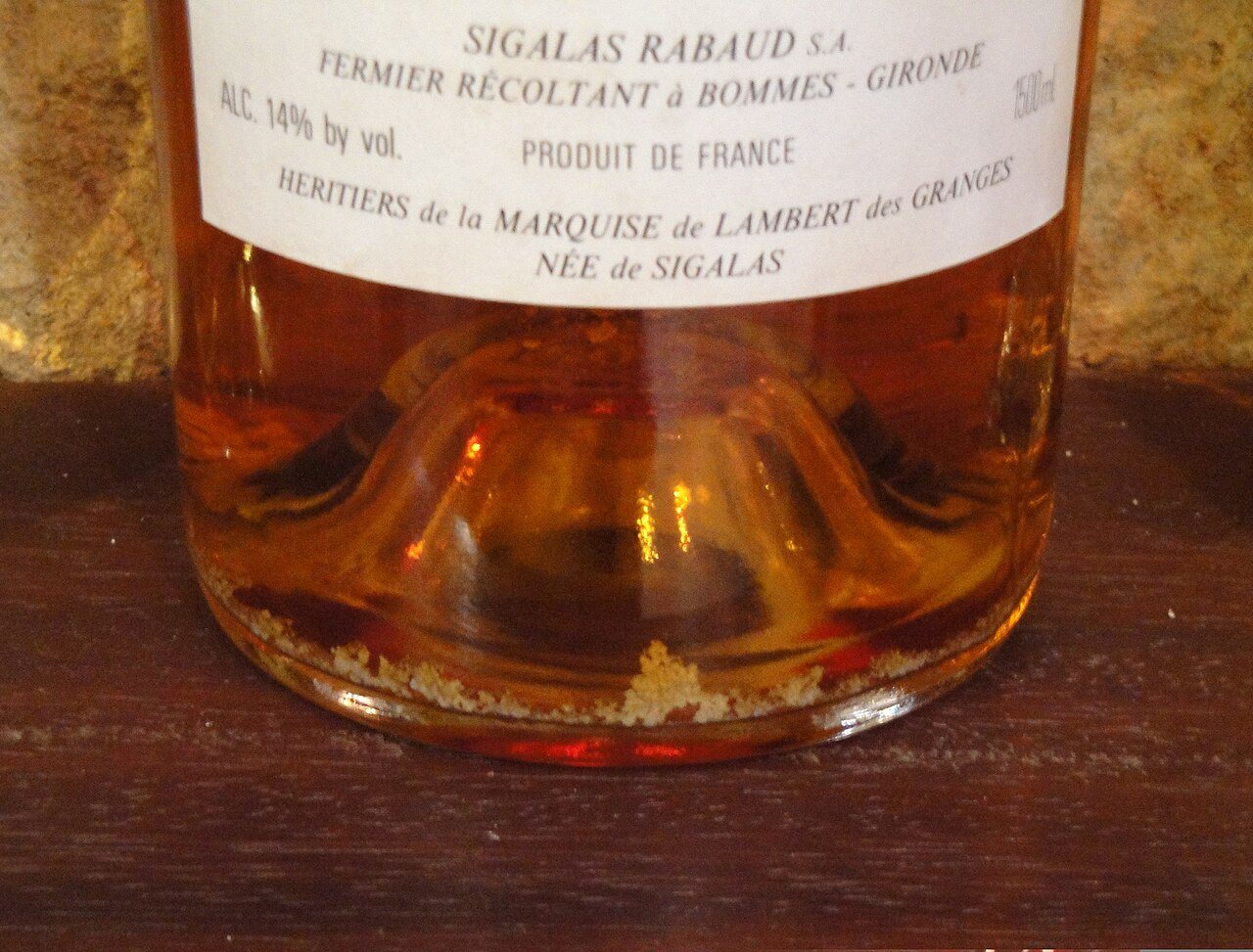
Tartaric stabilization of white wines prevents potassium bitartrate and calcium neutral tartrate from precipitating in the bottle as crystals visible on the bottom or on the cork. Although tartaric salts are harmless and do not alter the aromatic or taste profile, many importers and foreign retail chains reject lots showing crystalline deposits, mistaking them for production defects or glass fragments. To ensure clarity during intercontinental transport and storage in refrigerated warehouses, your winery can choose between subtractive techniques — static cold, contact cold, electrodialysis, cation exchange resins — and crystallization-inhibiting additives such as carboxymethylcellulose, mannoproteins, metatartaric acid and potassium polyaspartate.
Why crystals are a problem in export
Wine is a hydroalcoholic solution supersaturated with tartaric acid, the characteristic organic acid of grapes. During alcoholic fermentation, the rise in ethanol reduces the solubility of tartaric acid salts: potassium bitartrate (KHT) and, to a lesser but more insidious extent, calcium neutral tartrate (CaT). If natural precipitation in the tank is not complete before bottling, any subsequent drop in temperature triggers nucleation and crystal growth directly in the bottle.
In international shipments the thermal risk is constant. An uninsulated container crossing North America, Northern Europe or continental Asia during winter months undergoes prolonged temperature swings; similarly, in the HoReCa channel and foreign retail, white wines and sparkling wines are stored in refrigerated cells or display cabinets at low temperatures for weeks before service. In white wines, the transparency of the glass and the clear colour of the liquid make sediment immediately visible.
Research on Italian wine samples from bodies such as the Edmund Mach Foundation shows that tartaric instability is a primary cause of loss of commercial value in destination markets, because it leads the final consumer to doubt the product's wholesomeness. In contracts with State monopolies and organised retail chains, the appearance of crystals can result in the recall of the lot at the producer's expense, the charging of logistics costs and the loss of the listing. Integrating tartaric stabilization into the white and rosé winemaking protocol is therefore a commercial requirement before it is a technical one.
Stability tests in the winery
Before choosing the treatment or validating a lot ready for bottling, the winery laboratory must measure the degree of tartaric instability. Proceeding blindly leads to two opposite errors: under-treating the wine and exposing it to complaints abroad, or over-treating it and wasting refrigeration, time and organoleptic quality.
The analytical methods used to verify the wine's stability fall into empirical cold-stability tests and rapid tests based on electrical conductivity:
- Cold stability test (fridge test or freezing test): consists of keeping a wine sample at low temperature or near freezing point for several days, then checking visually or under the microscope for the appearance of crystals. It is a simple method that requires no costly instrumentation, but it has long response times and can give false negatives if colloids slow the nucleation phase without completely blocking it over the long term.
- Mini-contact test and conductivity drop (Δχ): the wine sample is brought to a defined temperature close to zero, supplemented with a known quantity of micronised potassium bitartrate under constant stirring and monitored with a conductivity meter. The added crystal acts as a nucleation seed, forcing the excess potassium to precipitate rapidly. The precipitation removes ions from the solution and lowers the electrical conductivity: if the percentage drop in conductivity remains within the safety threshold set for that wine type, the lot is considered stable.
- Saturation temperature (Tsat): measures the exact temperature at which a wine supplemented with bitartrate crystals begins to dissolve them, determining, through the change in conductivity, the thermal level of thermodynamic equilibrium. The lower the saturation temperature, the greater the natural stability of the wine.
- FTIR spectroscopy (Fourier Transform Infrared): as documented by studies of the Edmund Mach Foundation, predictive models based on mid-infrared spectroscopy allow rapid in-line screening of instability potential across large numbers of samples, complementing traditional conductivity tests.
For calcium tartrate instability, rapid tests based on potassium conductivity are not sufficient: since the crystallization kinetics of calcium are very slow and little influenced by low temperatures, it is necessary to analytically determine the calcium ion content of the base wine, particularly when calcium-containing processing aids have been used or deacidifications have been carried out.
Static and contact cold
Physical cold treatments belong to the traditional subtractive methods: they use lowering the temperature to reduce the solubility of potassium bitartrate, make it crystallize and remove it by filtration before the wine goes into bottle. The effectiveness of these processes depends closely on how the previous stabilization and fining phase was conducted, since cloudy wines or wines rich in unstable macromolecules hinder the regular growth of crystals.
In traditional static cold, the fined wine is transferred to insulated tanks and brought to a temperature close to its freezing point (calculated on the basis of alcohol content). The wine remains in isothermal rest for several days or weeks. Two successive phenomena occur in this phase: nucleation (spontaneous formation of the first crystal nuclei) and growth (deposition of the salt onto the formed nuclei). At the end of the rest, the wine is cold-filtered — always at low temperature to prevent the crystals from redissolving — on diatomaceous earth or tangential filters.
Static cold has significant operational limits for a structured winery:
- High energy consumption: keeping large masses below zero for many days requires continuous operation of the refrigeration units.
- Tank immobilisation: insulated tanks remain occupied for long periods, creating bottlenecks in the scheduling of export bottlings.
- Risk of oxidation: the solubility of oxygen in wine increases significantly as temperature falls; if handling and cold rest do not take place under strict inert gas blanketing, dissolved oxygen taken up in the cold will trigger oxidative reactions affecting varietal aromas and colour as soon as the wine returns to ambient temperature in the bottle.
The contact system (static-dynamic or continuous) overcomes the slowness of spontaneous nucleation. The wine is cooled via a heat exchanger and supplemented with micronised potassium bitartrate crystals in a stirred reactor (crystalliser). By skipping the induction phase of crystal seeds, precipitation of the excess salt occurs in a few hours rather than weeks. The crystals are then separated, recovered, ground and reused in subsequent cycles (until they become saturated with colloids and colouring substances). Although it drastically reduces processing times and tank occupation, the contact method maintains a significant energy requirement for the instantaneous thermal reduction of the mass.
Electrodialysis and cation exchange resins
To reduce the energy consumption linked to refrigeration and the risk of dissolving oxygen in aromatic white wines, modern oenology uses subtractive membrane or ion-exchange technologies that operate at cellar temperature. These processes fall fully within the innovative cellar technologies governed by the OIV International Code of Oenological Practices and by EU legislation.
Electrodialysis uses a stack of selective polymeric membranes — permeable alternately only to cations (such as potassium K+ and calcium Ca2+ ions) or only to anions (such as the tartrate ion HT-) — subjected to a continuous electric field. As the wine flows between the membranes, the electric field attracts potassium and calcium ions towards the cathode and tartrate anions towards the anode, transferring them into a parallel aqueous brine circuit that is then discharged. A computerised system continuously monitors the electrical conductivity of the outgoing wine, stopping ion extraction as soon as the stability value calculated from the preliminary test is reached.
The advantages of electrodialysis for exporters of white wines are clear:
- It operates at ambient temperature, eliminating refrigeration consumption and the risk of dissolving oxygen in the cold.
- It simultaneously removes both potassium and a fraction of calcium ions, helping to prevent late calcium tartrate precipitation as well.
- It does not alter the colloidal fraction, the fermentation esters or the varietal thiols.
- It requires a specific entry in the winery records, as provided by Delegated Regulation (EU) 2019/934 (Annex I, Part A, Table 1 and Appendix 5).
Cation exchange resins, governed by OIV sheet 3.3.3 and point 13 of Table 1 of Annex I to Delegated Regulation (EU) 2019/934, work on a different chemical principle. The wine (or a fraction of it) is passed through columns filled with polymeric resins activated in the acid cycle (loaded with H+ hydrogen ions). The resin captures the potassium and calcium cations of the wine and releases H+ ions in exchange. In this way the wine not only loses the metals responsible for tartaric precipitation, but also undergoes a lowering of pH and an increase in actual acidity.
For white wines produced in hot vintages or in southern viticultural areas, where high pH compromises gustatory freshness and the effectiveness of molecular sulphur dioxide, treating a fraction of the mass with cation resins resolves both tartaric stability and acid rebalancing in a single pass. European legislation requires that the treatment does not alter the original character of the wine and does not lower the pH beyond the limits set by the reference appendix; therefore in the winery a reduced aliquot of wine is usually treated and then blended with the main mass.
Additives: when protective colloids are enough
As an alternative to the physical removal of ions, it is possible to keep tartaric salts in solution by adding compounds that hinder the formation or growth of crystals (additive or inhibition approach). The use of these compounds is regulated by Delegated Regulation (EU) 2019/934 (Table 2 of authorised oenological substances) and entails precise labelling obligations in the ingredient list on labels destined for EU markets. For a detailed examination of the individual molecules and their dosages, you may consult the in-depth article on oenological stabilizers including CMC, gum arabic, mannoproteins and metatartaric acid.
From the standpoint of process choice in the winery, the four main inhibitors have quite distinct technical behaviours:
- Metatartaric acid: a polymeric ester obtained from the controlled heating of tartaric acid. It coats crystallization seeds, preventing their growth. It has a low cost and is immediate to use, but it undergoes hydrolysis over time, especially if the wine faces high temperatures during summer transport. It should be reserved exclusively for fast-turnover white wines consumed within a few months of bottling.
- Yeast mannoproteins: macromolecules extracted from the cell wall of Saccharomyces cerevisiae. They act as natural protective colloids (inspired by the effect of sur lie ageing), improve gustatory softness and do not affect filterability if chosen in liquid formulations specific for pre-bottling use. They are suitable for wines with low or medium tartaric instability and are also permitted in organic winemaking.
- Carboxymethylcellulose (CMC): a polymer derived from cellulose, effective on white and sparkling wines over the long term because it does not degrade with heat. Its negatively charged ions compete with tartrate and block the growth of the faces of the potassium bitartrate crystal. It does, however, require the wine to be perfectly stable from a protein standpoint: if unstable proteins remain in the white wine, or residues of protein fining agents and bentonite that were not well separated, CMC can react by forming haze. It can also increase the clogging index on final microfiltration cartridges if it is not added with adequate lead time.
- Potassium polyaspartate (KPA): a biopolymer synthesised from the amino acid L-aspartic acid, authorised by Regulation (EU) 2019/934 (OIV sheet 3.3.15, code E 456). Unlike CMC, it has a negligible impact on the filterability index of the wine, offers lasting stability even at non-optimal storage temperatures, and shows good hold against medium-high degrees of instability, provided that the protein stability of the white wine has been ensured beforehand.
None of these additives, on its own, guarantees stability if the wine shows strong supersaturation of calcium tartrate. Before choosing the additive route for a transoceanic shipment, it is always necessary to check the complete framework of authorised oenological practices in the destination third country: some non-EU markets have adopted the use of newer polymers such as CMC or potassium polyaspartate at different times, and customs compliance must be verified before the shipment or bottling.
Comparison of methods and selection criteria
The choice between physical removal and colloidal inhibition depends on your winery's volumes, the price positioning of the bottle, the geographic destination of the lot and the plant equipment available (owned or rented through mobile contract processors). The table below compares the operational parameters of the different solutions applied to white wines.
| Stabilization method | Mode of action | Energy and water consumption | Impact on aromas and structure | Duration over time | Label declaration (EU) |
|---|---|---|---|---|---|
| Static cold | Subtractive (slow thermal precipitation) | Very high (refrigeration for prolonged rest) | Risk of oxidation and loss of colloids/esters | Permanent (on potassium) | None (physical aid) |
| Contact cold | Subtractive (KHT-induced nucleation) | High (rapid thermal reduction) | Moderate; reduces time of cold exposure | Permanent (on potassium) | None (physical aid) |
| Electrodialysis | Subtractive (selective membrane extraction) | Low electrical consumption; water use for brine | None; operates at ambient temperature without filters | Permanent (also acts on part of the calcium) | None (physical treatment) |
| Cation resins | Subtractive (K+ and Ca2+ exchange with H+) | Low; water and chemical use for regeneration | Increases fixed acidity and lowers pH | Permanent | None (physical treatment) |
| Mannoproteins | Additive (yeast-derived protective colloid) | None | Positive; increases volume and roundness on the palate | Long (on slight or medium instability) | Yes (stabilising additive) |
| CMC / Polyaspartate | Additive (crystal growth inhibition) | None | Neutral (requires absolute protein stability) | Long (heat-stable) | Yes (stabilising additive) |
| Metatartaric acid | Additive (temporary inhibition) | None | Neutral | Short (heat-labile, hydrolyses when warm) | Yes (stabilising additive) |
To guide the operational decision in the winery you can follow three practical scenarios:
- Vintage white wines for retail and high-turnover export: if the wine shows low or moderate instability (verified through the mini-contact test) and is perfectly protein-stable, the use of potassium polyaspartate or CMC cuts industrial refrigeration costs, avoids volume losses due to diatomaceous earth filtration and speeds up order fulfilment.
- Strongly unstable white wines or wines destined for non-EU markets with restrictions on additives: when the conductivity drop exceeds the level manageable by protective colloids, or when the importer requires a wine free of stabilising additives declared on the ingredient list, electrodialysis (including through rented mobile units) represents the safest option for preserving the aromatic profile without immobilising the tank park.
- White wines from warm climates with high pH and acid deficiency: passing a fraction of the mass over cation exchange resins allows tartaric stabilization and pH reduction to be achieved in a single intervention, while also reducing the sulphur dioxide requirement before shipment.
Frequently asked questions
Does cold stabilization also eliminate the risk of calcium tartrate precipitation?
No. The solubility of calcium neutral tartrate varies very little as temperature falls, and its nucleation kinetics are extremely slow. A white wine stabilized cold for potassium bitartrate can still develop calcium tartrate crystals after many months in bottle; to prevent this, calcium content must be controlled at source or electrodialysis or cation resins must be used.
Why can carboxymethylcellulose (CMC) cause haze in white wines?
CMC can interact with residual heat-unstable proteins in the white wine, or with traces of protein fining agents and bentonite not fully removed, forming insoluble aggregates that cloud the bottle. Before dosing CMC or potassium polyaspartate it is essential to complete protein stabilization and verify with a heat stability test that the wine is free of reactive proteins.
Does the use of electrodialysis or cation resins have to be declared on the bottle label?
No. Under European Union legislation, electrodialysis and cation exchange resin treatment are classified as subtractive physical treatments rather than food additives: they must be recorded in the winery's electronic registers, but they do not appear in the ingredient list on the label, unlike CMC, polyaspartate, mannoproteins and metatartaric acid.
What is the main risk to the aromas of a white wine during static cold?
The greatest danger is indirect oxidation: at the low treatment temperatures, atmospheric oxygen dissolves into the wine far more readily than at ambient temperature. If racking, cooling and final filtration are not protected with inert gas, the oxygen taken up in the cold will oxidise thiols and fruity esters as soon as the bottles return to ambient temperature during transport.
Sources
- OIV — International Code of Oenological Practices
- EUR-Lex — Delegated Regulation (EU) 2019/934 of the Commission on authorised oenological practices and applicable restrictions
- Fondazione Edmund Mach — Research and technology transfer on the tartaric stability of wines
- CREA — Council for Agricultural Research and Economics (Research Centre for Viticulture and Enology)
- Tasting notes for importers: structure and vocabulary
- Supertuscan Wines: IGT Toscana vs Bolgheri DOC for Importers
- Trebbiano Varieties: Toscano, Abruzzo, Romagnolo, Turbiana
- SO2 in the winery: dosing by stage, EU limits, alternatives
- Triveneto: what it includes and what it produces for export
- Stuck Fermentation in Wine: Causes and How to Restart