Wine importers in Singapore: a hub for Malaysia, Indonesia, Thailand and Vietnam, and who buys Italian wine
Wines Export Editorial · Last updated:
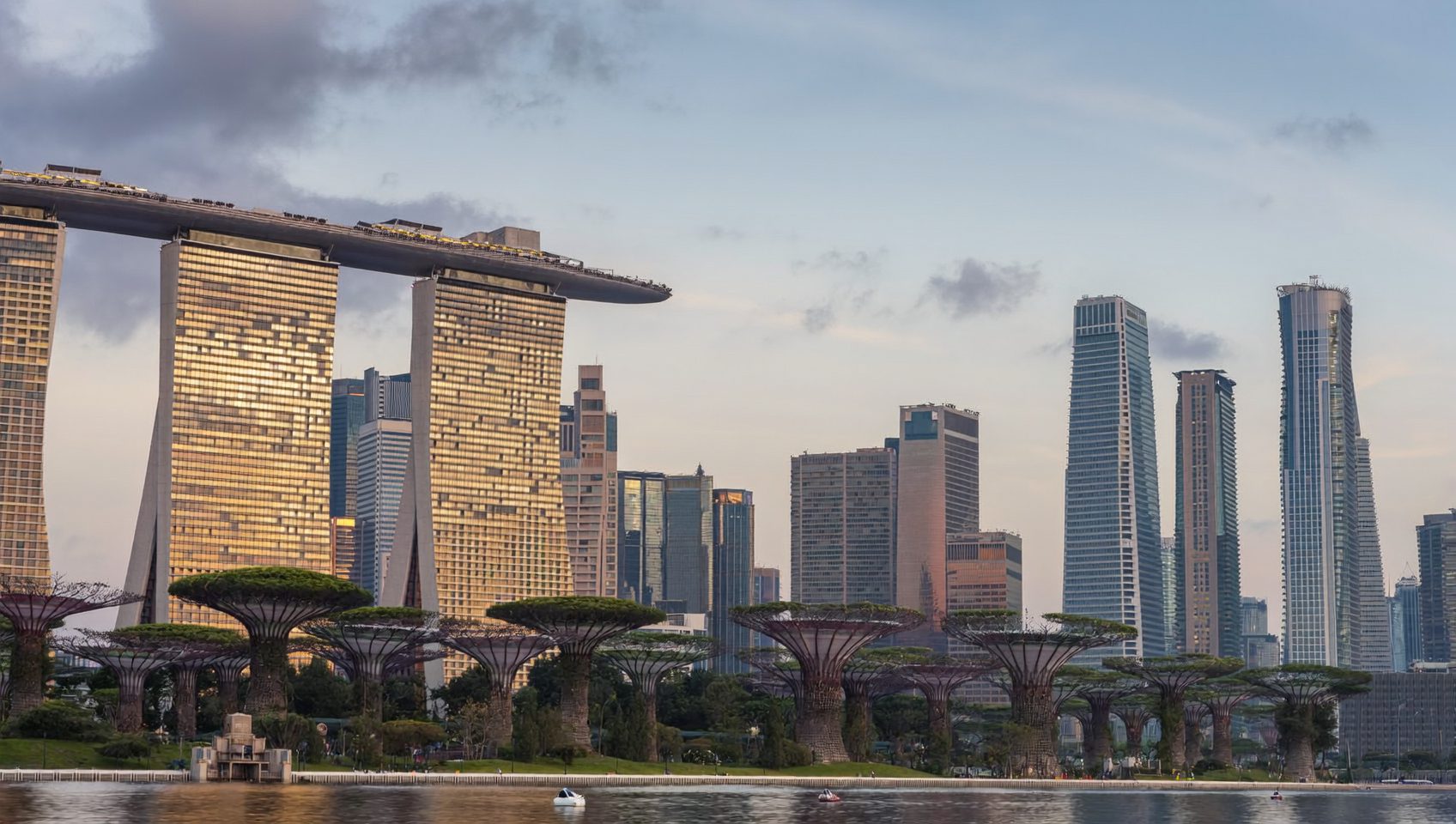
Exporting your wine to Singapore means entering the main commercial and financial hub of Southeast Asia. The city-state does not apply customs duties on wine, but it levies a fixed excise duty of 88 Singapore dollars (SGD) per litre of pure alcohol, in addition to the 9% Goods and Services Tax (GST). This tax mechanism discourages entry-level products and favours mid-range and premium labels, which are distributed both through the dense local network of restaurants and hotels and re-exported under tax suspension to Malaysia, Indonesia, Thailand and Vietnam.
How Singapore's wine excise duty works
Unlike many Asian markets that tax alcoholic beverages as a percentage of the invoice value, the local customs authority (Singapore Customs) applies to still wine and sparkling wine a customs duty of zero and a specific excise duty calculated solely on the volume of anhydrous alcohol contained in the bottle. The excise rate for wine is set at SGD 88 per litre of pure alcohol. To this amount is added the 9% GST (raised from 8% to 9% as of 1 January 2024), which is calculated on the sum of the CIF value (cost, insurance and freight) plus the excise duty itself.
The formula for calculating the excise duty on a single bottle is: volume in litres multiplied by the alcohol percentage, multiplied by SGD 88. For a standard 0.75-litre bottle at 13% vol., the excise calculation is 0.75 × 0.13 × 88 SGD, which equals SGD 8.58 per bottle, regardless of the ex-cellar price. If you export a structured red at 14.5% vol., the excise rises to SGD 9.57 per bottle; for a sparkling wine or a light white at 11.5% vol., it falls to SGD 7.59.
| Type and alcohol content (0.75 l bottle) | Hypothetical CIF value (SGD) | Customs duty | Fixed excise (SGD 88/l alcohol) | GST taxable base (CIF + excise) | GST (9%) | Total import taxes |
|---|---|---|---|---|---|---|
| White / Sparkling (11.5% vol.) | 10.00 SGD | 0 SGD | 7.59 SGD | 17.59 SGD | 1.58 SGD | 9.17 SGD |
| Medium red (13.0% vol.) | 10.00 SGD | 0 SGD | 8.58 SGD | 18.58 SGD | 1.67 SGD | 10.25 SGD |
| Ageing red (14.5% vol.) | 30.00 SGD | 0 SGD | 9.57 SGD | 39.57 SGD | 3.56 SGD | 13.13 SGD |
This tax structure compresses shelf price differences between a basic wine and a higher-tier wine. When a bottle already carries more than SGD 8.50 in excise alone, before GST and the distributor's margin are applied, inexpensive wines lose competitiveness. Conversely, on bottles with a higher ex-cellar price the percentage impact of the fixed excise is smaller, which encourages importers and final consumers to favour historic appellations, reserves and craft wines. For a comparison with the other major Asian hub with zero duty, you may consult our article on wine importers in Hong Kong and its role as an Asian hub.
How much Italian wine enters Singapore
The Singapore alcoholic beverage market stands out for growth in value that is clearly higher than growth in volume, driven by international business tourism, the high purchasing power of residents and the concentration of financial institutions and multinational companies. In the trade flows recorded by UN Comtrade for the customs heading HS 2204 (wine of fresh grapes), Singapore consistently ranks among the leading Asian import hubs by average value per litre, with bottled wines (subheading 2204.21) and sparkling wines (subheading 2204.10) clearly prevailing over bulk wine, which is almost absent.
Within this scenario, France holds the majority share by value, led by Champagne and the grand crus of Bordeaux and Burgundy, which find in Singapore an established base of collectors and investors. Italy competes in the group of main European and non-European supplier countries alongside Australia, the United States and Spain.
Italian presence is no longer limited to the investment labels from Tuscany and Piedmont: customs statistics and wine lists show a steady penetration of classic method sparkling wines and Prosecco DOC/DOCG, dry whites from North-East and Central Italy (much sought after for pairing with fish dishes and for the equatorial climate of the city-state), and indigenous reds from the South and the islands. If you want to place these dynamics in the wider continental context, you will find operational details in the dedicated page on wine regulation and export to Asia between China and Japan.
Importers with regional networks: who they are
Anyone importing wine into Singapore must operate through the TradeNet electronic system managed by Singapore Customs, obtaining customs permits before the goods arrive and holding a wholesale trade licence (such as the Class 4 liquor licence for B2B sales). The ecosystem of local importers is not monolithic, but it divides into four distinct profiles, each suited to a different winery size.
- Multinational and regional distributors: structured companies headquartered in Singapore with direct branches or subsidiaries in Malaysia, Thailand, Vietnam, the Philippines and the Maldives. They buy full containers or multi-pallet groupage, manage temperature-controlled logistics and supply large international hotel chains, airlines, cruise ships and airport duty-free shops.
- Importers specialised in the HoReCa channel: medium-sized companies often led by sommeliers, European expatriates or professionals trained in fine dining. They have very carefully curated portfolios, look for family wineries, less overexposed appellations and organic or biodynamic wines, and work closely with the wine directors of independent restaurants and wine bars.
- Fine wine merchants and investment companies: operators focused on historic vintages, large formats and prestige allocations. They sell mainly to wealthy private clients, family offices and collectors across the ASEAN area who use Singapore's climate-controlled vaults to store their collections.
- Large retail chains and specialised retail monopolies: high-end supermarkets and wine shops with several outlets on the island that import part of their range directly, in order to secure higher margins on mid-price segments.
To understand whether your positioning fits better with a distributor covering multiple countries or with a local specialist, it is useful to compare the distribution logics of this area with those described in the guide on emerging wine markets in Latin America and Africa, where credit risk and logistical fragmentation call for similar caution.
Restaurants and hotels: the channel that matters
In Singapore, domestic consumption is matched by an out-of-home sector (on-trade) of exceptional proportions relative to the size of the country. The city hosts dozens of restaurants recognised by international guides, large integrated complexes with luxury hotels, private clubs and a very lively scene of bistros and wine shops concentrated in neighbourhoods such as Ann Siang Hill, Club Street, Robertson Quay, Marina Bay and Dempsey Hill.
Italian restaurants represent one of the most numerous and established segments of the entire local food offer. These are no longer just generic trattorias, but venues specialised in individual Italian regional cuisines, contemporary gourmet pizzerias and fine-dining restaurants led by Italian chefs and restaurant managers or by professionals with solid international training.
For your winery, this channel offers three operational advantages:
- Rotation of wines by the glass: because of high taxes, diners in restaurants order wine by the glass very frequently. Entering the by-the-glass programme of a restaurant or hotel in Singapore guarantees steady reorders and introduces the brand to an international audience.
- Enhancing indigenous grape varieties: sommeliers in Singapore have a high level of technical training (many hold international certifications) and are receptive to unconventional Italian grape varieties, provided they are supported by precise technical sheets and a verifiable production history.
- Showcase for buyers from neighbouring countries: entrepreneurs and distributors from Jakarta, Kuala Lumpur, Bangkok and Ho Chi Minh City travel regularly to Singapore on business; seeing your label on the list of a leading restaurant in Singapore often generates spontaneous requests for distribution in nearby markets.
Free trade zones and re-export to neighbours
The real volume multiplier in Singapore is its logistics and customs infrastructure. Many Southeast Asian countries present tax, bureaucratic or logistical barriers that are complex for an Italian winery wishing to ship directly from Europe: Indonesia applies strict import quotas, high duties and special licences; Malaysia has very heavy taxation on alcoholic beverages; Thailand requires articulated registration and tax calculation procedures; the Philippines and Vietnam often do not justify, for a single local importer, the purchase of a full container from a single winery.
Singapore solves this bottleneck through its Free Trade Zones (FTZ) and the regime of authorised bonded warehouses (Licensed Warehouses and Zero-GST Warehouses). When your wine arrives at the port of Singapore and is stored in a climate-controlled bonded warehouse, payment of the SGD 88 per litre of alcohol excise and of the 9% GST is suspended.
| Final destination of goods stored in Singapore | Singapore excise treatment (SGD 88/l alcohol) | Singapore GST treatment (9%) | Operational advantage for winery and importer |
|---|---|---|---|
| Release for consumption in Singapore (HoReCa / Retail) | Due on exit from the bonded warehouse | Due on exit from the bonded warehouse | The importer pays taxes only on cases actually sold, optimising cash flow |
| Re-export to third countries (Malaysia, Thailand, Vietnam, etc.) | Exempt (under tax suspension) | Zero-rated (0% rate for exports) | Consolidation of mixed orders for neighbouring markets without double taxation |
| Supply to cruise ships and airlines (Duty-Free) | Exempt (under customs control) | Zero-rated | Access to the Asian travel retail channel starting from a single central stock |
Thanks to this mechanism, a Singapore importer can buy a substantial lot from your winery, store it under tax suspension in its own refrigerated warehouse on the island, and then split it: on bottles sold to restaurants in Singapore it will pay excise and GST when the goods are released; on cases resold to a sub-distributor in Vietnam or to a resort in Thailand it will pay neither Singapore excise nor Singapore GST (as exports are zero-rated for GST purposes), and the consignment will bear only the duties of the final destination country. Furthermore, through the free trade agreement between the European Union and Singapore (EUSFTA), goods of EU preferential origin benefit from simplified customs procedures and strengthened protection for registered Geographical Indications.
How to contact a Singapore importer
Proposing your wines to a Singapore importer requires rigorous commercial preparation, because local buyers receive dozens of offers every week from producers around the world. Before sending samples or price lists, verify the fundamental steps of the B2B negotiation by applying the method illustrated in the guide on how to find wine importers abroad.
When preparing your offer for Singapore, consider four practical aspects:
- Ex-works price list and alcohol content analysis: always present a clear ex-cellar price list, indicating for each reference the exact alcohol content stated on the label. Since the excise depends to the cent on the actual alcohol by volume, the buyer will immediately calculate the landed cost on the basis of the alcohol content.
- Presence at key trade fairs in the city: Singapore hosts crucial trade fair events for the Asian B2B sector, such as ProWine Singapore and Vinexpo Asia (which alternates its editions in the region), as well as institutional events organised by the Italian Trade Agency (ICE) and the Chambers of Commerce. Meeting buyers in person or organising tastings in local restaurants during these weeks speeds up selection times.
- Logistics and cold chain: in Singapore temperatures consistently exceed 30 degrees with very high humidity all year round. Serious importers use exclusively reefer (refrigerated) containers or advanced thermal covers with pick-up from climate-controlled warehouses. Make sure your warehouse in Italy is equipped for rapid loading of reefer containers and agree on Incoterms from the outset (usually EXW or FOB Italian port).
- After-sales support and training: importers working with the HoReCa channel expect the producer or export manager to visit the market periodically to run masterclasses with the sales force and dinners with private clients (wine dinners). Offering a promotional budget in the form of goods (for sampling to sommeliers) is often more appreciated than a financial discount on the invoice.
Frequently asked questions
What duties and taxes apply to importing wine into Singapore?
Singapore does not apply customs duties on wine imports (0% rate), but it levies a fixed excise of SGD 88 per litre of pure alcohol. On a 0.75-litre bottle at 13% alcohol, the excise amounts to SGD 8.58. Finally, the 9% Goods and Services Tax (GST) is applied to the total given by the CIF customs value plus the excise.
How does wine re-export from Singapore to other Asian countries work?
Importers can store wine in authorised bonded warehouses or in Singapore's Free Trade Zones under tax suspension. If the wine is re-exported to neighbouring markets such as Malaysia, Thailand, Indonesia or Vietnam without entering Singapore's domestic market, it pays neither the SGD 88 excise nor the 9% GST.
What kind of Italian wine do Singapore importers look for?
Because the high fixed excise penalises inexpensive wines, importers look for mid-range, premium and collectible wines. Large ageing reds for private collectors are in high demand, as are fresh whites, sparkling wines and wines from indigenous grape varieties intended for sale by the glass in the wide network of Italian restaurants and luxury hotels.
Is special label registration required to export wine to Singapore?
Ministerial pre-approval of individual labels is not required before shipment, but the product must comply with the food regulations of the Singapore Food Agency (SFA), which require English-language indication of the food name, net volume, alcohol content, country of origin, presence of allergens (sulphites) and the details of the local importer.
Sources
- Singapore Customs – Duties, excise and TradeNet customs procedures
- Singapore Ministry of Finance (MOF) – GST rules and rates
- European Commission – Access2Markets portal and EUSFTA agreement
- UN Comtrade – International trade statistics database
- Italian Trade Agency (ICE) – Singapore office and market statistics
Who buys wine in Singapore? A few names
According to the Wines Export Observatory (November 2026), the Italian denomination most carried by wine buyers in Singapore is Prosecco: 36% of those whose Italian range we know carry it, followed by Amarone (34%) and Valpolicella (34%).
The Wines Export database covers the whole wine trade in Singapore: importers, distributors, wholesalers, wine shops and online stores, city by city, updated continuously (23 November 2026). The Italian denominations most carried by buyers in Singapore, in order: Prosecco, Valpolicella, Amarone, Barolo and Chianti.
Singapore
Blackbird Group Pte. Ltd. · Ferrari Food+Wine · One Cellar
- Wine importers Texas and Florida: TABC licenses and Miami
- Wine importers Romania: who buys Italian wine, how to ship
- Wine Importers Thailand: Duties, Hotels and Who Buys Italian
- Wine importers Philippines: Manila and who buys
- Vietnam Wine Importers: EVFTA Tariffs and Who Buys
- Wine importers Nigeria: Lagos, NAFDAC and Italian sparkling