Wine importers and distributors in Texas and Florida: TABC licenses, Miami and channels
Wines Export Editorial · Last updated:

If you are looking for wine importers for Texas or Florida, you are dealing with two states that have their own rules. The first step is to understand who issues the licenses and which documents they require. In Texas, the competent authority is the TABC, which handles close to 100,000 licenses and permits a year. In Florida, the ICE office in Miami is an institutional reference point among those listed in the official sources cited at the end. Here you will find how to read the two markets, which channels buy Italian wine, and how to verify a distributor before you sign. For the national picture, see wine distributors in the United States.
Texas and Florida in the US statistical picture
The Wine Institute statistics page collects consumption and shipment data at national and California level, with sections on US consumption, shipments from California and US exports. The page does not give a breakdown by individual state, either for Texas or for Florida. If you want to compare them with other areas, you will need to look for state-by-state consumption data in other sources. You can start with wine consumption trends in the United States to understand the general context.
For this reason, this article does not give growth rates for Texas or Florida. What the sources allow us to state with confidence concerns licenses, offices and procedures, that is, the work an Italian company must do before selling in these states. Market figures should be taken from official statistics and not from the estimates of firms that sell import services.
Texas: the TABC license comes before the distributor
The TABC, the Texas Alcoholic Beverage Commission, manages industry licenses and permits through an online system called AIMS. From the portal you can submit new license applications, renewals and data updates. The site also indicates the local office as a point of support for first-time applicants. Applications are submitted online, and this is the first channel to check.
The TABC website lists the types of license and permit, each with a description of the activities it allows. For an Italian company, the relevant question is which party in the Texas system has the right to sell, distribute or transport wine. Your counterpart must hold the correct license for the role it plays in the supply chain. The license type must be checked against the activity the distributor actually carries out.
The TABC site also notes that some activities must post a bond before obtaining a license or permit. There are three bond types: the conduct bond, the guarantee bond and the bond on commission interest. Ask the distributor which bond it has posted and for which activity, and check that this is consistent with the license type it declares.
On the same page you will also find an entry on wine shipping, the list of Texas alcoholic beverage laws and the entry on local option elections. These are the links to open before signing, because a sales area may have local rules.
In Houston, ICE has an office, one of the five the site lists for the United States together with Chicago, Los Angeles, Miami and New York. The ICE site also has sections on market information and useful contacts. The official sources cited at the end publish no specific information for Dallas.
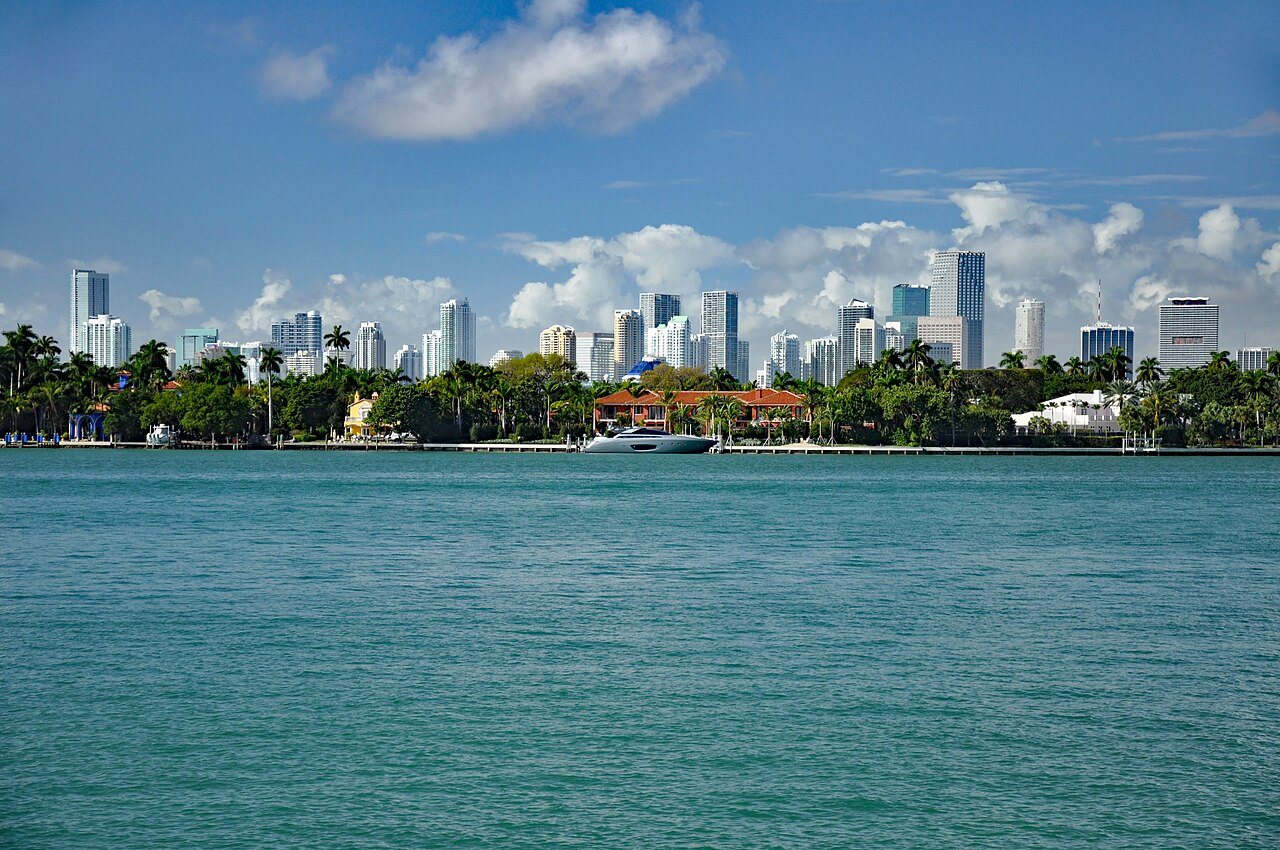
Florida: Miami as the reference point for your search
The ICE office in Miami is the first concrete reference for anyone looking for contacts in Florida among the official sources cited at the end. It is not a distributor or a re-export operator. It is an institutional office that can guide your search. Importing requires distributors with licenses and a verifiable client network.
The conditions for re-export and transit through Miami are not covered by the official sources cited at the end. If your plan involves using Florida as a gateway to other areas, ask the distributor in writing which licenses it holds, whether it can receive goods into bonded storage and how it can ship them out of the country. Do not assume that a license valid in Florida automatically covers re-export activity.
Florida's license types, timelines and costs are not published in the sources cited at the end: check them with the state authority. Before signing with a Florida distributor, the essential check is the same as in Texas: the distributor must demonstrate that it holds the right license for its role, and the documentation must be verifiable by a public authority.
The Italian restaurant channel in the two areas
Italian restaurants are often the first channel through which an Italian wine enters a new state, because the restaurateur chooses the wine for the list and can buy in small volumes. The official sources cited at the end do not describe the restaurant supply chain, so your first question to the distributor should be who serves restaurants directly. For the role of restaurants in an entry plan, see the page on the restaurant channel for Italian wine abroad.
In the two areas, it is useful to distinguish three types of venue: the Italian restaurant with an established wine list, the general restaurant looking for a quality label, and the wine bar or wine shop that also sells retail. Each requires a different commercial approach. A distributor that works only with large retail chains may not be the right partner for restaurants, and vice versa.
The check to make is simple: ask the distributor which venues it serves in your area of interest and which Italian labels it already has on its lists. If the distributor cannot name verifiable restaurant clients, the channel is not yet operational for them. This applies in every state, but in Texas and Florida the distances between cities and counties make geographic coverage a point to discuss clearly from the start.
How to find and contact local distributors
The method we recommend starts with institutions, not search engines. The TABC site lists the license and permit types provided for in Texas, with the activities each one allows. For Florida, the check goes through the state authority responsible for alcoholic beverages. In both cases, ask the distributor for a copy of its license, with the case number, and verify it on the public system before any agreement.
The second step is to gather market information from the ICE offices in Houston and Miami, which the site lists among its US offices. The third is to prepare an English product sheet with the documents the distributor will request: technical sheet, a copy of the label approved for the US market and shipping references. The fourth is to ask the distributor for the list of clients it serves in its channel, whether restaurants, wine shops or retail chains, and to verify two or three of those clients directly.
Particular attention should go to bonds and licenses. A distributor that has posted the bond required for its type of activity, and that shows a license with the correct number, offers a firmer basis than one that promises a commercial network without documents. A license that is inconsistent with the role should be clarified before signing, not after.
Finally, check the shelf price the distributor expects for your wine. Each step between producer, distributor and retailer affects the final price, and the page on how the US shelf price is formed explains how to read this calculation before setting the price for the winery.
How it differs from New York
The official sources cited at the end do not publish a direct comparison between Texas, Florida and New York. What can be said is that each state has its own licensing authority, its own procedures and its own list of license types. Anyone who has already worked in New York cannot take the same rules for granted in Texas or Florida, and must start again from the page of the state authority.
What really changes in practice concerns documents. In Texas, the application goes through the AIMS portal and bonds are a specific requirement for certain activities. In Florida, the structure is different and must be read from the competent state source. For this reason, the list of documents cannot be copied from one state to another: it must be rebuilt for each state, starting from the authority that grants the license.
In both states it is advisable to have more than one distributor under contract, with verified licenses and defined territories. The number of distributors to approach depends on the volume the winery can sustain, not on a fixed rule.
Table: the sources to consult and what they are for
| Source | What it contains | What it is for the importer |
|---|---|---|
| TABC, licenses and permits | AIMS portal, license types, bonds, around 100,000 licenses and permits handled per year | Verifying the Texas distributor's license and its role in the supply chain |
| ICE, United States | Offices in Chicago, Houston, Los Angeles, Miami and New York, market information and useful links | Getting oriented in the market and having an institutional reference in key cities |
| Wine Institute, statistics | US consumption, shipments from California, US exports | Reading the national picture before narrowing down to the state level |
Frequently asked questions
Do I need a TABC license to sell wine in Texas?
The TABC issues licenses and permits for the alcoholic beverage industry, and its site lists the types of activity allowed under each type. Which license is needed depends on the role your partner plays in the supply chain. Check the list on the TABC site and ask the distributor for its license type and case number.
Where are license applications submitted in Texas?
The TABC system is called AIMS and is used to submit new applications and to renew or update a license. The site also indicates the local TABC office as a point of support for first-time applicants. For a foreign importer, the first useful step is to ask the distributor for its license type and case number, and to verify them with the TABC.
Is there an ICE office in Miami?
Yes, ICE lists an office in Miami among its US offices, together with Chicago, Houston, Los Angeles and New York. The office can guide your search and point to the market information available, but it does not replace the distributor. License checks remain a step to be carried out with the competent state authority.
Does the Wine Institute provide consumption data for Texas and Florida?
No. On the Wine Institute page, the data are presented at national and California level. For detail on Texas and Florida, you need state sources or industry statistics.
Sources
Who buys wine in the United States? A few names
According to the Wines Export Observatory (November 2026), the Italian denomination most carried by wine buyers in the United States is Prosecco: 29% of those whose Italian range we know carry it, followed by Barolo (26%) and Chianti (23%).
The Wines Export database covers the whole wine trade in the United States: importers, distributors, wholesalers, wine shops and online stores, city by city, updated continuously (23 November 2026). The Italian denominations most carried by buyers in the United States, in order: Prosecco, Barolo, Chianti, Pinot Grigio and Brunello.
New York
MCF Rare Wine · Grand Cru Selections · Millesima USA Wine Store New York
Miami
BEST WINES, Best Wines of Miami LLC · MANZANOS WINES USA LLC · IWK USA IMPORTERS, LLC
Houston
La Botte LLC · Karmo, Inc. · J & J Wines LLC
- Wine Importers Thailand: Duties, Hotels and Who Buys Italian
- Wine importers Singapore: Southeast Asia hub
- Vietnam Wine Importers: EVFTA Tariffs and Who Buys
- Wine importers Romania: who buys Italian wine, how to ship
- Wine importers Western Europe: 8 countries compared
- Wine importers Philippines: Manila and who buys