Wine importers in Romania: who buys Italian wine, sales channels (HoReCa, retail, e-commerce) and how to ship
Wines Export Editorial · Last updated:

To sell and ship wine in Romania, you need to work with an EU member state that has a solid domestic wine production but imports growing volumes of foreign labels to supply urban restaurants and large retail chains. Purchases of Italian wine pass through distributors specialised in HoReCa based in Bucharest and Transylvania, direct importers serving European retail chains, and specialised e-commerce platforms. From the customs and tax point of view, intra-EU shipments of still, sparkling and sparkling wine travel with the electronic administrative document on the EMCS system and must comply with the rules of the Romanian Fiscal Code managed by the tax authority ANAF. In this operational guide we analyse who buys Italian wine on the Romanian market, the main consumption hubs, and how to manage excise duties, State tax stamps and logistics without operational blockages.
How much wine Romania imports and how much of it is Italian
Romania is not an import-only market like Poland or the Baltic States. It is a country with a well-established winemaking tradition overseen by the Oficiul Național al Viei și Produselor Vitivinicole (ONVPV). Before proposing your price list to a local buyer, it is useful to understand the structure of wine production in Romania and its grape varieties, because your wines will compete on shelves and in restaurant wine lists directly with domestic bottles. Romanian producers hold a strong position in the entry-level and mid-range segments thanks to an extensive distribution network and strong recognition among local consumers.
Despite the weight of domestic production, foreign trade statistics recorded by UN Comtrade and the Institutul Național de Statistică (INSSE) show a steady flow of wine imports from the European Union and from the neighbouring Republic of Moldova. Within intra-EU trade, Italy consistently ranks among the top suppliers by value and volume, alongside France and Spain. Italian wine meets a specific demand that local production covers only in part:
- Sparkling and frizzante wines: Italian Prosecco DOC and Charmat-method sparkling wines dominate the aperitif segment in day bars and clubs in the major cities, where local sparkling production volumes are more limited.
- Red wines from Italian indigenous grape varieties: wines from Puglia, Sicily, Veneto and Tuscany are requested by urban customers who frequent the many Italian and international restaurants in the country.
- Fresh, ready-to-drink whites: Pinot Grigio, Vermentino and north-eastern whites find a place on summer menus, on the Black Sea coast during the tourist season, and in city wine bars.
When you present your winery to a Romanian buyer, avoid offering bulk wine or entry-price bottled wine without a territorial identity: in that price band, large Romanian wineries are very hard to beat on logistics costs and distribution agreements. Your commercial opportunity lies in appellation wines with a clear positioning, able to offer the distributor an adequate margin and steady rotation.
Bucharest and Cluj: where Italian wine sells
Consumption of imported wine in Romania is strongly concentrated in the large urban centres, where the highest incomes, the offices of multinational companies, the services sector and business tourism are located. If you want to structure your sales network in the country, you should map the different geographical areas rather than rely on a single operator without national coverage.
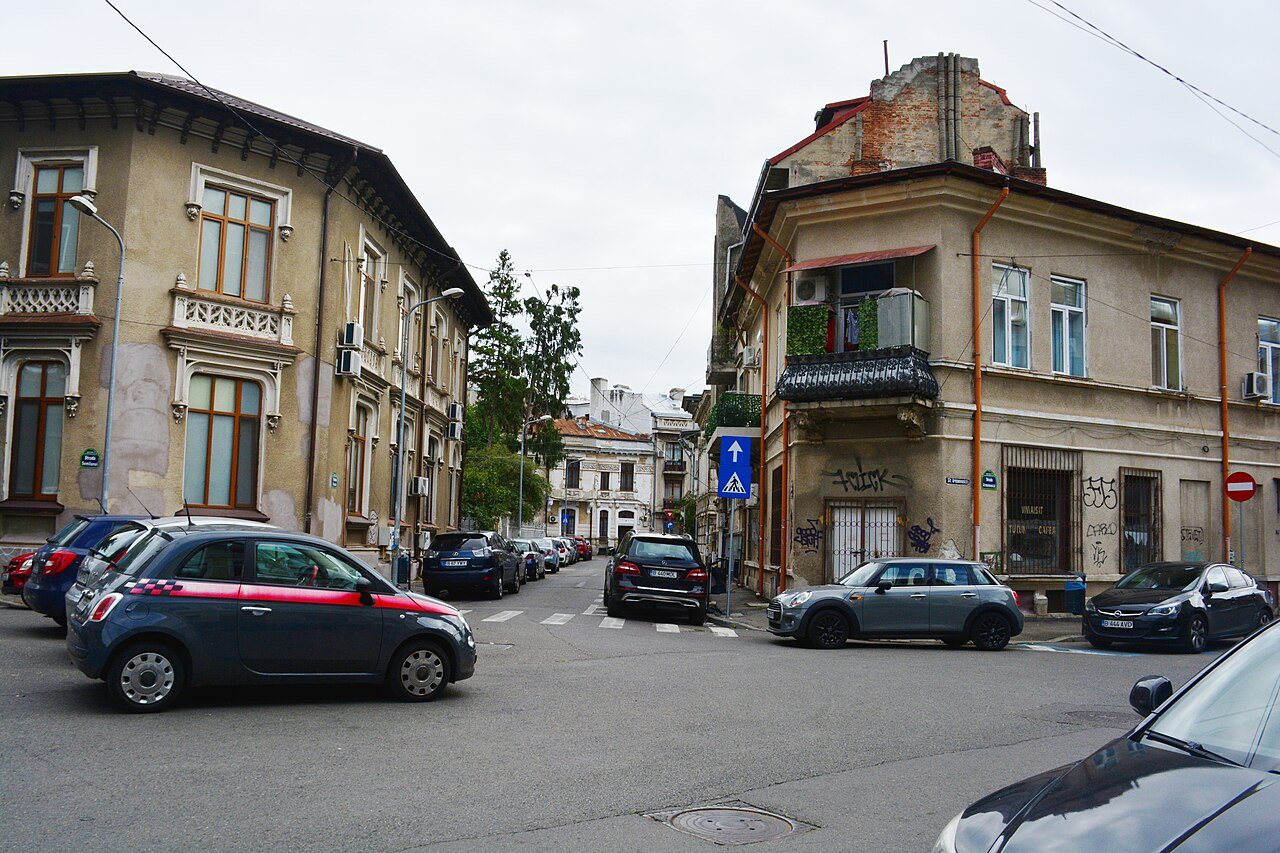
Bucharest and the Ilfov county represent the country's first economic and commercial hub. The capital hosts the main national importers, the purchasing centres of large retail chains, mid-to-upper-range restaurants, international hotels and nightlife venues. The northern districts of the city have a high concentration of bistros, wine shops and contemporary restaurants where the wine list gives ample space to Italian appellations, from Piedmont to Tuscany and Puglia.
The second most strategically important area is Transylvania, centred on Cluj-Napoca, followed by Timișoara, Brașov and Sibiu. Cluj-Napoca is a dynamic university and technology hub with a young and international customer base that frequents wine bars and tasting events; Brașov and Sibiu benefit from a steady tourist flow throughout the year. Many distributors active in Transylvania operate independently from Bucharest and prefer to import directly from Italy to serve their regional HoReCa customers, also taking advantage of the greater geographical proximity to the western borders towards Hungary.
A third relevant hub is the eastern and coastal area, which includes Constanța on the Black Sea and Iași in the historical region of Romanian Moldavia. The Black Sea riviera, and in particular the Mamaia area, generates very high consumption peaks in the summer months for Italian white wines, rosés and sparkling wines destined for beach clubs, hotels and seasonal restaurants.
Importers and HoReCa wholesalers
The Romanian HoReCa channel is served by a varied network of specialised importers and beverage wholesalers. Anyone looking for wine importers in Romania must distinguish among four types of commercial counterparts, each with different logistical and financial requirements:
- National importers specialised in fine wine and HoReCa: they are mostly based in Bucharest or Cluj, have their own authorised tax warehouse and a sales force made up of agents trained in wine. They build selected catalogues in which each Italian region is represented by one or two wineries on an exclusive basis. They require support for staff training, visits from the export manager or the winemaker for tasting dinners, and promotional budgets for inclusion in wine lists.
- Multi-product beverage distributors: they originated as wholesalers of beer, spirits, mineral water and soft drinks for bars, pubs, event halls (very important in Romania for weddings and banquets) and fast-food restaurants. In recent years they have added Prosecco and high-turnover Italian still wine lines. They buy by full pallets, look for competitive ex-cellar prices and fast restocking, but they are not suited to promoting niche wines or high-priced reserves.
- Importers of Italian food specialities: they supply pizzerias, trattorias and Italian restaurants spread across all Romanian cities. Alongside flour, dairy products, cured meats and preserves, they regularly import Italian regional wines (Chianti, Montepulciano d'Abruzzo, Primitivo, Nero d'Avola, Pinot Grigio) to offer restaurateurs a single supply service.
- E-commerce platforms and wine shop chains: online wine retail is very developed in Romania. Several online operators do not limit themselves to buying from local distributors, but act as registered consignees importing directly from European wineries to improve their margins and offer exclusive labels to private and business customers (B2B gifting).
To understand how your local competitors position themselves on restaurant wine lists, you can consult our guide to Romania's DOC and IG designations, regulated by the ONVPV specifications.
Retail chains: who buys
Organised retail (GDO) in Romania is almost entirely dominated by large European international groups: hypermarket chains, neighbourhood supermarkets, cash & carry and discount stores (including banners such as Kaufland, Carrefour, Lidl, Mega Image, Profi, Penny, Selgros and Metro). For a medium-sized Italian winery (from 500,000 to 2 million bottles), the Romanian modern trade channel offers interesting volumes, but it requires an adequate production and administrative structure.
Access to Romanian shelves follows two main routes:
- Direct purchase through a central purchasing office or logistics platform: discount chains and hypermarkets often buy high-turnover wines (Prosecco, Lambrusco, Primitivo, Pinot Grigio) directly from Italian wineries or cooperative groups, sometimes relying on the group's international central purchasing offices or on a local logistics operator that handles excise clearance.
- Supply through a referenced local importer: for lower-turnover references, or for the wine sections of urban supermarkets and cash & carry stores, GDO buyers prefer to buy from an already registered Romanian importer. In this way the chain acquires goods already cleared and excise-paid in local currency (Romanian leu, RON), shifting the burden of warehousing, the e-AD and national electronic invoicing onto the importer.
If you deal with an importer that supplies Romanian GDO, bear in mind that the payment terms requested by the chains are longer than in the HoReCa channel, and that the distributor will ask you to plan an annual calendar of price-cut promotions and contributions to seasonal flyers (Orthodox Easter and the year-end holidays are the two main sales peaks).
Shipping to Romania: excise, e-AD, banderole
Since 2007 Romania has been a member of the European Union and, with the completion of its integration into the Schengen area also for land borders, road transport from Italy through Austria and Hungary travels without customs barriers at the border. However, wine remains a product subject to harmonised excise duty: a B2B commercial shipment cannot travel with a simple accompanying invoice, but must follow the rules of Title VIII of the Romanian Fiscal Code (Law 227/2015 and subsequent amendments) under the supervision of the Agenția Națională de Administrare Fiscală (ANAF) and the Autoritatea Vamală Română.
To frame the shipment correctly, first verify the tax category of your product and the authorisation status of your Romanian customer. For technical details on how the European computerised system works, refer to the page on EMCS, tax warehouses and accompanying documents.
| Tax category (Fiscal Code, Title VIII) | Products included | Excise rule in Romania | Tax stamp (banderole / seal) | B2B transport document from Italy |
|---|---|---|---|---|
| Vinuri liniștite (Still wines) | Non-sparkling wines with actual alcoholic strength above 1.2% vol and up to 15% vol (or up to 18% vol if obtained without any fortification), from fermentation alone | Excise duty since 1 August 2025 (Law 141/2025, Annex 1 to Title VIII of the Fiscal Code): 10 lei per hectolitre of product in 2025, 11 lei in 2026 | Not required for still wines (excluded under art. 421 of the Fiscal Code) | e-AD (under excise suspension) or e-DAS (excise paid, with certified consignee) |
| Vinuri spumoase (Sparkling wines) | Wines with overpressure due to carbon dioxide in solution of 3 bar or more (classic-method and Charmat sparkling wines) | Excise per hectolitre of product: 83.81 lei in 2026 (Law 141/2025) | Not required for natural sparkling wines (excluded under art. 421 of the Fiscal Code) | e-AD (under excise suspension) or e-DAS (excise paid) |
| Produse intermediare (Intermediate products) | Fortified wines, vermouth, flavoured wines with added alcohol between 1.2% and 22% vol that do not fall within the wine category | Subject to high excise per hectolitre of product | Mandatory (ANAF tax banderole applied before release for consumption) | e-AD to a tax warehouse or authorised registered consignee |
| Alcool etilic (Ethyl alcohol and spirits) | Grappa, eaux-de-vie, spirits and spirit drinks above 22% vol | Subject to the maximum rate per hectolitre of pure alcohol | Mandatory (ANAF tax banderole on every bottle) | e-AD to a tax warehouse or authorised registered consignee |
A point that often raises doubts among Italian wineries concerns tax banderole (paper State stamps). Under articles 421-424 of the Romanian Fiscal Code, the obligation to apply banderole markings covers intermediate products (such as vermouth, flavoured wines and fortified wines) and ethyl alcohol (such as grappa), as well as processed tobacco. Still wines and sparkling wines (including Prosecco and Franciacorta) are not subject to the paper tax banderole on the bottle neck. However, if you also export grappa, vermouth or fortified wines to Romania, you should know that the Romanian importer must request the banderole from the competent authority; these can be sent to Italy to be applied on your bottling line before departure, or applied in the Romanian tax warehouse before the goods are released for consumption.
As regards transport and ANAF checks, Romania has introduced strict digital systems to counter tax evasion in road transport. In addition to issuing the e-AD (if you ship from your Italian tax warehouse to a Romanian antrepozit fiscal or destinatar înregistrat) or the e-DAS (if the buyer operates as a destinatar certificat), the Romanian importer is required to register international movements of goods on the national RO e-Transport system, which generates an identification code called the cod UIT.
Although the obligation to obtain the UIT code on the ANAF portal falls on the Romanian consignee for intra-EU purchases, your winery and your freight forwarder are directly involved: the UIT code must be communicated to the truck driver before the vehicle crosses the Romanian border and must accompany the transport until it reaches the unloading warehouse. If you ship under ex works (EXW) terms, make sure you provide the importer in advance with the exact gross weight, the value of the goods, the number of packages and the vehicle registration plate, so that the customer can generate the UIT code in time and avoid heavy penalties or the seizure of the load during road checks by the Directorate General for Fiscal Anti-Fraud of ANAF. If your trucks cross the central European route, it may help to compare these procedures with those required for exporting wine to Hungary, a mandatory transit country for road logistics to Romania.
How to contact a Romanian importer
Approaching wine buyers in Romania requires commercial preparation and respect for the dynamics of the local market. Buyers in Bucharest and Cluj receive dozens of generic offers from Italy every week: to get a response and move on to sampling, your approach must show that you understand their distribution structure.
These are the operational steps to set up the search and the negotiation:
- Verify the excise code before sending samples or quotations: when you start a dialogue with a new distributor or with a restaurateur who wants to import directly, immediately ask whether they hold a valid SEED code as a tax warehouse (antrepozitar autorizat), registered consignee (destinatar înregistrat) or certified consignee (destinatar certificat). If the customer does not have its own excise licence, it can still buy through a third-party logistics operator in Bucharest or Timișoara that offers EMCS receiving and excise clearance as a service for third parties.
- Prepare segmented price lists by channel: do not send your entire company catalogue. If you contact a mid-to-upper-range HoReCa distributor, select the lines dedicated to restaurants (avoiding labels already present in Romanian GDO, which are easy to check on local supermarket websites). If you speak with a beverage wholesaler or a retail buyer instead, highlight your winery's production capacity, batch consistency and quality certifications (such as IFS or BRC).
- Attend the relevant B2B trade fairs: Romanian importers regularly visit Vinitaly in Verona and ProWein in Düsseldorf, but to meet the heads of regional distributors and HoReCa sommeliers, it is very effective to take part in B2B events organised in Bucharest (such as the RO-Wine professional show) or in institutional tastings promoted by the ICE office in Bucharest.
- Samples and labelling: the language of business is English, but many Romanian operators understand and speak Italian fluently. For retail and HoReCa sales, national regulations require that the mandatory consumer information (sales denomination, allergens such as sulphites, alcoholic strength, nominal volume, name of the importer/distributor and, for products subject to the new European rules, ingredients and nutrition declaration) be shown in Romanian. In most cases the importer itself prints and applies an additional adhesive label in Romanian on the back of the bottle in its own warehouse, but always agree in writing who takes charge of this step before confirming the order.
Further reading: Wine Importers Malaysia: Who Buys and Where Alcohol Is Sold.
Further reading: Wine importers Philippines: Manila and who buys.
Further reading: South Africa wine importers: who buys Italian and Prosecco.
Frequently asked questions
Is a tax banderole required on wine bottles shipped to Romania?
No. For still wines and sparkling wines (including Prosecco and frizzante wines), the Romanian Fiscal Code does not require the application of paper tax banderole or seals. The obligation for the State stamp issued by ANAF applies only to intermediate products (such as vermouth and flavoured fortified wines) and to ethyl alcohol (grappa and spirits).
Which document accompanies the transport of wine from Italy to Romania?
As an intra-EU shipment of excise-subject products, the goods must travel accompanied by the electronic document e-AD (if shipped under excise suspension to a tax warehouse or registered consignee) or by the e-DAS (if shipped with excise paid to a certified consignee), issued through the EMCS system. In addition, for the road leg on Romanian territory, the importer must generate the UIT code through ANAF's national RO e-Transport system.
Who pays the excise duty on wine imported into Romania?
The excise duty under Title VIII of the Romanian Fiscal Code is borne by the economic operator in Romania that releases the product for consumption (the authorised consignor, the registered consignee or the certified consignee). The Italian winery invoices the wine net of VAT (an intra-EU transaction) and without charging Romanian excise, which is settled by the local buyer with the tax authorities in Bucharest.
Can a restaurant or wine shop in Bucharest buy wine directly from an Italian winery?
Yes, but only if the premises has previously registered with the Romanian Customs Authority as a registered consignee (occasional or habitual) or certified consignee, or if it relies on a third-party tax warehouse in Romania that receives the e-AD or e-DAS from the Italian winery, pays the local excise and then delivers the nationalised goods to the restaurant.
Sources
- Agenția Națională de Administrare Fiscală (ANAF) — Official portal of the Romanian tax and customs administration
- Ministerul Finanțelor România — Fiscal Code (Title VIII, Excise and other special taxes)
- Oficiul Național al Viei și Produselor Vitivinicole (ONVPV) — Romanian national office for vine and wine products
- Institutul Național de Statistică (INSSE) — Statistics on foreign trade and consumption in Romania
- Agenzia ICE — Network of foreign offices and information on export markets
- UN Comtrade — United Nations database on international trade in goods
- Romania, Law No. 141/2025 on fiscal and budgetary measures (Annex 1 to Title VIII of the Fiscal Code), text published by ANAF
Who buys wine in Romania? A few names
The Wines Export database covers the whole wine trade in Romania: importers, distributors, wholesalers, wine shops and online stores, city by city, updated continuously (23 November 2026). The Italian denominations most carried by buyers in Romania, in order: Prosecco, Primitivo, Amarone, Franciacorta and Valpolicella.
București
Dagmar Romania · Crama Mușat · Vino Italia Bucuresti
Brasov
Drink Story Bucuresti · SelectWine · The Bottle
Bucuresti
Vin Magazin · Beicevreipro.ro · Abel's Wine Bar
- Wine importers Singapore: Southeast Asia hub
- Wine importers Philippines: Manila and who buys
- Wine importers Texas and Florida: TABC licenses and Miami
- Wine importers Nigeria: Lagos, NAFDAC and Italian sparkling
- Wine Importers Thailand: Duties, Hotels and Who Buys Italian
- Wine importers New York: distributors and price posting