Wine importers in Vietnam: the tariffs falling under the EU-Vietnam agreement and who buys Italian wine
Wines Export Editorial · Last updated:

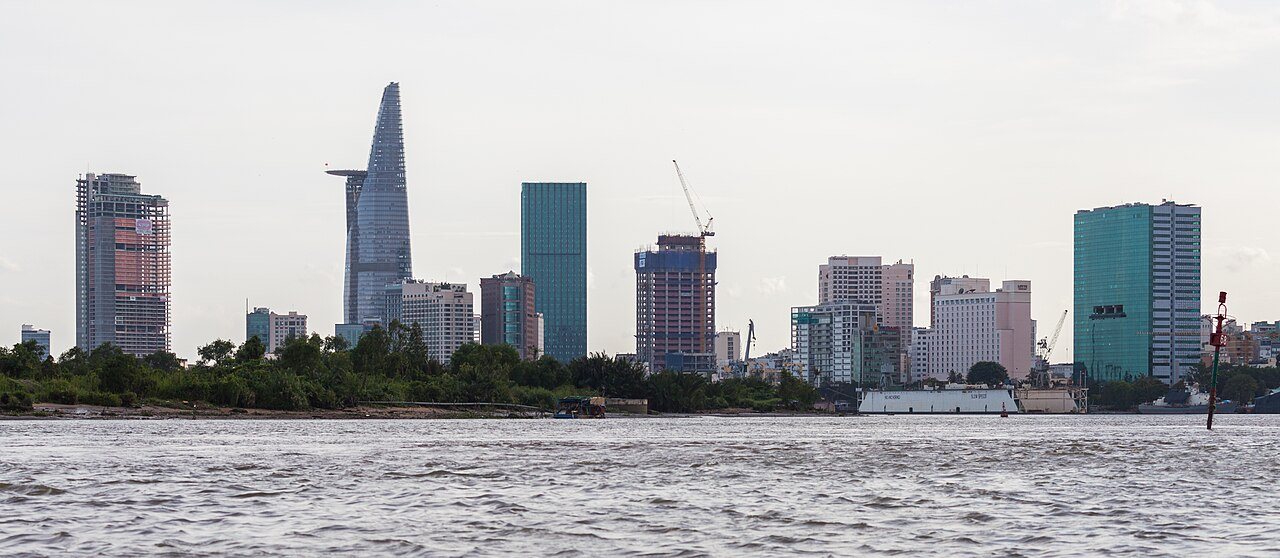
To export your wine to Vietnam, you need to work with a local importer holding a licence from the Ministry of Industry and Trade for alcoholic beverages with an alcohol content of 5.5% vol. or higher. The Free Trade Agreement between the European Union and Vietnam (EVFTA), in force since 1 August 2020, provides for the progressive elimination of customs duties on European wine over seven years from its activation. Despite the customs advantage, the final shelf and wine list price remains burdened by the Special Consumption Tax, which applies to all alcoholic beverages according to their alcohol content. Buyers are concentrated in the country's two economic hubs, Ho Chi Minh City and Hanoi, where specialised distributors operate in the HoReCa channel, international hotel chains and wine shop networks serving high-spending local customers and expatriates.
What the EVFTA provides for wine and on what timeline
The Free Trade Agreement between the European Union and Vietnam (EVFTA), signed in Hanoi on 30 June 2019 and operational from 1 August 2020, has structurally changed the competitiveness of Italian wines against non-European competitors. Before the agreement entered into force, wines imported from the European Union paid the most-favoured-nation (MFN) duty rate under the World Trade Organization framework. With the EVFTA, the Vietnamese government committed to eliminating customs duties on wines and spirits over seven years from the date of entry into force, following a schedule of progressive annual reductions incorporated into domestic customs regulations (including Decree 116/2022/ND-CP on the implementation of special preferential tariffs).
To obtain the duty exemption or reduction at the port of arrival (such as the ports of Cat Lai in Ho Chi Minh City or Hai Phong in the north), your winery must certify the preferential origin of the goods. Under the EVFTA rules of origin, detailed on the European Access2Markets portal for each code of customs heading 2204, the European exporter must be registered in the REX system (Registered Exporter) to issue the origin declaration directly on the commercial invoice for shipments with a value above the exemption threshold. If the origin documentation contains formal inconsistencies or discrepancies with the bill of lading, the Vietnamese customs authority disapplies the EVFTA benefit and charges the importer the full MFN duty.
Beyond tariff reductions, the agreement also addresses intellectual property protection through the automatic recognition of a list of European Union Geographical Indications. This mechanism protects Italy's main historic designations from counterfeiting and improper evocations on the Vietnamese market, offering legal assurance to importers who invest in positioning authentic DOP and IGP wines.
Domestic taxes: the special consumption tax
The progressive elimination of customs duties does not mean that wine enters Vietnam without a tax burden. The item that most affects price formation from the cellar gate to the shelf is the Special Consumption Tax (SCT), an ad valorem excise duty applied to both domestic and imported products. Vietnamese regulations set different rates based on the alcohol by volume of the beverage, distinguishing products below 20% from those at or above 20%.
Since 1 January 2018, the Special Consumption Tax rate for wine and alcoholic beverages with an alcohol content below 20% has been set at 35%, while for fortified wines or spirits at or above 20% (as well as for beer) the rate has risen to 65%. The Ministry of Finance and the National Assembly of Vietnam have also launched a tax reform aimed at further tightening taxation on alcoholic beverages between 2026 and 2031, in order to curb domestic consumption and increase state revenue.
| Tax or regulatory item | Legal reference / Condition | Applicable rate or requirement |
|---|---|---|
| EU import duty (HS code 2204) | EVFTA agreement (in force since 1 August 2020) | Progressive elimination over 7 years from the date of entry into force |
| Special Consumption Tax (wine below 20% vol.) | Special Consumption Tax Law (since 2018) | 35% on taxable value (subject to scheduled increases) |
| Special Consumption Tax (alcoholic beverages from 20% vol. upwards) | Special Consumption Tax Law (since 2018) | 65% on taxable value (with a scheduled increase up to 90% by 2031) |
| Alcoholic beverage import licence | Ministry of Industry and Trade (MOIT) | Mandatory for beverages with an alcohol content of 5.5% vol. or higher |
| Mandatory labelling in the local language | Decree 43/2017/ND-CP | Product name, exporter, importer, alcohol content, batch, warnings |
Customs taxes are calculated in cascade. The residual duty, if any, is calculated on the CIF value (cost of goods, insurance and sea or air freight). The 35% Special Consumption Tax (for still and sparkling wines below 20%) is then applied to the sum of the CIF value and the duty. Finally, value added tax (VAT) is calculated on the total amount obtained (CIF + duty + SCT). This multiplier effect means that every additional euro on your ex-cellar price generates a much larger increase in the customs-cleared cost borne by the Vietnamese distributor.
How much Italian wine enters Vietnam
Within the dynamics of Southeast Asia, which you can compare in our analysis of wine importers in Singapore and Southeast Asia, Vietnam presents a distinctive consumption profile. The national drink is beer, alongside traditional rice distillates, while grape wine represents a minority share of total alcohol volumes but with high added value.
In recent years, the Vietnamese wine market has experienced two opposing forces. On one side, urbanisation and rising incomes in metropolitan areas have widened the group of local consumers interested in red wine and sparkling wine as a symbol of social status and a tool for business relationships. On the other side, the entry into force of Law 44/2019/QH14 (operational from 1 January 2020) and the subsequent tightening of road penalties with Decree 168/2024/ND-CP have imposed a zero-tolerance limit (a blood alcohol level of absolute zero) for anyone driving a car or scooter. This rule has changed out-of-home habits, penalising occasional consumption in mid-range restaurants and concentrating purchases on high-end hotel dining, home consumption and corporate gifting.
In this context, Italian wine competes directly with France (historically favoured by the cultural and gastronomic ties of the colonial period) and with Chile, which has long enjoyed preferential tariff agreements. Italian wineries find space mainly with structured, soft red wines with a clear alcohol presence, which are in high demand for banquets and gifts during the Lunar New Year festival (Tet), and with Prosecco and sparkling wines in coastal tourist circuits and rooftop bars in the metropolitan areas. Compared with the mature markets described in the overview of wine exports to Asia between China and Japan, volumes per individual reference in Vietnam often start from fragmented orders in mixed pallets, consolidating once the brand becomes a stable presence on the menus of major hospitality groups.
Importers and distributors: Ho Chi Minh City and Hanoi
The wine distribution structure in Vietnam is strongly polarised between the south and the north of the country. To operate legally, an importer must hold the specific licence issued by the Ministry of Industry and Trade, submit shipments to state food safety inspections (ATTP declaration), apply import tax stamps on the bottles and affix a back label in Vietnamese compliant with Decree 43/2017/ND-CP before placing the product on the market.
Because of these bureaucratic barriers and the upfront financial outlay required to pay the Special Consumption Tax at customs, the number of active and creditworthy importers is limited. Operators fall into three main categories:
- Large multi-site national importers: companies structured with headquarters in Ho Chi Minh City and an operational branch in Hanoi (and sometimes warehouses in Da Nang). They manage broad portfolios covering Old and New World wines, operate temperature-controlled warehouses, refrigerated delivery fleets, and sales networks dedicated both to the HoReCa channel and to modern retail and their own wine shops.
- Distributors specialised in HoReCa and fine wines: medium-sized operators, often founded or run by European expatriate professionals or by Vietnamese sommeliers trained abroad. They work with higher margins on smaller volumes, supplying Western restaurants, bistros, wine bars and private collectors.
- Wholesalers focused on the corporate and gifting channel: trading companies very active in Hanoi and in the industrial provinces, whose turnover depends largely on the sale of corporate gift packs in the months leading up to Tet. They look for red wines with heavy bottles, classic labels and medium-high or entry-level volume price ranges.
Ho Chi Minh City is a highly dynamic commercial hub, with a young, international clientele open to experimenting with Italian indigenous grape varieties, mineral white wines and sparkling wines. Hanoi, home to ministries, embassies and major state-owned enterprises, shows instead a more traditional consumption profile, oriented toward prestigious designations, important red wines and institutional purchasing.
Hotels and international foodservice
Because Vietnamese law prohibits direct advertising for alcoholic beverages above 15% vol. and imposes strict promotional restrictions even below that threshold, the restaurants of five-star hotels and international resorts act as the main showcase for building brand awareness for Italian wineries.
The tourist and business hubs of Vietnam, from the central districts of Ho Chi Minh City and Hanoi to the beach destinations of Da Nang, Hoi An, Nha Trang and the island of Phu Quoc, host all the major global hotel chains. Food & Beverage Managers and Head Sommeliers of these establishments have direct decision-making power over the composition of wine lists, but for regulatory and logistical reasons they almost never import directly from the winery in Italy. They prefer to select labels and then order from local importers already accredited as hotel suppliers to store the goods and deliver them weekly.
For a medium-sized Italian winery, working this channel means offering the importer a concrete support package for on-trade:
- Wines for by-the-glass service: sparkling wines and fresh white or red wines with a competitive customs-cleared cost, able to guarantee the margin required by the financial parameters of international hotel chains.
- Training of floor staff: staff turnover in Vietnamese restaurants is high; wineries that send an export manager on site once or twice a year to run tasting masterclasses and support the distributor's sales staff achieve a markedly higher rotation.
- Stability of vintages and prices: supply contracts with large hotels are renegotiated on an annual basis; sudden price list changes take a reference out of the market because of the percentage impact of the Special Consumption Tax.
How to contact a Vietnamese importer
Starting a business negotiation in Vietnam requires the same structured method you would apply in other emerging markets across Latin America and Africa, combined with an understanding of local bureaucratic timelines. A distributor in Ho Chi Minh City or Hanoi receives dozens of proposals every week; to pass the first screening, your approach must show that you understand the country's customs rules.
Before sending samples or price lists, verify that your company is properly registered in the European REX system and state it clearly in your first message: knowing that you can issue the origin certificate yourself to benefit from the EVFTA reductions reassures the buyer about fast customs clearance. To identify qualified contacts and build a sales pipeline, you can follow the operational steps outlined in our guide on how to find wine importers abroad, adapting them to the specific tools available in the Vietnamese market:
- European business associations on the ground: the European Chamber of Commerce in Vietnam (EuroCham Vietnam), active since 1998 with more than 1,400 member companies and offices in Ho Chi Minh City and Hanoi, brings together the country's leading European operators and publishes the annual Whitebook with sector regulatory recommendations, including committees dedicated to wine and spirits. The Italian Chamber of Commerce in Vietnam (ICHAM) and the ICE office in Ho Chi Minh City also regularly organise B2B tastings and incoming missions.
- Reference trade fairs in the region: many Vietnamese buyers visit leading Asian shows every year (such as ProWine Singapore or Vinexpo Asia) and local specialised fairs dedicated to the Food & Hotel sector in Ho Chi Minh City and Hanoi. Scheduling appointments at least six weeks before the fair allows you to meet owners and purchasing directors outside the office routine.
- Managing sample shipments: never send bottles by express courier without first agreeing on the arrangements with the importer. Even free samples containing alcohol above 5.5% vol. are subject to strict customs checks and risk being held at the airport if the recipient does not provide its import licence and does not manage the health clearance.
When you present your commercial offer, prepare a complete technical data sheet showing the exact alcohol content to one decimal place (essential for state chemical checks and for the correct Special Consumption Tax bracket), dry extract, acidity, and the composition of cartons and pallets. Documentary clarity and speed in providing analysis and origin certificates make the difference between a negotiation that stalls and a confirmed order.
Further reading: Wine importers in Colombia: channels, duties and buyers.
Further reading: Wine Importers Malaysia: Who Buys and Where Alcohol Is Sold.
Further reading: Wine importers Philippines: Manila and who buys.
Frequently asked questions
What is the current duty for exporting Italian wine to Vietnam under the EVFTA?
Thanks to the EU-Vietnam Free Trade Agreement (EVFTA), in force since 1 August 2020, customs duties on wines originating in the European Union follow a progressive reduction schedule that leads to full elimination seven years after the agreement's entry into force. To benefit from the reduced or zero rate, the exporting winery must provide valid proof of preferential origin under the rules set out in the treaty.
How does the Special Consumption Tax on wine work in Vietnam?
The Special Consumption Tax is a domestic excise duty applied to the value of the goods increased by the customs duty. For wines with an alcohol content below 20%, the rate in force since 2018 is 35%, while for alcoholic beverages at or above 20% the rate rises to 65%, with further progressive increases scheduled by Vietnam's tax reform for the period 2026-2031.
Who can legally import wine into Vietnam?
Wine and beverages with an alcohol content of 5.5% or higher cannot be freely imported by just any company or restaurant: the operation is reserved for companies registered in Vietnam that hold the specific alcohol import and distribution licence issued by the Ministry of Industry and Trade (MOIT). Each shipment must also pass a state quality and food safety inspection before customs clearance.
What information must appear on the wine label for the Vietnamese market?
Under Decree 43/2017/ND-CP, all imported wine bottles must carry a supplementary label in Vietnamese before being placed on the market. The label must mandatorily show the product name, the details of the exporting winery and the importing company, the country of origin, the quantity, the alcohol content, storage instructions, the batch code and any legally required warnings.
Sources
- European Commission – Access2Markets portal (Tariffs, EVFTA agreements and rules of origin)
- Ministry of Industry and Trade of Vietnam (MOIT) – EVFTA tariff commitments
- VCCI – WTO and International Trade Center Vietnam (Summary of EVFTA commitments on wine and spirits)
- EuroCham Vietnam – European Chamber of Commerce in Vietnam
- ICE Agency – Network of foreign offices and promotion of Made in Italy
Who buys wine in Vietnam? A few names
According to the Wines Export Observatory (November 2026), the Italian denomination most carried by wine buyers in Vietnam is Primitivo: 67% of those whose Italian range we know carry it, followed by Montepulciano (33%) and Valpolicella (21%).
The Wines Export database covers the whole wine trade in Vietnam: importers, distributors, wholesalers, wine shops and online stores, city by city, updated continuously (23 November 2026). The Italian denominations most carried by buyers in Vietnam, in order: Primitivo, Montepulciano, Valpolicella, Amarone and Moscato.
Thành phố Hồ Chí Minh
Royal Wine - Rượu Vang Nhập Khẩu · Thế Giới Rượu Vang · Wine Corner - Spirits & Wine
Ho Chi Minh City
Vinoteka · Showroom Winekings · Rượu Thuý Ngân Showroom & Lounge
Đặc khu Phú Quốc
Corona Resort & Casino Phú Quốc · Mercury Phu Quoc Resort & Villas · Salinda Resort Phu Quoc Island
- Wine importers Western Europe: 8 countries compared
- Wine Importers Thailand: Duties, Hotels and Who Buys Italian
- Wine shelf price in Australia: how it is built
- Wine importers Texas and Florida: TABC licenses and Miami
- Wine Price Hong Kong vs Singapore: Duty and Excise
- Wine importers Singapore: Southeast Asia hub