Wine transport documents: CMR, bill of lading, air waybill and packing list
Wines Export Editorial · Last updated:
Wine transport documents are the ones the carrier issues when it takes charge of the goods: the CMR for road transport, the bill of lading for sea transport, and the air waybill for air transport. Alongside them is the packing list, which itemises the contents package by package and which the freight forwarder and the foreign customs authority compare with the invoice. These documents do not replace tax and customs documents such as the e-AD and the DAE: they sit alongside them, and the importer's bank often asks for them to authorise payment. Here you will find what each one contains, who issues it and how it connects to letter of credit and advance payment in wine export payments.
Tax documents and transport documents: two different families
In wine export, two families of documents coexist and are often confused. The first is tax and customs: the e-AD accompanies excise goods in circulation, and the DAE certifies the exit of goods from the territory of the Union. For how to complete the e-AD, see how to fill in the e-AD for wine, step by step, while the DAE is covered in DAE and proof of exit for wine export with VAT exemption.
The second family is transport. A transport document proves who handed over the goods, to whom, how many packages there were and under which contract. The sales contract determines who chooses the carrier and who pays for the journey. The ICC Incoterms 2020 rules, which are eleven in number, establish the point at which costs and risks pass from one party to the other, so the transport document should be read together with the delivery term chosen.
| Document | Mode of transport | Who issues it | Who usually requests it |
|---|---|---|---|
| CMR | road | road carrier, also signed by the sender | importer, on delivery |
| Bill of lading | sea | sea carrier or its agent | bank under the letter of credit |
| Air waybill (AWB) | air | air carrier or freight forwarder | importer and customs |
| Packing list | all modes | winery or freight forwarder | foreign customs and freight forwarder |
Fedespedi, the Italian national federation of international freight forwarding companies, is a useful reference for anyone who wants to understand how Italian operators manage these documents.
CMR for road transport: what to write and how to handle reservations
For wine travelling by truck to another country, the international consignment note is used, known as the CMR after the convention that governs it. The sender completes the departure details: who is shipping, who is receiving, the place of delivery, a description of the goods with the number of packages, the type of packaging, the marks and the gross weight, then the instructions and the attached documents. The carrier signs on collection. The CMR is not a document of title like the bill of lading: it evidences the contract of carriage and the condition in which the goods were taken over.
What really matters on receipt are the reservations. If bottles arrive broken, or cartons are found wet, the consignee must note the reservation on the CMR at the time of delivery, describing the damage precisely. Writing "three wet cartons, faded labels" is far more useful than a generic phrase such as "goods damaged". Without a written and signed reservation, proving the damage and claiming against the carrier becomes much harder, because the carrier can argue that the goods were in order at delivery.
Copies also need careful handling. The CMR exists in several copies intended for the sender, the consignee and the carrier, and the customs office of exit or arrival may ask for the copy that accompanies the goods. Keep a signed copy, with the reservation if there is one, together with the invoice and the packing list, because the importer will use them for its own checks. The deadlines for claims and the rules on copies are set by the convention itself: check them with your freight forwarder before departure, not after the damage occurs.
Bill of lading for sea transport: original, telex release and seaway bill
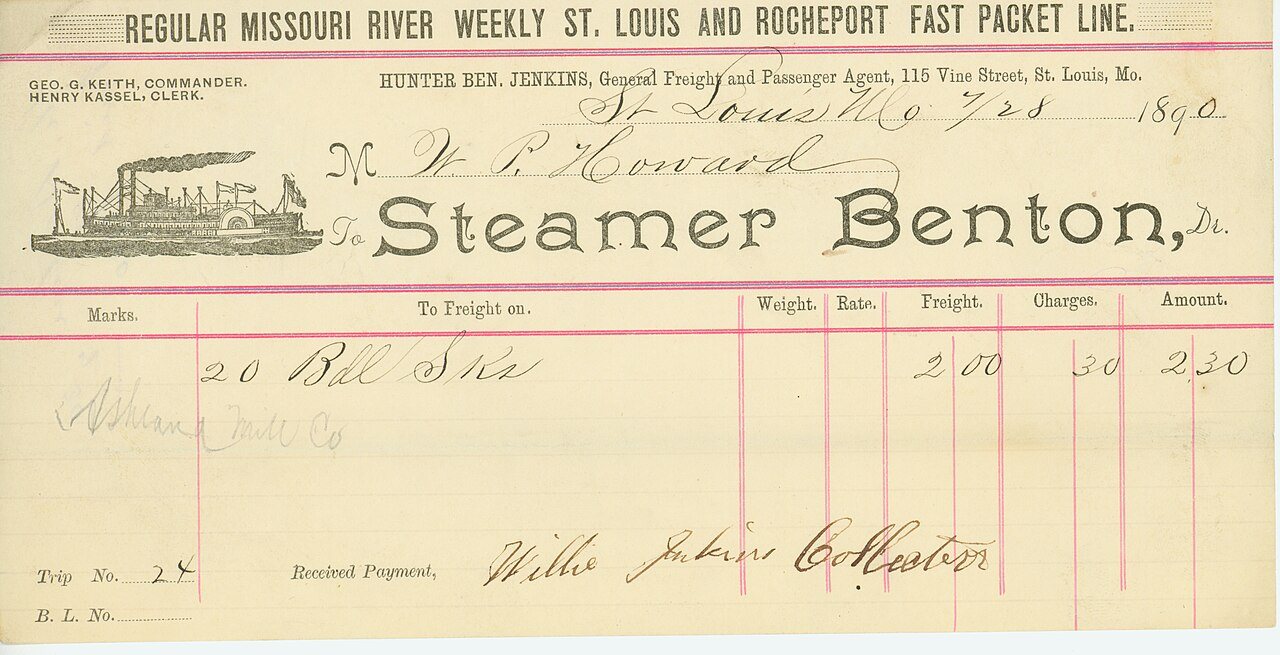
The bill of lading is the document issued by the sea carrier. Among transport documents, it is the one that can circulate as a document of title: whoever holds it at the time of discharge collects the goods. For this reason the bank asks for it when payment is made by letter of credit, and for the same reason it should not be sent to the importer before payment has been secured.
The Incoterms 2020 rules add an important detail for wine. Under FCA delivery by sea, the buyer may ask its carrier for a bill of lading with an on-board notation, issued only after loading on board. The seller receives it and hands it to the buyer, often through the banks. If the contract provides for this arrangement, the date of the notation becomes a detail to check with the same care as the number of bottles.
There are also two alternatives that change the risk. The first is the telex release: the shipper returns the original to the carrier at the port of loading and the carrier authorises delivery at discharge without the original being presented. The telex release must be agreed in advance with the carrier and the importer, because the seller gives up the control that the original provides over the goods, and the bill can no longer serve as security under a letter of credit. The second is the seaway bill, a non-negotiable sea transport document: it is not required to collect the goods, so it is poorly suited to payments secured by a bank, but it is simpler where the relationship between the parties is already well established.
Air waybill for samples and fine wine
The air waybill (AWB) is the air consignment note. IATA describes it as the document that constitutes the contract of carriage between the shipper and the air carrier. The sector is moving to electronic format: IATA Resolution 672, the Multilateral e-AWB Agreement, makes it possible to dispense with paper, so there is no longer any need to print, handle or archive the form. For wine exports, this matters mainly for samples and small shipments of fine wine, which travel by air more often than people may think.
The practical point is this: the electronic AWB is used between airlines and freight forwarders that have signed the multilateral agreement with IATA. Ask your freight forwarder whether the route is covered by the agreement and whether the airline accepts the electronic format for alcoholic beverages. Some airlines apply their own restrictions to this type of goods, and you will only find them out if you ask before booking.
Packing list: how the freight forwarder and foreign customs use it
The packing list is the list of packages. For each package it states the contents, the number of bottles, the gross and net weight and the dimensions. It has no value as a document of title or payment, but it is the document on which the freight forwarder builds its declarations and which foreign customs compare with the invoice. When the packing list and the invoice do not match in terms of bottles, packages or weights, the concrete risk is a hold at the border and a request for clarification that delays delivery.
Write the names of the wines exactly as they appear on the invoice and the label, including vintage and designation. Many customs authorities require the description in the language of the country or in English, and an abbreviated name different from the one on the invoice creates an inconsistency that the importer will have to explain. Also describe the packaging consistently with the CMR or the bill of lading, because these are the three documents the consignee compares side by side.
How these documents are used under a letter of credit
Under a letter of credit, the issuing bank pays against compliant documents, not against goods it has seen with its own eyes. For this reason the bill of lading, the CMR or the AWB, the invoice and the packing list must match on the essential data: names, description of the goods, quantities, dates and place of delivery. A discrepancy, even a small one, such as a shipment date different from the one stated in the credit or a weight that does not add up, can block payment until it is resolved.
For this reason it is advisable to prepare the documents in a precise order. First check the credit line by line, then ask the carrier for the correct document, and finally verify that each copy shows the same data as the invoice. The most frequent errors arise precisely because each document is prepared by a different person, without a final cross-check. For the overall payment mechanism, see the page on letter of credit, advance payment and other payment methods for wine export.
The Incoterms rules also affect which document must be requested. Under a term that leaves transport to the buyer, the transport document is often issued on the buyer's instructions, and the seller delivers the goods to the first carrier. The framework changes from contract to contract, and the choice should be made before signing the order.
Frequently asked questions
What is the difference between a CMR and a bill of lading?
The CMR is the consignment note used for road transport, while the bill of lading is the sea transport document. The bill of lading can circulate as a document of title and is used to collect the goods at discharge, whereas the CMR serves mainly to evidence the contract and the condition of the goods when taken over.
Is the CMR needed to obtain payment under a letter of credit?
Banks usually require different transport documents depending on the mode of transport. In road transport the CMR may be among the documents required, but this must be checked against the wording of the credit, because the bank specifies which documents it accepts and with which data.
What happens if the packing list does not match the invoice?
Foreign customs authorities often compare these two documents, and a difference in the number of bottles, packages or weights can cause a hold or a request for clarification. It is advisable to correct the packing list before shipment, because correcting it after a hold takes more time and more steps.
Is a paper air waybill needed to ship samples?
Not necessarily. IATA Resolution 672 allows paper to be dispensed with between operators that have joined the agreement. Ask your freight forwarder whether the route and the airline accept it before booking.
Sources
- Winery management software for wine exports: key features
- Wine Technical Sheet for Importers: What It Must Contain
- Stand-by letter of credit and guarantees for wine exports
- Wine sustainability certification: Equalitas, VIVA, SQNPI
- Small winery bottling line: components and export fill
- Wine Pallet Label GS1-128 and SSCC for Retail and Monopolies