Wine Pallet Logistics Label: GS1-128, SSCC and GTIN-14 on the Carton
Wines Export Editorial · Last updated:

A wine pallet that arrives without a GS1-128 logistics label can be stopped at the loading dock, and the cost of the manual check often falls back on the supplier. The pallet label carries an SSCC, a unique serial number that identifies that single logistics unit, encoded in a GS1-128 barcode that the warehouse scans on arrival. The outer carton instead carries the GTIN-14, the code of the commercial package, while the shipment data must reach the customer before the truck. This is the requirement that decides whether the load is accepted or sent back, and it comes on top of the rules for entering foreign retail chains and for Nordic monopolies.
Why retailers and monopolies reject pallets without a logistics label
On receipt, the distribution centre scans the pallet label and compares it with the advance shipping notice received earlier. The system matches the code to an order, its contents and its destination. If the code on the label does not match the one in the notice, or the symbol cannot be read, the pallet goes to manual handling, and the cost of that check is usually charged back to the supplier.
The problem, then, is not only a late delivery. A wrong label turns a regular load into an exception to be resolved at the dock, with delays that the chain does not pay for and that your customer does not forget. For this reason the winery must treat the logistics label as a real shipping document, to be prepared before the first order.
Bottle GTIN, carton GTIN-14, pallet SSCC
Three different codes coexist on the same shipment. Confusing them is the most frequent mistake in first deliveries, because each serves a different level of packaging and is read by a different reader.
| Code | Identifies | Where it is | Symbol |
|---|---|---|---|
| Bottle GTIN | The single wine sold to the consumer | Bottle label | Retail point-of-sale barcode |
| Carton GTIN-14 | The commercial package containing several bottles | Outer carton | ITF-14 or GS1-128 |
| SSCC | The single pallet or logistics unit | Label applied to the pallet | GS1-128 with AI 00 |
| Pallet contents | GTIN and quantities present on the pallet | Same pallet label | GS1-128 with AI 02 and AI 37 |
The GTIN-14 is built starting from the GTIN of the product inside the carton. The first digit is an indicator that distinguishes the different packaging levels defined by the brand owner, so a six-bottle carton and a twelve-bottle carton must have different codes. The GTIN-14 tells you which type of carton it is, not which specific carton: the number of the individual pallet is the SSCC's job.
The ITF-14 code is the most widely used symbol for the carton. Chains scan it on receipt, but it carries only the GTIN and no other data. If the customer also asks for the lot or the expiry date, GS1-128 is needed, because this symbol can carry several fields with application identifiers.
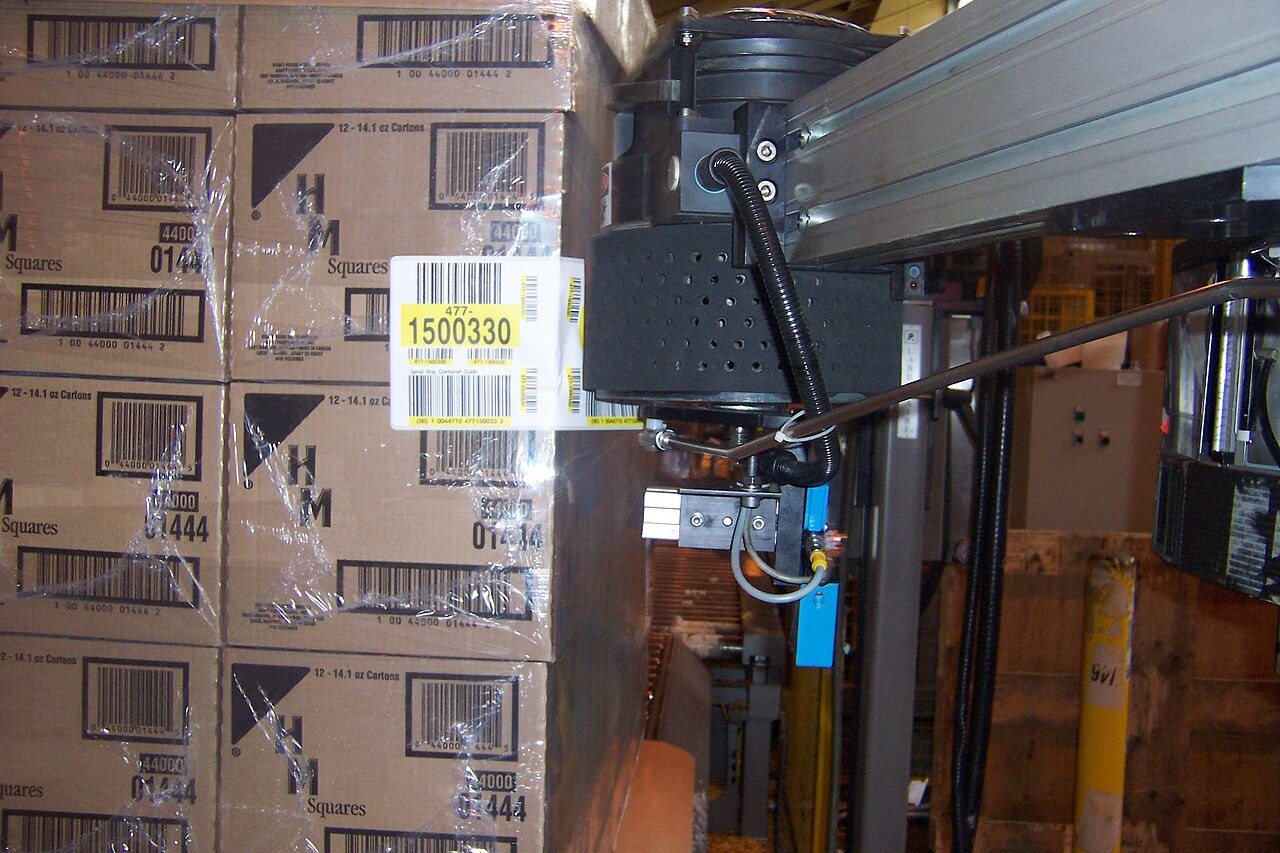
The GS1-128 label: fields, position and mixed pallets
The SSCC always consists of 18 digits and must always be entered into the system as an 18-digit number, with the check digit calculated using the same rule as the other GS1 identifiers. On the label the code is preceded by application identifier 00. A practical detail: the SSCC must sit on the lowest code on the label, because it is the data the reader looks for first at the dock. Other GS1-128 codes carrying the additional data requested by the customer may appear above it, provided each identifier appears only once.
For position, a concrete published reference is that of a US chain, which asks for the label in the upper right corner of the pallet, on at least two sides, in the top third, outside the shrink wrap. It is not a European rule, but it shows the right criterion: the code must be visible from the aisle, not covered by the film. Each customer's specifications should in any case be checked against the pallet that will actually ship.
Mixed pallets deserve attention. A single application identifier cannot describe heterogeneous contents, so the practice is one label per single-product pallet, or a label containing only the SSCC. On mixed pallets the content identifier 02 is not used: the SSCC stays on the label and the product detail must be declared in the shipping notice.
Advance Ship Notice (ASN) and data to send before delivery
The advance shipping notice, known as ASN and in EDI 856 format in American systems, lists each pallet with its SSCC, its contents and the reference order. The document tells the receiver what is about to arrive before the truck unloads. For this reason the file must go out on time: if the journey is faster than the transmission, the notice must be sent so that it reaches the distribution centre's systems before the vehicle.
Walmart asks suppliers of products included in the Food Traceability List for a shipping notice with the traceability data required by FSMA 204 and an SSCC-18 on the pallet linked to that notice. Wine is not on that list, but the same logic of matching pallet and notice also applies to its shipments. The critical point is consistency: the printed code, the one in the notice and the physical pallet at the dock must match, otherwise the system does not close the receipt.
What Systembolaget, LCBO and the chains ask for
The LCBO Doing Business portal is the official source for anyone who wants to sell to Ontario's channels. It presents itself as a reference point for suppliers, agents and authorised companies, with information on procedures and tools for doing business with the monopoly. The portal's home page, however, does not report a specification on the pallet label: that must be sought in the supplier documents the portal refers to.
For Systembolaget, Vinmonopolet and Alko, the sources listed below do not include up-to-date logistics specifications. Before printing the first label, check on the supplier portal of the individual monopoly the code format, the position on the pallet and the data to send in the notice. The same applies to German chains and distributors: requirements change from one party to another, and the general rule remains the same, that is SSCC in GS1-128, GTIN-14 on the carton and a linked notice.
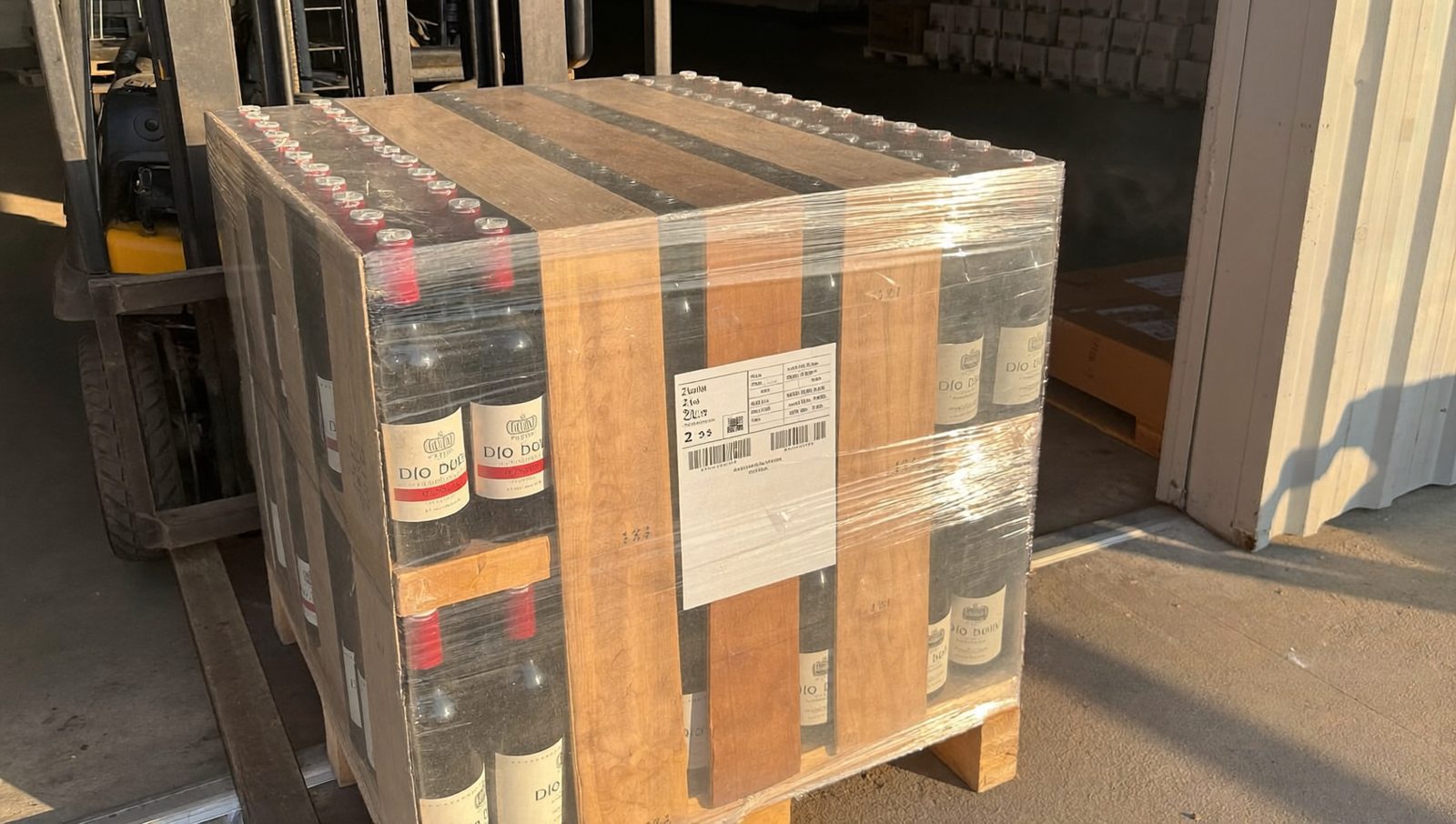
Tools: from the management system to the printer
The SSCC is not invented: it is built starting from the GS1 company prefix assigned to the winery, with a sequential number for each pallet and the check digit. The management system must generate the number and record it in the pallet list, so that the label and the notice start from the same data. The role of the management system is explained on the page what your management system must do for export.
GS1 Italy offers services to generate codes, calculate the check digit and verify that codes are correct. They are useful tools for checking the GTIN of the wine and of the carton before printing, because a wrong GTIN makes even a well-made label useless.
For printing, export pallet labels are made with thermal transfer printers and with materials that withstand transport, because the label must remain legible for weeks. The subject of pallets and packaging is covered on the page pallets and packaging for wine export, which explains how to arrange the cartons before applying the label.
Frequently asked questions
What is the SSCC on a wine pallet?
The SSCC is an 18-digit serial number that identifies a single pallet, encoded in a GS1-128 with application identifier 00. It allows the distribution centre to scan the pallet and link it to the advance shipping notice. It does not describe the wine, but the logistics unit.
Is the carton code the same as the bottle code?
No. The bottle has its own GTIN, while the carton has a GTIN-14 that includes an indicator for the packaging level. The GTIN-14 is usually printed with ITF-14 or with GS1-128, while the bottle carries the consumer point-of-sale code.
Is a GS1-128 label also required for Nordic monopolies?
It depends on the specifications of each monopoly, which change over time. Before the first shipment, check the supplier portal of Systembolaget, Vinmonopolet or Alko and compare the format with the one indicated in this article.
What happens if the SSCC on the pallet does not match the notice?
The pallet is not received automatically and goes to a manual check at the dock. The cost of this operation is usually charged back to the supplier, which is why the consistency between label and notice must be checked before every dispatch.
Sources
- Wine sustainability certification: Equalitas, VIVA, SQNPI
- Wine export logistics: courier, pallet or container?
- Wine Technical Sheet for Importers: What It Must Contain
- Wine grape price by appellation: how to read ISMEA
- Wine Transport Documents: CMR, Bill of Lading, AWB
- Wine Filtration: DE vs Crossflow, When Each Pays Off