Wine export certificate: VI-1, analysis certificate and laboratory: which countries still require them, who issues them and what the report must contain
Wines Export Editorial · Last updated:
The "wine export certificate" that many wineries search for does not exist as a single document. There are different attestations, required by different countries: the analysis certificate from a laboratory, the certificate of origin, a health or free sale certificate and, in a few remaining cases, the VI-1 form. The UK removed VI-1 from 1 January 2022; Brazil requires an analysis from an Italian laboratory accredited in its system; China asks for a health or free sale certificate and considers analysis optional; Taiwan wants an analysis from a recognised laboratory, no older than two years; South Korea does not impose it at customs, but importers ask for it. Here you will find, country by country, what is required, who issues it in Italy and what the report must contain. The full list of shipping documents is in the guide to documents for exporting wine.
There is no single export certificate
When an importer asks you for "the certificate for export", they are almost always asking for one of four things. The analysis certificate is a laboratory report stating the chemical parameters of the wine: alcohol content, sugars, acidity, sulphur dioxide, and everything the regulations of the destination country set as a limit. The certificate of origin attests where the goods come from; in Italy it is issued by the Chamber of Commerce, and it should not be confused with the proof of preferential origin used under free trade agreements. The health certificate or free sale certificate attests that the product complies with the rules of the country of production and circulates freely there; it is issued by a public authority. The VI-1 is a European Union form that combines certificate and analysis in a single document, but it is required for wine entering the Union, not for wine leaving it.
The confusion arises because the destination country decides for itself which of these documents it wants, with which parameters and issued by whom. There is no European list valid for everyone; there is the regulation of each country, read in the official guides and confirmed with the importer, who is the person presenting the documents to their customs. The general process, from contract to shipment, is covered in the guide on how to export wine abroad.
VI-1: what it was and where it survives
The VI-1 is defined by Article 20 of Delegated Regulation (EU) 2018/273: the document accompanying wine products imported into the Union combines in a single form the certificate and the analysis report provided for in Article 90 of Regulation 1308/2013, and is issued by the competent bodies of the third country of origin. It certifies three things: that the product has the characteristics of a wine product under EU law or a bilateral agreement; that it is obtained from grapes of a given vintage or variety; and, where applicable, that it complies with the specification of a geographical indication. Article 21 lists the exemptions: among others, labelled containers up to 10 litres with a non-reusable closure, for a total not exceeding 100 litres; 30 litres between private individuals or in a traveller's luggage; samples for fairs in containers up to 2 litres; and wines bottled in the Union, exported and re-imported. Article 26 provides a simplified procedure for producers in third countries that offer special guarantees, who are authorised to complete the VI-1 themselves.
For an Italian winery, the VI-1 is therefore a document to know mainly in two cases. The first is the return of goods: a wine of yours bottled in Italy, exported and then re-imported, is exempt. The second is the United Kingdom, which kept the form after leaving the Union: the GOV.UK guidance, updated to 19 September 2025, states that the VI-1 is no longer needed to import wine into Great Britain or from the Union into Northern Ireland, with one exception, non-EU wine entering Northern Ireland directly, which still requires a pro forma VI-1. The rest of the British rules, including the address of the responsible operator on the label, is in the guide on how to export wine to the United Kingdom.
The analysis certificate: parameters required by country
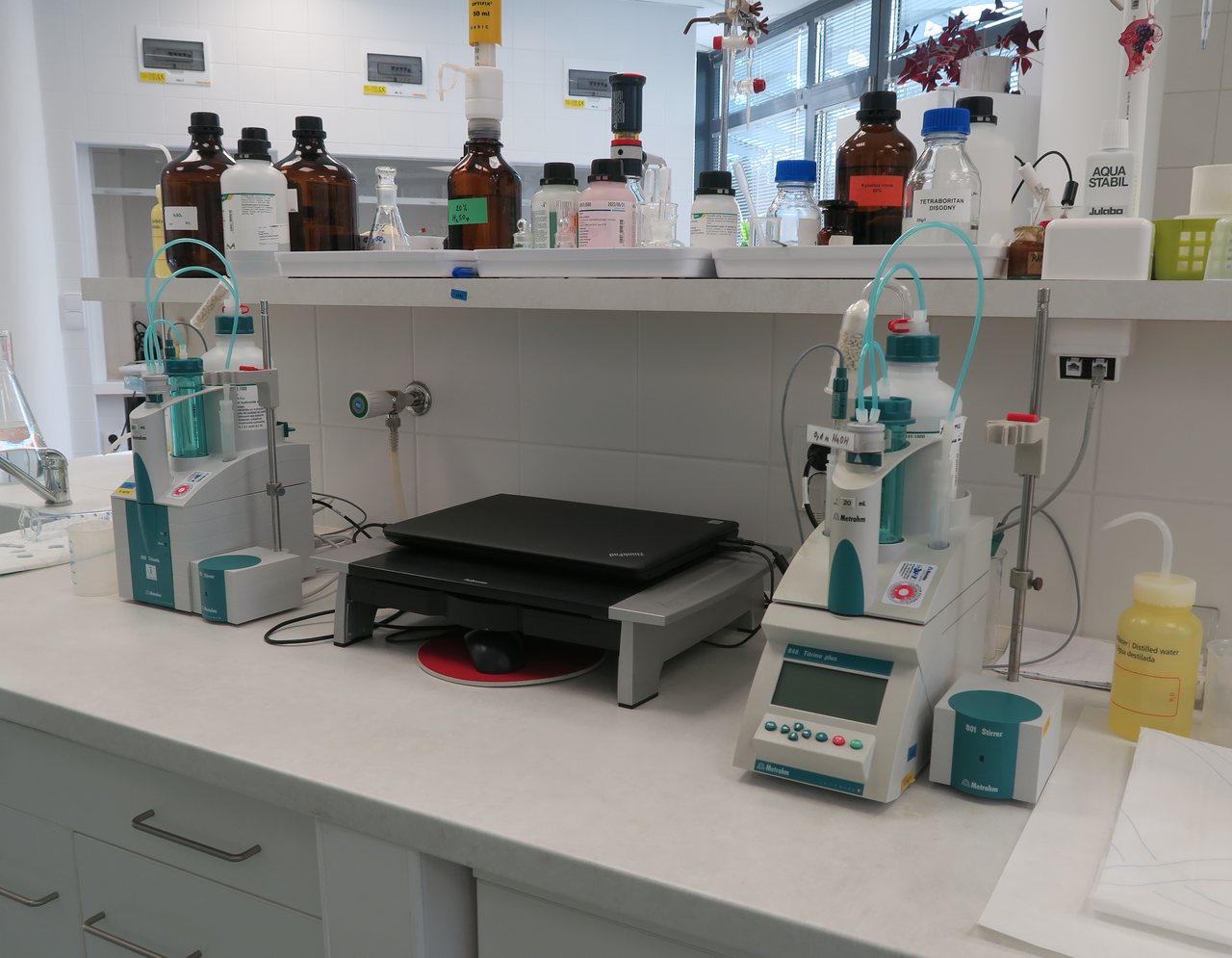
The analysis certificate does not have a single model. Each country sets the parameters and, sometimes, the type of laboratory.
Brazil is the most structured case. According to the ICE guide, the certificate has no fixed model but must be issued by an Italian laboratory accredited in the SISCOLE system of the Brazilian Ministry of Agriculture, and must cover the physico-chemical parameters in tables 4 to 12 of normative instruction 14 of 2018 (amended by 48 of 2018), the inorganic contaminants arsenic, lead, cadmium and tin (tin only for bag-in-box) under ANVISA resolution 42 of 2013, ochratoxin A under resolution 7 of 2011, and the presence of additives under resolution 123 of 2016. If a parameter, for example sugars or alcohol content, falls outside Brazilian limits, a certificate of typicality is also needed. The steps with MAPA, the import licence and Vigiagro are covered in the guide on customs documents for Brazil.
Taiwan requires the analysis certificate as mandatory, issued within the last two years by a laboratory recognised by ILAC, by a governmental body or institute of the country of production, or by a laboratory accredited by that body, under Article 6 of the regulation on the inspection of imported alcoholic beverages; the certificate of origin is mandatory, and the importer must hold an alcoholic beverage import licence, except for exemptions for quantities up to 5 litres for personal use or samples.
Thailand requires, before the import permit, either the analysis documentation or samples of at least half a litre per product to be submitted to the analysis group of the excise department; the ICE guide refers to an annex with the analysis standards for wine.
South Korea does not impose the analysis certificate at customs clearance, but importers routinely ask for it, because the wine must comply with local limits on certain substances and, if it does not, it risks being sent back to the country of origin. The ICE guide also points to stricter requirements for health warnings on labels expected from September 2026.
China considers the analysis certificate optional and indicates the reference methods of the GB/T 15038-2006 standard, which are recommended but not mandatory; mandatory, however, are the registration of the bottling facility with Chinese customs under the CITA code, the certificate of origin and the health or free sale certificate. Switzerland, by contrast, does not require any analysis certificate.
The practical way to work is to ask the importer for the list of parameters their customs wants before sending the wine to the laboratory: a report with four parameters when twelve are needed has to be redone, and time is lost twice. What the basic parameters measure and how to read them is explained in the sheet on wine chemical parameters.
Accredited laboratories and timing
In Italy, the reference is the list from the Ministry of Agriculture of laboratories authorised to issue official analysis certificates in the wine sector. The list, organised by region, specifies that the certificates have official value "also for export purposes, limited to the authorised analysis tests": a laboratory may be authorised for alcohol content but not for heavy metals. The list of tests authorised for each laboratory can be checked in the ministerial decrees cited in the list itself, or in the Accredia database, under "accredited testing laboratories", by entering the accreditation code. The list includes public bodies, such as the CREA wine research centre in Asti, as well as private laboratories; authorisations are renewed by decrees published in the Official Gazette.
When the destination country asks for a "recognised" or "accredited" laboratory, as Taiwan or Brazil does, verify two things: that the laboratory is accredited by Accredia under the ISO/IEC 17025 standard for the tests you need, and that it appears in the country-specific lists, such as the Brazilian SISCOLE, where they exist. General accreditation is not enough if the country has its own list.
As for laboratory timing, there are no figures valid for everyone. The timing written in the guides is that of the foreign authorities: in Brazil, according to ICE, the review of documents by MAPA takes from 25 to 35 days, and the import licence arrives only after the goods have arrived, so it is worth starting the procedure as soon as the transport document is issued. Plan the analyses at bottling of the lot intended for export, not when the container is booked.
Health and free sale certificates
The health certificate and the free sale certificate answer a different question from the analysis: not "what the wine contains" but "is it legally on sale in the country of origin and compliant with its rules". It is issued by a public authority, not a laboratory. The ICE guide for China requires a health or free sale certificate "issued by the competent authority of the country of origin" and refers to the page of the Italian Ministry of Health on food exports; to find out which office to contact, start from there and from the ICE office in the country, because the models agreed between Italy and the third country change over time and by product.
Table: country, document, who issues it
| Country | Analysis certificate | Who issues it | Other certificates required |
|---|---|---|---|
| Brazil | Mandatory, no fixed model, with parameters from normative instructions 14/2018 and 48/2018, contaminants and ochratoxin A | Italian laboratory accredited in MAPA's SISCOLE | Certificate of origin under normative instruction 67/2018; certificate of typicality if a parameter falls outside limits |
| China | Optional; GB/T 15038-2006 methods recommended | Laboratory | GACC registration with CITA code; certificate of origin; health or free sale certificate from the authority of the country of origin |
| Taiwan | Mandatory, issued within the last two years | Laboratory recognised by ILAC, governmental body of the country of production, or laboratory accredited by it | Mandatory certificate of origin; importer's import licence |
| Thailand | Analysis documentation or samples of at least 0.5 litres before the import permit | Analysis group of the Thai excise department for samples | Certificate of origin on request; importer's type 1 licence |
| South Korea | Not mandatory at customs clearance, requested by importers | Laboratory | Certificate of origin not mandatory but standard practice |
| United Kingdom (Great Britain) | Not required; VI-1 abolished from 1 January 2022 | — | Pro forma VI-1 only for non-EU wine going directly to Northern Ireland |
| Switzerland | Not necessary | — | Origin declaration on invoice up to EUR 6,000, EUR.1 above that |
Sources: ICE wine export guides by country, GOV.UK, Regulation (EU) 2018/273.
Frequently asked questions
Is there a wine export certificate issued by the Italian State?
No, not as a general document. There is the analysis certificate from a laboratory authorised by the Ministry of Agriculture, the certificate of origin from the Chamber of Commerce, and health or free sale certificates from the health authority, required case by case by the destination country.
Is the VI-1 needed to export Italian wine?
No. The VI-1 is the document for wine entering the European Union from third countries. It is not needed for exports. The United Kingdom, which had kept it, abolished it from 1 January 2022 for Great Britain, with the sole exception of non-EU wine going directly to Northern Ireland.
Which laboratory can I use for the analysis certificate?
One from the ministerial list of laboratories authorised in the wine sector, checking that it is authorised for the specific tests required by the destination country. The list of tests can be verified in the Accredia database using the accreditation code. For Brazil, the laboratory must also be accredited in SISCOLE.
What happens if a wine parameter is outside the limits of the destination country?
It depends on the country. In Brazil, a certificate of typicality explaining the wine's characteristic is required; in South Korea, the wine risks being sent back to its origin. In any case, it is a problem to discover in the laboratory before shipping, not at customs.
Does the Chamber of Commerce certificate of origin serve as proof of origin for zero duty?
No. The certificate of origin attests provenance; the proof of preferential origin, which entitles you to reduced duty under free trade agreements, is the statement on the invoice with the REX number or, under some agreements, the EUR.1 certificate.
Sources
- Delegated Regulation (EU) 2018/273, Article 20, certification of conformity of imported wine products (VI-1): https://www.legislation.gov.uk/eur/2018/273/article/20/adopted
- Delegated Regulation (EU) 2018/273, Article 21, exemptions from VI-1: https://www.legislation.gov.uk/eur/2018/273/article/21/adopted
- GOV.UK, importing, selling and labelling wine (updated 19 September 2025): https://www.gov.uk/guidance/importing-selling-and-labelling-wine
- ICE, wine export guide, Brazil: https://sites.google.com/ice.it/guidaexportvino/americhe/brasile
- ICE, wine export guide, China: https://sites.google.com/ice.it/guidaexportvino/asia/cina
- ICE, wine export guide, Taiwan: https://sites.google.com/ice.it/guidaexportvino/asia/taiwan
- ICE, wine export guide, South Korea: https://sites.google.com/ice.it/guidaexportvino/asia/corea-del-sud
- Ministry of Agricultural Policies, list of laboratories authorised to issue official analysis certificates in the wine sector (updated to 8 July 2020): https://www.federvini.it/images/vino_aggiornato_al_8_luglio_2020.pdf
- Wine Export Documents from Italy: EU and Non-EU Checklist
- Dealcoholised wine: EU rules, techniques and labelling
- Wine export pallets: bottles per pallet and container
- Wine consortia explained: erga omnes, neck strips and export
- Wine Filtration: DE vs Crossflow, When Each Pays Off
- Which wine marketplaces accept third-party sellers