Which courier to choose for shipping wine abroad: express, pallet or specialist
Wines Export Editorial · Last updated:
When an importer asks how the wine will arrive, the answer depends on three factors: the type of shipment, the destination country and the party who pays the taxes on arrival. For samples and small shipments of a few bottles, express courier is usually the fastest route. For shipments of 6 to 60 bottles and for pallets, the pallet network and the wine specialist come into play. Before accepting any rate, check three things: whether the carrier accepts alcoholic beverages to that country, who handles excise duty on arrival, and who is responsible for breakage. The practical packing and acceptance rules are in our guide to couriers that accept wine and how to pack it.
Three carrier types: express, pallet network, wine specialist
The three types do not differ only in price. They differ in the type of package they accept, the way they handle regulated goods and the level of support you receive when something goes wrong. Comparing them on the rate alone often leads to choosing the wrong carrier for the shipment in front of you.
| Type | Where it works well | Point to check |
|---|---|---|
| Express courier | Samples and shipments of a few bottles, with parcel-by-parcel tracking | Whether the service accepts alcoholic beverages for that country and under what conditions |
| Pallet network | Shipments of several cartons to a professional consignee | Pickup, number of packages, delivery times in the destination country |
| Wine specialist | Regular shipments to importers who require documents and tax handling | Scope of the service, fees and liability stated in writing |
Express courier is designed for small parcels and short timeframes. In practice, wine travels this way only if the carrier's general conditions allow it for the chosen country, and not all countries treat alcohol in the same way. A single package with a few bottles is simple to manage, but the unit cost rises quickly as the shipment grows.
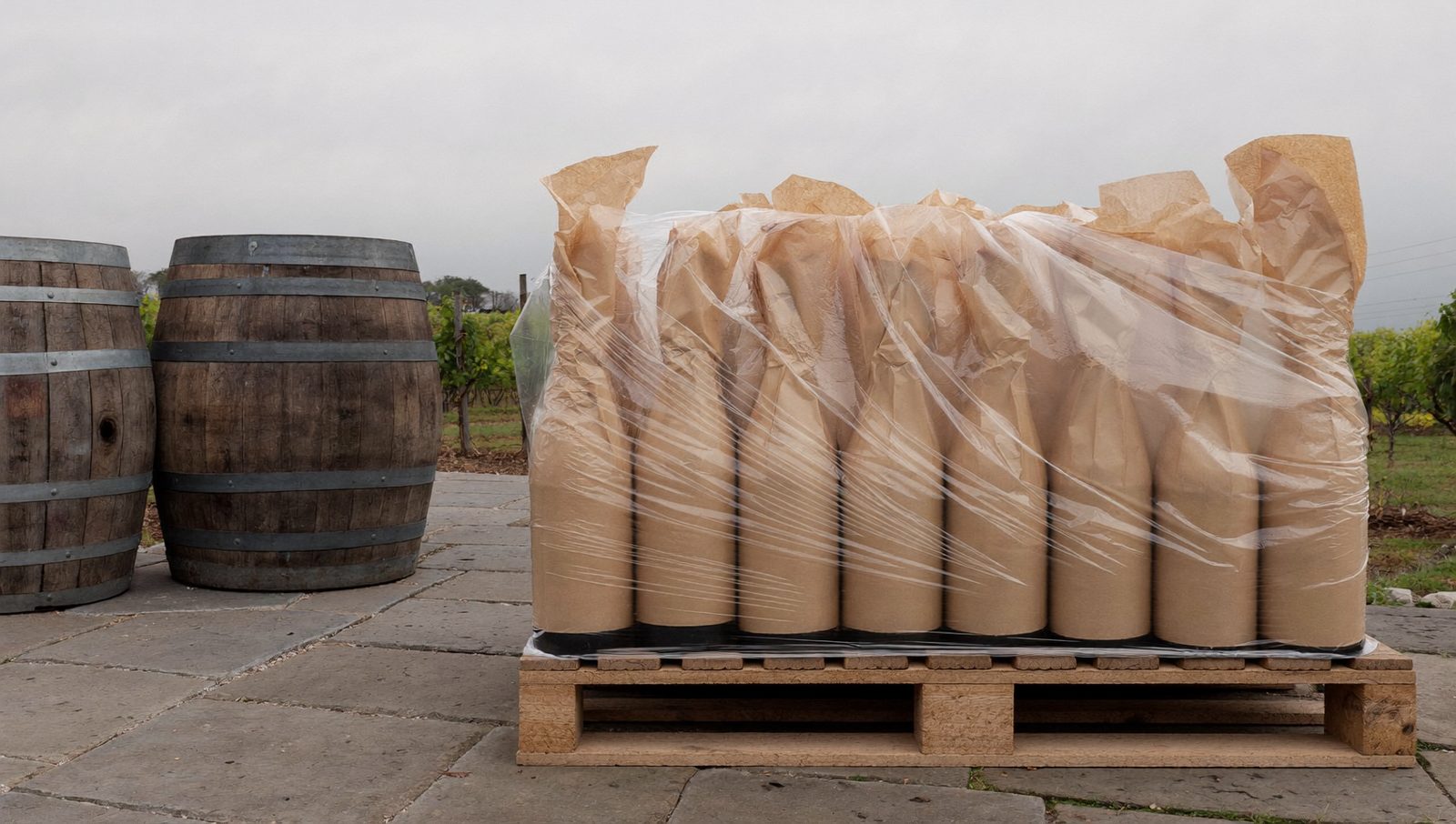
The pallet network meets a different need: more cartons, one recipient and a scheduled delivery. It makes sense when the consignee has a warehouse able to receive the pallet and check the goods on arrival. The critical point is pickup at the winery: ask in advance how many hours' notice are required and how missing or damaged packages are documented.
The wine specialist usually works with cartons prepared for transport and with documents designed for import. It is an orderly choice when shipments are repeated every month or every quarter, because the supplier knows the paperwork of the country and can tell you who does what. In return, it charges fees and offers a scope of service that should be read carefully, since it does not always include excise duty or fiscal representation.
The criteria that matter: alcohol acceptance, excise, breakage, timing
Before comparing rates, four criteria are needed, and they should be applied in this order. The first is a filter: if the carrier does not accept alcoholic beverages to the recipient's country, comparing prices is pointless. Ask for the answer in writing, stating the country, the number of bottles and the type of packaging, because a general yes on the phone does not protect you if the package is blocked.
The second criterion is who manages the tax. The courier transports the goods but does not determine the excise duty due in the destination country. At European level the framework is clear: the Commission notes that excise duties on alcoholic beverages are governed by two directives, 92/83/EEC on the structure of the duty and 92/84/EEC on minimum rates. Clarify with the importer first who pays and who declares, because the answer changes the final cost more than any discount on the rate.
The third criterion is liability for damage. Read what the carrier covers, up to which declared value and with what deadlines for filing a claim. A broken package or wine spoiled by heat raises practical questions: who documents the damage, who pays for the goods, who refunds the transport. On these points we refer you to our page on claims for breakage and spoiled wine, which covers the details.
The fourth criterion is the actual transit and customs clearance times, not those stated in the carrier's catalogue. Ask for the expected time to your country and also ask what happens if the goods are held at customs for a few days. If the shipment includes samples that must cross a non-EU border, the procedure changes, and it is worth reading how to ship wine samples through customs before booking the pickup.

Comparison by shipment: samples, 6-60 bottles, pallets
Shipment size is the first element that guides the choice, because it changes everything else: the type of package, the amount of paperwork and the number of people involved. The table below relates the three most common sizes to the carrier that usually handles the load most reliably, and to the check to make before paying.
| Shipment | Carrier usually suited | What to check first |
|---|---|---|
| Samples, a few bottles | Express courier | Alcohol acceptance for the country and customs documents |
| 6 to 60 bottles | Wine specialist, or express with several parcels | Who pays the excise on arrival, packaging and cost per bottle |
| Pallet | Pallet network, or specialist | Pickup at the winery, number of packages and a professional consignee |
The 6 to 60 bottle range is where many wineries get the calculation wrong. The rate per package looks acceptable, but with more cartons the logistics cost grows and the weight of packaging and documents on the unit price changes. For this range, it is wise to request two quotes: one per single package with express and one per multiple packages with a specialist, and compare them on the final cost per bottle, not on the total.
For pallets, the focus shifts to arrival logistics. A pallet is efficient only if someone receives it, checks it and signs for the delivery. If the consignee has no licensed warehouse, the redelivery cost can exceed the savings on the main transport, and this should be clarified before accepting the order.
What carriers' general conditions say about alcohol
The general transport conditions and the pages on regulated goods are the document to read before every shipment, even more than the commercial brochure. Look in the text for three phrases: alcoholic beverages, goods subject to restrictions and required packaging. If you find a ban for your country, the carrier will not change the rule over the phone: the solution is to change carrier or change shipping method.
When the page is unclear for the destination country, the answer should be requested in writing and kept with the reference number. A written answer lets you explain to the importer why the package was accepted or refused, and prevents you from discovering the rule when the goods are already held at a sorting hub. The same applies to packaging: some conditions require specific dividers or cartons, and non-compliant packaging can void insurance cover.
Not all conditions are written in the same way. Some distinguish shipments to private individuals from those to professional operators, and others separate alcohol from other regulated goods. If your shipment goes to an importer, check the section on commercial shipments and not the one designed for personal parcels.
When the courier is not enough: excise and fiscal representative
The courier handles transport, but it does not handle the tax issue. The European Commission's page on alcohol excise duties reports a figure that surprises many exporters: for still wine and sparkling wine, the harmonised minimum rate is zero euro per hectolitre of product. The effective rate your importer pays therefore depends on choices made by the destination country, which may sit above the minimum, and not on whether the wine was shipped by one courier or another.
The same document notes that the subject was updated by Directive 2020/1151, applicable from 1 January 2022, and that EU countries may apply rates above the minimums according to their own needs. To compare rates country by country, the Commission points to the Taxes in Europe Database, which should be consulted before setting your ex-works price. An updated table of rates in your pricing helps reduce the risk of a margin shrinking on arrival.
When the sale is direct to a private customer in another EU country, the issue also becomes one of fiscal representation, and the courier is not the party responsible for it. To understand when a representative is needed and how payment of the duty is organised, read our page on the fiscal representative for excise in B2C wine sales in the EU, and for the general framework on shipments, shipping wine to a private buyer in another EU country.
Cost per bottle: how to estimate it before accepting an order
The cost per bottle does not equal the courier rate. To estimate it, add up everything the shipment costs up to delivery: the carrier's rate per package or per pallet, packaging material and dividers, insurance on the declared value, documentation and customs clearance costs, and any taxes that remain your responsibility under the agreement with the importer. Then divide the total by the number of bottles shipped.
The result changes considerably with shipment size. On a sample, an express shipment weighs disproportionately on each bottle, while across sixty bottles the weight of packaging and documentation is spread over more units. For this reason the estimate should be redone for each type of shipment, and a single coefficient should not be applied to all orders.
Compare the cost per bottle with the ex-works price you propose to the importer. If logistics absorbs too large a part of the margin, consider revising the minimum order, the type of packaging or the shipping method before accepting the order. An order accepted at a loss is hard to recover with the next product, because importers tend to use the first offer as a reference.
Frequently asked questions
Which courier should I choose to ship wine abroad?
There is no single answer. Express courier works well for samples, while for shipments of 6 to 60 bottles and for pallets it is worth comparing the pallet network with a wine specialist. Before choosing, ask the carrier in writing whether it accepts alcoholic beverages to the destination country.
Does the courier pay the excise on wine shipped abroad?
The courier transports the goods and does not set the duty of the destination country. Alcohol excise is regulated at European level with harmonised minimum rates, while the effective rate depends on the destination country. Clarify with the importer who pays and who declares the duty before setting the price.
Is wine broken in transit covered by the courier's insurance?
It depends on the conditions of the chosen carrier. Check the maximum covered value, the deadlines for reporting damage and who must document it with photographs and reports. For the practical steps after breakage, see our page on claims for breakage and spoiled wine.
How is the shipping cost per bottle calculated?
Add up the carrier's rate, packaging, insurance, documents and taxes for which you are responsible, then divide the total by the number of bottles. The result should be compared with the ex-works price you propose to the importer.
Sources
- Shipping wine by courier: rules, countries and how to pack
- Small winery bottling line: components and export fill
- Documentary collection for wine exports: D/P and D/A
- Stand-by letter of credit and guarantees for wine exports
- Exporting Wine to China: Steps, Documents and Clearance
- Winery management software for wine exports: key features