Which couriers accept wine, under which conditions (business account, alcohol agreement, countries, excise), and how to pack bottles so they arrive intact
Wines Export Editorial · Last updated:
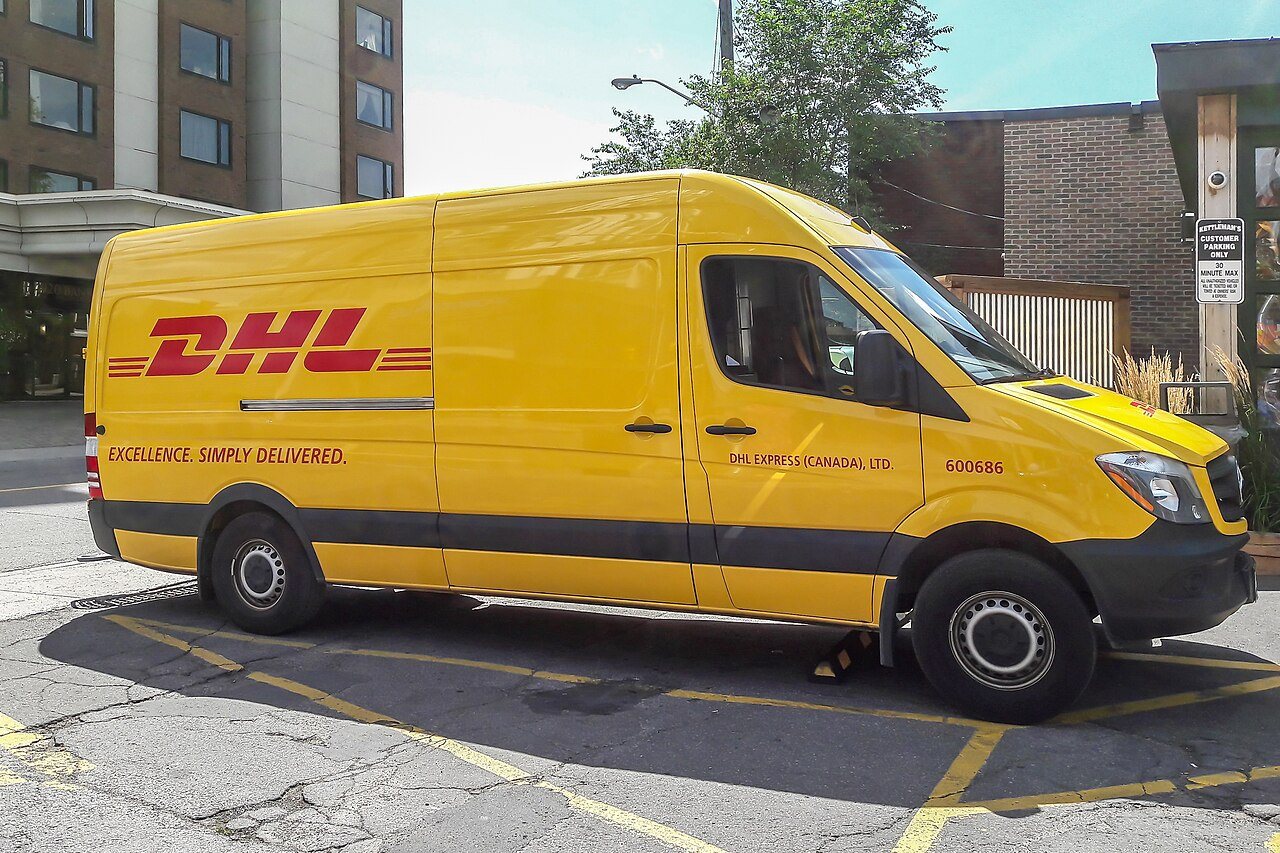
No major courier accepts wine from shippers without a dedicated contract. UPS requires an International Special Commodity agreement for alcohol before the first shipment, FedEx accepts alcoholic beverages only from approved licensed shippers with a signed agreement, and DHL Express collects alcoholic beverages only from licence holders it has approved in advance. Once the agreement is signed, the courier transports and clears the goods through customs; it does not settle the excise duty, which in the destination country remains payable by you or by the consignee, and it does not enter the duty-suspension regime. Below you will find the conditions of the three major couriers, taken from their official pages and guides, the countries where they do not deliver to private individuals, the packaging rules they require, and the point at which it makes sense to switch to a freight forwarder.
The courier transports: the excise remains your responsibility
The question "which courier should I use to ship wine" often hides a different question: who pays the excise on arrival. The UPS international guide for alcoholic beverages states this clearly for the European Union: the contract service covers customs clearance of the alcohol at the point of entry, where duties, VAT and excise must be paid; clearance followed by onward transport under excise suspension is not possible, except where exceptions are indicated country by country. In plain terms: the courier is not a tax warehouse and does not move your wine under an e-AD.
For sales to private individuals in another Member State, the Italian consolidated excise law (Testo unico accise, article 10-bis) provides that the excise paid in Italy is refunded to the seller only if the seller proves it has paid the excise of the destination country, following that country's procedures, if necessary through a tax representative. Those who sell to private consumers will find the full picture in Tax representative and excise: selling wine to private buyers in the EU; those who sell to importers and distributors, with the excise paid by the buyer's tax warehouse, in Excise and VAT on wine: who pays in the chain, from DAP to DDP.
The UPS guide adds a detail that explains many customs holds: for wine entering the EU from third countries, a certificate from a recognised body and an analysis report from the country of origin are required, except for containers labelled up to 5 litres with a non-reusable closure and a total quantity of up to 100 litres. The same logic applies in reverse to your outgoing samples: there is no "samples" exemption, as explained in Wine samples at customs: how to ship them without holds.
What UPS, FedEx and DHL require to accept alcohol
The conditions of the three couriers are similar in substance: a business account, an alcohol sales licence, a specific written agreement, an electronic labelling system, and the signature of an adult on delivery. They differ in the details.
| Courier | Access condition | Documents and services required | Source |
|---|---|---|---|
| UPS | International Special Commodity (ISC) agreement for alcohol in place before shipping | Shipment processed with WorldShip or an approved system; international waybill; detailed commercial invoice; for every B2C shipment, the Adult Signature Required service | UPS International Alcohol Shipping Guide |
| FedEx | FedEx approval, signed agreement, compliance with alcohol rules | Only approved licensed shippers; private individuals cannot ship beer, wine or spirits | fedex.com, "How to ship alcohol" page |
| DHL Express (USA) | Collection only from licence holders approved by DHL | Agreement to Transport Alcoholic Beverages signed, and copies of state and federal licences | MyDHL+, Guidelines for Shipping Alcoholic Beverages |
The UPS guide also requires that the invoice description and the label of every alcohol shipment include: a detailed description with production date, number of containers and total litres, type of packaging, brand, origin or production area, alcohol strength, customs code, winery details, and whether the shipment is commercial or for personal consumption. Anyone who has never prepared an export invoice for wine will find the required items in the wine technical sheet for importers and in the export price list in EXW and DAP.
A practical warning: FedEx and UPS publish the complete rules only behind a business account, and they change them without notice. The UPS guide states this itself ("UPS will have the right to unilaterally modify any requirement"). Before promising delivery to a foreign customer, have your commercial contact confirm in writing that the route and the type of consignee are enabled.
Countries where the courier does not deliver alcohol to private individuals
The most frequent limitation does not concern Islamic countries, where the prohibition is general, but countries where delivery to private individuals is allowed only in part. The UPS guide distinguishes throughout between shipments to licensed businesses (B2B) and to consumers (B2C): a consignee is treated as a business if it is the registered importer, and as a consumer if it is a natural person at a residential address with the wording "not for resale."
According to the same guide, UPS delivers wine to consumers in the five main US wine markets (Canada, the United Kingdom, Japan, China and Hong Kong) and in 46 other countries, a list that includes almost the entire European Union, Switzerland, Norway, South Korea, Taiwan, Singapore, Australia, New Zealand, Mexico and South Africa. Outside that list, B2C delivery is not a service. Inside the list, there are still exceptions:
| Country | Limit stated in the UPS guide |
|---|---|
| Australia | Delivery only in New South Wales, Victoria, ACT, South Australia, Western Australia and Tasmania; not in Queensland and the Northern Territory due to local alcohol rules |
| Argentina | Declared value not exceeding 1,000 US dollars and weight not exceeding 50 kg per shipment; the consignee's tax ID is required |
| Norway | Spirits above 60 per cent prohibited; private individuals may import without a licence within personal limits |
| European Union | Clearance at the point of entry with duties, VAT and excise paid; no onward movement under excise suspension |
The Nordic monopolies and Canada add their own rules on sales to private individuals, described in Nordic monopolies: Systembolaget, Vinmonopolet and Alko tenders and in Canada: agents and private import in Ontario and Quebec. For the United States, the courier requires that the consignee be a licensee or that the shipment fall under an authorised DTC scheme: the cases are covered in Shipping wine to the United States: B2B, samples and private buyers.
How to pack: reinforced carton, moulded polystyrene or moulded pulp, drop test
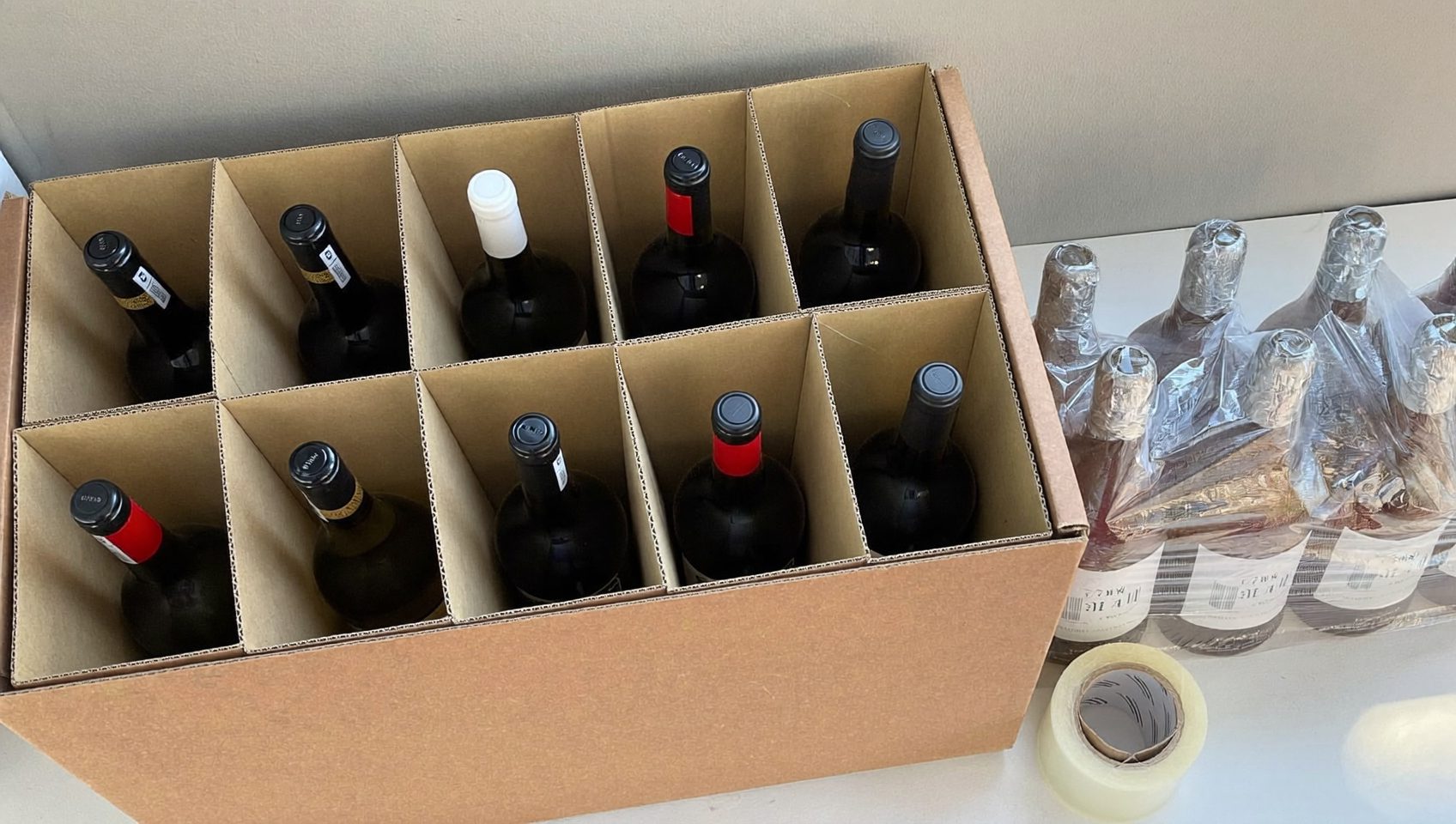
Couriers do not leave packaging to your discretion. The UPS guide accepts three types of inner packaging: moulded expanded polystyrene, a folded corrugated cardboard tray, or a moulded fibre (pulp) tray. Each component must hold the bottles at the centre of the package, away from the walls; the outer container must be sturdy corrugated cardboard, with all flaps sealed on top and bottom with adhesive tape. For moulded pulp and die-cut cardboard, UPS requires that the packaging manufacturer has tested them before shipment according to ISTA procedures or the UPS laboratory's procedures.
ISTA, the international association for packaging testing, describes procedure 3A as the test for individually packaged products travelling through a parcel delivery system, up to 70 kg. The sequence, as read from the procedure's summary document, is as follows:
| ISTA 3A test block | What it simulates | Detail for the standard package |
|---|---|---|
| Shock, drop | Manual handling and conveyors | 9 drops, height varying with weight |
| Random vibration | Truck and aircraft | Random profile, with a low-pressure option |
| Shock, drop | Handling after transport | 8 drops, including one on an edge |
| Concentrated impact | Flat packages | 4.1 kg box dropped from 400 mm |
The same document recommends, for fragile and liquid products, testing at least two samples, because a single result proves nothing. In practice, ask your packaging supplier for the ISTA 3A test report for the exact model you use (6 bottles of 75 cl, 3, 12): the certification applies to that configuration, not to the whole family. For pallet and container shipments, different rules apply, described in the page on wine logistics and transport.
Three practical points that are not in the regulations but come from complaints: a 6-bottle polystyrene carton weighs about the same as a pulp one but resists a drop onto an edge better; cork stoppers suffer more from heat in a summer van than glass does, which is why UPS offers insurance cover for "cork push" and seepage; and a reused carton that has already made one trip has lost the rigidity that let it pass the test.
Insurance and tracking: what they actually cover
The courier's standard cover is linked to the declared value and does not cover the typical risk for wine: the bottle that arrives intact but cooked. Through its insurance agency, UPS offers cover "up to the selling price" against breakage and temperature damage, such as displaced stoppers or leakage, with an option for single shipments or for volumes. The principle applies to everyone: ask whether the policy covers temperature damage, because breakage is rare and cooking is frequent.
On tracking, one detail matters: the signature of an adult, required for deliveries to private individuals, means the parcel is not left at reception or with a neighbour. If the consignee is absent three times, the wine goes back and you pay the transport twice. Always notify the customer before shipping, with the tracking number and delivery window; the same applies to samples sent to an importer, as explained in How to contact a wine importer: email, trade fair and samples.
When a freight forwarder makes more sense than a courier
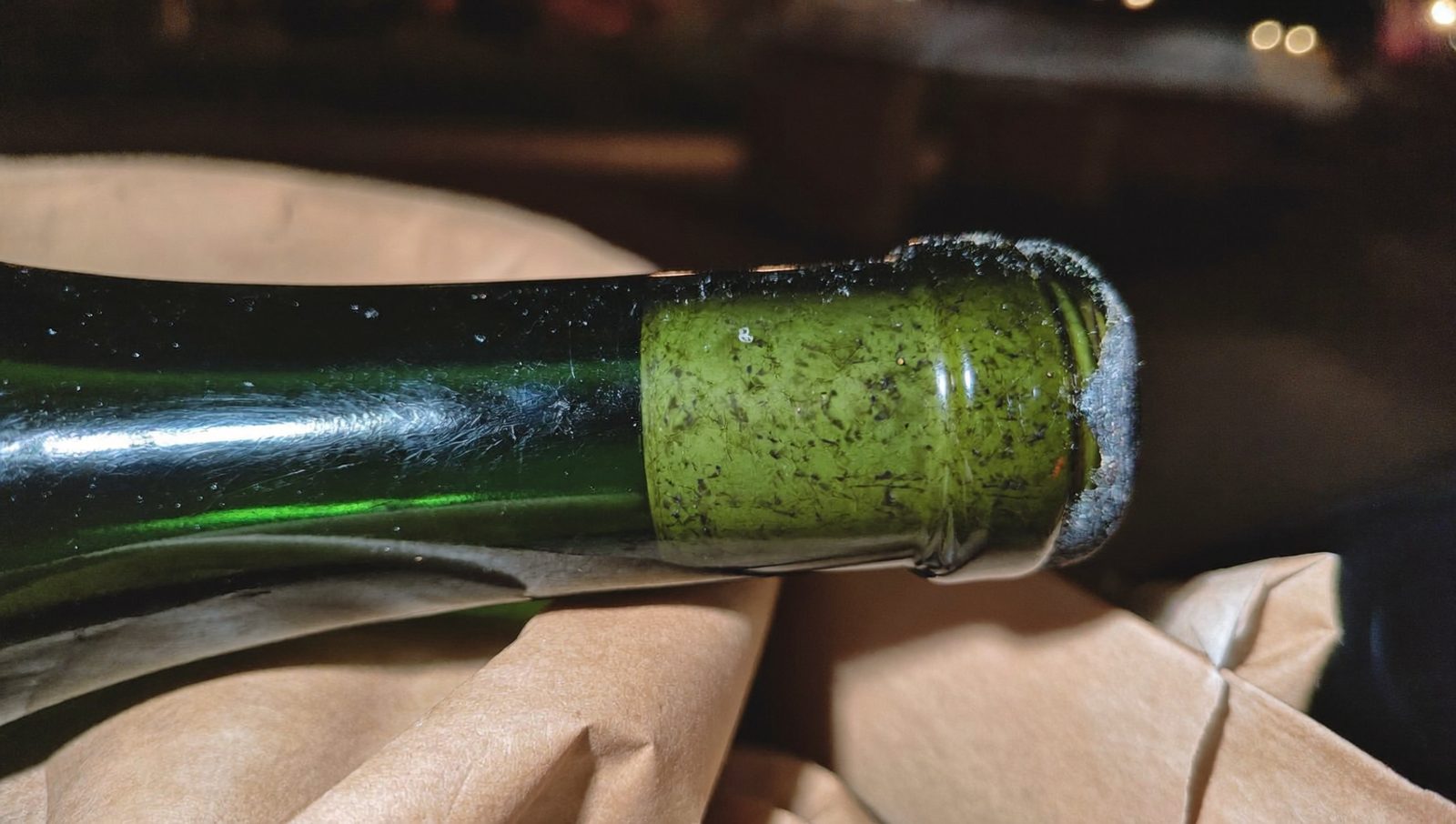
An express courier makes sense when the package is small, urgency is high and the consignee is ready to clear customs: samples, replenishment of a few cases to a foreign restaurant, sales to private individuals in countries where it is allowed. It does not make sense when the volume exceeds a pallet, when the wine must travel under excise suspension to the importer's tax warehouse, or when the destination requires documents the courier does not handle (health notifications, preferential certificates of origin, import permits). In those cases the partner is the freight forwarder, who organises the groupage or container, issues the transport documents and works with the arrival tax warehouse. The differences, transit times and the choice between FCL and LCL are covered in Wine freight forwarders: choosing the right export partner and in Wine freight forwarders: how to choose the right one.
A common-sense rule that does not depend on the carrier: the cost of transport per bottle falls with volume, while the cost of customs errors rises with distance. Before choosing, calculate the full landed cost to destination using the method described in Wine landed cost: how to calculate the delivered price.
Frequently asked questions
Can I ship a case of wine with my regular UPS or FedEx account?
No. UPS requires an International Special Commodity agreement for alcohol before the first shipment; FedEx accepts alcoholic beverages only from approved licensed shippers who have signed a dedicated agreement. Without the agreement, the package is refused or sent back to the sender at your expense.
Does the courier pay the excise in the destination country?
The courier clears customs and advances the taxes at the point of entry, then charges them to you or to the consignee according to the contract. It does not move the wine under excise suspension and does not replace the tax representative for sales to private individuals: that obligation remains yours.
What packaging do couriers require for bottles?
Inner packaging in moulded expanded polystyrene, a folded corrugated cardboard tray or moulded fibre, that holds the bottles at the centre of the package; a sturdy outer carton with all flaps sealed. UPS requires that pulp and die-cut cardboard be tested by the manufacturer according to ISTA procedures, such as 3A for parcels up to 70 kg.
In which countries does the courier not deliver wine to private individuals?
Outside the list of about fifty countries where UPS states it delivers to consumers, B2C shipping is not a service. There are also limits within the list: in Australia there is no delivery to Queensland or the Northern Territory, and in Argentina the value is limited to 1,000 US dollars and 50 kg per package.
Is an adult's signature required?
Yes, for all consumer shipments. UPS requires it through the Adult Signature Required service on every international B2C shipment; without an adult present, the parcel is not left and, after the attempts provided for, returns to the sender.
Sources
- UPS, International Alcohol Shipping Guide (ISC conditions, packaging, countries): https://filexfer.ups.com/assets/resources/webcontent/en_US/international-alcohol-shipping-guide.pdf
- FedEx, How to ship alcohol: regulations, licenses and services: https://www.fedex.com/en-us/shipping/alcohol.html
- DHL Express USA, Guidelines for Shipping Alcoholic Beverages (MyDHL+): https://mydhl.express.dhl/us/en/help-and-support/customs-clearance-advice/alcoholic-beverages.html
- DHL Express Belgium, Prohibited and restricted items (definition of restricted items): https://express-resource.dhl.com/be-coh-prohibited-and-restricted-items-eng.html
- ISTA, Procedure 3A, overview (parcels up to 70 kg, test sequence): https://ista.org/docs/3Aoverview.pdf
- Italian consolidated excise law (D.Lgs. 504/1995), article 10-bis, distance selling: https://miolegale.it/testi-unici/accise/art-10-bis/
- Documentary collection for wine exports: D/P and D/A
- Courier for Shipping Wine: How to Choose the Carrier
- Exporting Wine to China: Steps, Documents and Clearance
- Small winery bottling line: components and export fill
- Wine excise duty in EU countries: still and sparkling table
- Stand-by letter of credit and guarantees for wine exports