Shipping wine to a private customer in France, Germany, Poland, Ireland or another EU country: destination excise, tax representative, local VAT, couriers — the general rule and the exceptions
Wines Export Editorial · Last updated:
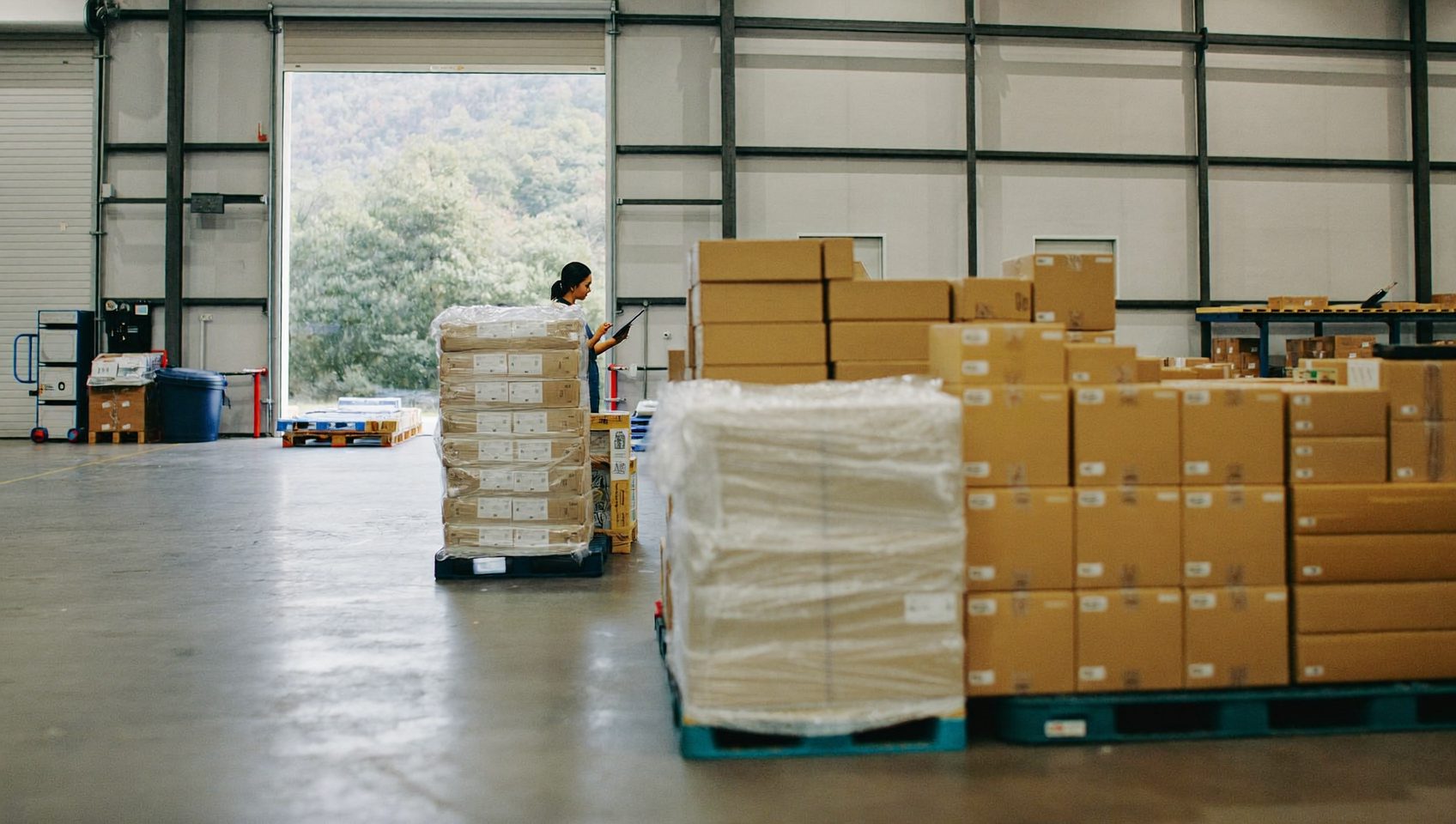
Shipping six bottles to a private customer living in France, Germany or Poland is not a sale like the ones you make in Italy. Under the EU excise directive it is a "distance sale", and the same rule applies in all twenty-seven member states. Excise is paid in the customer's country, at that country's rate, and the liable party is you, the shipper. Before handing the parcel to the courier, you must register with the competent office of the destination state and have guaranteed payment; after delivery you pay the duty and keep records of your shipments. VAT is also that of the customer's country, and you declare it through the OSS one-stop shop without opening a VAT registration abroad. What varies from country to country is the rest: how much excise applies to wine, whether you can handle it yourself or a tax representative is more convenient, and what happens in countries with a monopoly. This page sets out the common rule and a table for the countries readers ask about most often. For the mechanics of the representative and OSS in detail, see the article on tax representative and excise for B2C wine sales in the EU.
What is the general rule of the excise directive?
The source is Article 44 of Directive (EU) 2020/262. It applies when a product already released for consumption in one member state is purchased by a person who is neither an authorised warehousekeeper nor a registered or certified consignee, who does not carry on an independent economic activity, and the product is dispatched or transported to another member state by the seller or on the seller's behalf, including indirectly. In that case the excise is due in the destination state, becomes chargeable at the moment of delivery, and is calculated at the rate in force on that day.
The liable party is the seller. The destination state may allow the seller to appoint a tax representative established in its territory and approved by its authorities; it may also provide that, if the seller or the representative has not complied with the registration and guarantee obligation, the consignee becomes liable. The seller has three obligations: before dispatch, register its identity and guarantee payment of the excise with the competent office designated by the destination state; after delivery, pay the excise to that office; and keep records of its deliveries. Excise possibly paid in the country of departure is refunded on request. For Italian wine no refund arises, because the national rate is zero: Directives 92/83 and 92/84 set a European minimum of zero for still wine and sparkling wine, and each state decides for itself whether to apply a positive rate, as the Commission explains on its page on alcohol excise duties.
Two clarifications that help avoid frequent mistakes. First: the rule applies even to a single case, as there is no exemption for small quantities shipped by the seller. The indicative levels in Article 32 of the same directive, which states may not set below 90 litres of wine of which no more than 60 of sparkling wine, concern only the private buyer who purchases in Italy and transports the wine home himself: in that case the excise remains that of the country of purchase. As soon as you organise the transport, or even just tell the customer which courier to use, you are in distance selling. Second: a sale to a restaurant or wine shop abroad is never a distance sale, because the recipient carries on an economic activity; that sale follows the documents described in the guide to export documents for wine and the e-AD compilation in EMCS.
How heavy is the excise, and is a representative needed? The country-by-country table
The rates are those published by the national administrations; the references are in the Sources. "Representative" indicates what the country currently requires of a seller established elsewhere: where it is optional, you can register and guarantee payment yourself.
| Country | Excise on still wine (12-13% vol) | Sparkling wine | Tax representative | Note |
|---|---|---|---|---|
| France | 4.12 euro/hl in 2025, 4.19 in 2026 | 10.20 euro/hl in 2025, 10.38 in 2026 | Required in French practice for distance selling | From 1 January 2020, sales to private buyers with duties paid are exempt from internal movement formalities |
| Germany | Still wine does not appear among taxed products | 136 euro/hl (51 euro/hl below 6% vol) | Representative (Beauftragter) with authorisation from the Hauptzollamt | Sparkling wine pays 1.02 euro per 0.75 l bottle |
| Poland | 222 zł/hl in 2025, 233 zł/hl in 2026 | Same rate as still wine | Registration with the Ministry of Finance, excise department | Wine and fermented beverages have the same rate (Art. 165a excise law) |
| Ireland | 424.84 euro/hl (between 5.5 and 15% vol) | 849.68 euro/hl | Revenue requires a representative established in Ireland | Without excise paid, the wine may be detained, seized and confiscated |
| Finland | 456 cents/litre in 2025, 504.97 in 2026 (8-15% vol) | Same band as wine | Optional: without it, prior notification and guarantee for each shipment | Declaration within four working days and payment within ten of receipt, without a representative |
| Sweden | 29.58 SEK/litre (8.5-15% vol) from 1 January 2024 | Same band as wine | No representative: the seller registers as a "distance seller" | Continuous registration (weekly declaration) or temporary registration for a single shipment |
Source: French Customs (tariffs 2025-2026), Bremen public service (Schaumweinsteuer), Polish excise law Art. 165a, Revenue Ireland (rates as of 5 December 2025), Vero.fi (table 2025-2026), Skatteverket (rates from 1 January 2024).
Two ways of reading the table. The first concerns the order of magnitude: in France and Germany the excise on still wine is zero or a few cents per bottle; in Poland it is about 1.7 zł for a 0.75 l bottle; in Ireland it exceeds three euro per bottle; in Finland and Sweden it is higher still. It is the excise, not transport, that decides whether the price to the private buyer holds. The second concerns the rules: in Sweden and Finland you can do everything yourself with a registration, while in Ireland and France the administrations still indicate a representative established in the country. The comparison of rates across all countries, updated by the Commission, is in the page on national excise duties compared.
France, Germany, Poland, Ireland: what changes in the four cases readers ask about most?
France. The excise on still wine is the lowest among the large markets: 4.12 euro per hectolitre in 2025 and 4.19 in 2026, that is three cents per bottle, while sparkling wine pays 10.20 euro per hectolitre in 2025. French Customs specifies that from 1 January 2020, those who sell wine with duties paid to a private buyer are exempt from internal movement formalities, and that the CRD capsule has been optional since 1 June 2019 on containers up to 3 litres. For a seller established in another country, French practice remains that of the approved tax representative (représentant fiscal agréé), who keeps the records of deliveries and submits a monthly declaration; Customs manages approvals and guarantees.
Germany. Your bottle of still red or white wine pays no excise: the rates published by the Bremen public service list only Schaumwein, at 136 euro per hectolitre (51 euro below 6% vol), and intermediate products, at 102 or 153 euro per hectolitre. Be careful, therefore, with Prosecco, Franciacorta and Lambrusco with mushroom-style stoppers: 1.02 euro per bottle of German excise. The foreign seller works with a Beauftragter authorised by the principal customs office, who files the declaration and may need to provide a guarantee.
Poland. The excise law sets for wine and fermented beverages a scale already fixed: 222 zł per hectolitre in 2025 and 233 in 2026, after 191, 201 and 211 in the years from 2022 to 2024. The contact point indicated by the Commission is the excise department of the Ministry of Finance. The rules on banderols and documents for sales to businesses are in the page on customs documents for Poland.
Ireland. This is the country where excise changes the price: 424.84 euro per hectolitre on still wine between 5.5 and 15% vol and 849.68 on sparkling wine, rates published by Revenue on 5 December 2025. Revenue states that a seller established in another member state must appoint a tax representative established in Ireland who pays the excise, and that otherwise the product may be detained, seized and confiscated; it advises the consumer to check, before ordering, that the seller has arranged payment. The rest of the Irish rules is in the guide on customs documents and excise for Ireland.
Finland and Sweden: how does it work in countries with a monopoly?
In the Nordic countries retail sale of alcohol goes through a state monopoly, but distance purchase by a private individual is not prohibited: it is the seller who must register.
In Finland the representative is optional. Whoever does not appoint one must submit a prior notification to the Tax Administration before each shipment, with a Finnish identification number, and provide a guarantee; after arrival, it declares within four working days and pays within ten, shipment by shipment. Whoever appoints an authorised representative, with a fixed guarantee, has a single monthly declaration. The Finnish guide also clarifies a point that many e-commerce sites get wrong: if the private buyer organises transport himself, it is a "distance purchase" and the taxpayer is him, but as soon as the seller takes part in organising it, even just by directing the buyer to a carrier, it becomes a distance sale and the liability falls on the seller. The rate for the 8-15% vol band is 456 cents per litre in 2025 and rises to 504.97 in 2026.
In Sweden the Tax Agency does not speak of a representative but of two registrations for the seller. The "registered distance seller", for those who ship several times, provides a guarantee, must have no tax debts above 2,000 SEK and files a weekly declaration, even if nil, by the Friday of the following week. The "temporarily registered distance seller" serves a single shipment: one registration for each delivery and for each customer, guarantee paid before dispatch, declaration within five days of delivery. Applications have been submitted since 1 January 2023 and apply to shipments from 13 February 2023. If the seller is not registered, the Swedish private buyer must register and pay the excise, which for wine between 8.5 and 15% vol is 29.58 SEK per litre. For sales to the monopoly, which are a different matter altogether, read the page on Nordic monopoly tenders.
And VAT? How the OSS one-stop shop works
VAT also follows the customer: in intra-EU distance selling of goods to a private individual, the rate of the country of consumption applies. Since 1 July 2021 the Italian Revenue Agency has described the OSS scheme as a centralised, digital European VAT payment system, born from extending the former MOSS: it covers intra-EU distance sales of goods and allows electronic registration in a single member state, one declaration, one payment and a single point of contact. In practice you declare from Italy the French, German or Irish VAT on the bottles sold, without a local VAT number. The OSS does not, however, cover excise: that follows the procedure of Article 44 described above, country by country. If you sell to private buyers and businesses in the same market, the framework of who pays what is in the article on excise and VAT along the chain, DAP or DDP.
Which courier accepts wine, and how should it be packed?
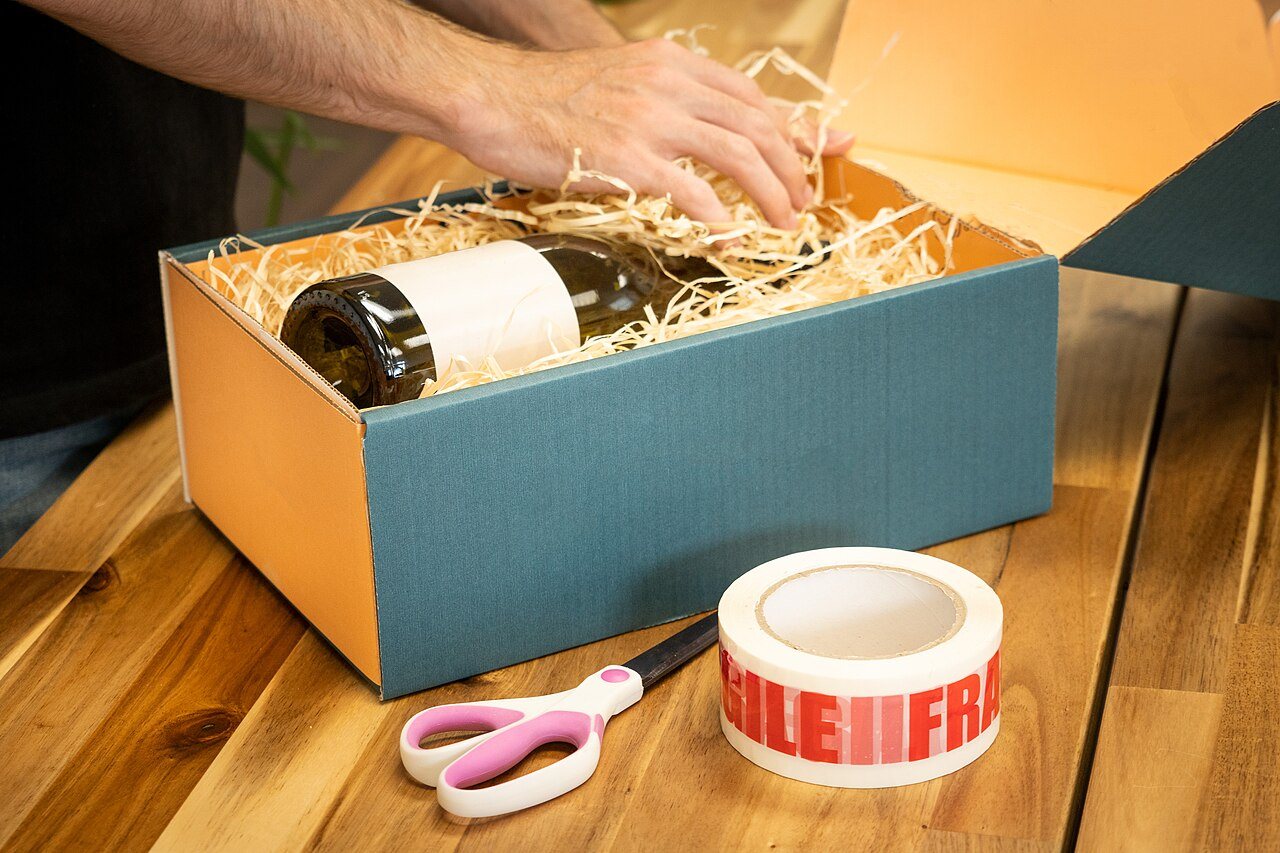
The customs side is resolved through registrations; the physical side is resolved through the right contract. The major express couriers accept alcoholic beverages only from shippers with a dedicated contract, and they require packaging that passes their drop tests: boxes with dividers or printed inserts, bottles that do not touch, and a "fragile" label that alone is not enough. The Finnish guide notes an operational detail useful everywhere: when you use a representative, its excise number must be communicated to the carrier and must be producible at customs or to the Tax Administration on request. Include in the parcel the invoice with the VAT of the destination country and, where required, the reference to the registration or to the representative.
For samples intended for importers the logic is different, because the recipient is a business: the rules and packaging are in the article on how to ship wine samples through customs. If shipments to private buyers become continuous, it is worth asking the courier for an "alcohol" contract with rates per carton of six and per carton of twelve, and comparing the cost with that of a local warehouse.
When does a warehouse in the destination country make sense?
As long as you ship a few cases a month, distance selling with registration or a representative is the simplest route. When volumes grow, the same directive offers an alternative: ship full pallets under excise suspension, with e-AD in EMCS, to a tax warehouse or a registered consignee in the country, and make deliveries to private buyers from there as domestic sales. In that case excise is paid when the goods leave the warehouse, VAT remains the local one, and the domestic courier costs less than the international one. The price is a tax position in the country, a logistics contract and stock tied up; in Ireland, where each bottle carries over three euro of excise, the cash advance on a pallet weighs heavily, while in Germany, where still wine pays nothing, the warehouse is purely a logistics choice. To understand how prices are written at the two ends of the chain, read how to build an export price list in EXW, FOB and foreign currencies.
Further reading: Courier for Shipping Wine: How to Choose the Carrier.
Frequently asked questions
Can I send a case of wine to a friend in France without paying anything?
If you ship it yourself, even as a gift, the directive treats it as a dispatch from the seller, and French excise is due at destination, with prior registration. In practice the amount on still wine is a few cents, but the obligation exists. If instead the private buyer purchases at the winery and takes the wine away himself, within the indicative levels of his country (at least 90 litres of wine), he pays no excise at home.
Do I need to open a VAT registration in the customer's country?
No, for VAT: with the OSS scheme you declare it from Italy. For excise it depends on the country: in Sweden and Finland you register as a distance seller without a representative; in Ireland and France the practice is a tax representative established in the country.
Does sparkling wine pay more than still wine?
Yes, in almost all the countries in the table: in Germany still wine is not taxed while sparkling wine pays 136 euro per hectolitre; in France 10.20 against 4.12 euro per hectolitre in 2025; in Ireland 849.68 against 424.84. In Poland, Finland and Sweden wine and sparkling wine fall in the same band.
Sources
- Directive (EU) 2020/262, Article 44 (distance selling), text on legislation.gov.uk
- European Commission, distance selling of excise goods and national contact points
- French Customs, duties on alcohol and alcoholic beverages, tariffs 2025 and 2026
- Revenue Ireland, Alcohol Products Tax: rates
- Vero.fi, excise duty table for alcohol and alcoholic beverages 2025-2026
- Skatteverket, distance selling of alcohol to private individuals in Sweden
- Shipping Wine to Romania: Excise, e-AD and Couriers
- Shipping wine to Belgium: excise, e-AD and couriers
- Shipping Wine to Switzerland: Duties and VAT for Buyers
- Shipping wine to Austria: excise, B2B and consumers
- Export Sales Terms for Wine: Essential Clauses
- Shipping wine to Asia: containers, ports and transit times