Hottone: the Malavasi sparkling wine aged on the bottom of a lake
Wines Export Editorial · Last updated:
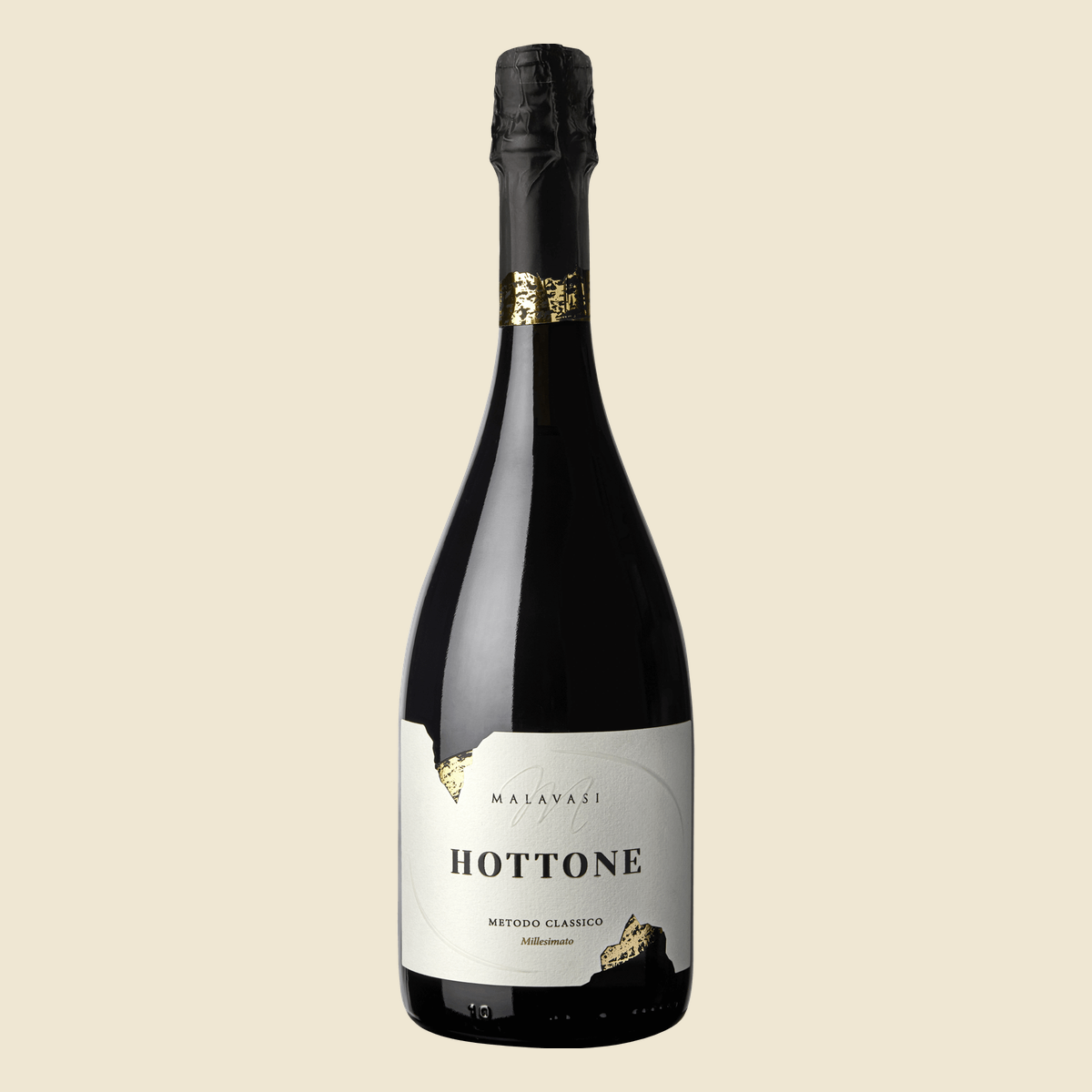
Cantine Malavasi
In January 2022, a small family winery in Pozzolengo, on the moraine hills south of Lake Garda, unveiled a sparkling wine that quickly drew attention well beyond the Brescia area. It's called Hottone, a Metodo Classico produced by Cantine Malavasi in an extremely limited, numbered production, sold exclusively to wine shops, Michelin-starred restaurants, and high-end hotels.
A historic grape variety and a numbered production
What sets Hottone apart isn't a single detail, but the combination of eight elements the winery itself presents as unique, starting with the grape: the wine is made from 100% Tocai grapes (locally called Tuchì), a variety historically present around Lake Garda but rarely vinified as sparkling wine — according to Cantine Malavasi, Hottone is the only example made from this grape in the entire Garda area. The 620 vines the wine comes from were planted in 1944 on Collina Belvedere, a hill in Pozzolengo overlooking both Lake Garda and the Sirmione peninsula — a vineyard the Malavasi family chose to dedicate entirely to this single, ambitious sparkling wine project, one whose output is fixed by the existing vines rather than expandable.
The name itself carries a family tribute: Hottone is dedicated to Ottone Tinti, an ancestor of Daniele Malavasi and a lasting source of inspiration for the winery's work. Production is deliberately limited, and every bottle is numbered: a total of 1,151 standard 0.75L bottles and 755 magnums were produced, sold exclusively to members of the winery's Wine Club, along with select wine shops, five-star hotels, and Michelin-starred restaurants. Club members are also entitled to a full day at the winery — guided tours, tastings, and lunch — an idea that, in Daniele Malavasi's own words, grew out of the intent to "show that it's genuinely possible to offer products just as compelling and of significant value" outside the more celebrated Franciacorta area.
Seventeen months on the bottom of a lake
What makes Hottone truly distinctive, though, is its aging process. After bottle refermentation — which, per the official product sheet, lasts at least 24 months on the lees — the bottles don't rest in a conventional cellar. Instead, they're submerged in a private lake owned by the Malavasi family in Magnacavallo, in the province of Mantua: a former channel of the Po River now used for recreational fishing. There, at a depth of 8 meters, the bottles spend 17 months at a temperature oscillating between 10 and 15°C, rocked by what the winery describes as a "natural batonnage" produced by the gentle wave motion of an underground aquifer.
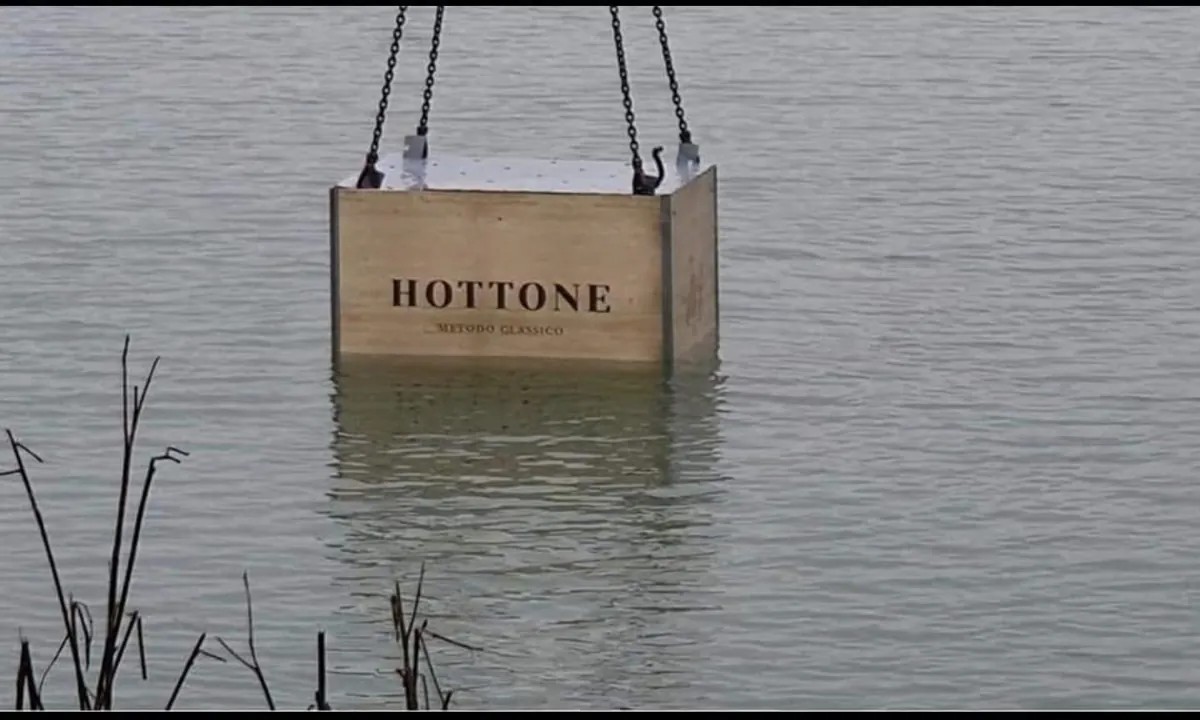
bsnews.it
Unusual as it is, this technique isn't isolated in the Italian wine landscape. The pioneering experiment in this field belongs to the Ligurian winery Bisson: since 2009, when the first bottles from the 2008 vintage were submerged, its "Abissi" sparkling wine has rested on the seabed off Portofino at a depth of 60 meters, where a constant 15°C temperature supports at least 18 months of aging cradled by marine currents. Cantine Riva del Garda, on the upper part of the lake, has developed its own underwater-aging project as well: its Trentodoc "Brezza Riva Silente", launched with the 2019 vintage, rests at 40 meters in the waters of Lake Garda itself. Unlike either of these, Hottone is the only project to use a private freshwater lake rather than the sea or the public waters of Lake Garda, and remains — according to the winery — the only Metodo Classico made in the Garda area from a grape, Tocai, rarely vinified as sparkling wine.
A winery in its fourth generation
Behind Hottone is Cantine Malavasi, a family-run winery with roots stretching back to the 19th century, when great-grandfather Tita began producing wine as in-kind payment for the workers on the family's farmland. Today, in its fourth generation, the winery is led by Daniele Malavasi and spans ten hectares of vineyards between Desenzano del Garda and Pozzolengo, on a terroir of calcareous clay with strong thermal swings driven by the lake's proximity — conditions that, according to the winery, sharpen the minerality and aromatic character of its grapes, particularly Turbiana (Trebbiano di Lugana), the backbone of a production that spans eight labels across whites, reds, rosés, and sparkling wines.
The territory: Lugana and the moraine hills of Garda
The area where Hottone is made lends its name to the Lugana DOC appellation, one of Italy's most recognized white-wine zones, straddling the provinces of Brescia and Verona. The moraine hills surrounding the southern shore of Lake Garda — shaped by retreating glaciers thousands of years ago — left behind a soil rich in calcareous clay, while the lake's proximity moderates temperatures and extends the growing season, conditions local producers consider ideal for aromatic freshness in white wines. It's within this same terroir, but with a grape normally destined for still wine, that the Hottone project takes shape: a bet that pairs a grape not traditionally used for sparkling wine with an aging technique well outside convention.
Cantine Malavasi isn't new to this kind of undertaking. Over the years, the winery has built a distinctive positioning around grape varieties and winemaking choices few other local producers pursue, from a single-varietal Petit Verdot to an approach the winery itself describes as artisanal, with contained volumes and a strong tie to the Pozzolengo and Desenzano del Garda territory.
Why a niche curiosity matters for export too
Projects like Hottone don't compete, in volume, with a winery's traditional export lines — the numbered production run and the sales channel reserved for wine shops and Michelin-starred restaurants exclude it almost by definition from mass-market logistics. But for an importer or foreign buyer looking for products with a genuine story behind the label, wines like this send a concrete signal: that of a winery willing to invest time, capital, and an entire historic vineyard into a single experimental project, backed by product communication that's already prepared and verifiable. It's the same principle — authentic storytelling, verifiable product data, traceable numbered production — that makes a small producer compelling in export markets where premium positioning matters as much as volume.
Even outside the logic of large volumes, the communication built around a project like Hottone points in the same direction as any small Italian winery's export strategy: telling the territory, the grape variety, the production process, and the family history with precision, making every claim verifiable — exactly what a foreign buyer, especially in the most mature and demanding markets, expects today from an Italian producer before even tasting the wine.
What this means for a foreign buyer
For an importer evaluating an Italian winery portfolio, a project like Hottone rarely fits into a standing order — it's a numbered, allocation-only wine built for a specific retail and hospitality channel. But it's a useful test of a supplier's depth: a winery capable of building, documenting, and sustaining a project this specific over more than a decade — from a 1944 vineyard, through founding a company in 2009, to a market debut in 2022 — is signaling operational patience and a genuine relationship with its own land, qualities that tend to carry over into how it handles its core export lines as well. In a market where storytelling is increasingly part of the sale, having one verifiable, well-documented flagship story is worth more to a distributor's pitch than a long list of unremarkable labels.
Sources
- bsnews.it — "Vino, debutta Hottone, lo spumante più costoso del Garda: curiosità" (January 19, 2022)
- Bresciaoggi — "Malavasi cresce in doppia cifra e lancia la sfida d'Hottone" (January 25, 2022)
- Cantine Malavasi — Hottone, official product page
- Enoteca Bisson — Lo Spumante degli Abissi
- Cibo Today — Cantine Riva del Garda and the sparkling wine aged in the waters of Lake Garda
Discover more winery stories and export insights on our blog, or try the free demo of Wines Export to access our network of verified buyers.
- How Long Does a Reliable Rootstock Trial Need to Run?
- Grapevine Water Stress: How Climate Change Is Reshaping Vineyard Irrigation
- How to Export Wine Abroad: An Operational Guide to the First Shipment
- Finding Italian Wine Suppliers in Switzerland: A Guide for Importers
- Italian Wine Exports 2025: Which Markets Are Growing, Which Are Shrinking
- How to Find Italian Wine Suppliers in Sweden (English)