ISPM 15 Pallets for Exporting Wine Outside the EU: What the Standard Says and What to Check
Wines Export Editorial · Last updated:
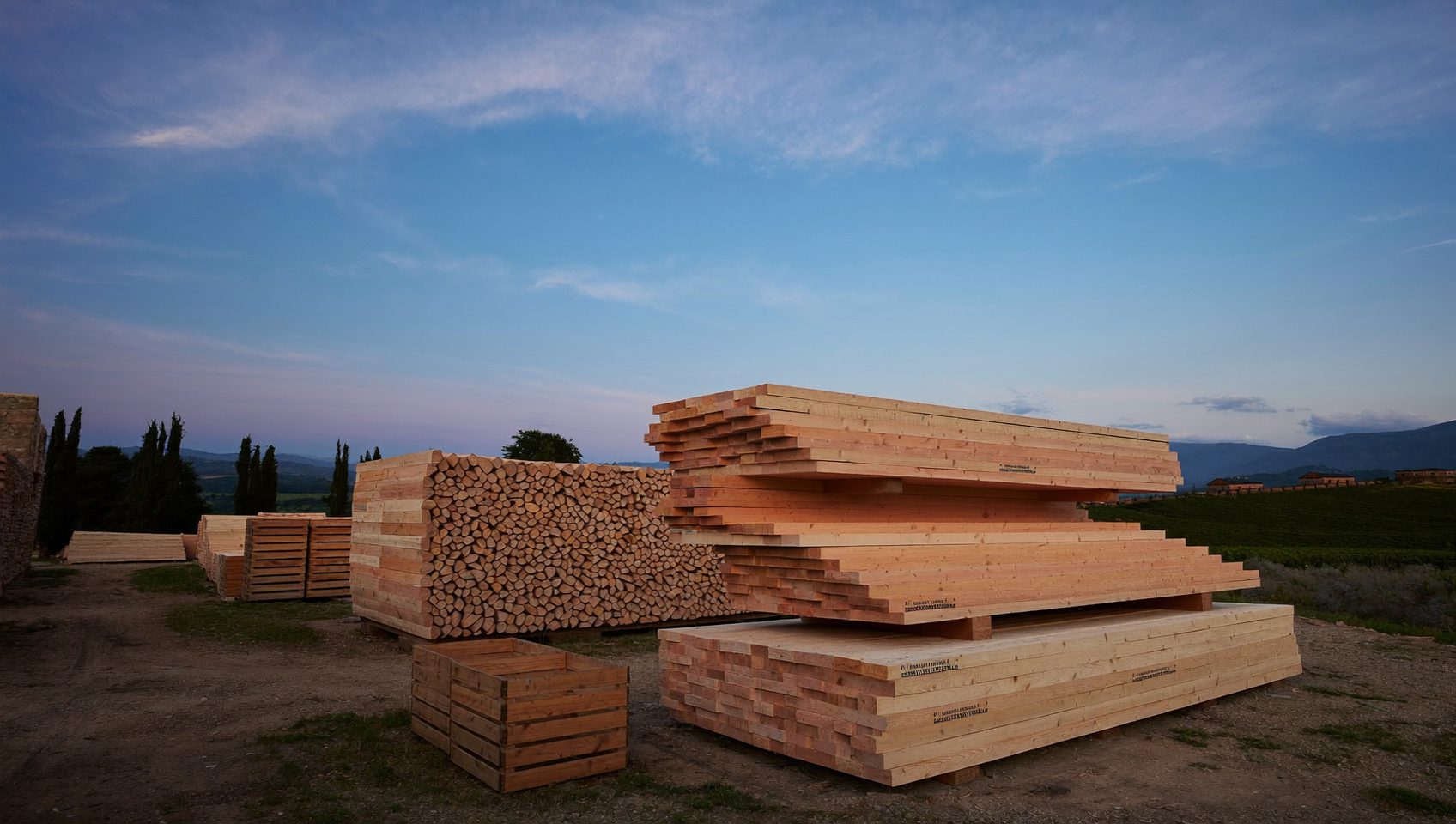
A wooden pallet in a container bound for the United States, China or Australia must comply with the ISPM 15 standard, published by the International Plant Protection Convention (IPPC). The standard describes phytosanitary measures for raw wood packaging material used in international trade. It excludes wood that has been processed so as to be free of pests, such as plywood. This guide summarises what ISPM 15 (2018 text, with Annexes 1 and 2) says and what you can verify on the pallet before loading, while the complete container route is explained in packaging and containers for wine export.
What the ISPM 15 standard is and why it matters for wine
The ISPM 15 standard sets out phytosanitary measures that reduce the risk of introducing and spreading quarantine pests associated with the international movement of raw wood packaging material. The pallet carrying cases of wine is made of wood, so it falls into this category, and the check is the responsibility of the winery loading it. The IPPC page gives 13 July 2021 as the publication date and refers to a separate page dedicated to implementation resources.
For a winery, the practical point is this: the pallet is not a neutral accessory to the shipment. When the container reaches the border, inspection of the wood can hold up the goods or slow customs clearance, even if the wine is fully compliant. For this reason, it is advisable to treat the pallet as a document to prepare together with the invoice and the packing list, not as a detail to decide at the last minute.
What is not covered by the standard
The scope section of ISPM 15 (2018 text) specifies that the material covered by the standard also includes dunnage, meaning the wooden supports and blocks used to secure the load, while pallets or packaging made of wood processed so as to be free of pests are excluded. Plywood is the example cited. The same text clarifies that the measures do not offer continuous protection against subsequent pest contamination. A stamped pallet, therefore, meets a requirement on wood treatment and does not cover the entire route of the goods.
This distinction matters most when the load is mixed. If the container includes new pallets, reconditioned pallets and wooden blocks for stabilising the cases, each element must be assessed separately. A compliant pallet does not automatically make the raw wooden supports that accompany it compliant.
| Material | Covered by the standard | Reference |
|---|---|---|
| Raw wood pallet | Yes, it is covered material | IPPC, ISPM 15 |
| Raw wood dunnage (blocks and supports) | Yes, it is covered material | IPPC, ISPM 15 |
| Plywood or pest-free processed wood | No, it is excluded from the standard | IPPC, ISPM 15 |
| Plastic or metal pallets | Not addressed in ISPM 15 (2018 text), which covers wood only | To be checked with the authority of the country |
HT treatment and stamp: what to check on the pallet
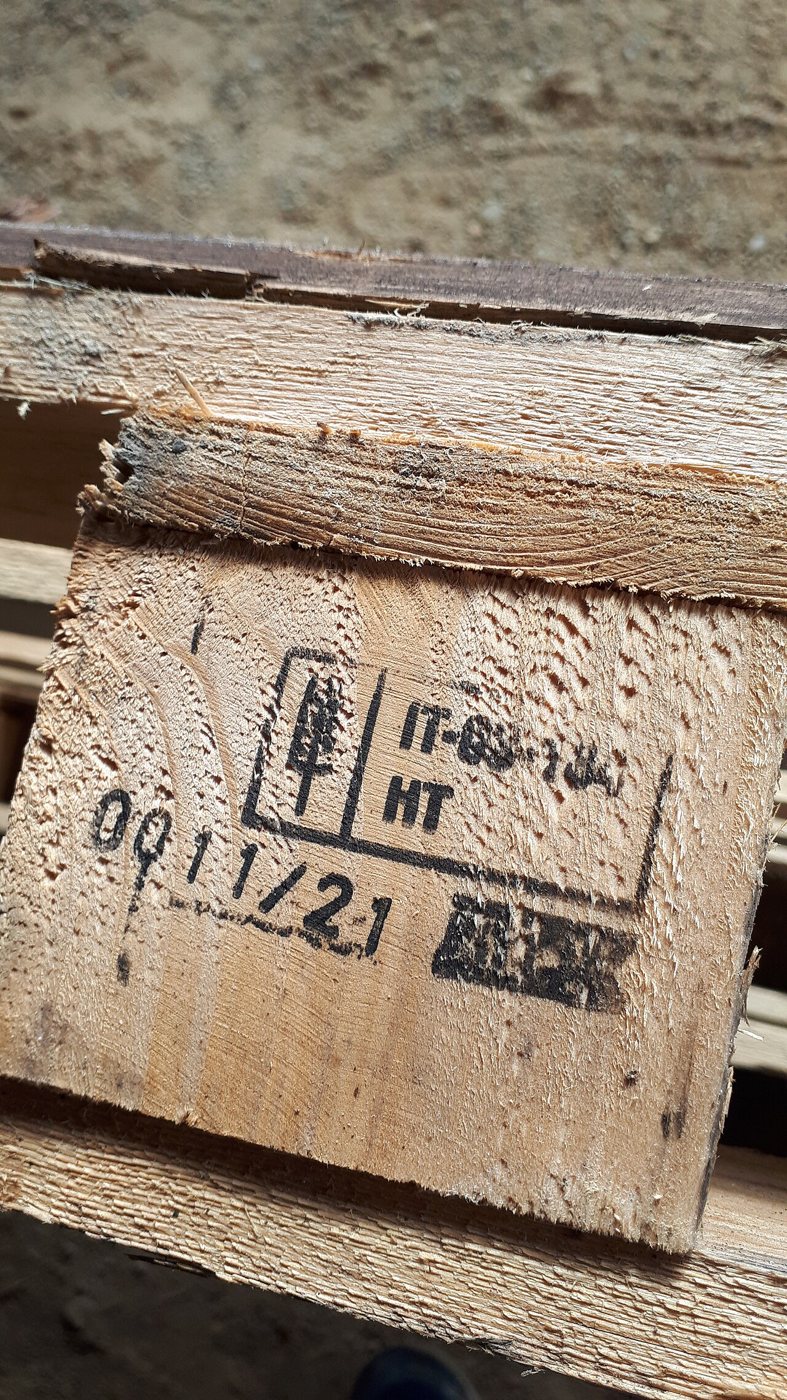
The full text of the standard (version adopted in 2018) describes both in its annexes. Annex 1 defines heat treatment in a conventional steam or dry kiln heat chamber, treatment code HT: the wood must reach a minimum of 56 °C for a minimum of 30 continuous minutes throughout its entire profile, including the core, following schedules specified or approved by the national plant protection organization. Annex 2 states that the mark comprises four components: the IPPC symbol on the left, the ISO two-letter country code, the producer or treatment provider code assigned by the national authority (separated from the country code by a hyphen) and the treatment code (HT, DH, MB or SF). The mark must be rectangular or square, within a border line with a vertical line separating the symbol from the codes, and legible without a visual aid. Ask your supplier for the document certifying the treatment and compare the stamp with these components.
On the pallet, check that the stamp is present on every pallet and remains legible after transport. A stamp covered by labels, dirty or worn makes inspection at the border more difficult. Also ask your supplier whether the wood is raw or processed, because that distinction determines whether the material falls within the standard.
What to ask your pallet supplier before ordering
The supplier is your first source of useful information. Before confirming the order, ask in writing what type of wood they use, whether the pallets are new or reconditioned, how the wood has been treated and which stamp they apply. Also ask whether treatment documentation accompanies every batch or only the first order. A vague answer is itself information: it indicates that the check will have to be carried out on each individual lot at the time of delivery.
Keep the documentation with the other shipping papers, as customs inspection may ask to see it. If your supplier changes over time, repeat the same questions, because a pallet bought last year says nothing about today's lot.
EPAL, disposable and plastic pallets: how to choose for non-EU exports
The choice of pallet depends on the destination country and the type of load. ISPM 15 (2018 text) concerns raw wood and its exemptions and does not say which pallet format is accepted in each market. An EPAL-type or disposable wooden pallet can fall within the standard only if the treatment and stamp are compliant; for this reason, verification must be carried out on the individual lot and not on the commercial name of the pallet.
The name EPAL denotes a standard of quality and dimensions for pallets, not an automatic certification of phytosanitary treatment. A pallet may have the right dimensions and lack the required stamp, or have the stamp and not be in the format expected by your freight forwarder. The two checks should be kept separate.
If the pallet is plastic, ISPM 15 (2018 text) does not mention it, because it covers wood packaging only: do not consider it exempt or subject to the standard without a specific check. For loading cases and bottles, the topic is covered in the guide on bottles per case, pallet and container quantities.
Countries that require it: how to check the destination
ISPM 15 is an international standard and does not list the countries that apply the rule on a mandatory basis. The check must be made against the rules of the destination country, because enforcement depends on local authorities. For the route to the United States, we refer you to the page documents and requirements for exporting wine to the United States. For Australia, we refer you to exporting wine to Australia. For China, where registration and labelling have their own rules, we refer you to GACC registration and Chinese wine labelling.
The most reliable method is to start from the final destination and work back through the rules from the country to the winery. Your freight forwarder and importer know local requirements on wood and can confirm whether your pallet is accepted. Request confirmation in writing, specifying the type of pallet, the declared treatment and the mode of transport.
What happens at customs if the stamp is missing or illegible
Section 4.6 of ISPM 15 (2018 text) provides that, where wood packaging material does not carry the required mark, the plant protection authority of the importing country may detain it and then, as appropriate, remove the non-compliant material, treat it, destroy it or reship it. The standard does not list the penalties applied in individual countries. A pallet without a stamp, or with an illegible stamp, can make the inspection of the packaging material more difficult. To find out how the destination country handles the case, ask your importer and check the official rules of its customs authority before shipping.
In practice, the most common problem is delay: a container held for inspection of the wood can stay in port for days, and this affects demurrage costs and delivery to the importer. For a winery shipping temperature-controlled wine or wine with fixed delivery dates, the delay is often more costly than the preventive check.
Common mistakes when preparing the load
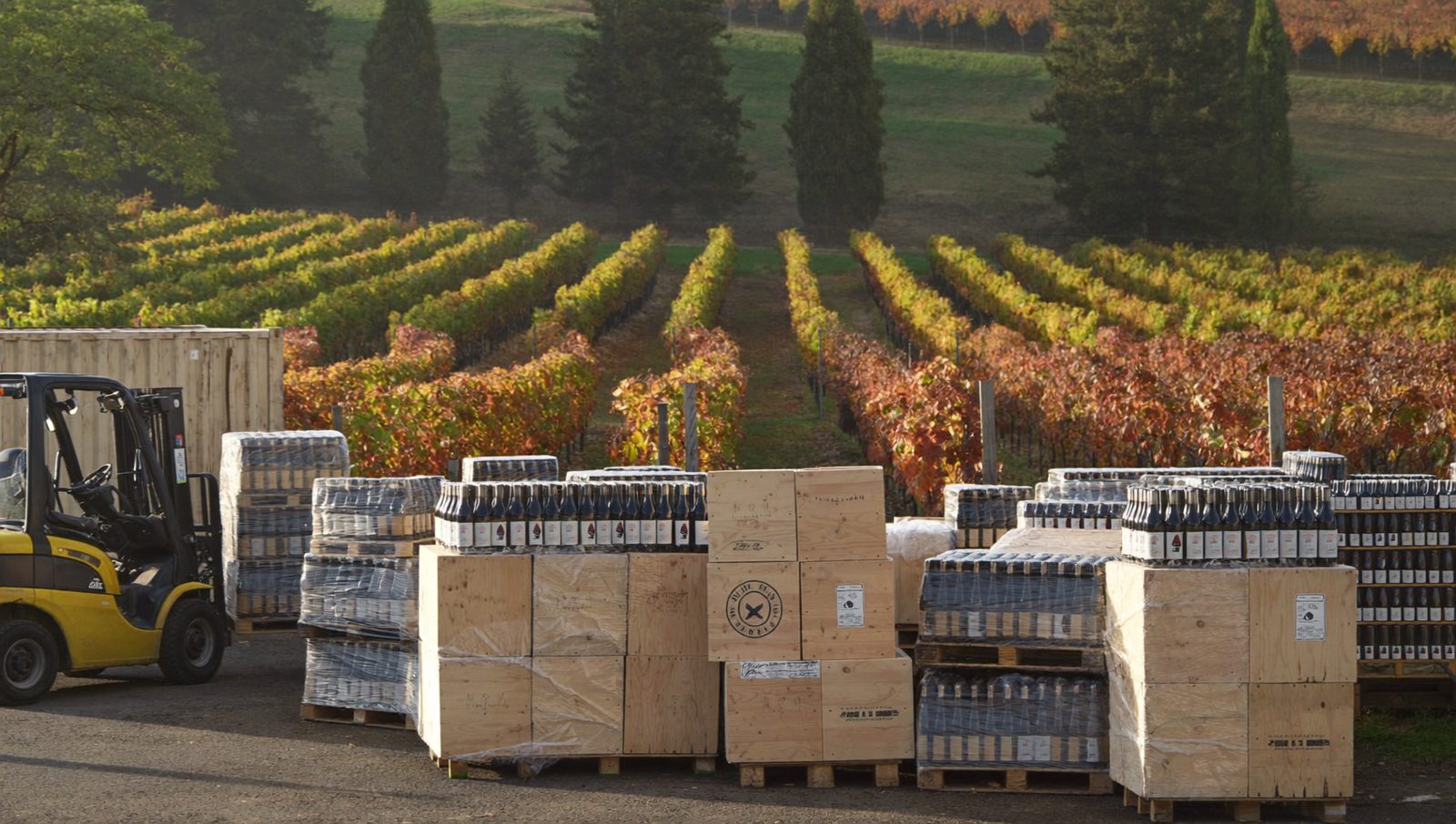
The first mistake is thinking the stamp alone is enough. The stamp is necessary, but it must be matched with correctly treated wood and documentation consistent with the shipment. The second mistake is using reconditioned pallets without checking their origin, because a pallet repaired with boards of different wood may no longer have traceable treatment. The third is forgetting the wooden blocks used to secure the cases, which are often bought separately and are not included in the check.
A final mistake concerns timing. If pallets are checked only after loading, a problem forces the container to be reopened. It is better to inspect pallets before they enter the warehouse, so that non-compliant ones can be rejected immediately.
Frequently asked questions
Is a pallet with an ISPM 15 stamp enough to bring wine into a non-EU country?
The stamp meets the standard's requirement on wood, but on its own it does not guarantee entry through customs. Each country applies its own rules and the final check rests with its authority. Verify the destination before loading.
Is plywood exempt from the standard?
ISPM 15 (2018 text) excludes wood processed so as to be free of pests and cites plywood as an example. Your specific case should nonetheless be confirmed with the authority of the destination country.
Do the standard's measures protect the load throughout the entire journey?
No. The standard describes measures that do not offer continuous protection against subsequent pest contamination. The stamp certifies the treatment of the wood and does not guarantee the rest of the shipment.
Do the wooden blocks used to secure the cases need the stamp?
ISPM 15 (2018 text) includes dunnage, meaning raw wood supports and blocks, among the material covered by the standard. Ask your supplier whether the blocks are treated and stamped in the same way as the pallets, and keep the documentation together with the pallet paperwork.
Sources
- IPPC, Regulation of wood packaging material in international trade (ISPM 15)
- Conlegno, FITOK, il marchio per il legno trattato
- EPAL, European Pallet Association
- U.S. Customs and Border Protection, Wood packaging material
- Australian Government, Department of Agriculture, Fisheries and Forestry, Timber packaging
- IPPC/FAO, ISPM 15 (2018), full text with Annexes 1 and 2 (PDF)
- Italian Wine Production Regulations: How to Read Them
- HS Codes 2204 for Wine: Bottles, Bulk and Sparkling
- Letter of Credit and Deposits for Wine Export Payments
- How to Export Wine Abroad: the Steps in Order
- Lightweight wine bottle weight limits: monopoly rules, CO2
- How many bottles per case, pallet and container