Shipping Wine to Latin America: Ports, Reefer or Dry, Groupage and Cost Items
Wines Export Editorial · Last updated:

When shipping wine to Latin America from Italy, three decisions are made in this order: the arrival port, the type of container, and the form of the cargo, that is, a full container load or groupage. Among the Latin American ports that appear in wine shipments are Santos, Buenos Aires, Cartagena, Callao, Manzanillo and Veracruz, and each serves a different consumption area. Transit time is not a fixed figure: it depends on the shipping service chosen, the intermediate calls and the season. This guide starts from the winery that has to prepare the shipment and explains how to read each cost item, beginning with temperature-controlled wine transport and the work of a freight forwarder specialised in wine.
Which ports really serve the South American market
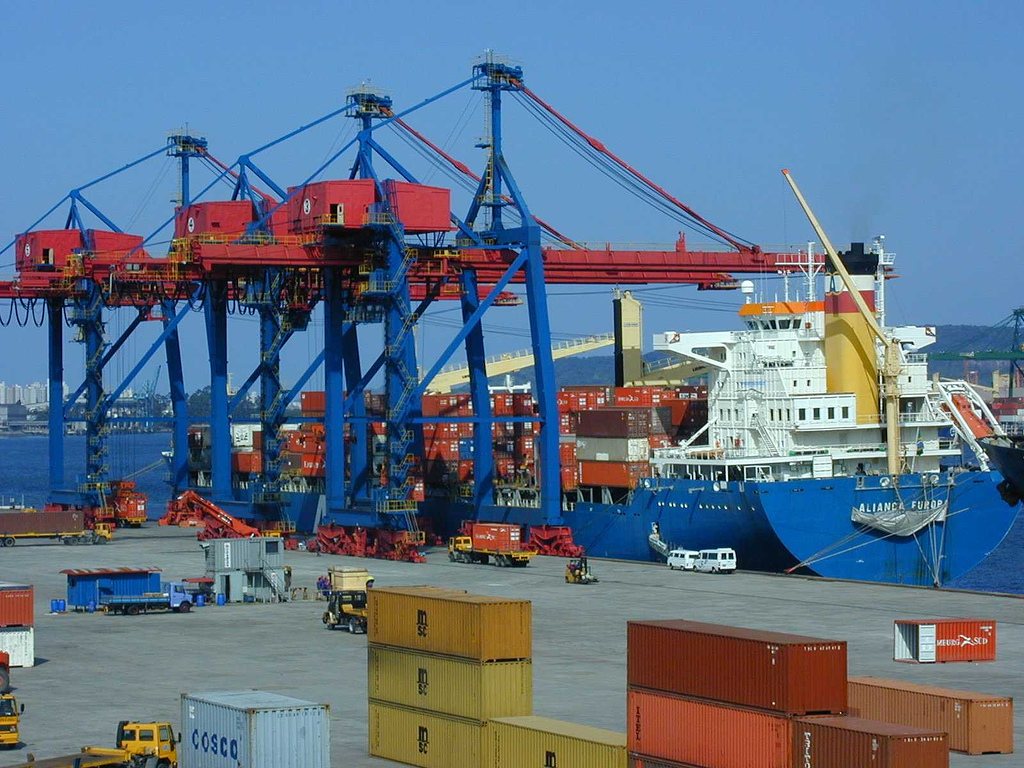
Not all ports in the region handle the same type of traffic, and the choice of discharge port affects the cost of inland transport and the delivery time to the customer. The port of Santos is Brazil's main container port and serves the São Paulo area. Buenos Aires faces the Río de la Plata and handles the traffic destined for the Argentine capital and the Pampas. Cartagena is on the Colombian Caribbean coast, Callao is the port of Lima on the Peruvian Pacific coast, and Manzanillo and Veracruz serve the Pacific coast and the Gulf coast of Mexico, respectively.
| Port | Country | Coastline | Area served |
|---|---|---|---|
| Santos | Brazil | Atlantic | São Paulo and inland region |
| Buenos Aires | Argentina | Río de la Plata | Capital and Pampas |
| Cartagena | Colombia | Caribbean | Colombian Caribbean coast |
| Callao | Peru | Pacific | Lima and Peruvian coast |
| Manzanillo | Mexico | Pacific | Mexican west coast |
| Veracruz | Mexico | Gulf of Mexico | Gulf coast and inland connections |
For Brazil, it is also worth checking the ICE country information, which lists the São Paulo office, the liaison point in Rio de Janeiro and the assistance desk on intellectual property and trade barriers. These are useful references before deciding whether your importer receives the goods in Santos or at another port.
Transit times from Genoa and La Spezia: how to read them
Shipping lines publish a transit time for each service, but this value generally measures the leg from the port of loading to the port of discharge. It does not include customs clearance, inland transport to the importer's warehouse, or any wait for container availability. A direct service and one with two or three intermediate calls can have very different times, and the weekly frequency of the line matters as much as the stated duration.
From Italy, cargo can depart, for example, from the Ligurian ports of Genoa and La Spezia, but the available service changes from month to month. Ask your forwarder for three options showing the stated time, the planned call and the document cut-off date. Compare the actual arrival dates, not only the sailing duration.
Reefer or dry: crossing the equator
A dry container, meaning not refrigerated, is the standard solution for bottled wine packed in cartons. A reefer, meaning refrigerated, container should be considered when the route crosses the equatorial zone in hot periods, or when the winery has a product sensitive to temperature changes. On the equatorial leg and during stops at terminals, the cargo may be exposed to high temperatures, so it is advisable to decide on the container type before booking.
A reefer costs more than a dry container, requires an electrical connection at terminals and temperature set-point management during the voyage. There is no automatic choice: ask the carrier whether the line guarantees reefer service on that route, at what temperature it is set, and who is responsible if the container stays at a terminal for several days. Also check the contract with the importer, since some accept dry containers and others expressly require reefers.
Full container or groupage: the thresholds
A full container load, known as FCL, is dedicated to a single winery or a single importer. Groupage, or LCL, combines several shipments from different shippers in the same container and is invoiced according to the volume occupied. For a winery shipping a few pallets, groupage is often the most sensible choice, while at higher volumes a full container reduces handling and the risk of damage to cases.
There is no single threshold valid for everyone. The break-even point between the two solutions changes with current rates, the port and seasonality. Ask your forwarder to calculate both options on the same volume, stating the number of pallets, the carton height and the gross weight. To understand how many bottles fit in a case, a pallet and a container, the page on how many bottles in a case, pallet and container may help, while for the pallet and carton it is advisable to read pallets and packaging for wine export.
Shipping documents: bill of lading, packing list, certificates
The document governing the cargo is the bill of lading, issued by the carrier or its agent. Alongside it you need the commercial invoice, the packing list with details of cartons, bottles and weights, and the certificate of origin when the importer or the country requires it. For some countries, analysis or health certificates must be added, as well as the documents required for the label. Check every requirement in the destination country before closing the shipment, because a missing document can hold the goods in port.
Inconsistencies between documents are a frequent cause of delay. The consignee name on the bill of lading, the weight stated on the packing list and the invoice value must match. A discrepancy between two documents can block customs clearance even when the goods are in perfect condition.
Cost items and most used Incoterms
The final price of a sea shipment is made up of several items: inland transport to the port, handling charges at the terminal, the ocean freight, any bunker or seasonal surcharges, insurance, customs clearance and transport from the port to the warehouse. Each line and each forwarder presents these items under its own names, so ask for a written quotation that lists them one by one.
Incoterms rules state who pays what and who bears the risk at each stage. According to the ICC, the rules are recognised by UNCITRAL as the global standard for interpreting the most common terms in international trade, and they were first published in 1936. The Incoterms 2020 version has been in force since 1 January 2020 and clarifies responsibilities, costs and risks in the delivery of goods from seller to buyer. In sea transport to Latin America, FOB and CIF are often encountered, but the term should be chosen together with the importer, considering who pays the freight and who pays the insurance. For the full framework of terms, see Incoterms 2020 for wine: which one to choose.
Import clearance at destination: who handles it and how long it takes
Customs clearance in the destination country is generally handled by the importer, who uses a local agent or customs firm. The Italian winery, on the other hand, must provide correct and timely documents and cannot pass on its own compilation errors to local customs. The time required varies widely from port to port and from country to country, and it is not possible to state a duration valid for all cases. Ask your counterpart which agent they intend to use and what documents they need before the vessel arrives.
The highest risk is the accumulation of port storage charges, which add up each day the container remains idle. For this reason, it is advisable for the importer to be ready to receive the arrival notice and pay the necessary duties without delay. A shared schedule between winery, forwarder and importer helps reduce this risk.
Frequently asked questions
Which port should I choose for shipping wine to Brazil?
The port of Santos is the most widely used gateway for central-southern Brazil and serves the São Paulo area. The final choice depends on where the importer is located and which liner services are available in the shipping period. Ask your forwarder to compare at least two ports before confirming the route.
Is a reefer container always needed for wine?
No. Bottled wine is generally shipped in dry containers, while a reefer is considered when the route crosses the equator in hot periods or when the product is sensitive. A reefer costs more and requires specific handling at terminals. The decision should be taken with the carrier and the importer.
What is needed for import clearance at destination?
You need the bill of lading, the commercial invoice, the packing list and the certificates required by the destination country. The importer or its customs agent submits the documentation to the local authorities. Consistent documents reduce the times and costs of port storage.
Who pays for sea freight under Incoterms?
It depends on the Incoterms rule chosen in the sales contract. Terms such as FOB and CIF establish at different points in the chain when costs and risks pass between seller and buyer. The Incoterms rules, recognised by UNCITRAL as the global standard, should be stated in writing in the contract together with the reference version, for example Incoterms 2020.
Sources
- Shipping wine to Asia: containers, ports and transit times
- Shipping Wine to the USA: B2B, Samples, Not Private Buyers
- Shipping wine to Austria: excise, B2B and consumers
- Shipping Wine to Spain: Zero Excise, Documents and VAT
- Shipping wine to Belgium: excise, e-AD and couriers
- Shipping Wine to Ireland: Excise Duty and VAT Rules