Liquid and powdered wine stabilisers: CMC, gum arabic, mannoproteins, metatartaric acid, polyaspartate — what they stabilise, dosage, compatibility, shelf life, mistakes
Wines Export Editorial · Last updated:
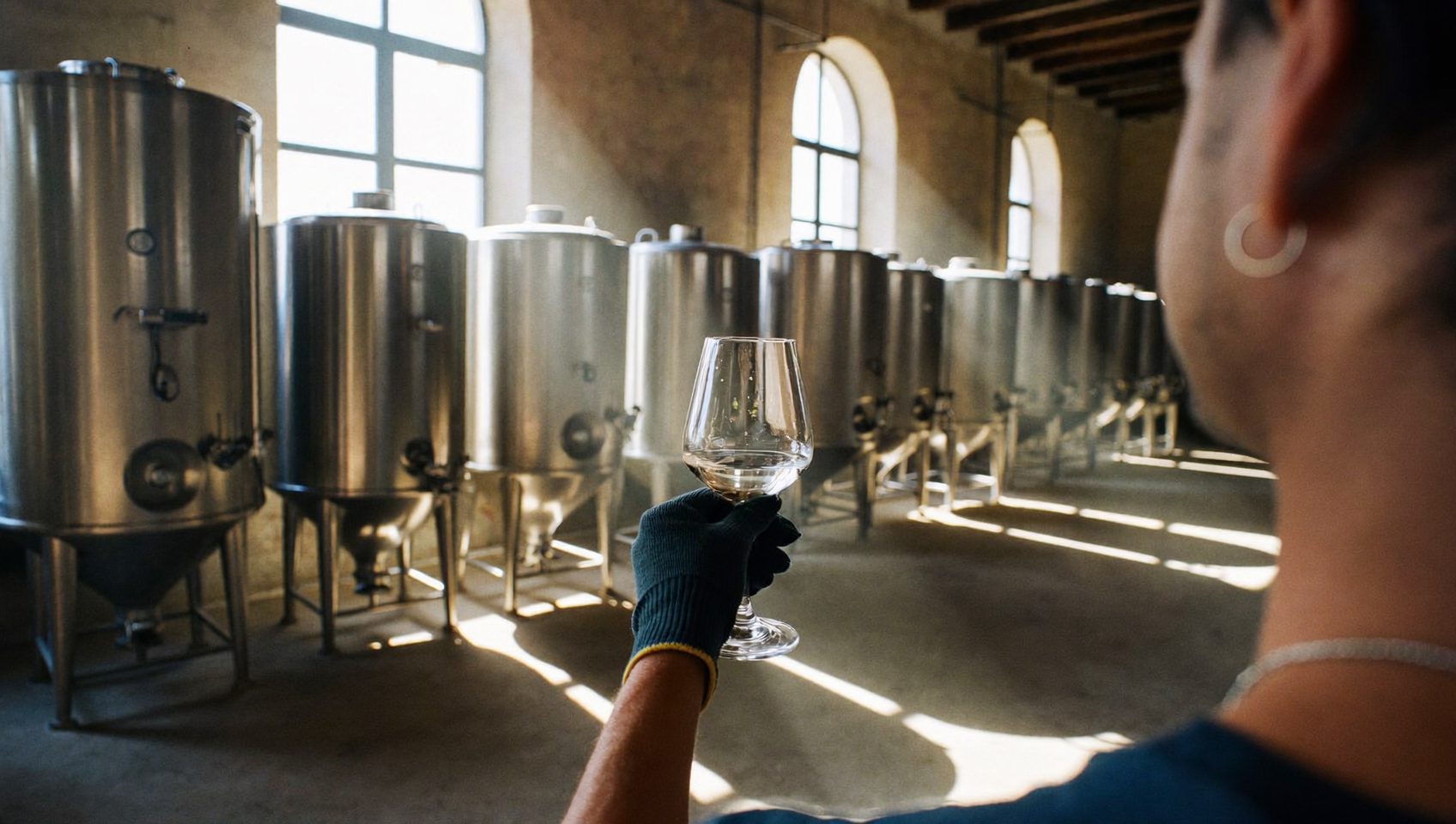
Choosing the right wine stabiliser protects your wines from tartaric precipitation, protein haze and loss of colour pigment during international transport and storage on foreign shelves. The solutions available today — carboxymethylcellulose (CMC), gum arabic, mannoproteins, metatartaric acid and potassium polyaspartate — act as protective colloids or crystallisation inhibitors, avoiding or complementing subtractive physical treatments. In this practical guide we analyse the differences between liquid and granular formulations, the mechanism of action of each molecule, the duration of the effect over time and the pre-bottling precautions needed to avoid filtration blockages or cross-instability.
Stabilising what: tartaric, colour, proteins
When you prepare a wine lot for export, the thermal stress of transport in containers or by road tests the chemical-physical balance of the bottle. Complaints from foreign importers about visual defects almost always concern three distinct phenomena: precipitation of tartaric acid salts, flocculation of colloidal colouring matter in red or rosé wines, and protein haze in whites.
Tartaric precipitation mainly involves potassium bitartrate and, to a lesser extent and with slower kinetics, neutral calcium tartrate. While physical tartaric stabilisation by cold or electrodialysis works subtractively by removing excess ions before bottling, additive stabilisers operate by inhibition: they bind to sub-microscopic crystallisation nuclei or modify their surface charge, preventing the growth of the crystal visible on the bottom of the bottle.
In young red wines or wines intended for ageing, the main problem is the instability of the colouring matter. Free anthocyanins and low-molecular-weight tannin-anthocyanin complexes tend to aggregate in the cold, forming amorphous deposits. Here, hydrocolloids capable of wrapping the hydrophobic particles and keeping them in stable suspension are needed. For protein haze in white and rosé wines, removal of heat-unstable proteins remains linked to traditional adsorbent fining agents or enzymatic treatments within stabilisation and fining management, but certain yeast-derived polysaccharide fractions help improve overall heat stability while reducing the bentonite requirement.
| Wine stabiliser | Main target | Suitable wines | Duration of effect over time | Impact on filterability |
|---|---|---|---|---|
| Carboxymethylcellulose (CMC) | Potassium bitartrate | Whites, rosés and sparkling wines | Long and stable at various temperatures | Medium-high if added too close to the filters |
| Gum arabic | Colloidal colour, structure, tartaric adjuvant | Reds, rosés, whites | Long (does not undergo rapid thermal hydrolysis) | Variable depending on degree of purification and microfiltration |
| Mannoproteins | Potassium bitartrate, colour, protein stability | Whites, rosés, reds, sparkling wines | Long and stable in the finished wine | Low for specific fractions used pre-bottling |
| Metatartaric acid | Potassium bitartrate and partially calcium | Fast-turnover wines | Short, strongly reduced by heat | None (high solubility and low steric bulk) |
| Potassium polyaspartate (KPA) | Potassium bitartrate | Whites, rosés and reds (with stable colour) | Long and stable even at high temperatures | Very low (excellent filterability index) |
Liquid or powder: what changes in the cellar
When purchasing, the oenologist and cellar manager often have to choose between a liquid wine stabiliser and a granular or powdered one. The difference is not only a matter of storage convenience: it directly affects dissolution kinetics, the microbiological stability of the commercial preparation and the ease of in-line dosing before filling.
Powdered or granular formulations (common for metatartaric acid, spray-dried or instant gum arabic, pure mannoproteins and some CMC and polyaspartate preparations) offer prolonged storage in the warehouse without the need for chemical preservatives in the container. The granular format, obtained through physical agglomeration of fine powder, drastically reduces lump formation (the so-called "fish-eye" effect) when the product comes into contact with water or wine, also cutting the dispersion of airborne dust in the work environment. However, dry products require careful preparation: they must be dissolved beforehand in water or wine in the proportions and at the temperatures indicated in the manufacturer's technical data sheet and, in the case of complex biopolymers such as CMC or gums, they need a full hydration time for the colloid before being added to the bulk.
Liquid wine stabiliser was designed to simplify work on high-speed bottling lines or in cellars equipped with proportional dosing pumps. A liquid solution of gum arabic, low-viscosity CMC or potassium polyaspartate is already fully hydrated, stabilised with sulphur dioxide or food acidifiers and pre-filtered at the supplier's plant. This avoids dissolution errors by cellar operators and allows direct injection upstream or downstream of membrane filters, depending on the nature of the molecule. On the other hand, the liquid product has a higher transport weight, is vulnerable to frost during winter storage and, once the pack is opened, must be used quickly or kept under inert gas to avoid oxidation or microbial contamination.

CMC: where yes and where no
Sodium carboxymethylcellulose (CMC) is a polymer derived from natural cellulose from wood or cotton, characterised by a negative electric charge at wine pH. Introduced among the oenological practices authorised by the International Organisation of Vine and Wine (OIV) and incorporated into European Union legislation, CMC works by competing with tartrate ions: it attaches to the growth faces of potassium bitartrate microcrystals, neutralising their positive charge, deforming the crystal structure and blocking its enlargement.
CMC gives optimal results on still white wines, sparkling wines and sparkling wines in general (both Martinotti and traditional method, added to the liqueur de tirage or before final filtration). Since it does not undergo thermal hydrolysis at normal transport and storage temperatures, it is a reliable solution for white wines destined for overseas shipments or markets with long distribution chains.
However, CMC has strict physical-chemical limits that every winery must respect:
- Incompatibility with the colouring matter of red wines: due to its strong negative charge at oenological pH, CMC interacts with free anthocyanins and with residual proteins carrying a positive charge. In red wines (and in some highly extracted or colour-unstable rosés) this bond causes colloidal flocculation leading to haze and colour precipitation in the bottle.
- Ineffectiveness on calcium tartrate: CMC inhibits the precipitation of potassium bitartrate but does not protect the wine from neutral calcium tartrate precipitation; in some cases of strong calcium supersaturation it may even favour it by shifting ionic equilibria.
- Sensitivity to proteins: if a white wine has not been properly stabilised on the protein front with bentonite before CMC is added, the polymer can react with residual heat-unstable proteins, creating immediate or delayed haze.
Gum arabic and mannoproteins for ageing
When the focus shifts to colour retention, taste softness and the protection of wines intended for ageing, natural polysaccharides come into play: gum arabic and mannoproteins extracted from the cell wall of Saccharomyces cerevisiae.
Gum arabic is a plant exudate obtained from the trunks and branches of Acacia senegal or Acacia seyal. Chemically, it is an arabinogalactan complex associated with a small protein fraction. Its branched, globular structure acts as a true protective colloid through steric hindrance: it wraps unstable tannin-anthocyanin complexes, iron or copper salts and forming microcrystals, preventing them from joining until they reach the critical size for sedimentation. In red wines for ageing or early drinking, adding gum arabic before bottling prevents coloured deposits on the glass during bottle ageing and softens the perception of astringency from green tannins. Acacia seyal gums are generally less branched and more easily filterable than Acacia senegal gums, which instead offer superior stabilising and structuring power but require advanced purification treatments to avoid clogging microfiltration cartridges.
Mannoproteins are glycoproteins naturally released by yeasts during alcoholic fermentation and during ageing on fine lees (sur lie). Commercial oenological preparations reproduce this phenomenon through enzymatic or thermal extraction from the cell walls of selected yeasts. Unlike gum arabic, which is an exogenous additive foreign to the grape and yeast world, mannoproteins return to the wine one of its endogenous components. Depending on the molecular weight and degree of glycosylation of the extracted fraction, they perform several functions:
- they inhibit the nucleation and growth of potassium bitartrate crystals without altering the filterability of the wine if chosen in specific formulations;
- they interact with the polyphenols of red wines, stabilising colour over the long term and improving volume on the palate;
- they contribute to protein stability and to the persistence of the bead (perlage) in sparkling wines.
For structured red wines destined for long periods of bottle ageing in foreign markets, the combined or targeted use of mannoproteins and gum arabic helps maintain clarity and colloidal balance without depleting the polyphenolic matrix through aggressive fining.
Metatartaric acid and polyaspartate: duration of effect
Metatartaric acid and potassium polyaspartate (KPA) represent two different eras of oenological chemistry applied to tartaric inhibition, with opposite performance in terms of duration over time (shelf life).
Metatartaric acid is a polyester obtained by controlled thermal esterification of L(+)-tartaric acid. Its ability to block the growth of potassium bitartrate crystals (and partly calcium tartrate) depends on the esterification index: the higher the index, the greater the protective power. It is inexpensive, very easy to dissolve and does not change the filterability index of the wine at all. Its Achilles' heel is hydrolysis in acidic environments: once added to wine, metatartaric acid slowly begins to hydrolyse back into free tartaric acid, thereby losing all stabilising effect. The rate of this hydrolysis depends exponentially on storage temperature. If the wine stays in cool warehouses, protection lasts several months; if a container crosses the equator or sits on a port quay in summer sun, metatartaric acid hydrolyses in a few weeks or days, leaving the wine fully exposed to tartaric precipitation. For this reason its use should be reserved exclusively for wines with very rapid commercial turnover and temperature-controlled logistics.
Potassium polyaspartate (KPA), a biopolymer synthesised from L-aspartic acid (a natural amino acid), was developed and approved by the OIV and the European Union precisely to overcome the limits of CMC and metatartaric acid. KPA has a high density of negative charges that bind to potassium bitartrate nuclei, preventing their development, but it has a much more flexible, low-molecular-weight molecule compared with CMC. The operational advantages for the winery are three:
- Stability over time and to heat: unlike metatartaric acid, the peptide bond of polyaspartate does not undergo rapid hydrolysis in wine, ensuring lasting tartaric stability even after prolonged thermal stress during international transport.
- No impact on filtration: thanks to its small molecular size, KPA does not clog final microfiltration membranes and can be dosed close to bottling.
- Usable on red wines too: provided the red wine already has a stable polyphenolic and protein profile, polyaspartate can be used without causing the immediate colour drop typical of CMC.
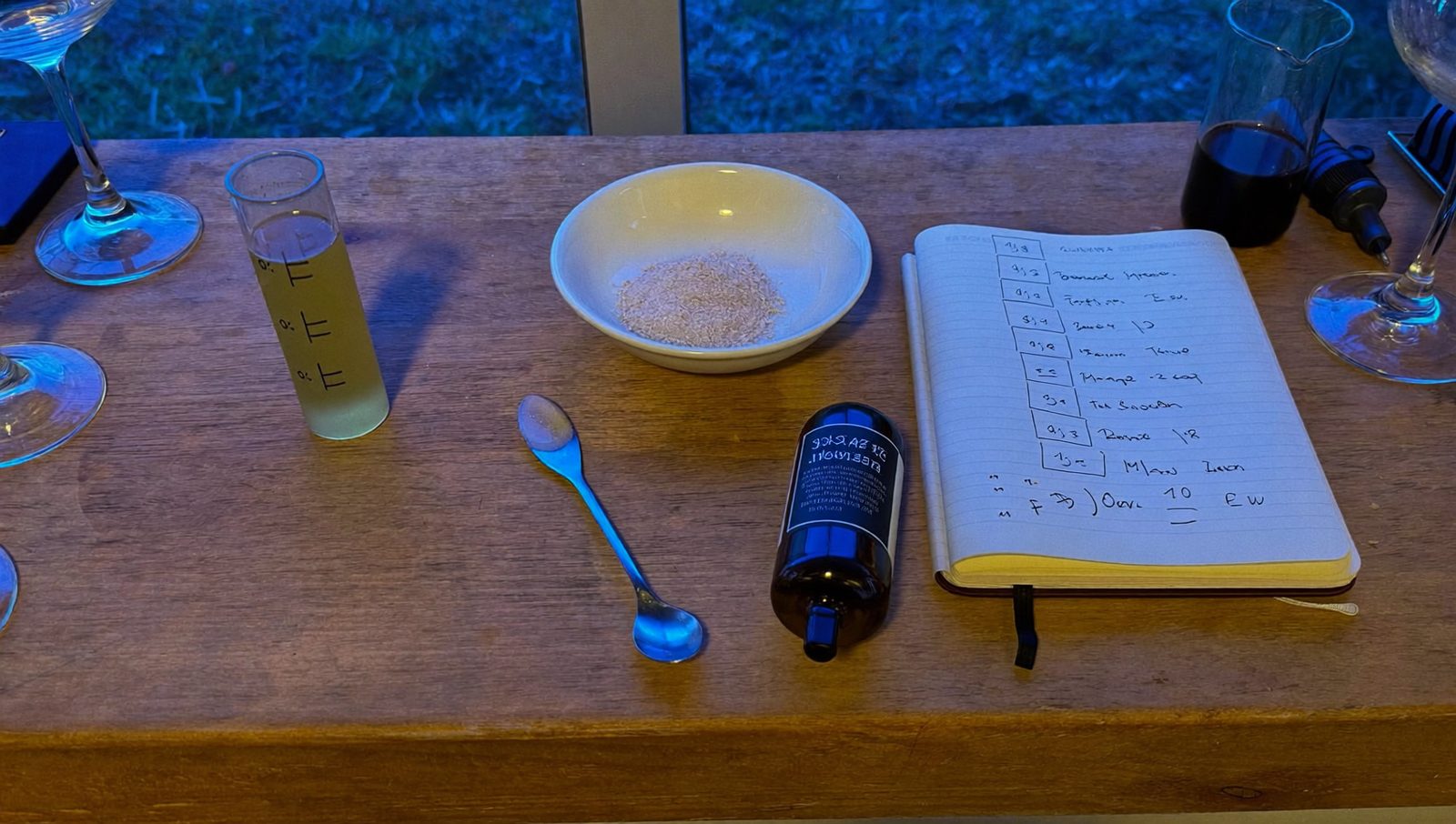
Dosages, EU limits and mistakes to avoid before bottling
The use of chemical and colloidal stabilisers is strictly governed by Commission Delegated Regulation (EU) 2019/934 and by the sheets of the OIV International Code of Oenological Practices. Before treating a lot destined for export, it is essential to consult the up-to-date framework of authorised oenological practices and to check any additional restrictions in the third countries of destination (for example, if you export to markets with specific bilateral agreements or local rules not fully aligned with the latest OIV aids). Likewise, following the entry into force of European rules on nutritional and ingredient labelling of wine products, stabilisers classified as additives (such as metatartaric acid, gum arabic, carboxymethylcellulose, yeast mannoproteins and potassium polyaspartate) fall under acidity regulators or stabilising agents that must appear in the ingredients list (on the physical label or via QR code / e-label).
To avoid compromising cellar work in the most delicate phase, the one preceding filtration and bottling, here are the most frequent operational mistakes and how to prevent them through analysis of the base wine's chemical parameters:
- Adding stabilisers without testing protein and colour stability: no anionic polymer (CMC, KPA, but also gum arabic or metatartaric acid) should be added to a protein-unstable white wine or to a red wine with highly reactive colouring matter. Always run a heat test for proteins and a cold test for colouring matter before dosing the tartaric stabiliser.
- Underestimating the filterability index (Vmax / IF): CMC and non-microfilterable gum arabics have a high molecular weight. If added just minutes before membrane cartridges, they cause rapid clogging. CMC should be added to the tank several days before final filtration, on wine that is already clear; traditional gum arabics are added after the membrane through a sterile dosing unit, unless gums or mannoproteins specifically certified for pre-membrane addition are used.
- Using lysozyme in combination with negatively charged colloids: lysozyme is a protein strongly positively charged at wine pH. If you have treated a wine with lysozyme to control lactic bacteria, the subsequent addition of CMC, metatartaric acid, polyaspartate or gum arabic causes an immediate reaction with the formation of insoluble flocs in the bottle.
- Ignoring calcium content: since CMC, mannoproteins and polyaspartate act selectively on potassium bitartrate, a wine with a high content of calcium ions (frequently caused by late deacidification with calcium carbonate or by impure fining agents) risks developing calcium tartrate precipitation months after bottling, against which these additives are ineffective.
Frequently asked questions
What is the practical difference between a liquid and a granular wine stabiliser?
Liquid stabiliser is already hydrated, pre-filtered and ready for direct in-line dosing via proportional pumps, reducing the risk of operational errors in the cellar. The granular or powdered format has a longer storage life in the warehouse and contains no preservatives such as sulphur dioxide, but it requires prior dissolution in water or wine and strict respect for the swelling times of the colloid before being added to the bulk.
Can I use carboxymethylcellulose (CMC) to stabilise a red wine?
The use of CMC on red wines is not recommended and is subject to strong technical and regulatory limits, since the negative charge of the polymer reacts with positively charged anthocyanins and polyphenols, causing haze and colour precipitation. For red wines it is preferable to use mannoproteins, gum arabic or, after laboratory verification of colouring matter stability, potassium polyaspartate.
How long does the stabilising effect of metatartaric acid last in the bottle?
The duration of metatartaric acid depends strictly on the temperature at which the wine is stored: at cool cellar temperatures it protects against precipitation for several months, but if bottles are exposed to thermal swings above 25-30 °C during summer transport, the molecule rapidly hydrolyses into tartaric acid and loses all effectiveness. For wines destined for ageing or for long-haul export, CMC, polyaspartate or mannoproteins are indicated.
Must wine stabilisers be declared in the ingredients list on the label?
Yes. Under European Union legislation on the labelling of wine products, stabilisers that remain in the finished wine (such as gum arabic, metatartaric acid, CMC, mannoproteins and potassium polyaspartate) are classified as food additives (stabilisers or acidity regulators) and not as technological aids, so they must be listed in the ingredients list on the back label or via an electronic e-label.
Sources
- Wine team building Rome: corporate tastings for groups
- Wine polysaccharides and mannoproteins: uses in winemaking
- Winemaking Additives Allowed in EU, Not in USA, Japan, China
- Wine fining agents: bentonite, PVPP, plant proteins, dosage
- Winery Equipment List: What to Buy First, What to Rent
- Wine filtration: roughing, fining and sterile filtration