Sangiovese: Characteristics and Market Potential for Wineries
Wines Export Editorial · Last updated:

The complete guide is here: Sangiovese.
Sangiovese embodies the essence of Italian viticulture, serving as the backbone for globally renowned and appreciated wines. Its versatility, capacity to express terroir, and aging potential make it an ideal candidate for export. This article explores its distinctive characteristics, organoleptic profile, and market opportunities for wineries aiming to introduce it to international markets, offering a practical guide to success. Further Reading: MASAF — National Register of Vine Varieties.
What are the origins and distribution of Sangiovese?
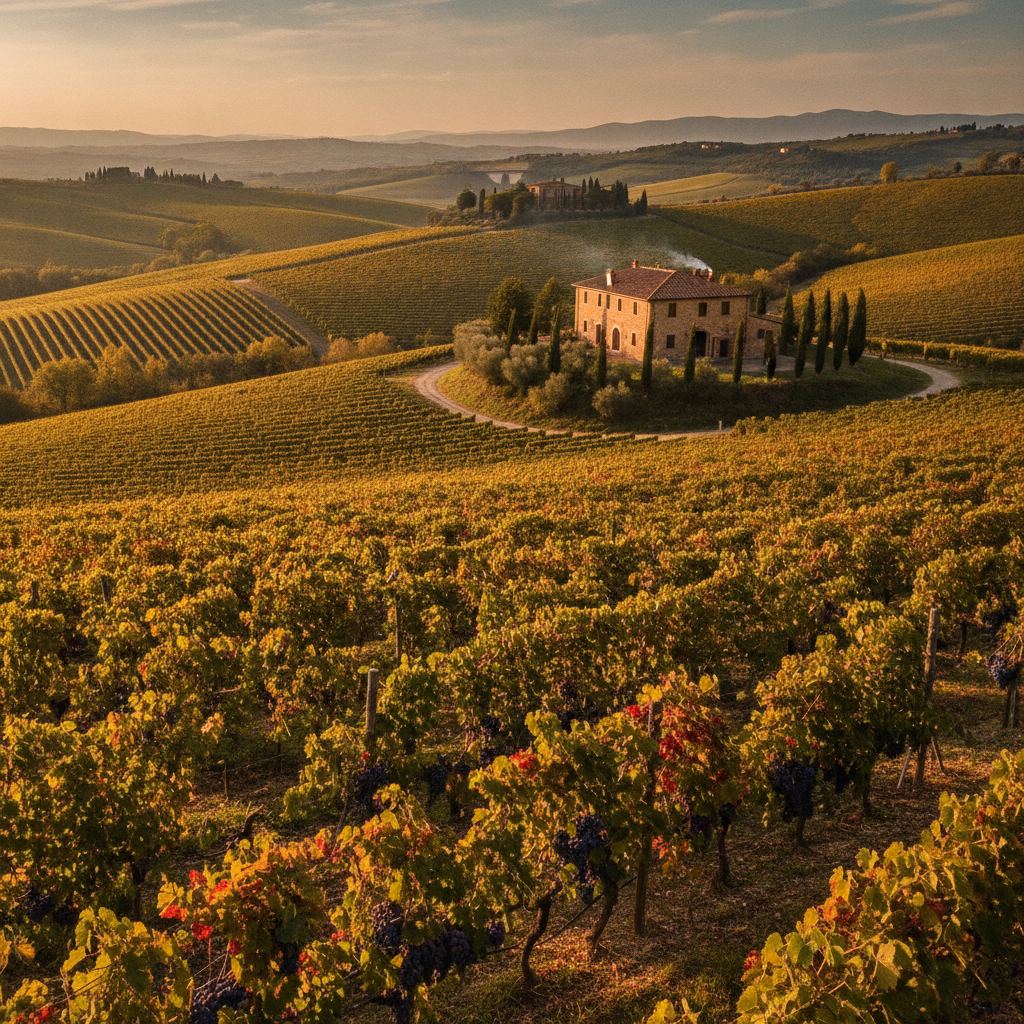
Although its origins are debated, Sangiovese is undeniably rooted in Italy, with widespread distribution across various regions, especially in the central areas. It is the most cultivated black grape varietal in Italy, adapting to diverse pedoclimatic conditions.
The varietal thrives in cool, fertile, and deep soils but also adapts to chalky, less fertile grounds, where it often achieves greater expressive quality. It grows well in temperate climates, favoring trellised training systems and variable pruning techniques. Its good productivity is influenced by targeted agronomic practices.
What are the ampelographic and phenological characteristics of Sangiovese?
According to the ampelographic description in Italy's National Register of Grape Varieties, Sangiovese has a woolly shoot tip, greenish-white with a slightly carmine edge, and medium-sized adult leaves that are pentagonal and five-lobed (sometimes three-lobed), with a U-shaped petiolar sinus and lyre-shaped upper lateral sinuses that are more or less closed. The leaf blade is generally flat, sometimes slightly wavy.
It is a mid-to-late ripening varietal, with harvest typically occurring between late September and mid-October. It requires careful phytosanitary management due to its susceptibility to fungal diseases but shows good tolerance to downy mildew.
What is the organoleptic and chemical profile of Sangiovese must?
Sangiovese grapes yield musts with good sugar content and sustained acidity, fundamental parameters for winemaking.
The wines exhibit a ruby red color, with aromas of spices, cherry, and plum, evolving with aging towards notes of tobacco and licorice. On the palate, tannins, full body, and good acidity stand out.
What is the export potential of Sangiovese and which are the target markets?
Sangiovese possesses significant export potential, owing to its Italian identity and versatility. It is already recognized internationally, thanks to wines like Chianti and Brunello di Montalcino.
Historical Markets and New Opportunities
- Europe and North America: Established markets such as Germany, the United Kingdom, the United States, and Canada offer continuous opportunities due to the growing demand for quality Italian wines.
- Asia: Emerging markets like China and India are showing increasing interest in European wines, where the narrative linked to Italian tradition can be a strong point of attraction.
- New Markets: Countries like Brazil, Australia, New Zealand, and the Nordic markets are developing a greater propensity for wine consumption, with a focus on Italian grape varietals.
Key Factors for Export
- Identity and Terroir: Sangiovese's strong connection to Italian territory is a distinctive element. Communicating this link offers a competitive advantage.
- Enological Versatility: The ability to produce wines with different profiles satisfies diverse consumer preferences and suits various price points.
- Consistent Quality: Maintaining high production standards is crucial for building and sustaining the trust of importers and consumers.
- Storytelling: Narrating the history of the grape varietal, agricultural practices, and the uniqueness of the terroir creates an emotional connection with the end consumer, supporting B2B buyers.
What are foreign buyers looking for in Sangiovese?
Importers seek wines with good value for money, a clear identity, and resale potential. For Sangiovese, this includes wines with recognized appellations, consistency, and reliability in organoleptic characteristics, margin potential, and marketing support from wineries.

Frequently Asked Questions
What are the main Italian regions where Sangiovese is cultivated?
Sangiovese is widely distributed across various Italian regions, with a particular concentration in the central areas of the peninsula.
Is Sangiovese a grape varietal suitable for aging?
Yes, Sangiovese wines are characterized by good acidity and tannins, which give them structure and aging potential.
What are some examples of famous Italian wines based on Sangiovese?
Wines such as Chianti and Brunello di Montalcino are well-known examples of Italian wines made from Sangiovese.
Sangiovese is an ambassador of Italian wine culture worldwide. Its intrinsic characteristics, combined with careful management and a targeted export strategy, make it a successful opportunity for Italian wineries aiming to expand their presence in international markets. Its ability to evolve with aging and express the nuances of the terroir ensures continued interest from importers and consumers seeking authenticity and quality.
Sources
- Sangiovese Grosso Grape: Traits, Cultivation and Export
- Sagrantino: Grape, Montefalco DOCG and Montefalco Rosso
- Sangiovese Grape: Biotypes, Denominations and Export Rules
- Rossese grape: Dolceacqua DOC, Riviera di Ponente, rules
- Serprino: the Glera of the Colli Euganei, DOC and rules
- Riesling in Italy: Renano and Italico, DOCs, Rules, Export