Sagrantino: Cultivation, Characteristics, and Market for Wineries
Sagrantino is an indigenous Italian grape variety with significant export potential, prized for its structure, complexity, and longevity. Originating from Umbria, this grape is capable of producing red wines of great character, ideal for conquering international markets. Its unique qualities, from its history to its enological characteristics, make it an excellence to be valued by Italian wineries aiming to expand their international presence. Understanding its cultivation needs and organoleptic profile is fundamental to communicating its value to international buyers and making the most of market opportunities. In-depth information: MASAF — National Register of Vine Varieties.
What are the origins and history of the Sagrantino grape?
Sagrantino's roots are deeply embedded in Umbria, particularly in the Montefalco area, with a history dating back at least to the 16th century. It is believed that the name derives from its use for wines intended for religious celebrations. Despite having risked extinction, it was rediscovered and revitalized in the 20th century, earning the Denominazione di Origine Controllata e Garantita (D.O.C.G.) Montefalco Sagrantino status.
In-depth information: Its history is a tale of resilience and recovery, a cultural heritage that adds value to the wine. The dedication of winemakers and institutions has allowed for the preservation and promotion of this unique grape, making it a symbol of Umbrian enology today.
What are the ampelographic characteristics of Sagrantino?
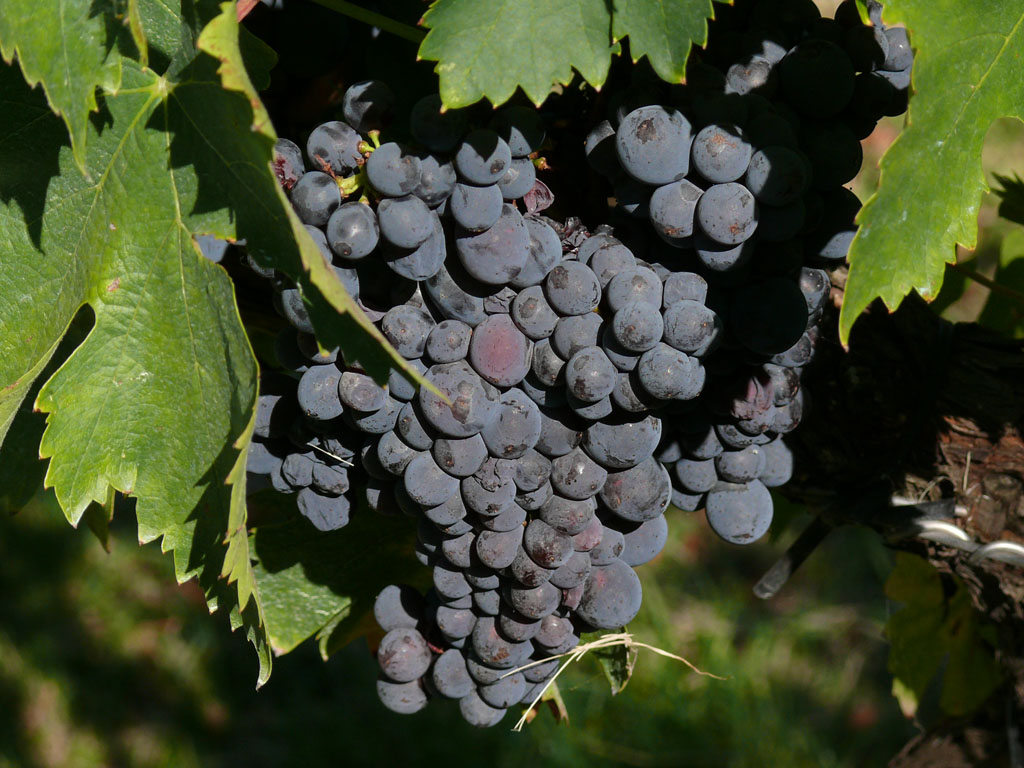
Sagrantino is a black grape variety with a woolly shoot tip and adult pentalobate leaves. It features closed petiolar sinuses and open, deep lateral sinuses. Its genetics, while not fully elucidated, distinctly set it apart from other Italian grape varieties.
In-depth information: These physical characteristics are the starting point for understanding the potential of the resulting wine. Its morphology is adapted to its native terroir, contributing to its uniqueness.
What are the environmental and cultivation needs of Sagrantino?
This grape variety favors cool, fertile, and well-drained soils, with a strong preference for the Umbrian hilly regions offering excellent sun exposure and significant diurnal temperature variations. It adapts well to expanded training systems with long pruning.
In-depth information: Agronomic management is crucial. While irrigation can increase production, it is essential to balance it to preserve the concentration and quality of the grapes, key elements for wines destined for export.
Is Sagrantino susceptible to diseases and adversities?
Sagrantino shows susceptibility to downy mildew and powdery mildew, requiring targeted monitoring and treatments, preferably sustainable. Phylloxera necessitates the use of resistant rootstocks to ensure the survival of the vines.
In-depth information: Managing phytosanitary adversities is a critical aspect for producing grapes of consistent quality, essential for meeting international market standards.
What are the characteristics of Sagrantino must and wine?
Sagrantino grapes exhibit good sugar content (17.0-20.0%) and variable acidity (7.0-10.0 g/l), ideal for structured and long-lived wines. The wine is distinguished by its intense ruby red color, complex aromas of black fruit, spices, and earthy notes, and a powerful palate with elegant tannins.
In-depth information: These parameters form the basis for producing wines capable of aging and evolving, characteristics highly sought after by discerning consumers and niche markets.
How is Sagrantino used in enology and what is its export potential?
Sagrantino is almost exclusively vinified as a single varietal, often aged in wood to soften tannins and enrich its bouquet. Its export potential is growing, especially in North American and European markets, thanks to its uniqueness, structure, and longevity.
In-depth information: Wineries focusing on quality and territorial storytelling can make Sagrantino an ambassador of Made in Italy enology, responding to the demand for authentic wines with character.
What do international buyers look for in Sagrantino?
International buyers seek authenticity tied to the territory (D.O.C.G. Montefalco Sagrantino), structure and longevity for collectible wines, versatility in food pairings, uniqueness for market differentiation, and good profit margin potential.
In-depth information: The ability to offer a distinctive product with a compelling story and intrinsic quality is what attracts international importers and distributors, eager to present high-value wines to their clients.
What is Wines Export's role for Sagrantino?
Wines Export collaborates with Italian wineries producing Sagrantino, particularly in Umbria, connecting foreign importers with qualified producers. Our network facilitates commercial agreements and lasting partnerships, supporting the export of high-quality wines.
In-depth information: Our B2B network is a strategic tool for wineries wishing to access international markets, offering a curated selection of producers and facilitating business relationships.
Frequently Asked Questions
Is Sagrantino a wine suitable for aging?
Yes, Sagrantino is known for its remarkable aging potential due to its tannic structure and aromatic complexity, which allow it to evolve positively over time.
What are the main characteristics that make Sagrantino interesting for export?
International buyers appreciate its authenticity tied to the Umbrian territory, its robust structure, longevity, and its uniqueness which distinguishes it from more common international varietals.
Which markets show the greatest interest in Sagrantino?
International markets, particularly North American and European ones, are showing growing interest in Italian red wines with character like Sagrantino.
The Sagrantino grape variety represents a strategic opportunity for Italian wineries looking to expand their presence in international markets. Its uniqueness, history, organoleptic characteristics, and aging potential make it a wine of great charm and value. Understanding the needs of foreign markets and effectively communicating the intrinsic value of this grape is key to fully unlocking its export potential.
If your winery is interested in exploring export opportunities for the Sagrantino grape variety or other excellent Italian wines, discover how our B2B service can support you.