How to Organise Sensory Analysis in the Winery: Internal Panel, Score Sheets, Tasting Conditions, Defect Thresholds, Triangle Tests, and How to Use It Before Bottling and Export
Wines Export Editorial · Last updated:
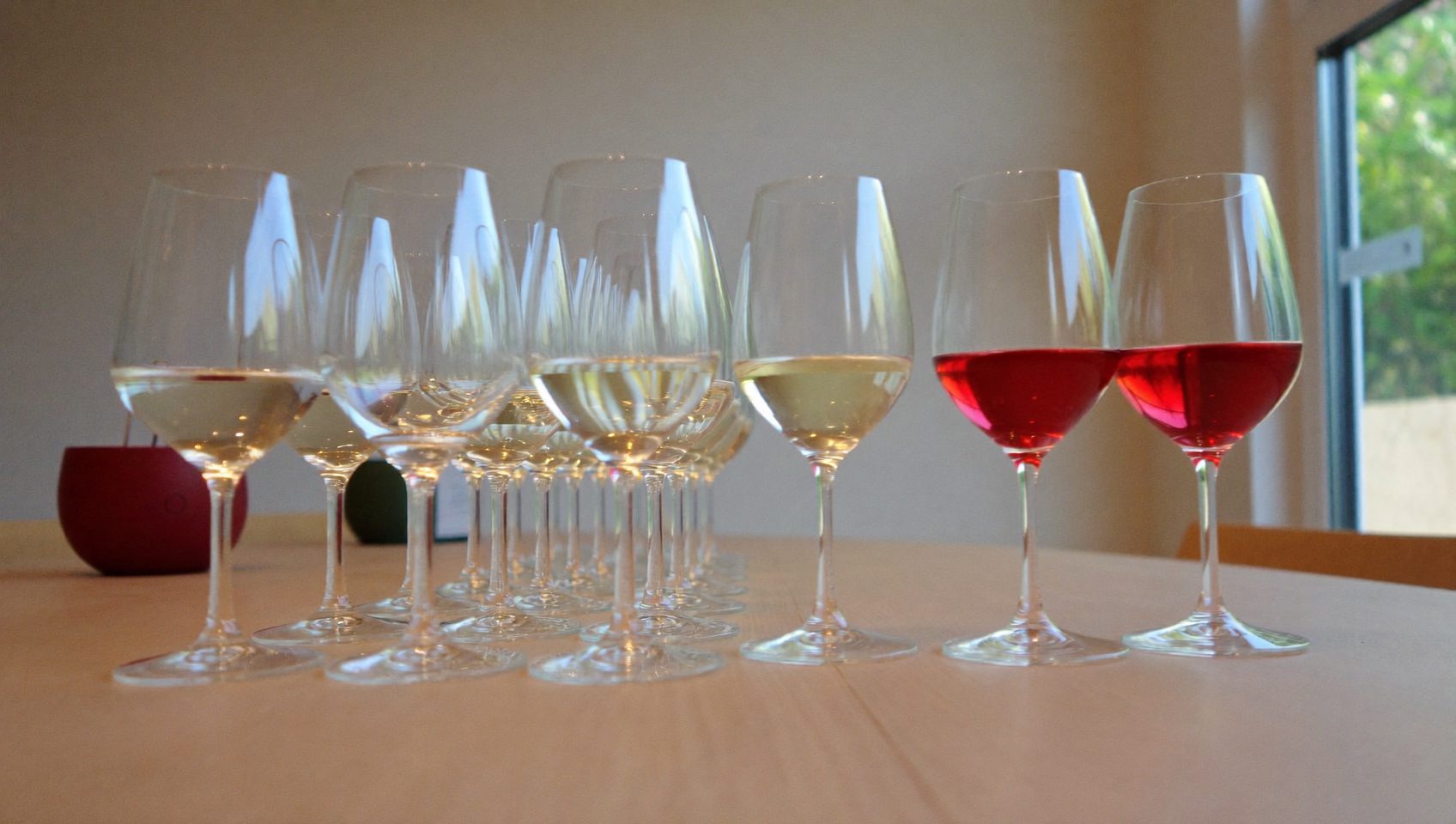
Organising sensory analysis in the cellar means pairing the laboratory's chemical reports with a structured blind tasting protocol, run by a group of trained assessors. An internal panel detects olfactory deviations that standard instrumentation struggles to pick up at low concentrations, validates blending decisions and checks that there is no perceptible difference between the sample approved by the foreign buyer and the lot ready for bottling. Without coded score sheets, consistent serving conditions and formal discriminating tests, daily tasting risks being reduced to the opinion of a single winemaker or owner, exposing the winery to olfactory adaptation and to commercial disputes when the goods arrive.
Why a structured internal panel is needed in the cellar
In medium-sized wineries, decisions on blends, fining and pre-bottling conformity often rest on informal tasting at the tank. This approach has a documented physiological limit: those who work every day in the same environment gradually lose sensitivity to the constant aromatic notes of their own cellar, a phenomenon known as cellar blindness or olfactory adaptation. If a barrel slowly but continuously releases ethylphenols, or if a batch suffers a slight reduction, the person who follows it every day risks unintentionally raising their own tolerance threshold.
Setting up an internal panel does not require hiring external professional tasters for every session. You can select the group from staff already on site: cellar workers, agronomists, logistics managers, sales and export office personnel. The only initial requirement is the absence of specific anosmias towards the main key compounds of wine and willingness to take part in short, regular calibration sessions. To learn more about the criteria for recruiting, training and statistically managing judges, you can consult the dedicated guide on how to structure a sensory analysis panel.
Involving people other than the winemaker brings a double operational advantage. On one hand it reduces hierarchical bias, provided that judgements are recorded in writing or on a mobile device before any comment is voiced aloud. On the other hand it aligns the technical language between those who produce the wine and those who present it at trade fairs or to international distributors, avoiding discrepancies between the actual profile of the lot and the commercial sheets sent to customers.
Tasting conditions, sample preparation and glassware
The reliability of a tasting session depends on controlling environmental and serving variables. A wine assessed amid the noise of the bottling line, next to cleaning products or under coloured neon lights will yield judgements distorted compared with the same sample examined in a neutral room. International technical standards defined by the International Organisation of Vine and Wine (OIV) and by ISO standards for sensory analysis rooms set out precise requirements that each winery can adapt to its own spaces.
The room used for technical tastings must be physically separated from the vinification and storage areas, free of foreign odours, quiet and lit with uniform, neutral light, similar to daylight. This allows clarity and colour tone to be assessed without chromatic distortion. When the aim of the session is solely to check an olfactory or gustatory difference between two tanks of slightly different colour, the use of opaque black glasses prevents sight from influencing the olfactory and gustatory judgement.
Glassware and service must also be standardised. Using uniform tasting glasses with a tulip shape, which concentrates volatile substances towards the nose, washed without scented rinse agents and stored in odour-free cabinets, eliminates false positives linked to the glass or packing cardboard. Samples should be served at the same temperature, checked with a thermometer before pouring, and in identical volumes. Each glass must carry a random multi-digit code instead of the tank number or label name: even the most experienced assessor is affected by expectation bias if they know they are tasting the top selection rather than the base wine.
Score sheets: what to measure and which model to choose
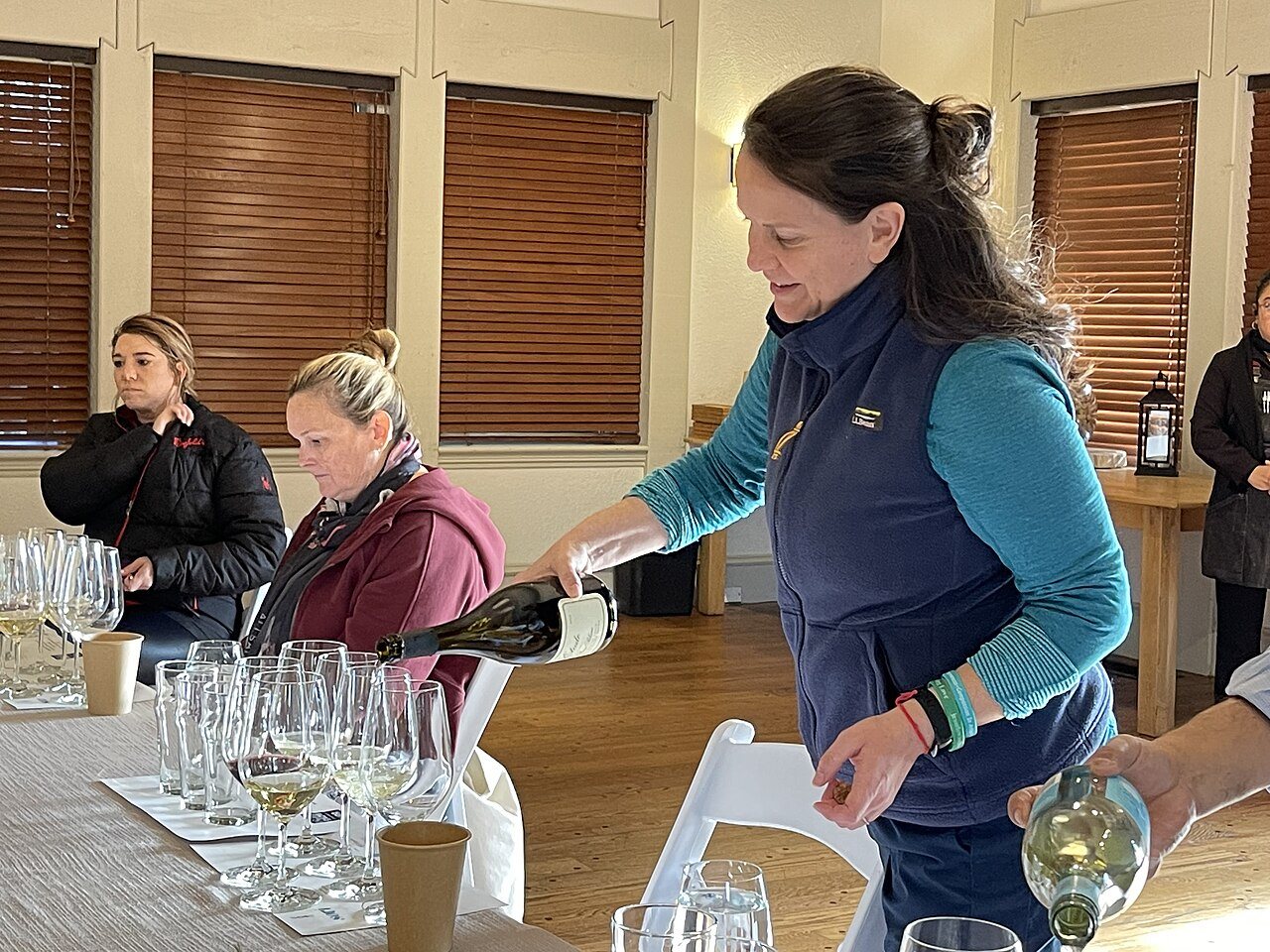
Using a single sheet for every cellar tasting slows down the work and generates unusable data. A wine competition sheet, designed to assign an overall merit score, is of little use when you need to decide which fining agent strips the mid-palate less, or whether a batch destined for mass retail keeps continuity with the previous vintage.
In a functional cellar protocol it is worth adopting three distinct types of sheet, each linked to a specific technical purpose:
| Sheet type | Cellar objective | Measurement structure | When to use it |
|---|---|---|---|
| Discriminating sheet | Establish whether a perceptible difference exists between two samples | Forced choice (selecting the different sample) with no intensity scales | Change of cork supplier, filtration trials, comparison of two tanks before blending |
| Descriptive sheet (profile) | Measure the intensity of specific visual, olfactory and gustatory descriptors | Linear or numerical scales on chosen attributes (acidity, astringency, fruit note, wood) | Choice of blending components, monitoring of ageing, drafting export technical sheets |
| Defect and conformity control sheet | Validate the absence of anomalies and adherence to the company standard | Checklist (absent / suspected / present) and suitability judgement (approved / blocked) | Pre-bottling control, verification of commercial samples before shipment |
In descriptive sheets, the selection of descriptors should be reduced to the essentials. Asking panel members to rate dozens of items for every glass causes sensory fatigue after a few samples. It is more effective to focus on structural attributes (acidity, saltiness, body, quality and dryness of tannin, persistence) and on a few well-defined aromatic families, always adding a dedicated line for olfactory cleanliness to flag any abnormal notes.
Main defect thresholds and preventing adaptation
The distinction between detection threshold (the minimum level at which an assessor senses that something differs from the neutral wine), recognition threshold (the level at which they identify the exact compound or defect) and rejection threshold (the level at which the defect compromises the marketability of the wine) is the cornerstone of diagnostics in the cellar. This distinction carries direct economic weight when you export: a northern European importer, a state monopoly or an Asian buyer often has rejection thresholds much lower than those who vinified the bulk, especially regarding volatile phenols, acetaldehyde and sulphur compounds. The physiological and cognitive mechanisms behind these variations are analysed in the guide on perception thresholds and cognitive biases in tasting.
To keep the panel responsive and aligned on the main deviations, you can organise periodic calibration sessions by adding known quantities of the compounds responsible for the most frequent defects to a neutral base wine:
| Anomaly or defect | Reference chemical compound | Typical sensory descriptor | Critical impact in export controls |
|---|---|---|---|
| Cork taint / mould | 2,4,6-trichloroanisole (TCA) and other haloanisoles | Wet cardboard, damp cellar, fruit suppression at sub-threshold doses | Immediate rejection of the lot; at low doses it dulls varietal aromatics without being recognised as cork taint |
| Phenolic character (Brettanomyces) | 4-ethylphenol, 4-ethylguaiacol | Leather, horse sweat, plaster, smoked clove | Many buyers and monopolies reject wines at the first hint of animal character, before the defect covers the fruit |
| Premature oxidation | Acetaldehyde (ethanal) | Bruised apple, walnut, loss of freshness and early browning | High risk for white and rosé wines after sea transport or storage in non-climate-controlled warehouses |
| Reduction and sulphur compounds | Hydrogen sulphide, mercaptans (light thiols) | Hard-boiled egg, burnt rubber, garlic, onion, closed nose | Difficult to correct after bottling; intensified by closures with very low oxygen permeability |
| Volatile acidity and acetic spoilage | Acetic acid and ethyl acetate | Solvent, nail varnish, pungent hardness on the finish | Besides depreciating the organoleptic profile, must remain within the legal limits of the destination countries |
Training serves not only to recognise the clear-cut defect but, above all, to identify its masking effect when the compound sits just below the individual recognition threshold. To link the panel's findings to microbiological or chemical causes and to corrective actions in the tank, you can refer to the guide on diagnosis and prevention of the main wine defects. Any corrective treatment — from the use of specific fining agents to the use of copper or chitosan — must always comply with the OIV International Code of Oenological Practices and with the limits set by the European Union in Delegated Regulation (EU) 2019/934, as summarised in the framework of authorised oenological practices and legal limits.
Triangle test and preference testing in technical decisions
When in the cellar you must take an operational decision between two technical options, asking those present "which of the two do you prefer?" is often the wrong question. Before expressing a preference, you must establish, on a statistical basis, whether the two samples are truly distinguishable. The most robust and quickest tool for this purpose is the triangle test.
In the triangle test, each panel judge is presented simultaneously with three coded glasses: two contain exactly the same wine (for example tank A) and one contains the wine to be compared (tank B). The possible combinations (AAB, ABA, BAA, BBA, BAB, ABB) must be balanced and randomly distributed among participants. The assessor is only asked to indicate which of the three samples differs from the other two, being required to give an answer even when they perceive no clear differences.
Since guessing gives a one-in-three chance of picking the odd glass, a single result has no value; what matters is the total number of correct answers out of all participants, compared with the statistical tables of the binomial distribution for the triangle test. In the cellar, this protocol has immediate application in four recurring situations:
- Blending several tanks of the same lot: before assembling two tanks that on paper have the same analytical parameters, the triangle test checks whether one of them has developed a slight olfactory deviation that would contaminate the entire mass.
- Fining and filtration trials: by comparing the untreated control with the fined or filtered samples, you verify whether the treatment has perceptibly altered the structure or aromatic framework.
- Evaluation of closures and oenological supplies: after a trial ageing period with corks or woods from different suppliers, the test establishes whether the change of material alters the wine's profile.
- Continuity between bottling lots: when a high-turnover wine for export is bottled in several runs during the year, comparison with the previous run measures the consistency of the house style.
The preference or ranking test comes into play only in a second phase, once the difference between samples has been established — for example when choosing among three deliberately different blending components. Here too, collecting blind preferences makes it possible to weigh gustatory balance without being influenced by the industrial cost of the individual fractions used in the blend.
Sensory control before bottling and for export samples
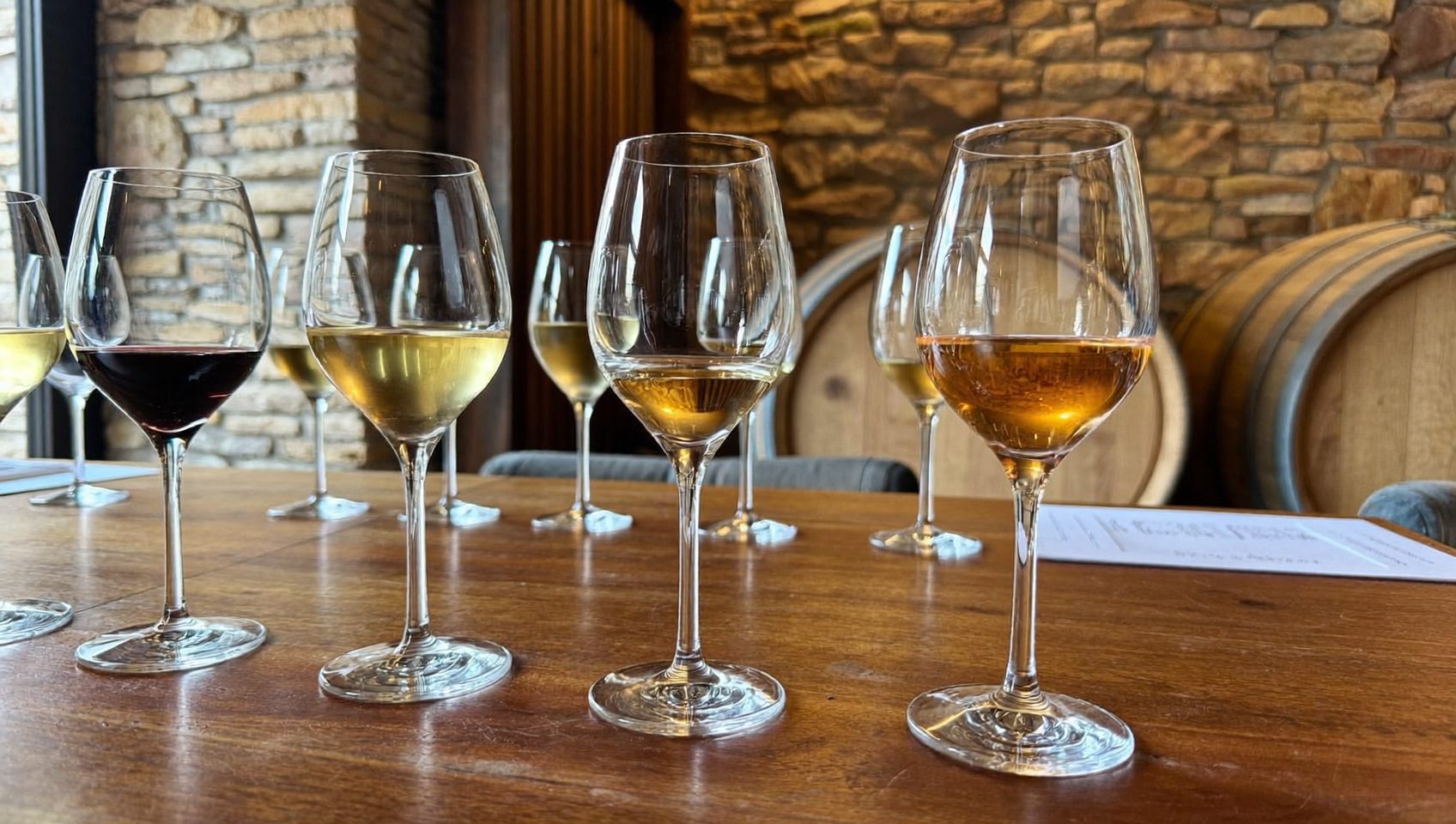
In managing sales abroad, the most delicate point is not the preparation of the first sample to win over the importer, but the match between that approved sample and the pallet that will leave months later. If you send a foreign buyer a sample drawn from a tank not yet stabilised or from a single particularly expressive barrel, and then ship a lot that was tightly filtered and sulphited the week before departure, the distributor will detect an immediate discrepancy. In contracts with foreign mass retail or monopolies, non-conformity with the reference sample (often called master sample or award sample) can lead to customs clearance being blocked or the contract being terminated.
To eliminate this risk, you can integrate sensory analysis into the preparation flow of export orders through three mandatory steps:
- Pre-shipment validation of the commercial sample: no sample leaves the cellar for a trade fair, a competition or an importer without having been blind-tasted by at least three members of the internal panel, and without a twin bottle (counter-sample) being archived in the cellar at controlled temperature, recording date, tank code and the preparation status of the mass.
- Pre-bottling release tasting: once tartaric stabilisation, fining and any pre-filtration of the final mass have been completed, the panel performs a direct comparison between the archived counter-sample and the wine ready to go to the line, verifying the absence of olfactory deviations and consistency of structure.
- Control at end of bottling and after rest: during bottling, bottles are taken at the start, middle and end of the shift. In addition to physical checks on fill levels, pressure, dissolved oxygen and closure integrity — which form part of the wider cellar quality control protocol — the panel re-tastes the samples a few days after bottling to confirm that bottling stress has passed before authorising international shipment.
Keeping a digital log of these sessions, linked to the lot number printed on the bottle, protects the winery in case of complaints: if a foreign customer reports an oxidation or heat-damage problem on arrival, you can taste the counter-sample kept in your archive and demonstrate, with panel data and chemical analyses in hand, that the goods left in good condition and that the thermal damage occurred during transport handled by the carrier.
Frequently asked questions
How many people are needed to set up an internal tasting panel in a medium-sized winery?
You do not need a large group like those in research centres: in a structured winery you can form a stable core by involving the technical, agronomic and sales staff already on site. The key is to ensure that a sufficient number of trained assessors take part in every decision session or triangle test, so that judgement does not depend on just one or two people.
How often should the panel be recalibrated on wine defect thresholds?
It is advisable to schedule calibration sessions with chemical standards or spiked wines before the critical moments of the year: before harvest, during the selection of winter blends and before the large spring bottling runs. Brief sessions dedicated to two or three compounds at a time (such as TCA, ethylphenols, acetaldehyde or acetic acid) are enough to keep attention high and to verify that no member of the group has developed adaptation.
How do you prevent the judgement of the winemaker or owner from influencing the other tasters?
The fundamental rule is absolute silence during tasting and independent completion of the sheets before any discussion. Serving samples blind with random numerical codes, and changing the order of presentation among participants, prevents both hierarchical influence and bias linked to knowing the tank or the label.
Why can a wine judged clean by the chemical laboratory still be rejected at tasting by a foreign buyer?
Routine chemical analyses measure general parameters (alcohol, sugars, total and volatile acidity, sulphur dioxide, pH), but they do not automatically look for trace compounds such as haloanisoles, pyrazines, light mercaptans or volatile phenols, unless targeted and costly gas chromatography analyses are requested. The trained human nose has very low detection thresholds for these molecules and immediately picks up a compressed or dirty aromatic profile.
Sources
- OIV — International Code of Oenological Practices
- EUR-Lex — Delegated Regulation (EU) 2019/934 on authorised oenological practices
- OIV — International Organisation of Vine and Wine (Standards and Technical Documents)
- ISO 8586:2012 — Sensory analysis: selection, training and monitoring of assessors
- CREA — Council for Agricultural Research and Economics
- Wine deacidification: calcium carbonate vs bicarbonate
- Wine bacteria: useful lactic and spoilage types
- Wine defects: TCA, Brett, volatile acidity, oxidation
- Wine analysis methods: OIV, FTIR, enzymatic kits compared
- Wine enzymes: pectolytic, extraction, fining and dosage
- Wine Acidification and Deacidification: The Practical Guide