Liquid and powder wine enzymes: pectolytic enzymes for free-run juice and fining, extraction enzymes for red wines, beta-glucanase — dosage, temperatures, mistakes
Wines Export Editorial · Last updated:
Wine enzymes are catalytic proteins used in the winery as processing aids to speed up the breakdown of grape polysaccharides, increasing juice yield, accelerating fining, extracting phenolic and aromatic compounds from the skins and improving filterability. Under European regulation and the OIV International Code of Oenological Practices they are classified as processing aids rather than additives, because they exhaust their function during processing and remain inactive in the bottled wine. Choosing the right preparation between liquid and micro-granular formulations, and managing dosages, operating temperatures and contact times in relation to bentonite, allows you to optimise processing times without altering the sensory balance of the wine.
What enzymes do in must and wine
The grape berry naturally contains endogenous enzymes (pectinases, proteases, oxidases), but their activity during crushing and maceration is often insufficient to rapidly break down the cell walls of the pulp and skin, especially at low temperatures or at the acidic pH of must. The grape cell wall consists of a dense network of pectins (chains of D-galacturonic acid), cellulose, hemicellulose and structural proteins. When grapes are crushed, pectins pass into the must, absorb water and swell, increasing the viscosity of the liquid, keeping solid particles in suspension and hindering the separation of juice from the fibrous parts.
The addition of exogenous enzyme preparations, obtained by controlled fermentation of selected fungal strains (mainly Aspergillus niger and Trichoderma) and regulated among the oenological practices authorised in the European Union by Delegated Regulation (EU) 2019/934, acts by specifically cutting these chemical bonds. The OIV (International Organisation of Vine and Wine) codifies four main uses of enzymes on grapes, musts and wines: improving maceration and the extraction of juice and other grape compounds, clarifying musts and wines, improving filterability and releasing aromatic substances from glycosylated precursors.
From a biochemical standpoint, a commercial preparation almost never contains a single enzyme activity, but a balanced complex designed for the technological goal. The main activities include:
- Pectin methylesterase (PME), polygalacturonase (PG) and pectin lyase (PL): work in sequence to demethylate and fragment the main pectin chain, reducing must viscosity.
- Cellulases and hemicellulases: attack the secondary fibrous structures of the exocarp (skin) cell wall, facilitating the release of vacuolar content.
- Beta-glucanases: specifically hydrolyse beta-glucans produced by Botrytis cinerea or by yeasts in autolysis.
- Glycosidases (such as beta-glucosidase): split the bond between sugars and free aromatic compounds (terpenes, norisoprenoids), making them volatile and perceptible to smell.
To ensure the aromatic cleanliness of the wine, purified oenological formulations are free of unwanted secondary activities such as cinnamyl-esterase, which would release cinnamic acids that yeasts can convert into vinylphenols (responsible for medicinal or varnish notes), and anthocyanase (non-specific beta-glucosidases), which would cause discolouration of red and rosé wines.
Pectolytic enzymes: free-run juice yield and fining
In white and rosé winemaking, pectolytic enzymes are applied from the moment grapes are received, directly in the loading hopper, on the crushed grapes or inside the press. The hydrolysis of pectic substances in the pulp reduces the mechanical resistance of the cells, allowing the must to drain more easily. This results in a larger fraction of free-run juice (the juice that drains by gravity or at very low pressure) and a reduction in the overall duration of pressing cycles and in the number of mechanical turns needed to exhaust the pomace. Fewer press rotations mean less laceration of skins and seeds, less extraction of potassium and oxidisable polyphenols, and lower initial turbidity.
Once the must has been separated from the skins, the second critical stage is settling (pre-fermentation clarification). Pectins act as protective colloids: they surround the negatively charged suspended particles and prevent them from aggregating and settling at the bottom of the tank. The pectolytic fining enzyme degrades this protective coating, allowing suspended particles to flocculate rapidly.
In winery trials on Chardonnay musts using pectinase at a dose of 2 g/hL, turbidity drops in less than 6 hours to values between 50 and 100 NTU (Nephelometric Turbidity Units), compared with 300 NTU in the untreated control, forming more compact lees and reducing volume losses at racking. If you use flotation (continuous or batch) instead of static cold settling, specific pectolytic enzymes with fast kinetics are required (usually dosed between 0.5 and 2 mL/hL for liquid formulations), designed to break down viscosity in a short time and form flocs of suitable size to bind to gas microbubbles and rise quickly to the surface. Formulations enriched with hemicellulase activities also solve the clarification difficulties typical of varieties naturally rich in pectins and mucilages, such as Moscato, Sauvignon Blanc, Garganega, Greco, Catarratto and Trebbiano, or of lots harvested at high temperatures.
Extraction in reds: colour and tannins
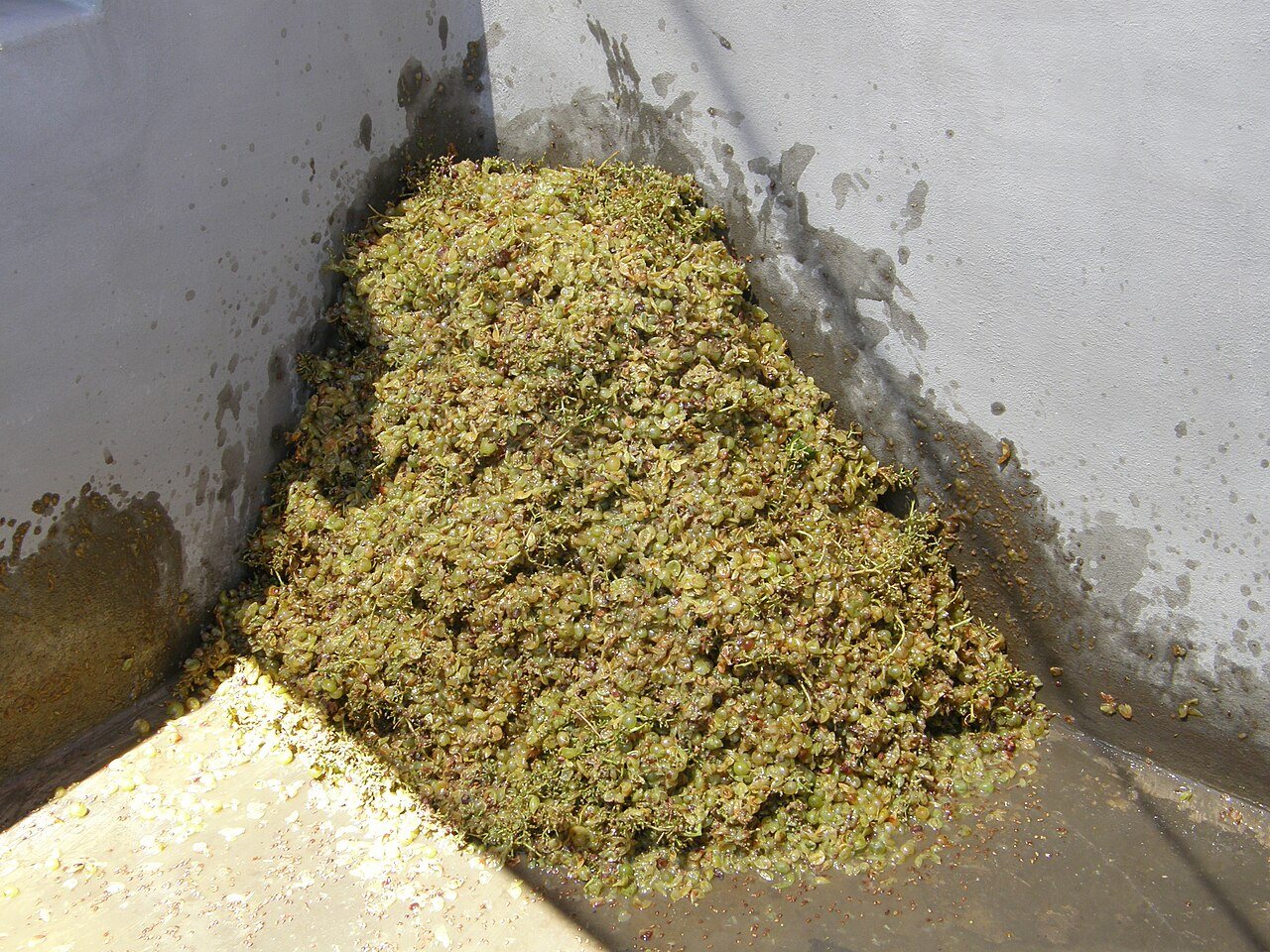
In red winemaking techniques, the goal of enzyme use during maceration is not only juice yield but the selective dissolution of compounds contained in the skin cells. Anthocyanins (responsible for red colour) are located in the vacuoles of the first cell layers of the skin hypodermis and are easily soluble even in the absence of alcohol, while tannins are bound both to vacuolar membranes and to cell walls and seeds.
Maceration enzymes for red wines combine pectolytic activity with calibrated cellulase, hemicellulase and protease activities. During crushing and the first days of fermentation, this enzyme complex progressively dismantles the pectocellulosic barrier of the skin cells, rapidly releasing skin anthocyanins and tannins (less astringent and more reactive than seed tannins). At the same time, the release of cell wall polysaccharides (in particular type II rhamnogalacturonans) favours the formation of stable bonds between anthocyanins and tannins, consolidating the stability of polyphenols, tannins and colour over time without increasing unstable colloidal load.
The use of these preparations (commonly dosed between 2 and 4 g per quintal of grapes in micro-granular formulations) allows the winery to modulate the length of maceration: you can shorten contact times with the skins to obtain young, fruity and soft red wines with intense colour, or maintain classic macerations on grapes intended for ageing to maximise polyphenolic structure and facilitate the subsequent draining and pressing of the fermented pomace. Even in thermovinification protocols, the combined use of heat-tolerant pectinases produces measurable increases between 10% and 15% in colour intensity compared with untreated controls, while also improving the aromatic cleanliness of the fermented wine.
Beta-glucanases and filterability
A separate chapter concerns wines made from grapes affected by Botrytis cinerea (grey rot or noble rot) and wines subjected to prolonged ageing on fine lees (sur lie). Botrytis secretes beta-glucan into the must (a high molecular weight glucose polymer with beta-1,3 and beta-1,6 bonds), a protective colloid that hinders the settling of particles and rapidly clogs filter pads and microfiltration membranes before bottling.
Even a limited percentage of botrytised bunches drastically reduces the workability of the wine: in trials on wines made from grapes 10% affected by Botrytis cinerea, the filterability index is 40% lower than that of the wine made from the same healthy grapes. Traditional pectolytic enzymes have no effect on beta-glucan. To solve the problem, specific beta-glucanase-based preparations are required, authorised by the OIV and by Delegated Regulation (EU) 2019/934 to improve the clarification and filterability of wines. Added to the wine after fermentation at an average dose of 3 g/hL and at a temperature of at least 15 °C, beta-glucanase hydrolyses the long glucan chains in about two weeks, restoring filterability to the levels of a wine made from healthy grapes.
The same beta-glucanase-based preparations, acting on the beta-glucans that make up the cell wall of Saccharomyces cerevisiae, are used at the end of fermentation to accelerate yeast lysis. This treatment shortens bâtonnage times, releasing mannoproteins, peptides and cell wall polysaccharides into the wine that increase mouthfeel, improve tartaric and protein stability and protect the aromatic profile from oxidation.
Liquid or powder, dosages, temperatures
Wine enzymes are commercially available in liquid form or in solid form (powder or, more commonly, low-dust micro-granules). The choice between the two depends on the organisation of work in the winery, the type of dosing system and the required shelf life.
Liquid preparations are ready to be diluted and fed directly in-line through dosing pumps (for example in continuous flotation plants or on the crushed-grape pipe), but they contain preservatives to stabilise the solution and are more sensitive to temperature fluctuations during storage. Micro-granular preparations offer greater stability over time (when stored closed in a cool, dry place they maintain nominal activity from one vintage to the next), but must be dissolved in water or must before addition. Once dissolved in water, powder or micro-granular enzymes retain full activity for only a few hours, so the solution should be prepared immediately before use.
| Parameter / Application | Main enzyme type | Common form and indicative dose | Timing of addition | Operational notes and constraints |
|---|---|---|---|---|
| Pressing and free-run juice (whites/rosés) | Pectolytic (PME, PG, PL) | Liquid or micro-granules: 1 - 3 g/q of grapes | On grapes in hopper or in press | Reduces pressing cycles and polyphenol release |
| Static settling of musts | Pectolytic clarifying | Liquid or micro-granules: 1 - 2 g/hL (or mL/hL) | In the drained must in the tank | Lowers turbidity to 50-100 NTU in about 6 hours |
| Continuous or batch flotation | Fast-kinetics pectolytic | Liquid: 0.5 - 2 mL/hL | In-line before the saturator or in the tank | Requires rapid depectinisation so flocs can rise |
| Skin maceration and reds | Pectolytic + cellulase / hemicellulase | Micro-granules: 2 - 4 g/q of grapes | At crushing, on the crushed grapes | Absence of cinnamyl-esterase and anthocyanase is mandatory |
| Aroma release (terpenes) | Beta-glucosidase + pectinase | Micro-granules: about 5 g/hL | End of alcoholic fermentation | Inhibited by glucose; stop with bentonite once target reached |
| Filterability and yeast lysis | Beta-glucanase | Micro-granules: 2 - 4 g/hL (average 3 g/hL) | Finished wine or on fine lees | Requires at least 15 °C and about 2 weeks of contact |
Temperature and pH are the two physical factors governing the speed of the enzyme reaction. Most wine enzymes have their optimum activity around 35-40 °C, denature irreversibly above 60 °C and slow down until inactivated below 5 °C. If you work with cryomaceration or static settling at low temperatures (for example between 8 and 10 °C), or on musts with very low pH (below 3.0) or with short contact times, you must compensate for the kinetic slowdown by using the higher doses within the range indicated by the producer or by choosing formulations specific for low temperatures.
Incompatibilities and mistakes
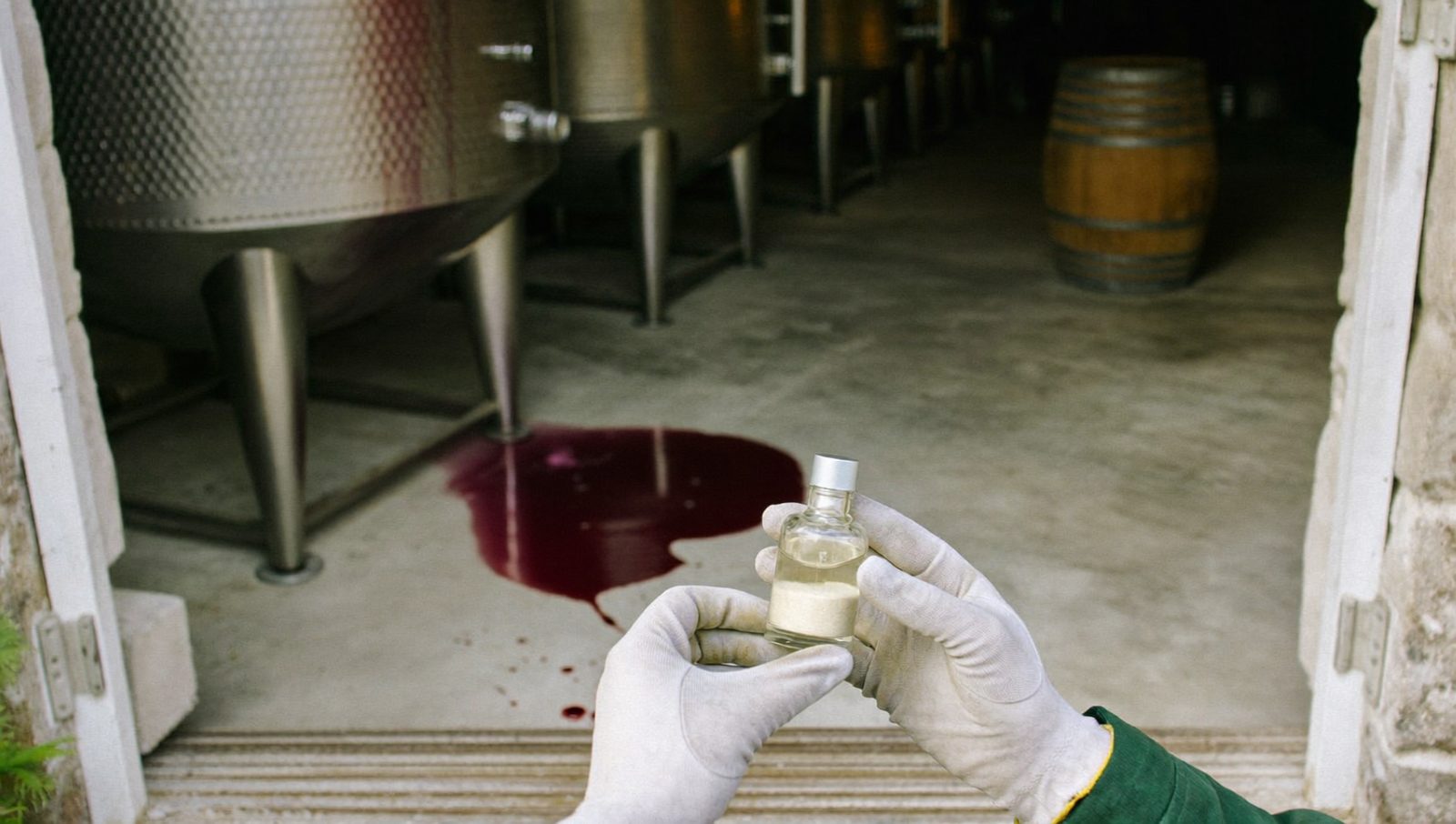
The most frequent operational mistake in the winery is adding enzymes and bentonite at the same time. Enzymes are proteins carrying a positive electrical charge at the pH of must and wine, so they are strongly adsorbed and inactivated by the negatively charged bentonite lamellae. If you plan to use fining agents such as bentonite, PVPP and vegetable proteins on must or wine, you must respect a strict time sequence: add the enzyme first, disperse it evenly throughout the mass and wait at least 30 minutes, up to 2 hours, before introducing the bentonite. Conversely, this same incompatibility is exploited positively when glycosidase enzymes are used to release varietal aromas: once the desired aromatic profile has been reached after at least 15 days of contact, a bentonite treatment removes the enzyme and completely blocks beta-glucosidase activity, preventing excessive hydrolysis that could destabilise colour or alter the bouquet.
A second point of attention concerns tannins and sulphur dioxide. Oenological polyphenols and tannins can complex enzyme proteins and reduce their effectiveness: in this case too, it is good practice to wait at least 30 minutes between homogenising the enzyme and any addition of tannin. As regards sulphur dioxide (SO2), oenological enzymes tolerate normal must sulphiting doses (up to 150 mg/L of total SO2 does not significantly reduce their activity), but they must never be introduced at the same point or at the same moment as the concentrated metabisulphite or liquid SO2 solution is injected, because the high local concentration would denature the enzyme proteins.
Finally, for aroma-releasing enzymes (beta-glucosidases), the classic mistake is adding them to the must at the beginning of alcoholic fermentation. Beta-glucosidase activity is in fact strongly inhibited by the presence of glucose: to obtain the release of terpenes and norisoprenoids, the product should be dosed at the end of alcoholic fermentation, on dry wines with minimal residual sugars.
Frequently asked questions
Do wine enzymes have to be declared on the label as wine ingredients?
No. Under European Union legislation (Delegated Regulation (EU) 2019/934) and the OIV Code, wine enzymes are classified as processing aids rather than additives. Because they act during processing and are subsequently inactivated or removed through fining and filtration without any technological effect in the finished product, they are not listed among the ingredients on the label, except where allergens subject to a specific labelling requirement are present (such as egg lysozyme, which follows its own rules).
How long should you wait between adding the enzyme and adding bentonite?
Bentonite adsorbs proteins and deactivates enzymes if added at the same time. In must, you should first disperse the enzyme evenly and wait at least 30 minutes (ideally 1-2 hours during static settling) before adding bentonite, so that the pectinases can complete the breakdown of the pectic chains.
At what temperature do pectolytic enzymes stop working?
Wine enzymes reach maximum reaction speed around 35-40 °C, slow progressively in the cold until they stop below 5 °C, and undergo irreversible thermal denaturation above 60 °C. In cold processing (below 10 °C) you should use preparations specific for cryomaceration or increase the dose and contact times.
How can you test in the winery whether the must is ready for flotation or racking after enzyme treatment?
To verify complete depectinisation of the must, use the alcohol test (pectin test): take a small sample of clear must (filtered or centrifuged), add twice its volume of acidified ethyl alcohol in a test tube and shake. If no filaments or gelatinous precipitates form, the pectins have been degraded and you can proceed with flotation or fining.
Sources
- Wine filtration aids: diatomaceous earth, perlite, cellulose
- Wine defects: TCA, Brett, volatile acidity, oxidation
- Wine filtration: roughing, fining and sterile filtration
- Wine deacidification: calcium carbonate vs bicarbonate
- Wine fining agents: bentonite, PVPP, plant proteins, dosage
- Cellar sensory analysis: internal panel and score sheets