Wine analysis methods: OIV, FTIR, enzymatic kits and rapid tools
Wines Export Editorial · Last updated:
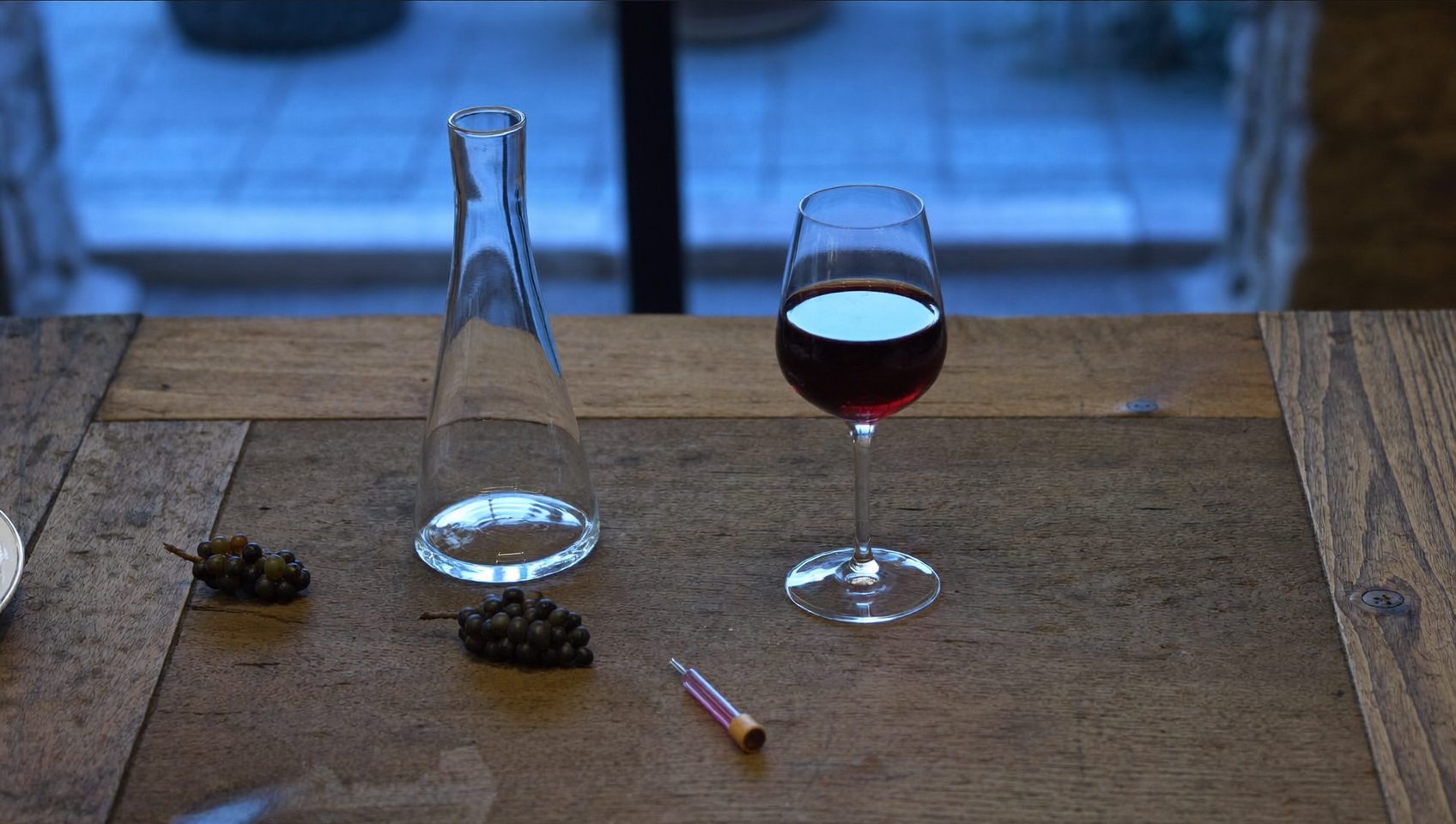
Two families of methods are used to analyse wine, and they cannot replace each other. The first is the set of reference methods collected by the OIV, which you use when a certificate or a customs authority asks for a verifiable result. The second includes routine methods, such as calibrated FTIR and enzymatic kits, which serve internal control in the winery. For exporters, what matters is knowing, parameter by parameter, which of the two is required. Before choosing, review cellar analysis tools and what you really need.
Why official methods and routine methods both exist
An official method is described precisely, tested in trials across different laboratories, and designed to give the same result wherever it is performed. A routine method is faster, costs less per sample and answers the practical question facing the winery: is the wine ready for bottling? The two are not mutually exclusive, but they do not carry the same weight in front of an importer or a customs officer.
The point that is often overlooked is this: a result obtained with a rapid instrument can be correct and still be unusable in a document, because the document requires a specific method. For each data point, an exporter should therefore ask two questions: which method is required, and who must carry it out.
OIV methods and the International Compendium
The OIV publishes the Compendium of International Methods of Wine and Must Analysis, a collection of analytical methods for wines and musts organised into sections. The sections cover physical characteristics, sugars, alcohols, acids, gases and other organic compounds, with entries such as total acidity, volatile acidity, pH, glycerol, methanol and ochratoxin A. The Compendium also contains a part on provisions relating to proprietary methods, meaning those developed and sold by a company, and a section dedicated to the classification of methods.
Each method in the Compendium is marked with a type, indicated as Type-I, Type-II, Type-III or Type-IV. This label is not a simple quality judgement and is not easy to translate: it indicates the rank of the method within the collection and should be read on the OIV entry for each parameter. When a certificate such as the VI-1, the wine analysis certificate, and where it is still required asks for a value, the winery must ask the issuing body which method it accepts, before choosing the instrument.
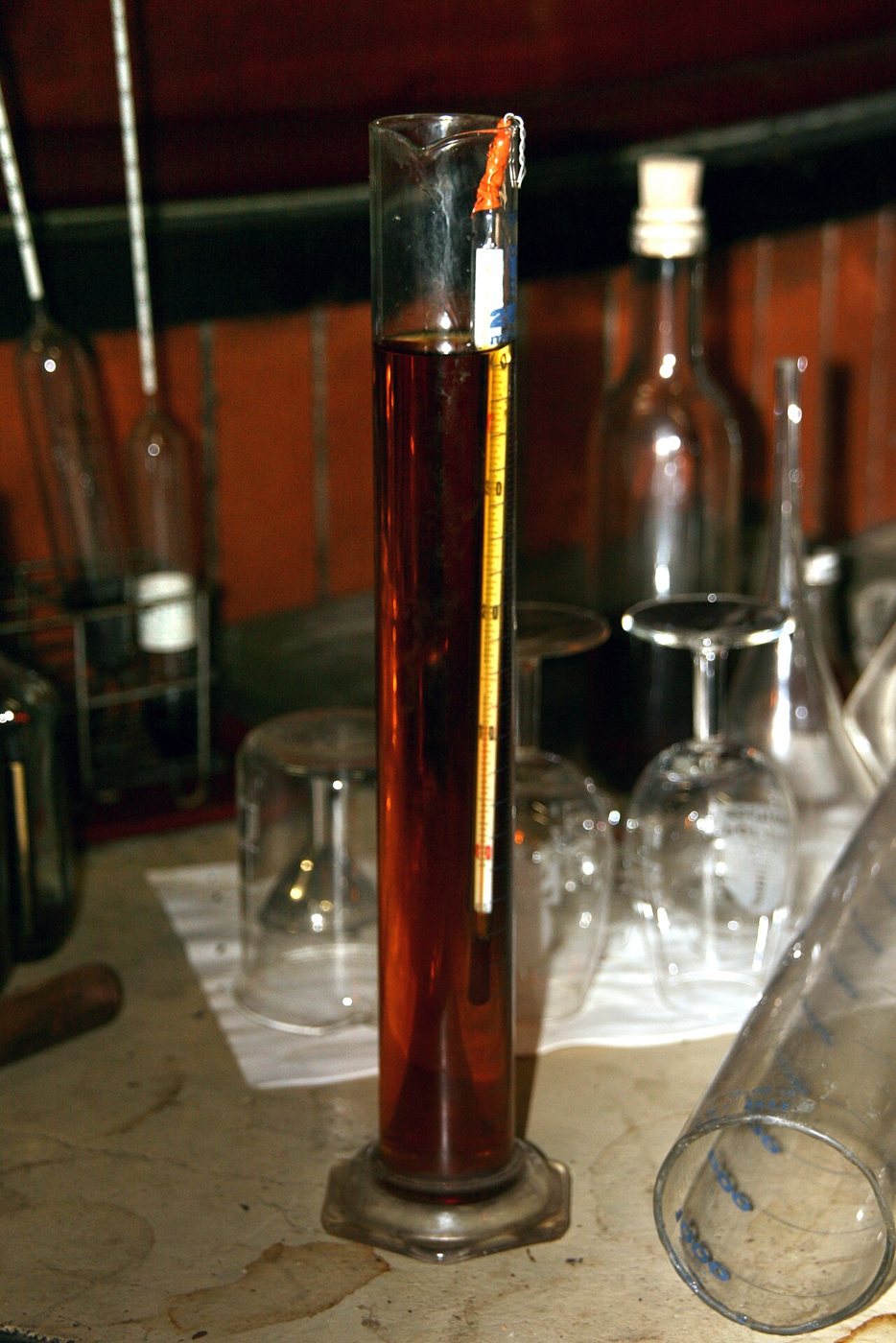
Which parameters have a reference enzymatic method
The table below lists some parameters that the OIV Compendium covers with enzymatic methods or with gas chromatography and HPLC methods. The entries are taken from the Compendium headings, with the relevant type. It does not replace reading the full method, but it shows where a bench kit alone is not enough for a value that must be certified.
| Parameter | Method in the OIV Compendium | Type indicated |
|---|---|---|
| Glucose and fructose | Enzymatic method | Type-II |
| L-malic acid | Enzymatic method | Type-II |
| Acetic acid | Automated enzymatic determination in wines | Type-II |
| D-gluconic acid | Automated enzymatic determination in wines and musts | Type-II |
| Glycerol | Enzymatic method | Type-IV |
| Methanol | Gas chromatography (GC) | Type-IV |
| Hydroxymethylfurfural | HPLC | Type-IV |
| Ochratoxin A | Reference method for the compound | Type-II |
| Ethyl carbamate | Reference method for the compound | Type-II |
| Volatile acidity | Titrimetric method | Type-I |
Two practical observations. First: within the same family of parameters, methods of different types coexist, so the name of the parameter alone is not enough to choose the method. Second: for sugars and organic acids, the Compendium lists several variants, enzymatic and chromatographic, and the winery must know which variant its document requires.
FTIR: what it measures well and where it fails
FTIR spectroscopy records the infrared absorption of wine over a range of wavelengths and produces a spectrum, a kind of fingerprint of the sample. On its own, the spectrum is not a number. To derive a value for sugars, acidity or alcohol from it, calibration is needed: a model built on samples whose values were determined with a reference method. A well-calibrated FTIR is a very useful control instrument in the winery, because it allows many samples to be analysed in a short time.
The limitation is that the model is only valid for the type of wine it was built on. A wine with a profile outside the calibration range, with abnormal colour or turbidity, or with a composition different from that of the original samples, can give a result that looks precise but is wrong. For this reason, calibration should be checked periodically with control samples. An FTIR result is a useful tool for deciding, but in documents for abroad it must be accompanied by the reference method the market requires, or the analysis must be repeated with that method.
Enzymatic kits and portable instruments: when they are enough
Enzymatic kits are pre-packaged chemical reactions: each kit measures a single compound, following a protocol defined by the manufacturer. They are suitable for internal control, for example to follow the progress of a wine during malolactic fermentation or before bottling. The Compendium contains provisions on the use of proprietary methods. For this reason, it is worth that the winery knows whether the kit it uses has a documented comparison with the reference method for that parameter.
Portable instruments, such as small benchtop analysers or rapid-reading sensors, meet the same need: having a result within minutes, next to the tank. Their use is appropriate when the winery knows what they measure and with what margin of error. They are generally not sufficient when the document asks for an official value. If your winery needs an in-house laboratory, the website of the Australian Wine Research Institute includes a section on setting up laboratories and methods, useful as a general reference for establishing procedures.
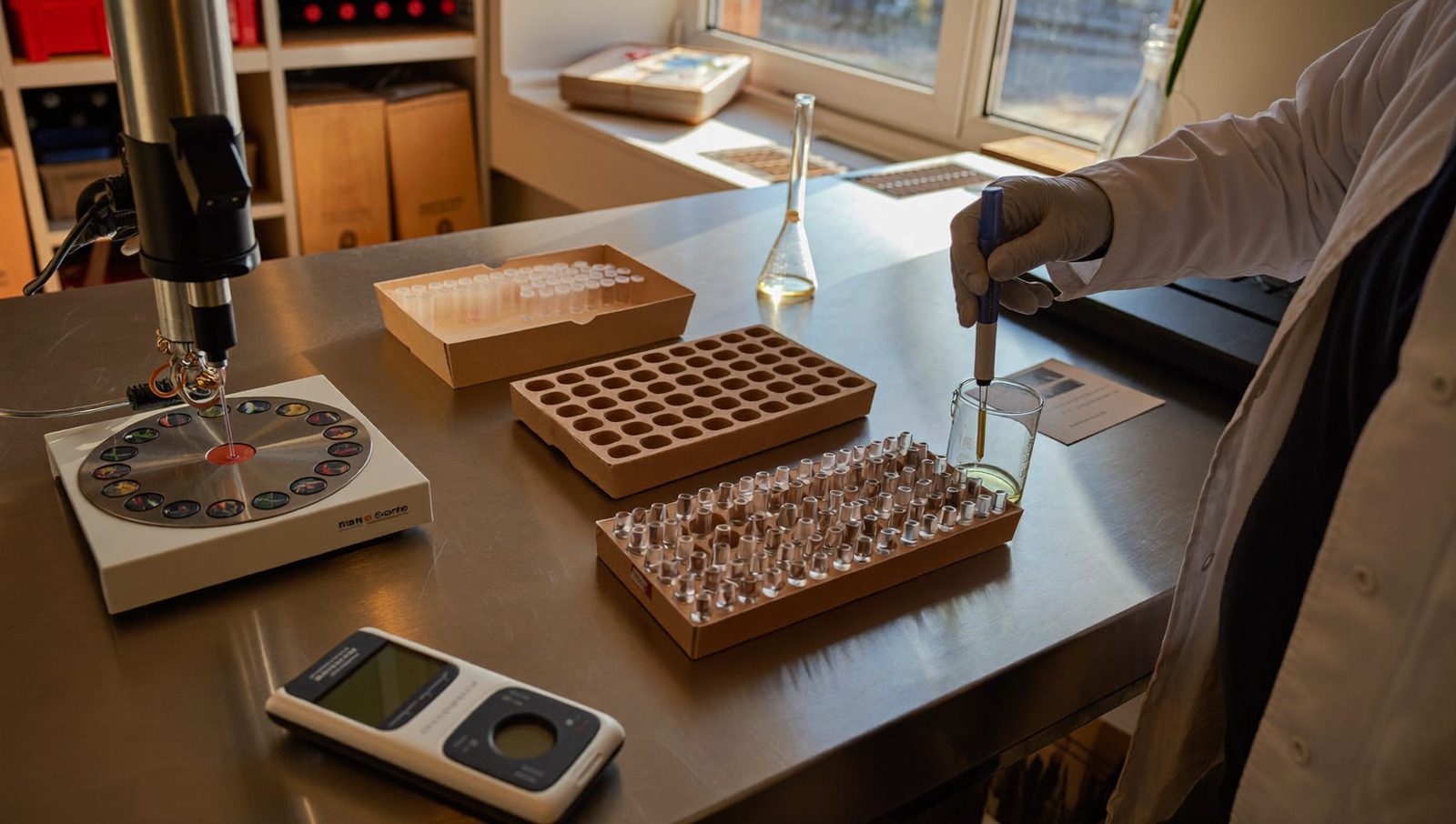
Accredited laboratories: when an external certificate is needed
An official result that an importer or a customs authority accepts normally comes from an accredited laboratory. Accredia, the Italian accreditation body, reports on its website 2,398 accredited bodies, of which 1,448 are testing laboratories, medical laboratories and organisers of interlaboratory proficiency tests. Tests performed under accreditation consist of determining one or more characteristics of the product according to well-defined methodologies, and it is this definition that makes the result comparable.
Accredia also explains that interlaboratory tests are used to assess the performance of a laboratory by comparing it with others. For the winery, the practical criterion is simple: ask the laboratory whether it is accredited for the specific method required by the certificate, not only for the general category. The scope of accreditation is stated in the laboratory's document, and that is where the method is verified.
For official wine controls in Italy, the reference is ICQRF, the Central Inspectorate for the Protection of Quality and Repression of Frauds of Agri-food Products of the Masaf. The ICQRF website describes the body as one of the largest in Europe for agri-food control, with 29 offices across the Italian territory. ICQRF rules and circulars remain the starting point for understanding which controls apply to Italian wineries.
Parameters required by non-EU markets: how to verify them
This article does not list thresholds by country, because each market sets its own requirements and not all of them publish them in the same way. The correct approach is to start from the destination country, look up the labelling, composition and documentation requirements, and then verify which analytical method the authority of that country accepts. Permitted winemaking practices also affect this step, and they vary from market to market: for the United States, Japan and China, it is worth reading permitted winemaking practices for export to the US, Japan and China.
The document that summarises the technical data of the wine for the importer is the technical data sheet. Whoever prepares it must state only values that the laboratory has determined with a declared method, and must say which method was used. A value without a method is hard to defend at customs. The technical data sheet for importers, and what it contains shows how to organise this information.
Finally, sensory analysis replaces neither reference methods nor routine methods, but it completes the internal picture. A well-run internal panel can detect deviations that no instrument flags, and it can be combined with chemical analyses when selecting lots. On this point, you can read sensory analysis in the winery with an internal panel, score sheets and thresholds.
Frequently asked questions
What is the difference between an OIV method and a routine method?
The OIV method is described in the International Compendium and is used for data that must be comparable between laboratories and countries. The routine method is faster and is used for internal control. For a certificate or a customs authority, it is worth checking which of the two is required.
Is an FTIR result valid for export?
It depends on the document. A well-calibrated FTIR result is useful for decisions in the winery, but for a value officially required, it is advisable to repeat the analysis with the reference method specified by the market or the certificate.
Can an enzymatic kit replace an accredited laboratory?
As a rule, no. The kit is suitable for internal control, whereas an accredited laboratory guarantees that the method is performed and documented according to defined rules. Before using a kit, check that its method has been compared with the reference method.
How do you know whether a laboratory is accredited for a method?
Ask the laboratory for its accreditation document and the scope of its tests. Check that the method required by the certificate is included, not only the general category.
Sources
- Wine bacteria: useful lactic and spoilage types
- Wine Acidification and Deacidification: The Practical Guide
- Cellar sensory analysis: internal panel and score sheets
- White grape pressing: pneumatic press and must fractions
- Wine deacidification: calcium carbonate vs bicarbonate
- Albeisa Bottle: What It Is and Which Wines Use It