Wine filtration: diatomaceous earth (DE) or crossflow, and when each pays off for the winery
Wines Export Editorial · Last updated:
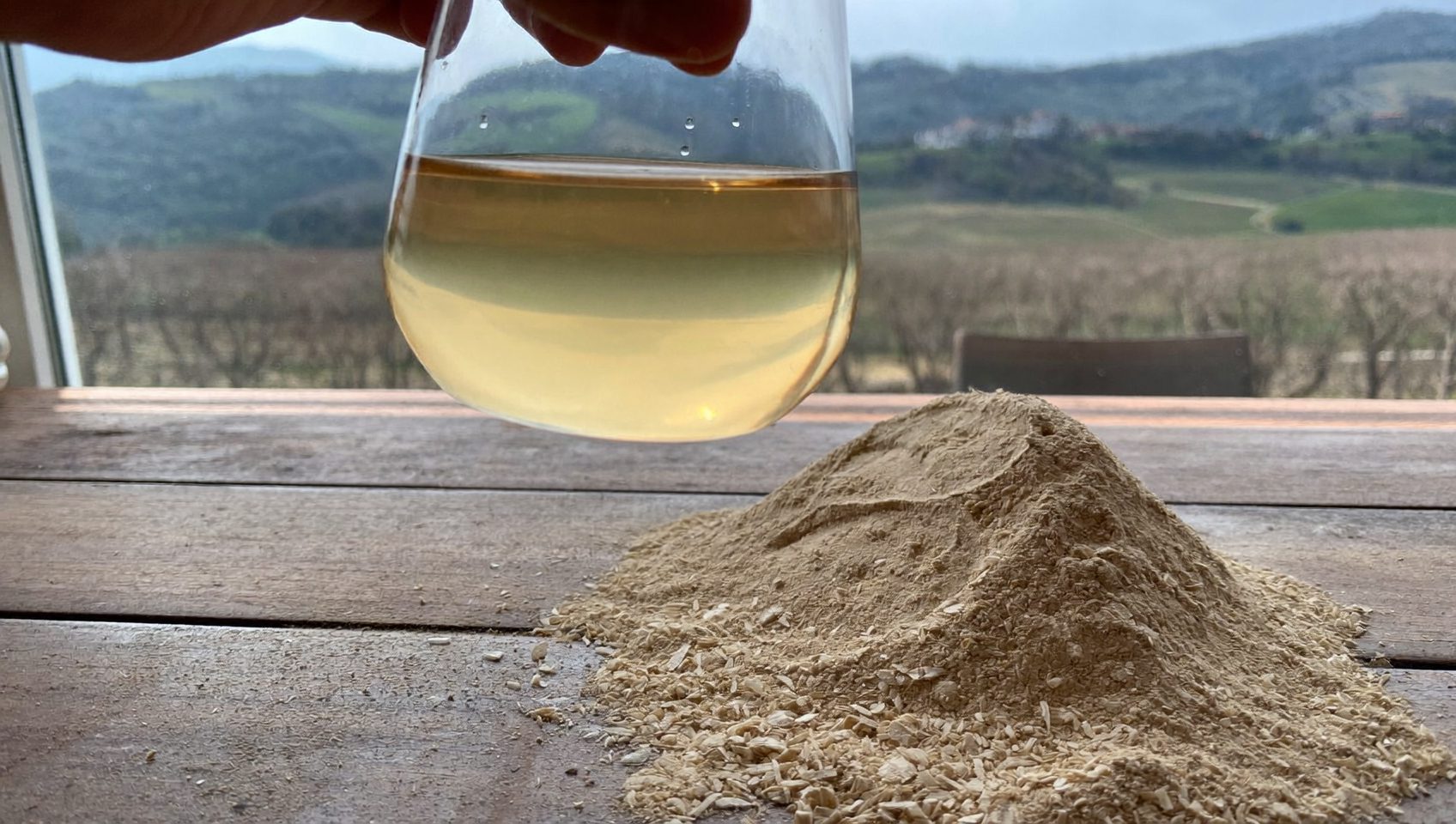
DE (diatomaceous earth) filtration passes the wine through a bed of filter aid (diatomite or perlite) deposited on filter plates, while crossflow filtration pumps the wine tangentially across a membrane, where the flow limits the build-up of deposit. For an average winery, the choice depends on three factors: how much spent filter material you must dispose of, how much wine you lose per cycle, and whether your volume justifies buying equipment or renting is enough. Consumption and energy figures vary with the equipment and the wine, and the sources listed below do not publish general values. Instead, it indicates what to ask the supplier before signing. For filter aid types, see filter aid materials and dosages. The role of each filtration stage is explained in wine filtration in practice: coarse, polishing and sterile filtration.
How DE filtration works and what waste remains
In DE filtration, the filter aid is first deposited on the filter supports (the precoat) and then dosed into the wine during filtration (the body feed), so that the bed retains suspended particles. The OIV International Code of Oenological Practices lists filtration through a filter bed among treatments of musts and wines, alongside other separation techniques used in winemaking. However, the factor that weighs most on the budget is the end of the cycle: the spent bed becomes a wet mass of diatomaceous earth or perlite mixed with wine and lees, which must be collected, dried and sent for disposal as waste.
Disposal is not a fixed cost. It depends on the amount of filter aid used per cycle, the liquid retained in the spent cake, and the rules of your municipality and your waste collector, which must be checked case by case. Anyone working with DE filtration must therefore calculate both the filter aid purchased and the collection of the residue, because the second cost grows with the number of cycles and does not appear on the supplier's price list.
How crossflow filtration works
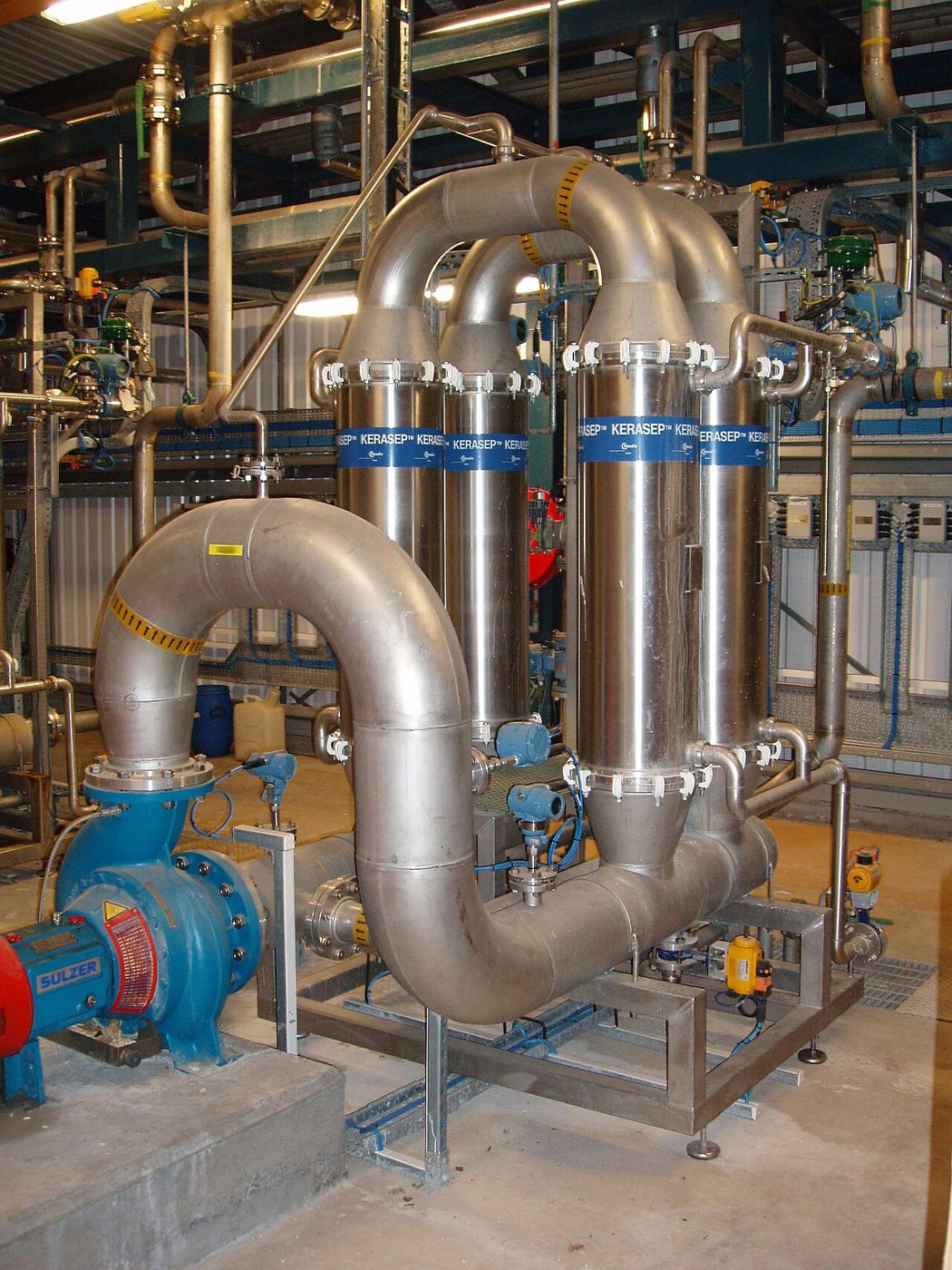
In crossflow filtration, the wine is pumped through a circuit and passes across the membrane parallel to its surface. The cross flow prevents deposit from settling on the membrane and carries it away, rather than letting it build up as a cake. The permeate, meaning the filtered wine, exits on one side, while the retentate, the part most loaded with solids, is recirculated or extracted. The choice of membrane pore size is the parameter that defines what remains in the wine.
The absence of filter aid means there is no solid residue to remove after each cycle. In exchange, the system requires washing, pressure checks and membrane maintenance that DE filtration does not need. Membranes foul and are regenerated, and their lifespan depends on the wine treated, the quality of cleaning and the frequency of washing. For the general framework of membrane systems, the OIV treats separation techniques using membranes as a category of their own, and operational details should be requested from the equipment manufacturer.
Wine, water and energy losses compared
The practical comparison is made item by item, because the two systems fail in different places. With DE filtration, wine loss lies in the liquid trapped in the spent cake; with crossflow, it lies in the retentate and in washing volumes. Neither item is negligible, and neither can be estimated reliably without tests on your own wine.
| Item | DE filtration | Crossflow filtration |
|---|---|---|
| Consumables | Filter aid every cycle (precoat and body feed) | Membranes, replaced over time |
| Residue to dispose of | Spent earth with retained wine | Retentate and washing water |
| Product loss | Liquid in the spent cake | Retentate and washing between cycles |
| Washing water | Cleaning of frames and plates | Washing and regeneration of membranes |
| Process control | Pressure between plates, bed change | Transmembrane pressure and flow |
| Skills required | Plate and waste management | Circuit and membrane management |
In both cases, the washing wastewater enters the winery's water balance and must be treated according to discharge regulations. For this step, see winery wastewater: regulations and treatment. Energy also matters: crossflow runs pumps continuously, whereas DE filtration concentrates work during assembly and bed changes. The comparison can only be completed with consumption data measured on your own plant.
Effect on colour, colloids and stability
Filtration does not only remove haze; it affects what remains in the glass. DE filtration retains particles according to the structure of the bed and can remove some colloidal compounds by adsorption, with an effect that depends on the filter aid and the dosage. Crossflow separates by size through the membrane, so the result depends mainly on pore diameter and operating pressure.
For stability, the key point is the capture of colloids that could form again in the bottle. When assessing stability, it helps to know how much colloidal material leaves the process, and polysaccharides and mannoproteins are among the factors to consider. The topic is covered in polysaccharides and mannoproteins in winemaking: what they do. Before choosing, filter the same wine with both systems, compare colour and turbidity at the end of treatment, and repeat the analyses after a few weeks of storage.
Renting, contract service or buying: from what volume does it pay off
The question winery owners ask most often is whether to buy their own equipment or pay for a service. The answer depends on the volume filtered in a year, how often the wine goes through filtration, and whether the winery has staff for maintenance. Purchased equipment only pays back if it runs many cycles; a rental or contract service brings transport, booking times and dependence on another company's schedule.
The sources listed below do not publish a volume threshold in hectolitres that applies to all wineries. For your case, the practical rule is to compare three quotes: one for purchased equipment with maintenance included, one for rental, and one for contract service, all calculated on the same annual volume and the same number of cycles. For choosing equipment for a small winery, in order of priority, see the list of equipment for a small winery in order of priority.
What to ask the supplier in the quote
A useful quote states the volume it is based on, the number of annual cycles and the type of wine treated. Ask for the filter aid consumption or the membrane replacement per cycle, the weight or volume of the residue to dispose of, and the cost of its collection, including the name of the company that collects it. For crossflow, ask for the expected membrane life, the washing procedure and the cost of replacements, and confirm who intervenes in case of a fault and within what timeframe.
Finally, ask for a trial on your own wine, not only on the manufacturer's data. A filtration test with turbidity and colour analysis, carried out before purchase or rental, gives direct evidence on your wine, to be compared with the technical datasheets. Check the results against the supplier's instructions and record the pressure and temperature conditions, since the outcome also depends on these.
Frequently asked questions
DE or crossflow filtration: which should a medium-sized winery choose?
There is no answer that fits every winery. The decisive criterion is the balance between filter aid and disposal of spent earth on one side, and membrane maintenance on the other, calculated on your annual volume. Ask two suppliers for the same estimate over one year of production, with the same cycles.
How much wine is lost with crossflow filtration?
The loss depends on the system, on whether the retentate is recirculated or extracted, and on the washing. The sources listed below do not publish a general figure, so the check should be made with a trial on your own wine and with the manufacturer's data.
Does microfiltration change the colour of the wine?
It can, because the membrane retains particles according to pore diameter and pressure. The effect should be verified by comparing colour and turbidity before and after treatment, on the wine you intend to bottle.
Is it worth renting a filtration system?
Renting makes sense when annual cycles are few or when there is no staff for maintenance. With high volumes and frequent filtration, buying becomes more reasonable, and the break-even point should be calculated using quotes for the same volume.
Sources
- Wine grape price by appellation: how to read ISMEA
- Wine export pallets: bottles per pallet and container
- Wine export logistics: courier, pallet or container?
- Wine Export Documents from Italy: EU and Non-EU Checklist
- Wine Pallet Label GS1-128 and SSCC for Retail and Monopolies
- Wine export certificate: VI-1 and analysis by country