Wine consortia: duties, erga omnes, neck strips and working with exporting wineries
Wines Export Editorial · Last updated:

Legal basis: Law 238/2016 and the chapter on consortia
The rules for wine protection consortia are set out in Law No. 238 of 12 December 2016, published in the Official Gazette on 28 December 2016 and in force from 12 January 2017. The title of the law is "Organic regulation of vine cultivation and of wine production and trade", and its table of contents shows that consortia are covered in Chapter V of Title III, dedicated to protecting designations of origin and geographical indications. The chapter contains a single article, Article 41. Article 42 concerns oenological competitions, so anyone looking for the consortia reference should stop at Article 41.
The general framework is consistent with the purpose of the law: Article 1 considers wine, the vine and wine-growing territories a national cultural heritage to be protected and enhanced, including on the economic and production side. The consortium is the tool through which producers of the same designation carry out this task from the bottom up, together with public institutions. For exporters, the practical point is that a consortium is not a simple club of members: once recognised, it exercises functions that concern the entire designation.
What consortia are and how many producers they represent
Federdoc describes itself as the national confederation of voluntary consortia for the protection of Italian wine designations. The word "voluntary" indicates that membership at base level arises from the free association of producers, while public recognition comes later and gives the consortium powers that a private association does not have.
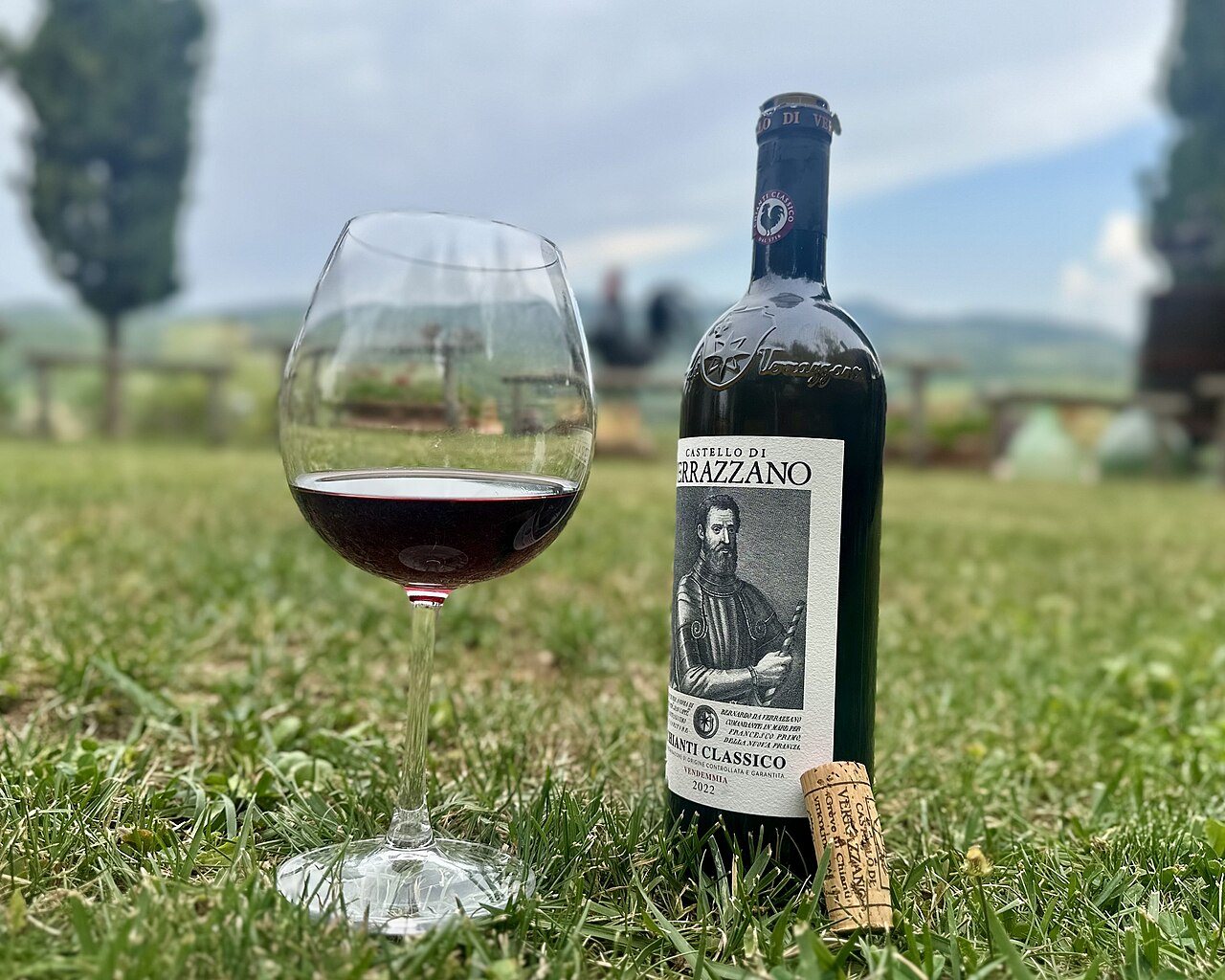
The case of Chianti Classico shows the concrete scale of a historic consortium. The Consorzio Vino Chianti Classico states that it was the first to be founded in Italy, in 1924, and that it currently represents 480 producers, of whom 342 put wine on the market under their own label. The statutory aims listed are the protection and promotion of the Gallo Nero mark, the collective sign that accompanies the designation's bottles.
| Body | What it is | Data from the source |
|---|---|---|
| Federdoc | National confederation of voluntary consortia | Represents the consortia for designated wines |
| Consorzio Vino Chianti Classico | Consortium of a historic DOCG | Founded 1924, 480 producers, 342 with their own label |
| Law 238/2016, art. 41 | Legal framework for recognised consortia | In force from 12 January 2017 |
Recognition and representativeness: how a consortium gets recognised
A producers' association becomes a protection consortium with public powers only after recognition by the Ministry of Agriculture, Food Sovereignty and Forestry. Recognition is not automatic: the law ties the application to representativeness requirements, meaning the weight its members have among growers and production of the designation concerned.
The precise thresholds are not given in the text of the law listed in the sources, which reports Article 41 in its heading but not the detail of the parameters, and the recognition of each consortium is formalised by a specific decree. Before making a commercial decision on a designation, check Article 41 in the current text and the recognition decree of the relevant consortium, because a change in representativeness can alter its scope.
Erga omnes: what it means for non-members
The term erga omnes, meaning "towards everyone", indicates that some rules of a recognised consortium also apply to producers who are not members. In practice, the production specification applies to anyone claiming the designation. When the consortium is recognised with erga omnes functions, some of its activities, such as supervision and promotion, also concern non-members, who may be asked to contribute to their costs even if they are not registered and do not take part in assemblies.
For an exporting winery this mechanism has two consequences. First: you cannot choose to stay outside the control system if you want to use the designation name on your label. Second: the consortium can act on the market to protect the name even on behalf of those who are not members, because the protected asset is the designation and not the single winery. The exact arrangements depend on the recognition decree and the consortium's bylaws, so the comparison should be made case by case.
Supervision, controls and protecting the name abroad
Supervision of the designation works on several levels. Public controls on production and labelling are joined by the monitoring activities that recognised consortia may carry out on the market, including reports of improper use of the name. In this sense, the consortium is a useful contact when an importer proposes a product using terms similar to the designation.
The most frequent phenomenon abroad is imitation that evokes Italy without being Italian, and the consortium is a body that knows the cases concerning its designation. To learn more about recognising it and how to respond, see how to defend against Italian sounding in wine. The consortium does not replace the winery's trademark registration, which remains a separate tool and should be done before entering a market, as explained in registering a wine trademark abroad before exporting.
Neck strips, yields and production management
For the higher-value designations, such as DOCG, the State strip is the seal that accompanies the bottle and certifies its conformity. The strip is not an initiative of the consortium: it is an element of the public control system, and the procedures for application and use go through the competent offices. The consortium nonetheless remains a useful reference for understanding which wines of the designation must carry it and in which formats.
Alongside the strips, the consortium follows production management: yields, claims and production declarations must comply with the production specification. For the exporter, the practical consequence is that a delay in the declaration or a yield outside the limits can block the claim of a lot just when the importer has already signed the order. Ask the consortium for the calendar of deadlines for the vintage before fixing shipping dates.
Promotion abroad and OCM funds in third countries
An important part of consortia's work is promotion abroad: events, tastings for trade operators, collective participation in trade fairs. Public support for these activities in non-EU countries largely comes through the promotion programmes provided by European wine policy, the so-called OCM. The consortium presents the projects and manages their implementation, so not all initiatives are open to every winery in the designation.
For an average winery the advantage is often access to collective stands and meetings with buyers that it would not reach alone. An example of how to prepare a presence is on the page about international wine fairs. If your consortium has an export programme, ask to be included in the plan for the following year, because registrations tend to close early.
What you can ask your consortium for exports
The consortium is not a commercial agency: it is a body with duties to protect the designation. The most useful requests from an exporting winery concern information on the production specification, reporting of imitations in target markets, access to collective initiatives and support in choosing the name to protect.
| Request to the consortium | Why it matters for export | What to check |
|---|---|---|
| Updated copy of the production specification | Avoids errors on label and yield | Version in force and decree date |
| Report of imitations in the market | Protects the name of the designation | Country, product and brand involved |
| Calendar of strips and declarations | Avoids shipment blocks | Vintage deadlines |
| Information on collective fairs | Reduces the cost of attending | Fees and membership requirements |
The consortium's collective mark, in the case of Chianti Classico the Gallo Nero, sits alongside the winery's private brand. To understand how to use them together on a foreign label, read the Chianti Classico Gallo Nero and what it means for importers. In designations with more than one consortium, such as Primitivo di Manduria, it is useful to check which consortium manages the specific type you want to export.
Frequently asked questions
What does a wine protection consortium do?
A recognised consortium protects and promotes a designation or geographical indication, follows the production specification and cooperates with the control authorities. It also carries out information and promotion activities, including abroad. The precise scope is set by Law 238/2016 and by the recognition decree.
Must a producer who is not a member comply with the production specification?
Yes, always. A producer claiming the designation must comply with the production specification and the controls, regardless of membership of the consortium. If the consortium is recognised with erga omnes functions, some of its activities also concern non-members. Check the consortium's status on the Ministry website before setting your strategy.
Can the consortium defend the wine name abroad?
It can report improper uses and act to protect the designation, including in export markets, within the powers set by the law and the recognition decree. For the winery's brand, a separate registration in the destination country is required. The consortium remains an ally for recognising the most frequent cases.
Who recognises a wine protection consortium?
Recognition is granted by the Ministry of Agriculture, Food Sovereignty and Forestry, based on the representativeness requirements set by law. Recognition should be verified in the specific decree for the designation, because it may change over time.
Sources
- Dealcoholised wine: EU rules, techniques and labelling
- Which wine marketplaces accept third-party sellers
- Wine export certificate: VI-1 and analysis by country
- Vegan wine certification and fining agents explained
- Wine Export Documents from Italy: EU and Non-EU Checklist
- UK Wine Duty by ABV: What Importers Pay per Bottle