Oenological polysaccharides: mannoproteins, yeast hulls, gum arabic, sur lie ageing — effect on softness, colour, stability, doses and EU limits
Wines Export Editorial · Last updated:

Wine polysaccharides and mannoproteins are colloidal macromolecules that determine body on the palate, soften the astringency of tannins and prevent the precipitation of colour and tartaric salts in the bottle. Your winery can enrich the must and the wine through extended contact with fine lees with stirring (bâtonnage), or through the use of yeast derivatives and gum arabic. Commission Delegated Regulation (EU) 2019/934 and the OIV International Code of Oenological Practices establish which of these substances are technological processing aids and which are additives to be declared in the ingredient list for wines sold in the European Union. Mastering colloidal balance allows you to export stable lots in both cold and warm conditions without resorting to heavy fining or filtration that would weaken the structure of the wine.
What wine polysaccharides are
A finished wine is not simply a hydroalcoholic solution of acids, polyphenols and aromatic compounds, but a colloidal system in which macromolecules of different nature interact through hydrogen bonds, electrostatic forces and hydrophobic interactions. Among these colloids, polysaccharides represent the quantitatively most significant fraction for the physical stability of the product and for its tactile response in tasting.
In must and wine, three major families of polysaccharides are distinguished, classified according to their biological and technological origin:
- Grape cell-wall polysaccharides: they come from the enzymatic breakdown of the cell walls of the skin and pulp of the berry during ripening, pressing and maceration. They include arabinan- and galactan-rich polysaccharides (PRAG, including arabinogalactan-proteins), type I and type II rhamnogalacturonans (RG-I and RG-II) and homogalacturonans. The use of maceration pectolytic enzymes, a practice codified by the OIV, speeds up the extraction of these fractions from the cell wall.
- Yeast-derived polysaccharides: they consist mainly of mannoproteins and beta-glucans, located in the outer and intermediate layers of the cell wall of Saccharomyces cerevisiae and of non-Saccharomyces yeasts such as Torulaspora delbrueckii. They are released into the liquid medium either by active secretion during alcoholic fermentation or by enzymatic hydrolysis during cell autolysis at the end of fermentation.
- Exogenous plant polysaccharides: in winery practice they are represented by gum arabic (E 414), a complex branched heteropolysaccharide associated with a protein or arabinogalactan-protein fraction, obtained from the exudate of the trunks of Acacia senegal or Acacia seyal.
To these three families is added an undesirable fraction: high molecular weight beta-glucans produced by the fungus Botrytis cinerea in grapes affected by grey rot. Unlike mannoproteins and arabinogalactans, botrytis glucans increase the viscosity of the wine without improving its taste profile and rapidly clog filter sheets, requiring specific treatment with beta-glucanase enzymes before bottling preparation operations.
Mannoproteins: from yeast or from the sachet
Mannoproteins are glycoproteins composed mainly of branched chains of D-mannose covalently bound to a peptide backbone. The simultaneous presence of a hydrophilic carbohydrate fraction and a protein portion with hydrophobic domains gives these molecules an amphiphilic behaviour: they act as natural surfactants and protective colloids, capable of surrounding unstable molecules and preventing their aggregation and sedimentation.
In winery management you can supply mannoproteins through two routes: biosynthesis and release by the fermenting biomass, or the addition of oenological formulations produced industrially from yeast cell walls by physical extraction or enzymatic hydrolysis. Within the technical catalogues and the EU legislation on authorised oenological practices, yeast derivatives are not all equivalent but serve distinct functions:
- Yeast hulls (yeast hulls or yeast ghosts): these are the insoluble fractions of yeast cell walls, free of cytoplasmic content. Their primary function, described in the OIV data sheets for must and wine under fermentation, is not final stabilisation but the detoxification of the fermentation medium: they adsorb medium- and short-chain fatty acids and plant protection residues that inhibit yeasts, preventing stuck fermentations in very clear musts or musts with high sugar content and in sparkling wine bases. During contact they nevertheless release a share of cell-wall polysaccharides.
- Inactivated yeasts and yeast autolysates: inactivated yeasts are obtained by thermal or physical inactivation of the whole cell; some specific formulations, regulated separately by the OIV Code, guarantee certified levels of reduced glutathione to protect varietal aromas from oxidation. Autolysates have instead undergone a controlled enzymatic self-digestion process that makes peptides, amino acids and cell-wall mannoproteins immediately bioavailable from the early stages of winemaking.
- Purified yeast mannoproteins: these are soluble extracts of high purity, selected according to molecular weight and the mannose/protein ratio. They are used during ageing or at pre-bottling as specific stabilisers against the precipitation of potassium bitartrate and for protein and colour stability.
The choice between the product added at pre-bottling and working with yeasts in the tank depends on the turnover times of your winery. A vintage white or a Charmat sparkling wine destined for foreign mass retail requires rapid stabilisation in the tank before sterile filtration; a wine aimed at a higher positioning in the Horeca channel may instead benefit from the long times of natural extraction on the lees.
Sur lie and bâtonnage: the natural route
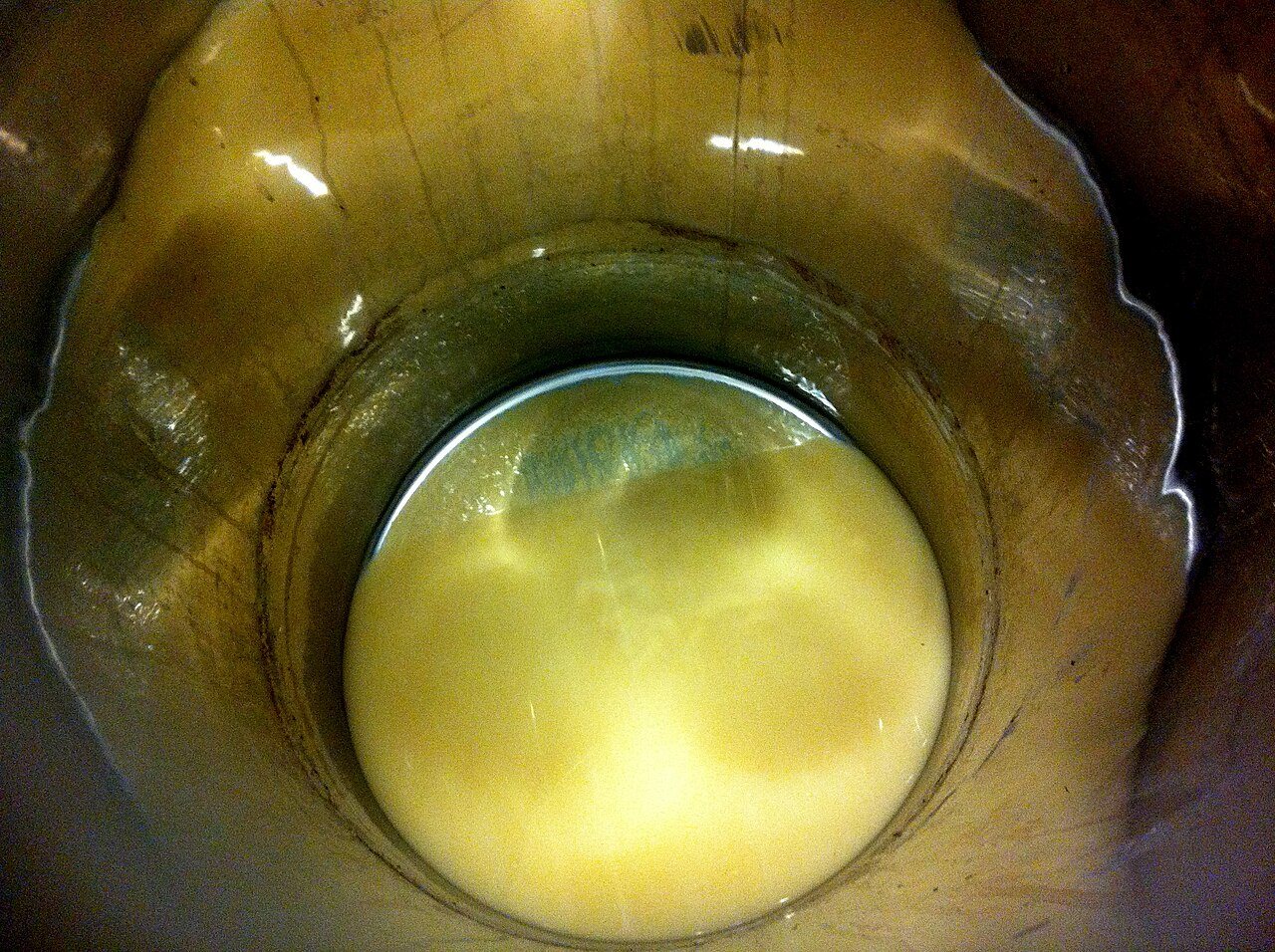
Ageing on fine lees (sur lie), accompanied by periodic resuspension of the deposit (bâtonnage), is the traditional technique for enriching wine with endogenous mannoproteins without resorting to exogenous additives. When yeasts exhaust the fermentable sugars and enter the phase of cell death, the endogenous glucanases and proteases of the cell begin to degrade the cell wall from within. This autolysis process gradually releases into the wine the mannoproteins bound to the beta-glucan matrix.
For sur lie ageing to produce a real improvement and not olfactory defects, it is necessary to separate coarse lees from fine lees promptly. Coarse lees settle within the first 24–48 hours after the end of fermentation and contain plant fragments, precipitated tartrates, heavy phenolic complexes and dead cells under conditions of strong stress: leaving them at the bottom of the tank quickly leads to the formation of mercaptans, hydrogen sulphide and reductive notes. Fine lees, made up of light yeast cells that remain in suspension for longer, are instead the noble substrate on which to carry out maturation, as explained in the guide on white and rosé winemaking.
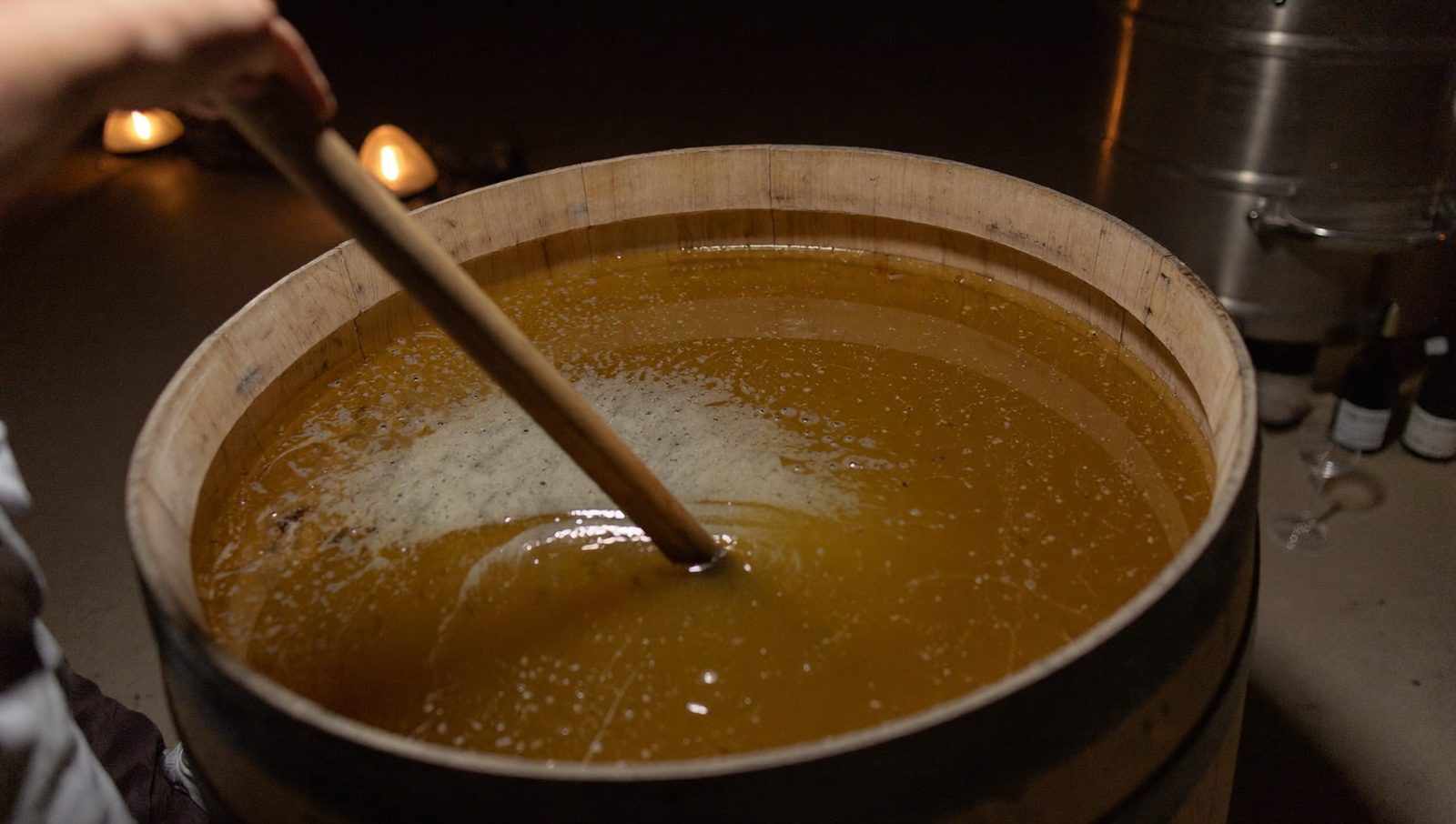
Bâtonnage — carried out manually with the appropriate rod in small oak barrels or by mechanical stirrers, air-free rackings or injection of inert gas into stainless steel tanks — fulfils three physical and chemical tasks:
- Increasing the exchange surface: it prevents the lees from compacting at the bottom of the container, forming an asphyxiated layer, and brings the cell-wall polysaccharides into contact with the entire mass of the wine.
- Preventing reduction: it maintains a balanced redox potential, preventing heavy sulphur compounds from accumulating at the bottom of the wine vessel.
- Controlled consumption of dissolved oxygen: fresh yeast lees retain a strong capacity to consume the oxygen that penetrates through the staves of the barrique or during cellar handling, protecting fruity esters, varietal thiols and the colour of white wine from oxidative browning.
As an alternative or in synergy with prolonged contact, wine research centres have studied the combined use of enzyme preparations based on beta-glucanases on fine lees: the enzyme accelerates the lysis of the yeast cell wall, reducing to a few weeks a release of mannoproteins that at cellar temperature would require several months of spontaneous autolysis. The practice nevertheless requires subsequent inactivation or removal of the enzymatic activity and careful microbiological monitoring, since autolysis also releases into the wine amino acids and growth factors that can favour the development of unwanted lactic acid bacteria or Brettanomyces in red wines not protected by adequate levels of molecular sulphur dioxide.
Effects on softness, colour and tartaric stability
The contribution of polysaccharides — whether obtained through autolysis, the addition of purified mannoproteins or through gum arabic — acts simultaneously on three physico-chemical fronts that directly affect the quality perceived by international buyers and the stability of the wine on foreign shelves.
Reduction of astringency and body on the palate
In red wines rich in polyphenols, tannins and colour, the sensation of astringency and dryness of the mouth is caused by the reaction between condensed tannins (proanthocyanidins) and the proline-rich proteins of human saliva: the salivary tannin-protein complex precipitates, causing the mouth to lose its natural lubrication. The acidic polysaccharides of the grape (such as rhamnogalacturonan II), yeast mannoproteins and gum arabic form soluble ternary complexes with tannins or shield their reactive sites. In this way the tannins remain in colloidal solution and do not coagulate salivary proteins: on the palate the aggressive astringency and the bitter note give way to a sensation of density, roundness and taste continuity. In white wines and sparkling wines, mannoproteins balance the sharpness of fixed acidity, providing fullness without the need to leave sugar residues that would compromise microbiological stability.
Stabilisation of the colouring matter in red wines
In young red wines the colour is given by free anthocyanins and polymeric pigments in the process of forming. With the low winter temperatures during transport in containers or storage in importers' warehouses in Northern Europe and North America, anthocyanins bound to less stable tannins tend to aggregate with residual proteins and precipitate at the bottom of the bottle as a coloured deposit. Mannoproteins introduced already during alcoholic fermentation or before bottling, and gum arabic added to the finished wine, act as protective colloids: they wrap the anthocyanin-tannin aggregates, preventing them from reaching the critical size for sedimentation. Gum arabic, in particular, is indicated by OIV data sheet 3.3.6 also to prevent hazes caused by copper and iron casse.
Tartaric and protein stability
Wine is a supersaturated solution of potassium bitartrate (KHT) and neutral calcium tartrate. While cold stabilisation physically removes the salts by induced crystallisation, mannoproteins act by inhibitory means: they adsorb onto the growth faces of embryonic potassium bitartrate microcrystals, modifying their morphology and blocking crystal growth, which thus remains invisible to the naked eye. On the front of clarity in white and rosé wines, mannoproteins derived from the yeast cell wall also interact with the heat-unstable grape proteins (thaumatin-like proteins and chitinases), helping to contain the risk of protein casse and sometimes allowing you to moderate the bentonite doses during stabilisation and fining.
Doses, timing, EU limits
To export without customs disputes or labelling blocks, the winery protocol must respect the conditions of use and the limits set by Annex I, Part A, Table 2 of Delegated Regulation (EU) 2019/934 (and subsequent updates such as Regulations 2022/68 and 2024/3085) and by the corresponding OIV Code data sheets.
A decisive regulatory point for those selling in the European Union is the distinction between additives and technological processing aids under Regulation (EU) 2021/2117 on nutritional and ingredient labelling:
- Yeast mannoproteins and gum arabic (E 414) are classified by Regulation (EU) 2019/934 as additives (acidity regulators or stabilising agents). Consequently, since they remain in the finished wine to perform a continuous technological stabilising function, they must be indicated in the ingredient list (on the physical label or via QR code / e-label).
- Yeast hulls, inactivated yeasts and yeast autolysates (when they do not contain purified mannoproteins or gum arabic added as stabilisers) are instead classified as technological processing aids: they exhaust their function during the winemaking or maturation process and, as processing aids that do not cause allergies or intolerances recognised by Annex II of Reg. 1169/2011, they are not subject to the obligation of declaration in the ingredient list.
For a technical comparison between the different products used at pre-bottling you can consult the in-depth article on oenological stabilisers: CMC, gum arabic, mannoproteins and metatartaric acid. The table below summarises the regulatory classification, legal limits and timing of use of the main polysaccharide-based products.
| Product or practice | Classification Reg. (EU) 2019/934 | Legal limit and conditions of use (EU / OIV) | Timing of use in the winery | Required in EU ingredient list |
|---|---|---|---|---|
| Sur lie ageing and bâtonnage | Physical / microbiological oenological practice | No numerical limit; use of fresh, healthy lees from dry wine vinification | After alcoholic or malolactic fermentation, before fining and filtration | No (no exogenous substance added) |
| Yeast hulls (yeast hulls) | Technological processing aid | Maximum 40 g/hL (0.4 g/L) in must and wine | During alcoholic fermentation, to prevent stuck fermentations, or in preparation for tirage | No (technological processing aid) |
| Inactivated yeasts and autolysates | Technological processing aid | Quantum satis (according to good manufacturing practice and technical data sheets) | On crushed grapes, during alcoholic fermentation or at the start of ageing | No (technological processing aid, unless additives are present in the formulation) |
| Yeast mannoproteins | Additive (stabilising agent) | Quantum satis for tartaric and protein stabilisation of wines (including sparkling wines) | At pre-bottling, before or after the last filtration depending on the filterability of the product | Yes (classified as a stabilising additive) |
| Gum arabic (E 414) | Additive (stabilising agent) | Maximum 0.3 g/L (30 g/hL) according to OIV data sheet 3.3.6; quantum satis in the EU table | On the finished wine, after the last filtration or immediately before bottling | Yes (additive E 414 / gum arabic) |
Common mistakes
In day-to-day winery management, uncoordinated use of polysaccharide colloids can generate costly technical problems, slowdowns on the bottling line or disputes with foreign customers. Here are the five operational mistakes to avoid:
- Adding gum arabic before membrane filtration without checking its filterability index: gum arabic is a high molecular weight macromolecule that forms a protective film; as OIV data sheet 3.3.6 prescribes, it must be added after the last filtration or just before bottling. If you must add it upstream of the microfiltration cartridges for plant reasons, you must use specifically tested microfilterable formulations and measure in advance the clogging index (IC) or the Vmax of the treated wine.
- Overloading an already unstable red wine without prior destabilisation or clarification: mannoproteins and gum arabic are protective colloids, not fining agents. If you add them to a red wine that already shows an excess of colloidal colouring matter in the process of aggregation, instead of stabilising the system you risk causing delayed flocculation in the bottle as soon as the wine undergoes a thermal shock during transport.
- Carrying out bâtonnage on contaminated lees or in the presence of excessive oxygen: resuspending lees that contain active populations of Brettanomyces bruxellensis or heterofermentative lactic acid bacteria means distributing spoilage microorganisms and their nutrients throughout the whole mass. Before planning a bâtonnage cycle on a red or white wine at high pH, check the microbiological health of the deposit under the microscope or by PCR.
- Forgetting the interaction with other stabilisers or fining agents: the simultaneous and non-sequential addition of colloids with opposite electrical charges (for example positively charged fining proteins and negatively charged acidic polysaccharides or CMC) can generate haze from colloidal overlap. Always respect the waiting times indicated in the technical protocols between the end of fining, the coarse filtration and the addition of the final stabiliser.
- Omitting mannoproteins or gum arabic from the e-label for the EU market: using a liquid or powder formulation containing purified mannoproteins or gum arabic, mistakenly considering it a winemaking processing aid, exposes the winery to sanctions for non-compliant labelling. Always verify on the safety data sheet and on the supplier's declaration of conformity whether the product falls under technological processing aids or under additives subject to Regulation (EU) 2021/2117.
Frequently asked questions
Must mannoproteins and gum arabic be declared on the label?
Yes. Under Delegated Regulation (EU) 2019/934 and the labelling rules introduced by Regulation (EU) 2021/2117, both yeast mannoproteins and gum arabic (E 414) are classified as oenological additives with a stabilising function and must therefore be listed in the ingredient list. Yeast hulls, inactivated yeasts and pure autolysates are instead technological processing aids and do not need to be declared.
Do mannoproteins completely replace bentonite in white wines?
No. Although mannoproteins extracted from the yeast cell wall or released during sur lie ageing improve thermal stability by partly binding to the unstable grape proteins, in grape varieties rich in chitinases and thaumatin-like proteins (such as Sauvignon Blanc, Gewürztraminer or Moscato) they are not enough on their own to guarantee passing hot stability tests. They can, however, allow you to reduce the bentonite dose required, better preserving the aromatic complement.
What is the difference between Seyal and Verek (Senegal) gum arabic in the winery?
Both are acacia exudates authorised as additive E 414. Verek gum (Acacia senegal) has a higher average molecular weight and a levorotatory power that gives greater taste volume and structure to wines, but it affects the filterability index more. Acacia seyal gum is instead more branched and compact, exerts a protective action on colour and colloids and is easier to manage close to final microfiltration.
Do added polysaccharides change the chemical parameters on export analysis certificates?
Mannoproteins and yeast hulls used at normal oenological doses do not alter the alcoholic strength, total acidity or volatile acidity. The addition of gum arabic (up to the OIV limit of 0.3 g/L) instead causes a slight increase in the net dry extract of the wine, equal to the weight of the dry substance introduced, without modifying the reducing sugar profile measured with the official enzymatic methods.
Sources
- Wine stabilisers: CMC, gum arabic, mannoproteins
- Wine fining agents: bentonite, PVPP, plant proteins, dosage
- Wine team building Rome: corporate tastings for groups
- Wine filtration: roughing, fining and sterile filtration
- Winemaking Additives Allowed in EU, Not in USA, Japan, China
- Wine filtration aids: diatomaceous earth, perlite, cellulose