Wine filtration step by step: roughing, fining and sterile filtration — which filter for each stage, pore size, turbidity, when not to filter, common mistakes
Wines Export Editorial · Last updated:
Wine filtration in the cellar takes place in three distinct operational stages — roughing, fining and sterile filtration — each designed to remove particles of decreasing size without stripping the structure of your wine or clogging the filter media prematurely. Carrying out these steps in the correct order, and checking turbidity and the filterability index of the wine in advance, allows you to prepare the wine for bottling while avoiding line blockages, product losses and the risk of refermentation in bottle. When you export to distant markets with long sea transport or temperature swings inside containers, the clarity and microbiological stability of the wine becomes an essential condition for avoiding complaints from importers.
The three filtration stages and what each one retains
In the OIV International Code of Oenological Practices and in Delegated Regulation (EU) 2019/934, filtration with or without inert filter aids is classified among the physical separation techniques for treating musts and wines. The practical goal in the cellar is not simply to make the liquid transparent, but to progressively separate suspended solids, unstable colloids and microorganisms through mechanisms of mechanical sieving, depth entrapment or electrostatic adsorption.
If you try to retain everything in a single pass on a very tight medium, the coarser particles and mucilages will block the filtering surface within minutes, raising the differential pressure and forcing you to stop work. For this reason the process is divided into three successive stages, or condensed into tangential systems that work on a different hydrodynamic principle. To check the legal limits on materials permitted in contact with must and wine, you can consult the overview of authorised oenological practices.
| Operational stage | Main goal in the cellar | Particles and bodies retained | Prevailing retention mechanism | Systems and media used |
|---|---|---|---|---|
| Roughing filtration | Post-fermentation or post-fining racking; reduction of the solids load | Cell fragments, fine lees, tartrate crystals, protein aggregates and fining flocs | Surface sieving on the pad and mechanical retention in depth | Diatomaceous earth or perlite filters (plate, leaf, vacuum rotary), wide-pore filter layers, tangential filter |
| Fining filtration | Achieving visual brilliance and preparing for the final membrane | Unstable colloids, residual yeast cells, very fine suspended particles | Depth retention in the fibrous labyrinth and adsorption by electrical charge (Zeta potential) | Plate filters with narrow-pore cellulose sheets, closed lenticular modules, depth pre-membrane cartridges |
| Sterile filtration | Microbiological stabilisation before filling | Active yeasts, lactic acid bacteria and acetic acid bacteria | Absolute surface sieving (geometric size exclusion) | Pleated polymer membrane cartridges housed in stainless steel housings on the bottling line |
Whether to carry out all stages or skip some depends on the wine style, the length of lees ageing and the stability required by the distribution channel. A young white or a rosé with residual sugar destined for overseas mass retail requires the full sequence up to the sterile membrane; a structured, dry red that has completed malolactic fermentation regularly and has undergone careful racking during long barrel ageing may stop at light roughing or loose fining.
Measure before filtering: turbidity and filterability index
Starting the pumps based only on the visual appearance of the wine in the glass exposes the cellar to serious misjudgements. A wine may look optically clear, especially if it is a red rich in colouring matter, yet contain invisible protective colloids — such as glucans produced by Botrytis cinerea, mannoproteins or undegraded pectins — capable of clogging a polymer membrane within the first hectolitres passed.
To work methodically you need two distinct analytical determinations in the laboratory before opening the tank valves:
- Nephelometric turbidity (expressed in NTU): measures the light scattered by particles in suspension. It is the reference parameter for checking the efficiency of static settling, flotation or fining with bentonite, gelatin and plant proteins, as well as for verifying the output of roughing and fining filters.
- The filterability index (or clogging index): measures how quickly a standard volume of wine, pushed at constant pressure through a laboratory membrane, slows its flow. Unlike the nephelometer, which reads particles that deflect light, the filterability test detects transparent, deformable colloids that clog the pores.
If your internal laboratory finds low turbidity but a filterability index outside the acceptable threshold, sending the wine to the membrane filter means burning through a series of cartridges without completing the batch. In that case, as also indicated in OIV technical sheets on the use of enzyme preparations, you must intervene upstream in the tank using specific enzymes (pectolytic or beta-glucanase), allow the required hydrolysis time for the polysaccharide chains, and repeat the test before connecting the lines.
Roughing filtration: diatomite precoat and wide-pore pads
Roughing comes into play when wine comes out of pressing, from the first post-fermentation racking, or from the bottom of a tank after treatment with fining agents and winemaking aids. The aim is to remove the bulk of the turbidity without creating an impermeable layer that blocks the flow of liquid.
In cellars using precoat filters (chamber filters with washable cloths or horizontal stainless steel discs), the secret to regular roughing lies in forming the precoat and in the continuous dosing of the filter aids. The cloudy liquid is not filtered by the metal support or the synthetic fabric of the machine, but by the porous bed formed by the filter aids — diatomaceous earth, perlite and cellulose fibres — deposited on it, selected according to the particle size and permeability needed for the initial level of turbidity.
The correct operating sequence on a precoat filter requires precise steps:
- Forming the precoat: clear wine (or water, depending on cellar procedure) mixed with a medium-coarse cellulose or diatomite fraction is circulated in a closed loop, so as to evenly coat the cloths or metal discs and prevent particles from the turbid wine passing through in the first minutes.
- Continuous body feed: the feed of the wine to be roughed is started while simultaneously activating the diaphragm dosing pump, which injects a constant suspension of diatomaceous earth or perlite into the feed stream. The filter aid particles deposit together with the lees of the wine, keeping the cake soft, porous and permeable as it grows in thickness minute by minute.
- Maintaining a constant flow rate: a precoat filter depends on hydrodynamic continuity. A water hammer effect, the sudden stop of the feed pump or the entry of an air bubble cause the cake to detach or crack; on restarting, dirty wine will pass through the cracks, undoing all the work done up to that point.
As an alternative to filter aids, for small volumes or for wines already partly clarified by gravity, roughing is carried out with plate filters fitted with wide-pore filter sheets, or with lenticular modules that enclose the same cellulose layers in a closed stainless steel housing, eliminating dripping and contact with atmospheric oxygen.
Fining filtration: depth layers, Zeta potential and cross-flow
Once the coarse solids load has been removed, the wine moves to the fining stage. This operation has the task of giving the liquid the clarity required by the market and, above all, of reducing the clogging index to protect the costly sterilising membranes placed downstream.
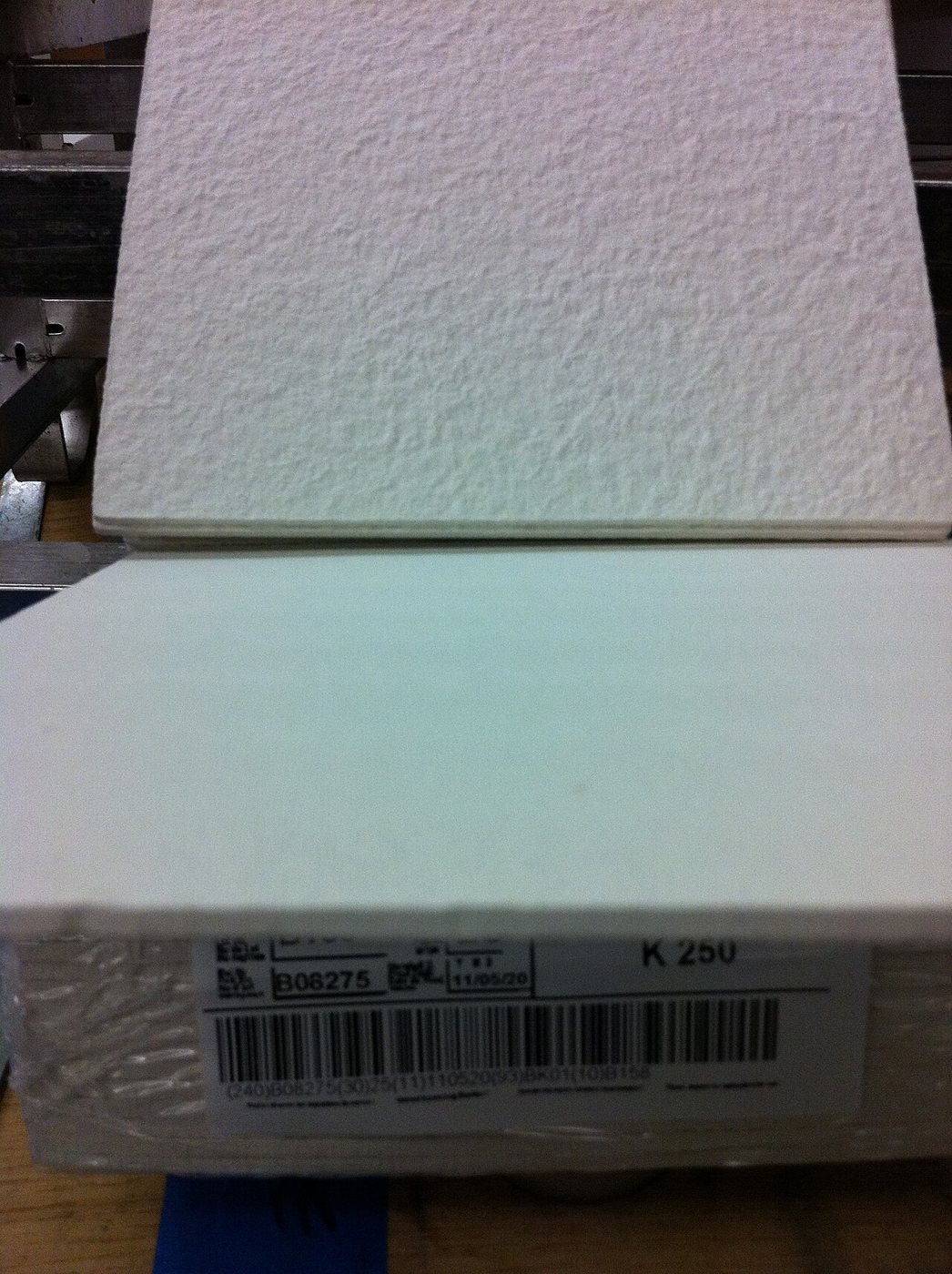
Traditional fining is carried out with narrow or very fine pore filter sheets, made of a three-dimensional matrix of purified cellulose fibres into which diatomaceous earth, perlite or resins are incorporated. Unlike a flat sieve, the sheet works in depth: the wine follows a winding path through the thickness of the sheet. Along this path two complementary phenomena come into play:
- Mechanical entrapment: particles larger than the internal channels remain physically blocked in the narrow passages between the fibres.
- Electrokinetic adsorption (Zeta potential): the cellulose fibres and mineral aids incorporated in the sheet carry a positive surface charge capable of attracting and retaining colloidal particles and macromolecules that are negatively charged at wine pH, even when these are smaller than the average pore diameter.
This adsorption capacity, however, has a physical limit: when all the positively charged active sites become saturated, and when the differential pressure between the filter inlet and outlet rises because the channels are clogging, the sheet loses its binding power. If you force the pump by raising the pressure beyond the limits specified by the manufacturer of the layers, you risk breakthrough: colloids and microorganisms retained up to that point are pushed through to the clear side, contaminating the receiving tank.
In structured cellars, the combination of roughing and fining is often replaced by tangential filtration (cross-flow). In a tangential filter the wine does not pass perpendicularly through a bed of diatomite or cellulose, but flows at high velocity parallel to the internal surface of polymer or ceramic capillary membranes. The clear fraction (permeate) passes through the pores under transmembrane pressure difference, while the tangential flow itself continuously sweeps solids (retentate) from the surface, preventing the formation of a compact cake. To evaluate the inclusion of these systems in your workflow, you can consult the overview of cellar equipment.
Sterile filtration: absolute-pore membranes and integrity testing
Sterile filtration — or microfiltration — is not used to clarify a cloudy wine; if a non-fined wine reaches the membrane filter, the process blocks almost instantly. Its only purpose is to retain with geometric certainty all yeast cells (including Saccharomyces and Brettanomyces) and lactic and acetic acid bacteria before the wine enters the filler. You will find the theoretical background and integration with the bottling line in the page on filtration at bottling.
At this stage depth filters are abandoned, and only absolute-pore polymer membranes are used (in polyethersulfone, polyvinylidene fluoride or nylon), housed as pleated cartridges inside sanitary stainless steel housings. A series configuration with two separate housings is often adopted: a first pre-filter cartridge to protect the investment, followed immediately by the final sterilising cartridge that guarantees microbiological retention.
Because a single microscopic crack or a pinched gasket renders the entire operation useless, the sterilising membrane must undergo the integrity test before filling begins and again immediately after the batch is finished. The standardised methods used in the cellar are based on the bubble point or on pressure-controlled air diffusion:
- Wet the membrane completely with water or wine, so that all pores are filled with liquid by capillarity.
- Introduce inert gas or filtered compressed air on the inlet side, gradually increasing the pressure.
- As long as the gas pressure remains below the capillary force holding the liquid in the pores, only a slight diffusion flow of dissolved gas is observed; as soon as the critical pressure linked to the diameter of the largest pore (the bubble point) is reached, liquid is expelled from the channels and a pressure drop or a continuous stream of bubbles is recorded on the outlet side.
- If free gas passage occurs at a pressure lower than that certified by the cartridge manufacturer, the membrane is damaged or incorrectly fitted: the batch just bottled cannot be considered sterile and must be held in the warehouse pending checks.
To connect the work of the membranes with the sanitation of lines, filler and closures, you can refer to the protocols on microbiological management in the cellar.
When not to filter the wine and the most common operational errors
Deciding to bottle a wine without filtration — or limiting yourself to very open roughing — is a legitimate technical choice to preserve the complete colloidal framework, the taste softness and the polysaccharide matrix, provided the wine has the chemical and biological characteristics to withstand shelf life without mechanical intervention.
You can avoid tight or sterile filtration only when the following conditions are met at the same time:
- The wine is completely dry, free of residual fermentable sugars that could trigger refermentation by yeasts still in suspension.
- Malolactic fermentation has been fully completed (or pH and free sulphur dioxide are at levels that inhibit any activity of lactic acid bacteria until consumption).
- The batch is free of active Brettanomyces contamination, verified by microbiological analysis before packaging, otherwise the development of volatile phenols in bottle will compromise the entire shipment.
- Ageing in tank or barrel has been sufficiently long, accompanied by regular racking that has allowed spontaneous sedimentation of fine lees, protein substances and unstable tartaric salts.
- The importer and the destination market are informed and accept the possible presence of a slight natural deposit on the bottom of the bottle over time, often highlighted on the back label as a sign of non-interventionist winemaking.
When you do choose to filter, the operational errors in the cellar that damage wine quality or inflate production costs are almost always traceable to forcing times and procedures:
- Skipping intermediate stages to save time: sending a newly racked or fined wine directly onto sterilising sheets or polymer membranes leads to immediate clogging of the filter media. The cost of discarded cartridges far exceeds the hourly cost of a well-run roughing.
- Working at excessively high differential pressures: when a plate or cartridge filter is clogging, increasing the pump speed to maintain the hourly flow rate squeezes deformable colloids (such as glucans and gums), forcing them through the pores. Once past to the clear side, these colloids re-aggregate in the storage tank or directly in bottle, re-forming turbidity weeks later.
- Neglecting the preliminary washing of sheets and filter aids: new cellulose layers and mineral aids can release so-called "cardboard tastes" or traces of metal ions (iron and calcium) responsible for later ferric casse or calcium tartrate precipitation. Before introducing the wine, the filter pack must always be flushed thoroughly with potable water — often acidified with citric acid according to the manufacturer's instructions — until no foreign odour is detectable in the discharge water.
- Forgetting to inert empty spaces: open plate filters, precoat tanks and housings not purged of air are critical points for oxygen dissolution. Working without pre-saturating the circuit with nitrogen or carbon dioxide causes immediate loss of thiol and ester aromas in white wines and a rise in peroxides in red wines just before bottling.
- Regenerating membranes with incompatible products or hard water: washing microfiltration cartridges or tangential membranes with water rich in calcium salts without prior softening causes carbonate precipitation inside the micropores during hot cycles with caustic soda, irreversibly reducing the filter's flow rate.
Frequently asked questions
What is the difference between depth filtration and surface filtration?
Depth filtration uses a thick filter medium (such as a diatomaceous earth pad or a cellulose sheet) in which particles are retained along a winding path, both by mechanical lodging and by electrostatic attraction. Surface filtration instead uses a thin membrane with calibrated pores that acts as an absolute geometric sieve, retaining on its surface everything larger than the pore diameter.
Why can a wine that looks clear still block microfiltration membranes?
Visual clarity and nephelometric measurement in NTU detect solid particles that deflect the light beam, but do not see transparent colloids in solution, such as grape polysaccharides, botrytis glucans or mannoproteins. These macromolecules form an invisible gel on the surface of the polymer membrane, stopping the flow; to detect them before filtering, the filterability index test is essential.
Does tangential filtration also replace the microfiltration cartridge on the filler?
Tangential filtration effectively replaces, in a single pass, roughing with diatomite and fining on sheets, bringing the wine to a clarity and filterability ready for bottling. However, for wines requiring absolute biological stability (such as those with residual sugar), a safety membrane cartridge is always kept immediately upstream of the filler, because it can be subjected to the bubble point integrity test.
Does filtration remove colour and structure from ageing red wines?
Filtration carried out at the right temperature, on wines already stabilised from a colloidal and tartaric point of view, with progressive passes and low differential pressures, causes negligible removal of anthocyanins and tannins. Organoleptic impoverishment occurs when a young, colour-rich wine still in an unstable colloidal state is filtered on overly tight media, or when oxidation is triggered by failing to protect the wine with inert gas.
Sources
- OIV — International Code of Oenological Practices (Part II: Oenological Treatments and Practices — Filtration)
- EUR-Lex — Delegated Regulation (EU) 2019/934 on authorised oenological practices
- CREA — Council for Agricultural Research and Economics
- MASAF — Ministry of Agriculture, Food Sovereignty and Forestry
- Wine fining agents: bentonite, PVPP, plant proteins, dosage
- Wine filtration aids: diatomaceous earth, perlite, cellulose
- Wine polysaccharides and mannoproteins: uses in winemaking
- Wine enzymes: pectolytic, extraction, fining and dosage
- Wine stabilisers: CMC, gum arabic, mannoproteins
- Wine defects: TCA, Brett, volatile acidity, oxidation