Wine filtration aids: diatomaceous earth, perlite, cellulose — precoat, body feed, dosing, disposal, safety, alternatives
Wines Export Editorial · Last updated:

Wine filtration aids allow you to clarify musts, lees and wines with a high load of suspended solids without immediately clogging the filter elements in your cellar. Diatomaceous earth, perlite and cellulose form an incompressible porous bed that retains mucilaginous and colloidal particles through mechanical sieving and depth adsorption. Choosing the right particle size, forming a uniform precoat and dosing the body feed continuously are technical steps that determine the clarity of the batch, the yield of must or recovered wine, and the chemical and physical stability of the lot intended for export markets.
What filtration aids are and how they work on dirty liquids
When you need to treat a racked must, a tank bottom or a young wine just drawn off, the suspended particles (yeast cells, skin fragments, glucidic and protein colloids, tartrate crystals) are for the most part deformable. If you push a liquid with these characteristics directly against a cloth or a filter sheet, the mucilaginous solids flatten onto the surface under pump pressure, sealing the pores within minutes and blocking the flow.
Filtration aids solve this blockage by creating a rigid or semi-rigid three-dimensional structure that is continuously renewed during the working cycle. From a regulatory standpoint, the International Code of Oenological Practices of the OIV and Delegated Regulation (EU) 2019/934, which governs the oenological practices authorised in the European Union, classify these materials as technological processing aids for filtration, with or without an inert filter layer. They perform a physical separation function and must not leave unwanted residues or transfer odours, heavy metals or off-flavours to the wine.
The filter bed works through two combined mechanisms:
- Mechanical retention in depth (sieve effect): the liquid passes through a network of tortuous channels formed by the overlapping granules of the filtration aid; particles larger than the channels remain trapped within the thickness of the pad.
- Electrokinetic and surface adsorption effect: particularly in diatomaceous earth and cellulose, the internal surface develops weak interactions capable of retaining colloidal particles smaller than the nominal pore size.
To place this step correctly within your cellar's processing cycle, you can compare the different clarification stages in the guide on coarse, brilliant and sterile wine filtration.
Diatomaceous earth, perlite, cellulose: technical differences and cellar uses
The three main materials used for porous-bed filtration have distinct geological or plant origins, different granule geometry and a specific hydrodynamic behaviour. Knowing their structure helps you compose the correct blend for each filter (horizontal plate, vertical disc, candle or rotary vacuum).
Diatomaceous earth (kieselguhr)
These derive from sedimentary deposits of the siliceous skeletons of fossil unicellular microalgae (diatoms). After extraction, the mineral is dried, ground and subjected to calcination (simple, or with alkaline fluxes such as sodium carbonate).
- Calcined diatomaceous earth (pink or beige colour): has low or medium permeability and a high internal specific surface. It guarantees fine, brilliant filtration suited to wines that are already partly clarified.
- Calcined diatomaceous earth with activator (white): heat treatment with a flux melts the finest microstructures and aggregates the frustules into larger particles. They offer high permeability and are used for coarse filtration of cloudy wines. The strength of diatomaceous earth lies in the internal cellular structure of each single granule: the liquid flows not only through the spaces between granules but also through the micropores of the fossil skeleton, providing superior clarifying power at the same flow rate.
Expanded and ground perlite
This is a glassy volcanic rock (rhyolitic) containing water trapped within its mineral matrix. Subjected to rapid heating in industrial furnaces, the water vaporises and expands the mineral into very light hollow spheres; these are then crushed and classified by air separation, creating curved, jagged lamellar fragments with no internal porosity.
- Operational advantages: it has a lower bulk density than diatomaceous earth; for the same purchased weight it develops a larger filter cake volume, reducing the weight of filtration aid consumed per hectolitre processed.
- Behaviour: having no pores within its granules, it works exclusively through intergranular sieving. It is the material of choice for rotary vacuum filters on musts, clarification bottoms and transfer lees, as well as for fast coarse filtration on pressure filters when turbidity is dominated by coarse solids.
Oenological cellulose
Made of purified plant fibres, bleached without chlorine and cut to controlled lengths. Unlike siliceous mineral aids, cellulose consists of flexible, interlaced filaments.
- Reinforcement function: it is almost never used alone for continuous body feed on very dirty wines because the fibres are partly compressible under pressure; instead it is used to form the first layer of the pad (precoat).
- Practical advantages: the fibres quickly cover the metal or synthetic meshes of the filter supports (stainless steel screens or polypropylene cloths), preventing the initial passage of fine mineral powders (cloudy "bleed" at start-up) and facilitating, at the end of the cycle, the clean release of the spent pad during washing or dry discharge.
| Characteristic | Diatomaceous earth | Expanded perlite | Oenological cellulose |
|---|---|---|---|
| Material origin | Sedimentary (fossil siliceous algae) | Volcanic (expanded glassy rock) | Plant (purified wood fibres) |
| Granule structure | Rigid with internal microporosity | Rigid lamellar with no internal pores | Fibrous, elongated and flexible |
| Bed specific weight | Medium to high | Low (high volumetric yield) | Very low |
| Clarity level achievable | From coarse to fine brilliant | Coarse and medium | Coarse (structural support) |
| Main use | Wines in ageing and pre-bottling | Musts, lees, very cloudy wines | Precoat formation and release |
Precoat and body feed: how the cycle is run on the filter
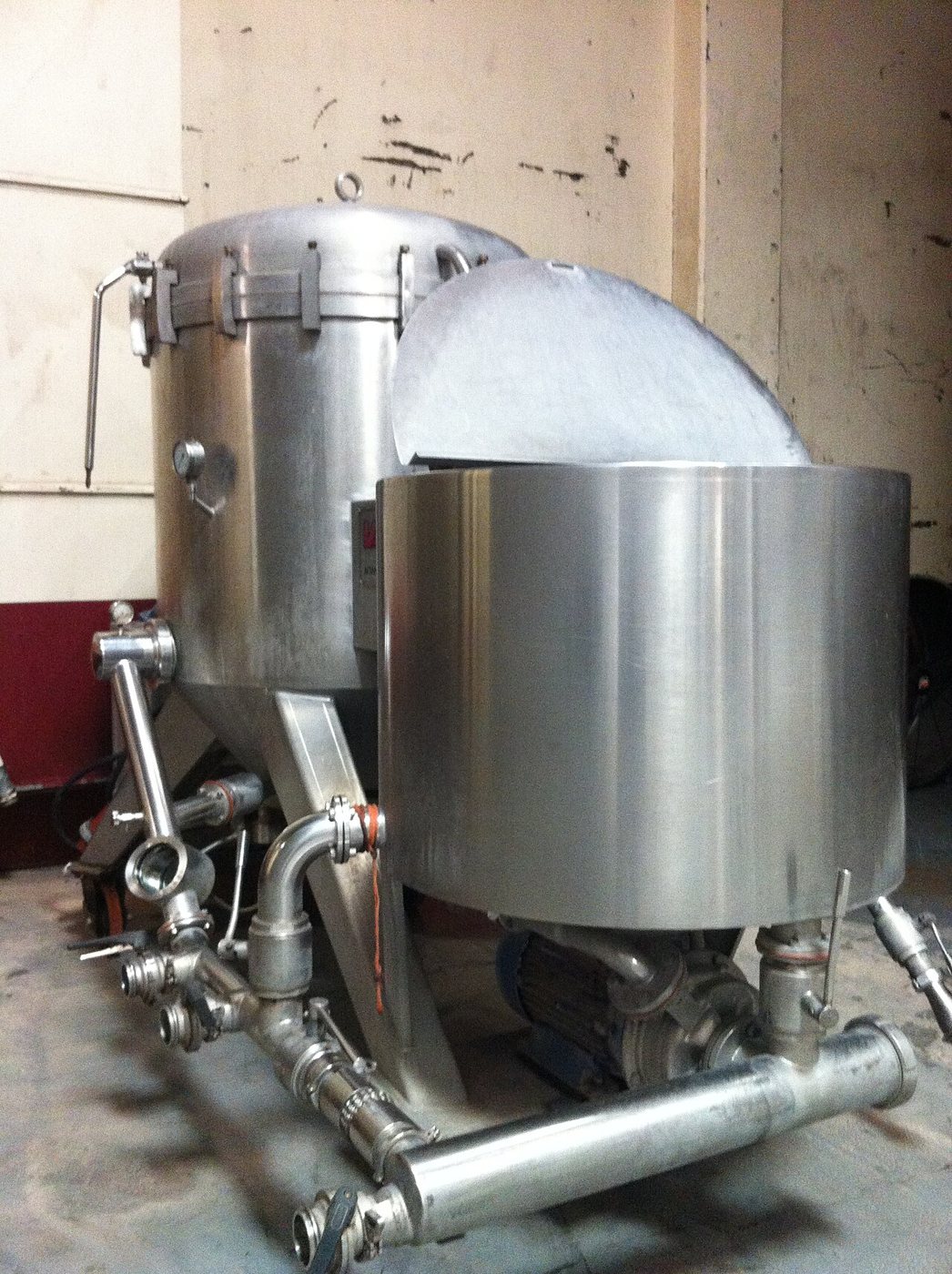
Running a filter with filter aids requires hydraulic continuity: any pressure surge or interruption of flow risks cracking the pad or causing it to slip from its supports, sending cloudy filtrate mixed with filter aid into the tank. The operation is divided into two distinct phases, which you can also explore in the dedicated section on cellar equipment for solid-liquid separation.
1. Forming the precoat (or pre-pad)
The precoat has the task of coating the cloths or metal discs of the filter with a uniform layer, protecting the support from direct clogging by the wine's mucilages and creating the initial filtering base.
- Fill the filter circuit and the dosing vessel with already clean wine (or with potable water, if your cellar procedure then calls for displacement with inert gas and wine without dilution), and put the system into closed recirculation.
- Disperse in the vessel with an agitator the aids chosen for the precoat: often a share of cellulose (or a pre-dosed blend of cellulose and medium-coarse aids) to create a bridge over the mesh of the screen, followed by a filter aid with permeability equal to or slightly finer than that planned for the cycle.
- Circulate the liquid at a constant flow rate until the turbidity at the visual sight glass disappears and the liquid returns clear: the filter aid has deposited evenly on the plates or candles.
2. Continuous body feed
Once the precoat is complete, switch the feed from closed recirculation to the tank of wine to be filtered, without ever stopping the flow or reducing the differential pressure to zero.
- At the same time, the diaphragm or piston dosing pump starts injecting a concentrated suspension of filter aid, kept in agitation in the mixing tank, into the inlet pipe carrying the cloudy wine.
- The injected filter aid travels together with the suspended solids of the wine and deposits on top of the precoat: instead of forming an impermeable film of lees, the dirt particles remain separated from one another by the rigid granules of diatomaceous earth or perlite. The thickness of the pad grows progressively in the filter chamber, maintaining permeability until the available space between the plates is physically filled or the maximum differential pressure allowed by the manufacturer is reached.
How to adjust doses based on turbidity and the nature of the haze
The most frequent error in body-feed filtration is not an excess of filter aid, but underdosing or choosing a filter aid that is too fine for the nature of the solids present in the wine.
If the wine contains deformable colloids (glucans from Botrytis cinerea, suspended mannoproteins, residues from protein fining or undegraded pectins) and the quantity of filter aid injected by the dosing pump is insufficient relative to the percentage of haze, the organic solids completely coat the grains of filter aid. The pad becomes slimy and impermeable: inlet pressure rises rapidly while flow collapses, forcing you to interrupt the cycle after a few hectolitres have been processed, with the filter chamber still almost empty and considerable loss of wine and labour.
Conversely, excessive overdosing of filter aid prematurely fills the useful volume of the sludge chamber with mineral alone, shortening the cycle through geometric exhaustion of the space between the discs.
To find the balance point between flow rate and degree of clarity (necessary to prepare the wine for the subsequent pre-bottling filtration on sheets or membrane), follow these operational criteria:
- High turbidity with mucilaginous solids (young wines, post-racking, botrytised grapes): prefer perlite or high-permeability white diatomaceous earth, increasing the stroke or frequency of the dosing pump to maintain a high ratio between the volume of rigid filter aid and the volume of deformable lees. Pre-emptive use of pectolytic enzymes or beta-glucanases in the tank (a practice permitted by the OIV and by EU Regulation 2019/934) reduces the viscosity of the colloid and cuts filter aid consumption.
- Crystalline or rigid haze (tartaric precipitation from cold stabilisation, bentonite residues): because potassium bitartrate crystals and bentonite flocs are already incompressible and themselves help keep the cake porous, you can reduce the body-feed dosage and use a filter aid of medium or low permeability to achieve high brilliance in a single pass.
- Monitoring the rise in differential pressure: during the cycle, watch the inlet and outlet pressure gauges of the filter. A linear and gradual rise in the pressure difference indicates that the body-feed dosage is proportionate to the turbidity of the wine; a sudden spike in the pressure curve signals underdosing by the pump or the arrival of the conical bottom of the tank, which is far more laden with lees than the mass above it.
Operator safety in the cellar and disposal of spent sludge
Using diatomaceous earth involves two management issues that affect the cellar's operating costs and regulatory obligations: protecting the health of workers exposed to dust, and the environmental management of the pad discharged at the end of the cycle.
Risk from crystalline free silica (CFS)
While cellulose is an organic polymer and perlite consists of amorphous (glassy) silica, diatomaceous earth, particularly varieties subjected to high-temperature calcination, contains variable fractions of crystalline free silica (quartz and cristobalite) in the respirable fraction of the dust. Prolonged inhalation of dust containing crystalline free silica is regulated by occupational health and safety rules (in Italy, Legislative Decree 81/2008 and the preventive technical guidance of INAIL, which transpose the European directives on carcinogenic and mutagenic agents in relation to work involving exposure to respirable crystalline silica dust).
The risk point in the cellar is not during filtration (when the aid is wet and immersed in the liquid), but when opening the bags and loading dry into the hopper or mixing vessel. To protect operators:
- Request up-to-date safety data sheets (SDS) from suppliers to verify the declared percentage of cristobalite and quartz in the product.
- Provide staff with respiratory protective equipment with a high-efficiency dust filter (FFP3 filtering facepieces) when handling open bags.
- Adopt vacuum loading systems (direct suction of dust from the bag below the liquid level in the mixing vessel), or switch to alternative filter aids free of crystalline silica (perlite, cellulose, or non-calcined diatomaceous earth with reduced cristobalite content).
Management and disposal of the spent pad
At the end of filtration, the cake made up of mineral filter aid, yeasts, tartrates, colouring matter and residual wine must not be discharged into the cellar's washing drains: siliceous solids are insoluble and abrasive for pumps, they settle in equalisation tanks and clog the company's wastewater treatment plant.
You should therefore prefer filters equipped with dry discharge (by centrifugation of horizontal plates, or by vibration/air backwashing of vertical discs): the cake falls into a container below as shovelable sludge, reducing water consumption and the organic load of wastewater discharges. According to the European Waste Catalogue (EER codes applicable to waste from the production of alcoholic beverages), spent filter aids and sludge constitute non-hazardous special waste that must be stored in a dedicated area and delivered to facilities authorised for recovery (composting, agronomic spreading where permitted by regional rules, or environmental restoration) or for disposal, keeping a record of movements in the cellar's environmental registers.
The alternative without filter aids: cross-flow filtration
For medium and large wineries that want to eliminate the purchase of diatomaceous earth, operator exposure to siliceous dust and the burden of disposing of spent earths, the established technological alternative is tangential (cross-flow) filtration on polymer or ceramic membranes (permitted by the OIV and by EU Regulation 2019/934 among the membrane separation techniques for musts and wines).
Unlike frontal filtration with body feed, in which all the wine passes perpendicularly through the filter aid pad, in a tangential filter the cloudy wine flows at high speed parallel to the internal surface of capillary or tubular membranes with a defined porosity (microfiltration). The hydrodynamic shear action of the flow continuously sweeps solids away from the membrane wall, preventing the formation of a blocking layer without any need for filter aid.
The operational comparison for the winery is clear:
- No consumables and no solid waste: no diatomaceous earth or perlite is purchased or disposed of; the concentrated liquid retentate is managed together with the normal cellar lees.
- Single pass: even a very cloudy wine leaves the tangential unit at a degree of clarity and filterability index (measurable with the clogging test) suitable for passing directly to final microfiltration membranes at bottling, skipping the intermediate sheet passages.
- Automation and oxygen control: modern tangential systems run in an automated closed loop without a permanent operator on site, reducing dissolved oxygen pick-up and the wine losses that, in diatomaceous earth filters, remain trapped in the volume of the discharged pad.
Frequently asked questions
What is the practical difference between diatomaceous earth and perlite in wine filtration?
Diatomaceous earth has an internal microporous structure within each granule that offers superior adsorbent and brilliance-giving power, making it suitable for finishing wines. Expanded perlite, on the other hand, is made of glassy flakes with no internal pores and lower bulk density: it develops a larger cake volume for the same weight and is indicated for coarse clarification of musts, lees and very loaded wines on rotary vacuum or pressure filters.
Why is cellulose added when forming the precoat?
Cellulose fibres are long, flexible and easily interlace over the metal or synthetic meshes of the filter supports. This fibrous layer prevents the finer mineral granules from passing through the screen at the start of the cycle, cushions small pressure fluctuations to avoid cracks in the pad, and allows quick, clean release of the spent cake at the end of processing.
What happens if too little filter aid is dosed during the body feed of a very dirty wine?
If the body-feed dosage is insufficient relative to the turbidity of the wine, mucilaginous particles and colloids coat the mineral granules and form an impermeable, slimy layer on the surface of the pad. The filter's differential pressure rises rapidly to its maximum limit and flow stops after a few hectolitres, forcing you to interrupt filtration and empty the filter.
How should spent diatomaceous earth be disposed of after cellar filtration?
Spent filter aids discharged from the filter must not be released into sewers or into the cellar's wastewater treatment plant, because they are insoluble and abrasive solids. They should be collected via dry discharge into dedicated containers and managed as non-hazardous special waste from food processing, delivered to companies authorised for recovery (such as composting) or disposal.
Sources
- OIV — International Code of Oenological Practices
- EUR-Lex — Delegated Regulation (EU) 2019/934 on authorised oenological practices and applicable restrictions
- INAIL — Italian National Institute for Insurance against Accidents at Work: prevention and safety on exposure to dust and crystalline silica
- CREA — Council for Agricultural Research and Economics
- Wine filtration: roughing, fining and sterile filtration
- Wine enzymes: pectolytic, extraction, fining and dosage
- Wine fining agents: bentonite, PVPP, plant proteins, dosage
- Wine defects: TCA, Brett, volatile acidity, oxidation
- Wine polysaccharides and mannoproteins: uses in winemaking
- Wine deacidification: calcium carbonate vs bicarbonate