Low-alcohol sparkling wine: early harvest, partial dealcoholisation, EU limits for dealcoholised and partially dealcoholised wine, and what can go on the label
Wines Export Editorial · Last updated:
Low-alcohol sparkling wine can be obtained in two ways: with an earlier harvest, which gives grapes with less sugar, or by removing alcohol from the base wine through total or partial dealcoholisation. Regulation (EU) 2021/2117 set the thresholds: the term «dealcoholised» applies to a product with an actual alcoholic strength not exceeding 0.5% vol, while the term «partially dealcoholised» applies to a product above 0.5% vol but below the minimum of its starting category. For a dealcoholised sparkling wine, a second fermentation is not enough, because it produces alcohol again. Here you will find the techniques, the labelling rules, the case of PDO and PGI wines, and an example of taxation in the United Kingdom.
Technical routes: grapes, must, dealcoholisation
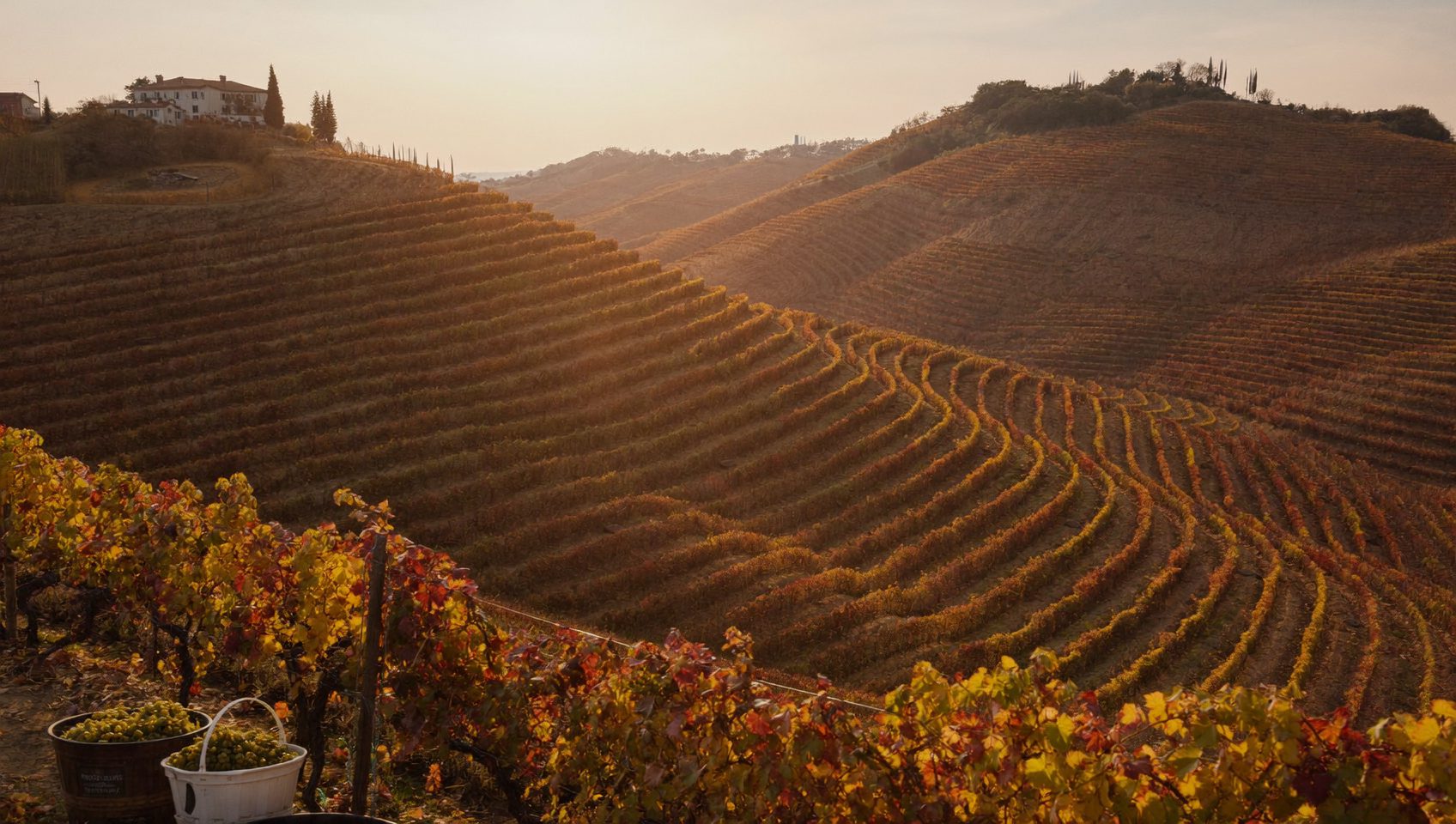
The first lever is the vineyard. Harvesting earlier means picking grapes with less sugar and more acidity, so the base wine will have a lower alcoholic strength after fermentation. The trade-off is a different style: high acidity and less ripe aromas. The decision should be made in the winery using sugar and acidity analyses, not only the calendar.
The second lever is the must. The OIV International Code of Oenological Practices lists among its treatments the reduction of the sugar content of musts by membrane coupling and the interruption of alcoholic fermentation by physical processes. Each practice must be checked in the approved oenological practices entry before use on a wine intended for export. For selected yeasts with low alcohol yield, the sources listed at the end give no precise technical indications: discuss this with your enology consultant.
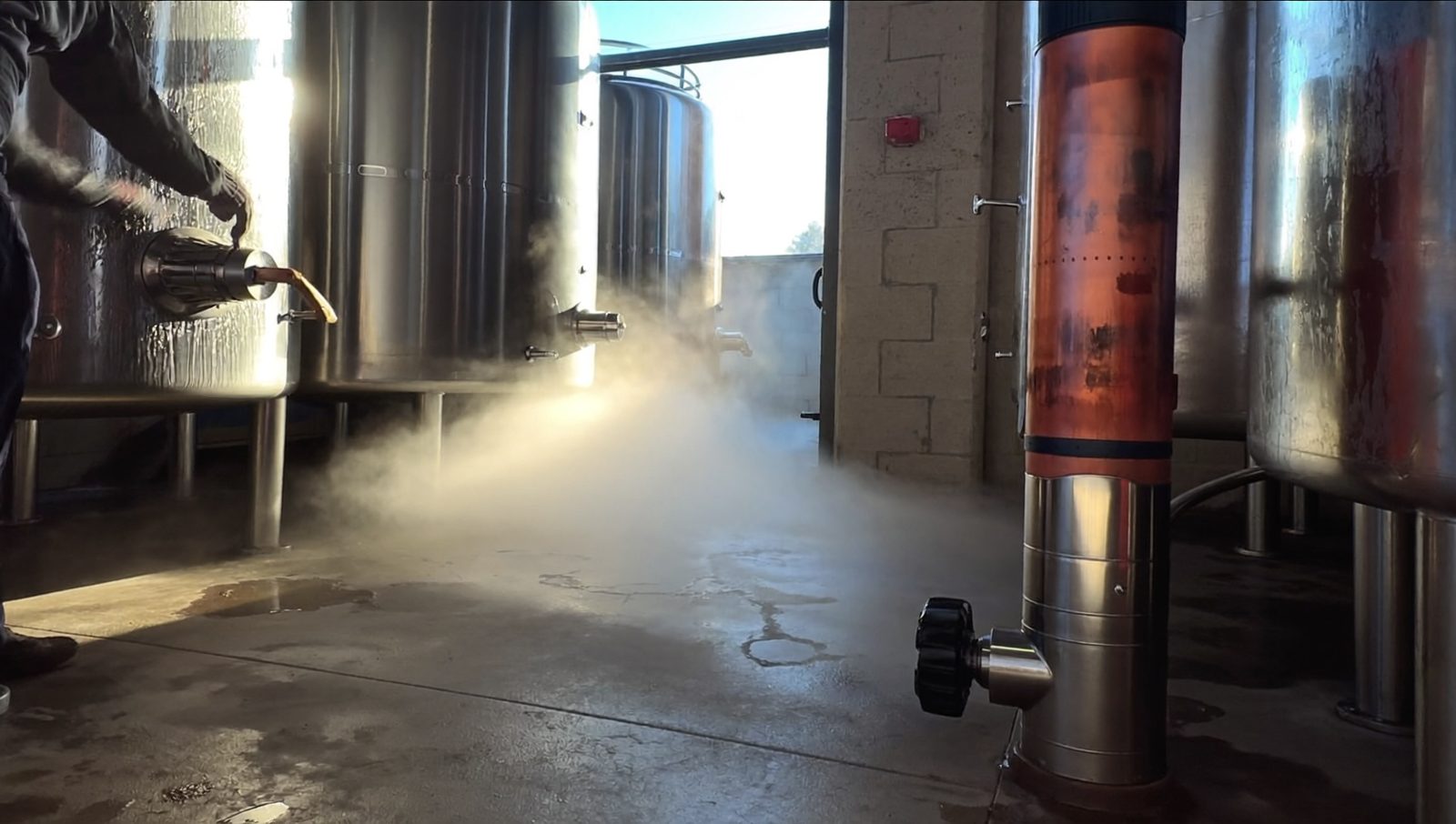
The third lever is dealcoholisation itself, which is applied to wine that has already fermented. The techniques permitted by the regulation are three: partial evaporation under vacuum, membrane techniques, and distillation. In practice, vacuum distillation, reverse osmosis and low-temperature distillation are often used. Each affects aromas, structure and acidity differently, and the result depends on the starting wine.
What Regulation 2021/2117 says
The regulation, published in December 2021, amended the CMO for wine and introduced the possibility of producing and marketing dealcoholised and partially dealcoholised wine products. The labelling rules came into force on 8 December 2023. It also harmonised the terms to be used on labels.
The definition rests on two thresholds. The table below summarises the cases.
| Label term | Actual alcoholic strength | Notes |
|---|---|---|
| Dealcoholised | not exceeding 0.5% vol | Permitted for wine, sparkling wine and semi-sparkling wine, using EU-approved processes |
| Partially dealcoholised | above 0.5% vol and below the minimum of the starting category | Applies to the category of origin, so the limit changes with the type of wine |
A partially dealcoholised wine must remain below the minimum of its own starting category. Under Italian national rules, the word «vino» is stricter alone: a product must have at least 9% vol to be called that, with exceptions linked to particular denominations, as reported by the Fondazione Museo del Vino. The same article notes that the ministerial decree of 20 December 2024 (prot. 672816) made dealcoholisation possible on national territory as well, after conflicts with Italian legislation that had prevented it.

Dealcoholised sparkling wine: why the second fermentation is not enough
Sparkling wine is a delicate case. In the traditional method or the Charmat method, the bubbles come from a second alcoholic fermentation. If the base is already dealcoholised, the second fermentation produces carbon dioxide and ethanol, so the result can no longer be called «dealcoholised sparkling wine». It may fall into the category «partially dealcoholised sparkling wine», provided it meets the limit of that category. According to the analysis by Assoenologi, a dealcoholised sparkling wine is possible if external carbon dioxide is added to the dealcoholised base in a quantity sufficient to reach the minimum overpressure required.
Anyone wanting a low-alcohol sparkling wine therefore has two routes. The first is to start from a partially dealcoholised base and carry out the second fermentation using the traditional method, accepting that the final product stays in the partial category. The second is to dealcoholise the base and then carbonate it. In the second case, the carbon dioxide is added from outside and does not come from the yeast. For bases and sparkling methods, the reference is the page on sparkling wine production, while for semi-sparkling wine, which has its own rules, see the page on frizzante wine.
What can go on the label
The dealcoholisation term must be paired with the category: the regulation refers to «wine», «sparkling wine» or «semi-sparkling wine», accompanied by «dealcoholised» or «partially dealcoholised». The word alone is not enough. A sparkling wine at 0.4% vol is dealcoholised in the technical sense, and the wording is added to the category, not substituted for it.
If the product falls below the Italian threshold of 9% vol, ask your consultant how to present the category, because the national rule on the word «vino» does not match the EU rule. The check must be made on the measured actual alcoholic strength, not on the figure declared at the project stage. A wine that goes from 12% to 6% after dealcoholisation remains «partially dealcoholised» only if 6% is below the minimum of the starting category and above 0.5%; if it drops to 0.5% or less, it becomes «dealcoholised». Always verify the laboratory figure before printing labels.
For export, the term must be translated with its technical meaning, not with a commercial synonym. In English, the regulation uses «dealcoholised» and «partially dealcoholised».
PDO and PGI: what is permitted
For denominated wines the rule is stricter. Total dealcoholisation is limited to products that do not have a PDO or PGI, as reported in the analysis by Wein.plus. Partial dealcoholisation, on the other hand, is permitted for all wines, including sparkling and semi-sparkling wines with added carbon dioxide.
For a denominated wine, partial dealcoholisation is possible on one condition: the production specification must describe the partially dealcoholised wine and, where relevant, the specific oenological practices used to produce it, as provided by Regulation 2021/2117. So before investing in a dealcoholisation plant, read your production specification, and if it does not provide for this, the consortium is your first point of contact. A winery producing a PDO sparkling wine that wants a low-alcohol product may find it simpler to create a line without a denomination, but this choice has a commercial cost to be assessed.
Markets where it sells: the United Kingdom as an example
The United Kingdom taxes wine by alcoholic strength, with the same table for still wine and sparkling wine. According to the Alcohol Duty rates page of the British government, updated to 1 February 2026, the duty per litre of pure alcohol is as follows.
| Alcoholic strength (ABV) | Duty in pounds sterling per litre of pure alcohol |
|---|---|
| From 0 to 1.2% | 0.00 |
| From 1.3% to 3.4% | 9.96 |
| From 3.5% to 8.4% | 26.61 |
| From 8.5% to 22% | 30.62 |
| Over 22% | 33.99 |
The practical consequence is simple. A dealcoholised wine, below 1.2% ABV, pays no duty under this table. A wine at 5% pays a much higher amount per litre of pure alcohol. For a 0.75-litre bottle, the calculation is: pure alcohol equal to 0.0375 litres multiplied by £26.61, giving roughly one pound of duty. The calculation serves to understand the order of magnitude, not to set a price: the band must be confirmed on the official page at the time of shipment.
For Nordic markets the sources listed at the end give no figures. The data you need is in the price lists and monopoly rules, which must be checked one by one. For details on British excise duty, the dedicated page is UK excise duty by wine strength from 2025.
Frequently asked questions
Can a wine with 0.5% vol be called dealcoholised?
Yes. The regulation sets the limit for the term «dealcoholised» at an actual alcoholic strength not exceeding 0.5% vol. Above this threshold, and below the minimum of the starting category, the correct term is «partially dealcoholised».
Can a dealcoholised sparkling wine undergo a second fermentation in the bottle?
Not in the sense of an alcoholic fermentation that produces more alcohol. The second fermentation produces ethanol, so the product falls into the partial category. To obtain a dealcoholised sparkling wine, external carbon dioxide must be added to the dealcoholised base.
Can a PDO wine become dealcoholised?
Total dealcoholisation is not permitted for denominated products. Partial dealcoholisation is, if the production specification provides for it and describes the product. Check the specification before deciding.
Can the term dealcoholised be used in Italy?
Yes. The ministerial decree of 20 December 2024 (prot. 672816) made production possible in Italy as well, according to the Fondazione Museo del Vino. For the word «vino», the national threshold of 9% vol still applies.
Sources
- Lugana Wine for Restaurants: Styles, Prices and Germany
- Wines Near Rome: Frascati, Cesanese and Castelli Romani
- Malolactic bacteria: strains, co-inoculation and white wines
- Barolo vs Barbaresco vs Langhe Nebbiolo: importer guide
- Montepulciano Wine: Vino Nobile or Montepulciano d'Abruzzo?
- Lagrein: Grape, Alto Adige DOC, Kretzer, Riserva and UGA