Lagrein: the Bolzano grape, origin and parentage, Alto Adige and Trentino DOC, Kretzer, Riserva, the Gries UGA and export
Wines Export Editorial · Last updated:
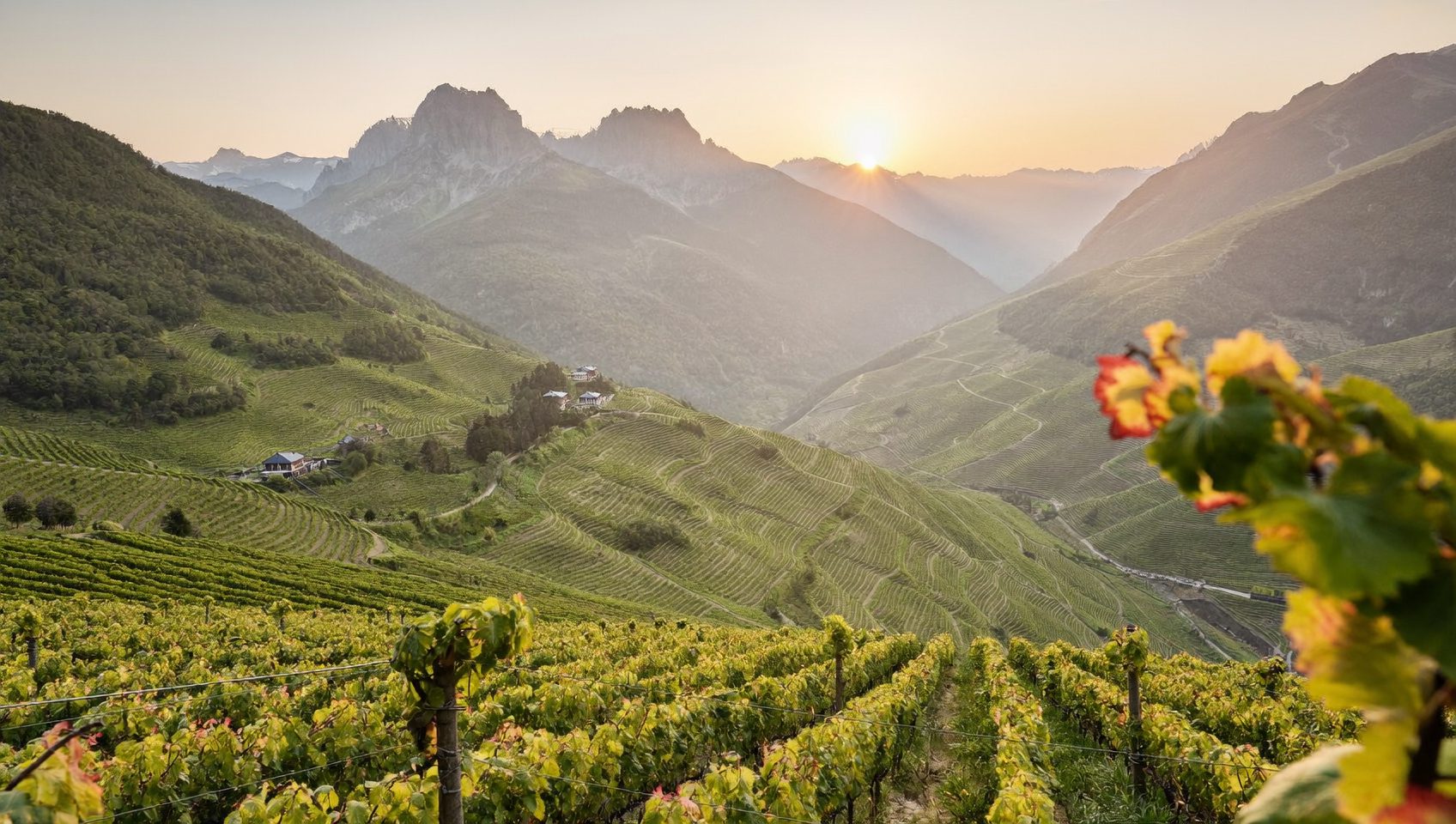
Lagrein is a black grape variety from Alto Adige (South Tyrol), entered in Italy's National Register of Grapevine Varieties as Lagrein N., code 112, since 25 May 1970, with no official synonyms (National Register of Grapevine Varieties, consulted 13 November 2026). It is grown mainly around Bolzano: in 2024 it covered 540.5 hectares in Alto Adige, 13.4 percent more than in 2018 (IRE, Bolzano Chamber of Commerce, October 2025). On the label it appears as Alto Adige Lagrein, also Riserva, and as Lagrein rosato or Kretzer, with at least 85 percent of the variety; the Riserva ages at least two years from 1 October of the harvest year (Alto Adige DOC disciplinare, art. 1, 2 and 5). Outside the province it has a second varietal DOC, Trentino Lagrein, either rubino (dunkel) or rosato (kretzer) (Trentino DOC disciplinare, art. 1). According to the DNA analysis published in Heredity in 2006, one of its parents is very likely Teroldego.
This page is the full guide to the grape, including what a buyer abroad should check. The regional picture is in wine from Trentino-Alto Adige: export guide; its two close relatives are in Teroldego Rotaliano DOC and Marzemino: the grape; the best-known white grapes of the province in Traminer Aromatico or Gewürztraminer and Pinot Bianco or Weissburgunder.
What is Lagrein and where does it come from?
Lagrein is a native Alto Adige variety, documented for centuries around Bolzano. The National Register lists it as a wine grape with 11 clones registered between 1978 and 2009, and gives no synonyms (National Register of Grapevine Varieties, entry 112). The Alto Adige disciplinare names it, together with the Schiava family and Moscato Giallo, among the province's traditional varieties, joined in the nineteenth century by the Bordeaux grapes, the Pinots and the Rhine varieties (art. 9); the Trentino disciplinare counts it among the native or long-established varieties (art. 9).
For the Consorzio Vini Alto Adige the first mention of Lagrein in an Alto Adige document dates from 1318, and the name probably comes from Lagarina, the southern stretch of the Adige valley (Vallagarina); for centuries the most common wine was the rosé, and Lagrein fermented on its skins reached the market only after 1960 (Consorzio Vini Alto Adige, Lagrein variety sheet). The 2006 genetic study instead places the first mentions in the sixteenth century, citing Calò and colleagues (2001) (Vouillamoz and Grando, Heredity, 2006). The two dates come from different sources and should be quoted with their source.
Which grapes is Lagrein related to?
The only parentage documented by a scientific source is the one with Teroldego. José Vouillamoz and M. Stella Grando, at the Istituto Agrario di San Michele all'Adige, analysed 89 varieties with 60 microsatellite markers and concluded that Teroldego is very likely a parent of both Lagrein and Marzemino, the other parent being unknown or extinct; Lagrein and Marzemino are therefore full siblings (Heredity, vol. 97, 2006, pp. 102-110).
In the same pedigree Lagrein is a third-degree relative of Syrah and a second-degree relative of the French Dureza, which the study identifies as Teroldego's full sibling (Vouillamoz and Grando, 2006). For an importer the point is simple: Lagrein, Teroldego and Marzemino are an Alpine family, and the link with Syrah is a distant kinship, not a shared origin. The other two grapes are profiled in Teroldego: the grape and Marzemino: the grape; Syrah in Syrah grape variety.
Where is it grown and how many hectares are there?
Lagrein is a grape of warm valley floors. The Consorzio names sand, gravel and Bolzano porphyry in warm, low sites up to 300 metres as its preferred soils; the main growing area is Bolzano, followed by Caldaro, Termeno, Appiano and Ora (Consorzio Vini Alto Adige, Lagrein page and variety sheet). The Trentino Superiore rules admit Lagrein on well-drained alluvial soils or on well-exposed slopes and hills, in loose soils, no higher than 400 metres (Trentino DOC disciplinare, Title II, art. 3).
| Figure | Value | Source |
|---|---|---|
| Lagrein area in Alto Adige, 2018 | 476.6 hectares | IRE, Bolzano Chamber of Commerce, October 2025 |
| Lagrein area in Alto Adige, 2024 | 540.5 hectares, +13.4 percent on 2018 | IRE, October 2025 |
| Total vineyard area of Alto Adige, 2024 | 5,833.1 hectares | IRE, October 2025 |
| Lagrein share of Alto Adige vineyard area | 9.0 percent (545 hectares) | Consorzio Vini Alto Adige, Lagrein page, consulted 13 November 2026 |
| Area in Alto Adige in 1960 and in 1998 | 585 hectares, then 253 hectares | Consorzio, Lagrein variety sheet |
| Area in Trentino | 220 hectares | Consorzio, Lagrein variety sheet |
| Area worldwide | 850 hectares, with experimental plantings in Argentina, the United States, Australia and Germany | Consorzio, Lagrein variety sheet |
In 2024 Lagrein was Alto Adige's second red grape by area, after Pinot Nero (592.8 hectares) and ahead of Schiava (472.7 hectares), which has lost 32.7 percent since 2018 (IRE, October 2025, table A-1). The IRE figures come from the Chamber of Commerce and the Autonomous Province of Bolzano; the Consorzio figures carry no survey year.
Which denominations use it, and at what percentage?
Lagrein can appear on the label in two DOCs and one IGT; in other denominations it is only a blending grape.
| Denomination | Lagrein required | Source |
|---|---|---|
| Alto Adige Lagrein, also Riserva | at least 85 percent; the rest from red grapes approved in the province of Bolzano | Alto Adige DOC disciplinare, art. 2.1 a |
| Alto Adige Lagrein rosato, rosè or Kretzer | at least 85 percent | art. 1 and 2.1 a |
| Alto Adige Cabernet-Lagrein and Lagrein-Merlot | over 15 percent each; the larger component is named first | art. 2.1 b |
| Alto Adige Rosso (Rot) | no minimum: Schiava, Lagrein, Pinot Nero, Merlot and Cabernet together at least 80 percent | art. 2.1 g |
| Alto Adige Valle Isarco Klausner Laitacher | no minimum: Schiava, Portoghese, Lagrein and Pinot Nero | art. 2.4 c |
| Trentino Lagrein rubino (dunkel) or rosato (kretzer), also Riserva | at least 85 percent | Trentino DOC disciplinare, art. 1 and 2 |
| Trentino Superiore Lagrein | at least 85 percent | Trentino DOC, Title II, art. 2 |
| Trentino red from two varieties (with Cabernet or Merlot) | at least 25 percent if it is the minor variety; wine 100 percent from the two | Trentino DOC, art. 2 |
| Trentino kretzer or rosato | at least two of Enantio, Schiava, Teroldego and Lagrein, none above 70 percent | Trentino DOC, art. 2 |
| Trentino Superiore rosso | up to 15 percent, together with Rebo | Trentino DOC, Title II, art. 2 |
| Trentino Sorni rosso | no minimum: Teroldego, Schiava and Lagrein, alone or together | Trentino DOC, annex 1, art. 2 |
| Casteller DOC | no minimum: Merlot at least 50 percent, the rest may include Lagrein | Casteller DOC disciplinare, art. 2 |
| Valdadige red and rosé | no minimum: Enantio and Schiava at least 50 percent, the rest may include Lagrein | Valdadige DOC disciplinare, art. 2 |
| Mitterberg IGT with the grape name | at least 85 percent | Mitterberg IGT disciplinare, art. 2 and annex 1 |
| Vigneti delle Dolomiti IGT | the name Lagrein may not be used on the label; in the novello Lagrein must prevail in the province of Bolzano | Vigneti delle Dolomiti IGT disciplinare, art. 1 and annex 1 |
The National Register lists Lagrein as permitted in four DOCs (Alto Adige, Casteller, Trentino, Valdadige) and seventeen IGTs, including Mitterberg, Vigneti delle Dolomiti, Trevenezie, Vallagarina, Veneto, Alpi Retiche and several Lombardy IGTs (entry 112).
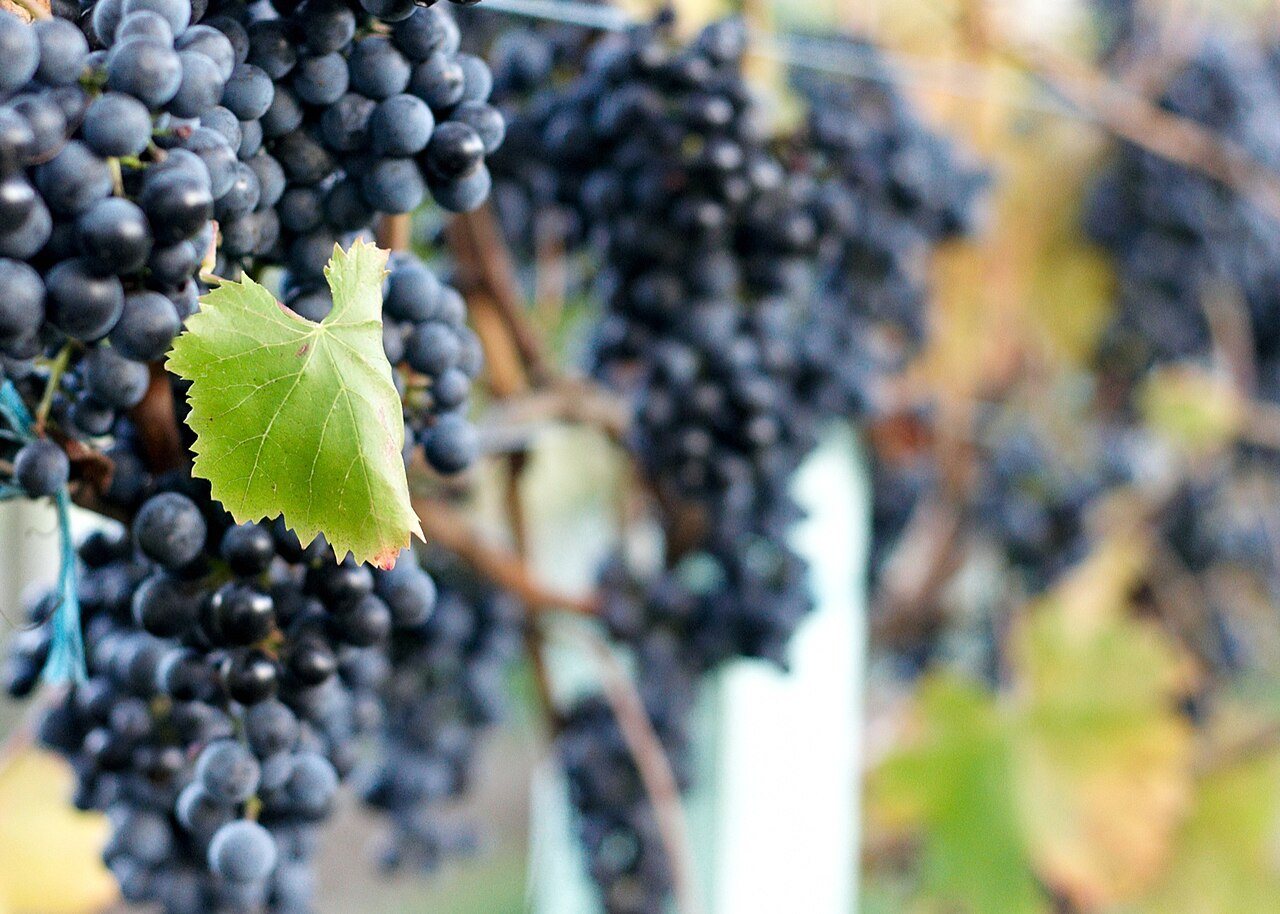
Alto Adige Lagrein DOC: the requirements
The Alto Adige DOC (Südtirol in German) allows three single-variety Lagrein wines: the red, the Riserva and the rosé.
| Requirement | Lagrein | Lagrein Riserva | Lagrein rosato or Kretzer | Source |
|---|---|---|---|---|
| Grape | at least 85 percent | at least 85 percent | at least 85 percent | art. 2.1 a |
| Maximum grape yield | 14 t/ha; 10.5 t/ha with a UGA | 14 t/ha; 10.5 t/ha with a UGA | 14 t/ha; 10.5 t/ha with a UGA | art. 4.4 |
| Minimum natural alcohol of the grapes | 11 percent; 11.5 with a UGA | 11.5 percent | 10 percent; 10.5 with a UGA | art. 4.4 and 5.5 |
| Grape-to-wine yield | 70 percent, 98 hl/ha without a UGA | 70 percent | 70 percent | art. 5.4 |
| Minimum ageing | none set | two years from 1 October of the harvest year | Riserva not provided for | art. 1 and 5.5 |
| Minimum total alcohol | 11.50 percent | 11.50 percent | 11.00 percent | art. 6 |
| Minimum total acidity | 4.0 g/l | 4.0 g/l | 4.0 g/l | art. 6 |
| Minimum non-reducing extract | 20.0 g/l | 20.0 g/l | 16.0 g/l | art. 6 |
If the wine yield exceeds 70 percent but stays within 80, the excess loses the DOC; above 80 the whole batch loses it (art. 5.4). The full yield applies from the vineyard's third year; in the second year it is at most half, in the planting year zero, and the Autonomous Province of Bolzano can lower it each year on a proposal from the Consorzio (art. 4.4). New vineyards need at least 3,300 vines per hectare (art. 4.2). Winemaking and compulsory ageing take place only in the province of Bolzano, except for derogations already granted (art. 5.1). Up to 15 percent of Alto Adige musts or wines of the same colour, including other vintages, may be added (art. 5.2).
The text is the Ministry of Agriculture's, approved by presidential decree on 14 April 1975 and last amended by ministerial decree of 8 October 2024 (Gazzetta Ufficiale n. 244, 17 October 2024). Compliance is checked by the Bolzano Chamber of Commerce (art. 10). How to read a disciplinare is explained in Italian wine production regulations: how to read them.
Gries and the other Lagrein UGAs
In the rules in force Gries is not a subzone: it is one of the additional geographical units (UGA, unità geografiche aggiuntive) of the municipality of Bolzano, and admits Lagrein, Merlot and Cabernet (art. 2.6 and 7.2). From the 2024 vintage the Alto Adige DOC has 86 UGAs (Consorzio Vini Alto Adige, UGA page). Lagrein is permitted in 18 of them, and in two it is the only permitted grape.
| Municipality | UGAs that admit Lagrein | Source |
|---|---|---|
| Bolzano | Gries, Gries-Moritzing (Lagrein only), St. Justina, Rentsch, Prazöll, Kampill | art. 2.6 |
| Bolzano and Renon | Leitach, St. Peter | art. 2.6 |
| Appiano | Huberfeld | art. 2.6 |
| Caldaro | Wadleith, St. Josef | art. 2.6 |
| Caldaro and Vadena | Feld | art. 2.6 |
| Egna | Griesfeld (Lagrein only) | art. 2.6 |
| Egna and Montagna | Lehen | art. 2.6 |
| Ora | Furggl | art. 2.6 |
| Terlano | Siebeneich | art. 2.6 |
| Termeno | Putznai, Steinacker | art. 2.6 |
A Lagrein with a UGA must come 100 percent from grapes of that UGA, with a maximum yield of 10.5 t/ha and at least 11.5 percent natural alcohol (art. 4.1 and 4.4). The UGA name goes directly under the denomination, always with the pictogram of a stylised bunch of grapes inside a location pin (art. 7.2, 7.3 and annex 1). A wine with a UGA, Riserva or «vigna» may be sold only in the traditional containers: glass bottles or traditional ceramic or wooden vessels of 0.375 and 0.750 litres and multiples, 0.5 litres other than the «uni» type, or 5 litres (art. 8.1).
The Alto Adige Lagrein label
| Rule | What the Alto Adige disciplinare requires | Source |
|---|---|---|
| Language | terms in Italian and/or German: Alto Adige or Südtirol, rosato, rosè or Kretzer | art. 1 and 7.1 |
| Vintage | compulsory | art. 7.4 |
| Adjectives | extra, fine, scelto, selezionato, vecchio and similar are banned | art. 7.1 |
| Position of terms | Riserva, UGA and «vigna» directly under the denomination, in the same field of vision as the mandatory particulars | art. 7.3 |
| «Vigna» | with the place name, separate vinification and storage, vineyard listed in the regional register | art. 7.5 |
| Two grapes | Cabernet-Lagrein or Lagrein-Merlot: larger component first, same type size, same line | art. 2.1 b |
| Closure | any system allowed by law | art. 8.1 |
The word «dunkel» does not appear in the Alto Adige disciplinare: according to the Consorzio the old term «Lagrein dunkel» is no longer allowed under the local rules (Lagrein variety sheet). In Trentino, by contrast, «dunkel/rubino» and «kretzer/rosato» are the two colour designations of Trentino Lagrein (Trentino DOC disciplinare, art. 1 and 5).
Trentino Lagrein DOC and Trentino Superiore Lagrein
In the province of Trento Lagrein has two levels: the Trentino DOC and the Trentino DOC with the term Superiore.
| Requirement | Trentino Lagrein | Trentino Lagrein Riserva | Trentino Superiore Lagrein | Source |
|---|---|---|---|---|
| Colour on the label | rubino (dunkel) or rosato (kretzer) | rubino (dunkel) or rosato (kretzer) | no designation; described as ruby red | art. 1 and 5; Title II, art. 1 and 6 |
| Grape | at least 85 percent; Moscato Giallo, Moscato Rosa and Traminer Aromatico excluded as complements | as Trentino Lagrein | at least 85 percent | art. 2; Title II, art. 2 |
| Maximum yield | 14 t/ha, 98 hl/ha | 14 t/ha, 98 hl/ha | 9 t/ha, 63 hl/ha | art. 4; Title II, art. 4 |
| Minimum natural alcohol | 10.5 percent | 11 percent (half a degree more) | 11.5 percent | art. 4 and 5; Title II, art. 4 |
| Minimum ageing | none | two years from 1 November of the harvest year | 22 months from 1 November of the harvest year | art. 5; Title II, art. 5 |
| Release | the rubino from 1 March of the year after the harvest | after ageing | after ageing | art. 5; Title II, art. 5 |
| Minimum total alcohol | 11.00 percent | 11.50 percent | 12.50 percent | art. 6; Title II, art. 6 |
| Minimum total acidity | 4.0 g/l | 4.0 g/l | 4.5 g/l | art. 6; Title II, art. 6 |
| Minimum non-reducing extract | 20.0 g/l rubino, 19.0 g/l rosato | 20.0 g/l rubino, 19.0 g/l rosato | 25.0 g/l | art. 6; Title II, art. 6 |
| Density of new vineyards | at least 2,500 vines/ha | at least 2,500 vines/ha | 4,000 vines/ha on vertical trellis, 3,500 on single pergola | art. 4; Title II, art. 4 |
Trentino Lagrein is vinified in the province of Trento; the Ministry may authorise vinification in the province of Bolzano and in the Veronese municipalities of Brentino Belluno and Dolcè for producers who can show traditional use (art. 5). Trentino Superiore is vinified and aged only in the province of Trento (Title II, art. 5). A 20 percent tolerance on grape yield is allowed without the right to the DOC; above that, the whole batch loses it (art. 4). The text published by the Ministry lists the provision of 12 July 2019 as its latest change. Trentino Lagrein uses the same area as the other types of the DOC, listed in art. 3; the other wines of the province are in exporting wine from Trento.
What kind of wine it is: red, Kretzer and Riserva
The same grape gives two wines that differ in colour and body. The Alto Adige disciplinare describes Lagrein as intense ruby to deep garnet, with a pleasant smell typical of the variety and a dry, soft, velvety, full taste; the rosé is light ruby or pink with salmon highlights, delicate, dry, not very full-bodied, elegant and fresh (art. 6). Among the traits of the territory, the disciplinare mentions Lagrein's berry-fruit bouquet and the full-bodied, soft-tannin reds grown below 400 metres (art. 9). Trentino Superiore Lagrein is described as ruby red with violet highlights, fruity, sometimes slightly vegetal and spicy (Title II, art. 6).
The Consorzio Vini Alto Adige describes it as late-ripening, with conical, loose bunches and dark blue, firm-skinned berries. Kretzer is the older tradition: the crushed grapes ferment briefly and are pressed off the skins after one or two days, and for a long time it was the everyday Lagrein. Lagrein fermented on the skins arrived after 1960, and from 1985 the best selections were aged in small oak casks (Lagrein variety sheet). In its tasting notes the Consorzio lists cherry, violet, blackberry, dark chocolate and dark bread; it recommends serving it at 16 to 18 °C with game, beef and aged cheese (Lagrein page and variety sheet).
Lagrein, Teroldego, Marzemino and St. Magdalener compared
Three related grapes and a neighbouring Schiava red, with different rules.
| Alto Adige Lagrein | Teroldego Rotaliano DOC | Trentino Marzemino | Alto Adige Santa Maddalena (St. Magdalener) | |
|---|---|---|---|---|
| Grape | Lagrein at least 85 percent | Teroldego 100 percent | Marzemino at least 85 percent | Schiava at least 85 percent |
| Rosé | yes, Lagrein rosato or Kretzer | yes, rosato or kretzer | no | no |
| Maximum grape yield | 14 t/ha | 17 t/ha | 13 t/ha | 12.5 t/ha |
| Minimum total alcohol | 11.50 percent | 11.50 percent | 11.00 percent | 11.50 percent |
| Riserva | two years from 1 October | Superiore Riserva: two years from 1 November | two years from 1 November | two years from 1 October |
| Parentage | offspring of Teroldego | parent of Lagrein and Marzemino | offspring of Teroldego, sibling of Lagrein | – |
Sources: Alto Adige DOC (art. 2, 4, 5 and 6), Teroldego Rotaliano DOC (art. 1, 2, 4, 6 and 7) and Trentino DOC (art. 2, 4, 5 and 6) disciplinari; parentage from Vouillamoz and Grando, Heredity, 2006.
The individual wines are in Teroldego Rotaliano DOC, Marzemino: the grape and St. Magdalener. The province's most planted international red is in Pinot Noir: export guide.
Selling Lagrein abroad: markets and what to check
Lagrein is the best-selling red of Alto Adige's large producers. In 2024 the 19 largest producers, who bottle more than 80 percent of the province's 0.75-litre DOC bottles, sold 3,489,000 bottles of Lagrein DOC, 10.7 percent of their sales and 14.7 percent more than in 2018; Pinot Nero DOC stood at 1,902,000 bottles (IRE, October 2025, tables 2 and A-3).
The IRE does not split markets by grape. For all the wine of the large producers, in 2024 Alto Adige itself took 27.4 percent of bottles and the rest of Italy 39.0; abroad came Germany (9.1 percent), the United States (8.3), Switzerland (3.2, up from 2.2 in 2018), Austria (2.0), Benelux (1.8), the United Kingdom (1.5), Japan and Canada (1.2 each). Outside Alto Adige the producers see room for growth in every market surveyed, above all Japan and Canada, and more than half of sales to end consumers go through restaurants and bars (IRE, October 2025). The Consorzio notes that Lagrein Kretzer was already exported to Germany, Austria and Switzerland before the shift to red in the 1980s (Consorzio Vini Alto Adige, 19 August 2026).
For channels: the German market is covered in wine importers in Germany: wholesalers and Fachhandel and wine importers in Germany; then wine importers in the United States, wine importers in Switzerland and wine importers in Austria.
Before listing a Lagrein, check six points:
- Denomination. Alto Adige or Trentino DOC with the grape name means at least 85 percent Lagrein; a Vigneti delle Dolomiti IGT may not put Lagrein on the label, a Mitterberg IGT may (disciplinari, art. 1 and 2).
- Colour. Kretzer, rosato or rosè is a rosé; dunkel or rubino is the Trentino red. In Alto Adige the red is simply called Lagrein.
- Riserva. In Alto Adige two years from 1 October of the harvest year; in Trentino two years from 1 November. For the Alto Adige rosé, art. 1 does not provide for a Riserva.
- UGA. Gries, Gries-Moritzing or Griesfeld on the label require the pictogram and 100 percent grapes from that unit.
- Vintage. Compulsory in Alto Adige on all still wines (art. 7.4).
- Format. With a UGA, Riserva or «vigna», only glass or traditional vessels in the sizes of art. 8.1.
Frequently asked questions
What is Lagrein?
It is a black grape variety native to Alto Adige, entered in Italy's National Register of Grapevine Varieties as Lagrein N. (code 112) since 25 May 1970. It is grown mainly around Bolzano and gives a red wine, also Riserva, and a rosé called Kretzer (National Register; Alto Adige DOC disciplinare, art. 1).
Is Lagrein related to Teroldego?
Yes. According to the study by Vouillamoz and Grando published in Heredity in 2006, Teroldego is very likely a parent of both Lagrein and Marzemino, which are therefore full siblings; the other parent is unknown.
What is the difference between Lagrein, Lagrein Kretzer and Lagrein Riserva?
Lagrein is the red; Kretzer (or rosato, or rosè) is the rosé, with a minimum alcohol of 11 percent instead of 11.5. The Riserva is a red aged at least two years from 1 October of the harvest year, from grapes with at least 11.5 percent natural alcohol (Alto Adige DOC disciplinare, art. 1, 5 and 6).
Is Lagrein Gries a subzone?
No. In the rules in force Gries is an additional geographical unit (UGA) of the municipality of Bolzano, where Lagrein, Merlot and Cabernet are permitted; in Gries-Moritzing only Lagrein is permitted. The wine must come 100 percent from grapes of the UGA (Alto Adige DOC disciplinare, art. 2.6 and 4.1).
How many hectares of Lagrein are there?
In Alto Adige 540.5 hectares in 2024, against 476.6 in 2018 (IRE, Bolzano Chamber of Commerce, October 2025). The Consorzio Vini Alto Adige gives 220 hectares in Trentino and 850 hectares worldwide.
Where is Lagrein sold?
The IRE does not publish markets by grape. For all the wine of Alto Adige's large producers, the leading foreign markets in 2024 were Germany, the United States and Switzerland; Lagrein DOC was the best-selling red, with 3,489,000 bottles (IRE, October 2025).
Sources
- National Register of Grapevine Varieties, Lagrein N. entry, code 112 (Italian Ministry of Agriculture)
- Disciplinari of Alto Adige DOC (last amended by DM 8 October 2024, GU n. 244 of 17 October 2024), Trentino DOC, Teroldego Rotaliano DOC, Casteller DOC, Valdadige DOC, Mitterberg IGT and Vigneti delle Dolomiti IGT, Ministry of Agriculture list of DOP and IGP disciplinari
- Vouillamoz J.F. and Grando M.S., Genealogy of wine grape cultivars: "Pinot" is related to "Syrah", Heredity 97, 2006, pp. 102-110
- IRE, Bolzano Chamber of Commerce, I grandi produttori di vino dell'Alto Adige 2018-2024: tra stabilità e nuove sfide, Analisi flash 1.25, October 2025
- Consorzio Vini Alto Adige, Lagrein page and Lagrein variety sheet
- Consorzio Vini Alto Adige, additional geographical units (UGA)
- Consorzio Vini Alto Adige, Alto Adige Grape Varieties with Deep Roots, 19 August 2026
- Barolo vs Barbaresco vs Langhe Nebbiolo: importer guide
- Kosher Wine Export: Certification, Costs and Buyers
- Wines Near Rome: Frascati, Cesanese and Castelli Romani
- Italian Fortified and Passito Wines: Categories and Excise
- Low-Alcohol Sparkling Wine: How to Make It and Legal Limits
- International grapes in Italy: Merlot, Chardonnay, Syrah