Langhe Nebbiolo DOC, Nebbiolo d'Alba, Barolo and Barbaresco DOCG: what changes by area, ageing, price and use on the wine list, and how to explain it to an importer
Wines Export Editorial · Last updated:
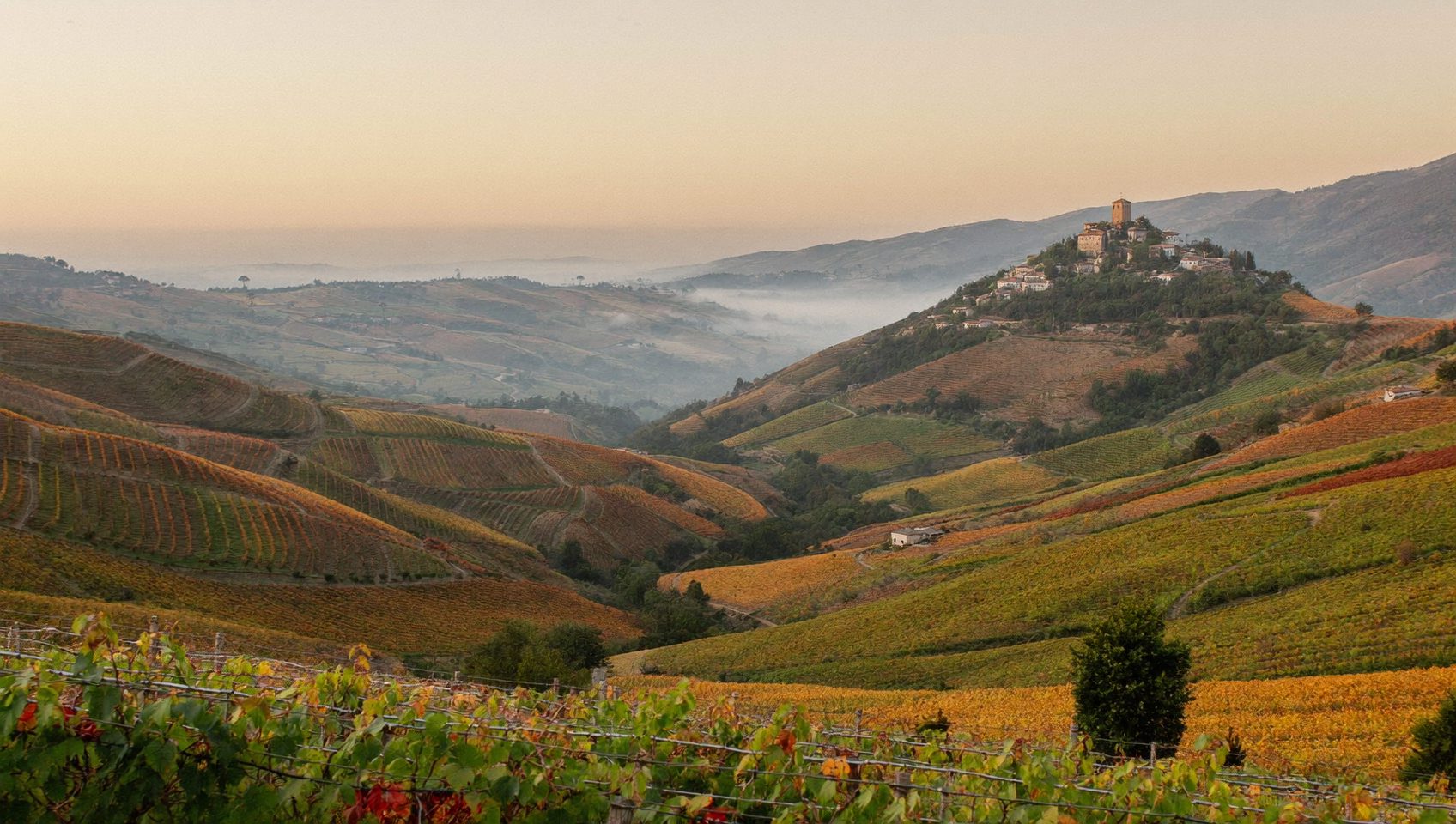
When you present your wines to a foreign buyer, the distinction between Langhe Nebbiolo DOC, Nebbiolo d'Alba DOC, Barbaresco DOCG and Barolo DOCG should not be reduced to a lesson on municipal boundaries. An importer evaluates these four denominations as different components of the same price list: they look for fast turnover and by-the-glass service in the DOCs, while they require prestige, allocations and vintage depth in the two DOCGs. Explaining clearly what differs between these labels allows your winery to sell the full range without one wine cannibalising the other.
The Nebbiolo pyramid in Langa
For a foreign buyer, particularly in markets where Burgundy sets the commercial grammar for single-varietal wines, Nebbiolo from the hills around Alba is read through a qualitative and positioning pyramid. At the base are the entry-level denominations, designed for more immediate drinking and wide distribution in casual dining; at the top are the two denominations of controlled and guaranteed origin, which are in turn subdivided into multi-vineyard blends, additional geographical mentions and Riserva versions.
The Consorzio di Tutela Barolo Barbaresco Alba Langhe e Dogliani brings together over 550 members and protects 9 denominations in total, divided into 4 DOCG and 5 DOC. Within this framework, the Nebbiolo grape in the Langhe and its export guide represent the core source of value for structured wineries in the province. For a buyer purchasing from export-oriented wineries in the Cuneo area, understanding the hierarchy of denominations means understanding why three bottles produced from the same grape, often in the same winery and a few kilometres apart, leave the cellar at ex-cellar prices that differ considerably.
The difference lies not only in the prestige of the name on the label, but in the direct costs of production and capital tied up: yields per hectare, the land value of vineyards, mandatory wood-ageing requirements and waiting times before release directly affect the selling price list.
| Denomination | Classification | Reference grape | Ageing requirement | Main role in the importer's portfolio |
|---|---|---|---|---|
| Langhe Nebbiolo | DOC | Nebbiolo (with a possible minimum share of complementary varieties permitted by the production rules) | No long mandatory ageing; ready for release on the market | By the glass, bistros, wine shops, fast rotation |
| Nebbiolo d'Alba | DOC | Nebbiolo as a single variety | Mandatory ageing more limited than in the DOCGs; Superiore version provided for | Mid-range restaurants, structured by-the-glass wine lists, retail sales |
| Barbaresco | DOCG | Nebbiolo as a single variety | Extended mandatory ageing with wood; Riserva grade provided for | Fine dining, gastronomic positioning, collecting |
| Barolo | DOCG | Nebbiolo as a single variety | Extended mandatory ageing (longer than the other denominations in the pyramid) with wood; Riserva grade provided for | Fine dining, allocations, auctions, investment and long ageing |
Langhe Nebbiolo and Nebbiolo d'Alba
In discussions with international distributors, the first distinction to clarify concerns the two DOCs: Langhe Nebbiolo and Nebbiolo d'Alba. Less experienced buyers often perceive them as interchangeable, but from a regulatory, geographical and oenological standpoint they follow distinct logics.
The Langhe Nebbiolo DOC explained to foreign buyers covers a broad territorial area and is the flexibility tool par excellence for Langa wineries. It allows producers to use grapes from younger vineyards located in the municipalities of Barolo or Barbaresco, or to downgrade lots originally claimed as DOCG that the winery prefers to bottle earlier to achieve a fresher, fruitier and more immediate profile. Moreover, the Langhe DOC rules allow minimal varietal flexibility, although in practice it is almost always vinified as a single variety to meet the demands of foreign markets that look for varietal typicity.
Nebbiolo d'Alba DOC, defined by the Consortium as the single-varietal wine of the Langa and Roero hills, has instead a specific historical delimitation covering the territories around the city of Alba, extending both on the right and left bank of the Tanaro river, outside the restricted historical enclaves of Barolo and Barbaresco. Here the soils often show a more marked sandy component compared with the compact marls of lower Langa, giving wines with very clear floral and fruity aromas, a tannic structure that is softer from the first years in bottle, and a specific territorial identity that is also expressed in the Superiore version.
When presenting both references to an importer, the practical advice is to distinguish the channel: Langhe Nebbiolo works as the entry point to your house style (your estate's "little Barolo" or "little Barbaresco"), while Nebbiolo d'Alba is positioned as an autonomous territorial wine, ideal for HoReCa clients who want to serve a single-varietal Nebbiolo of medium structure without the cost and waiting time of a DOCG.
Barolo: zone, ageing, mentions
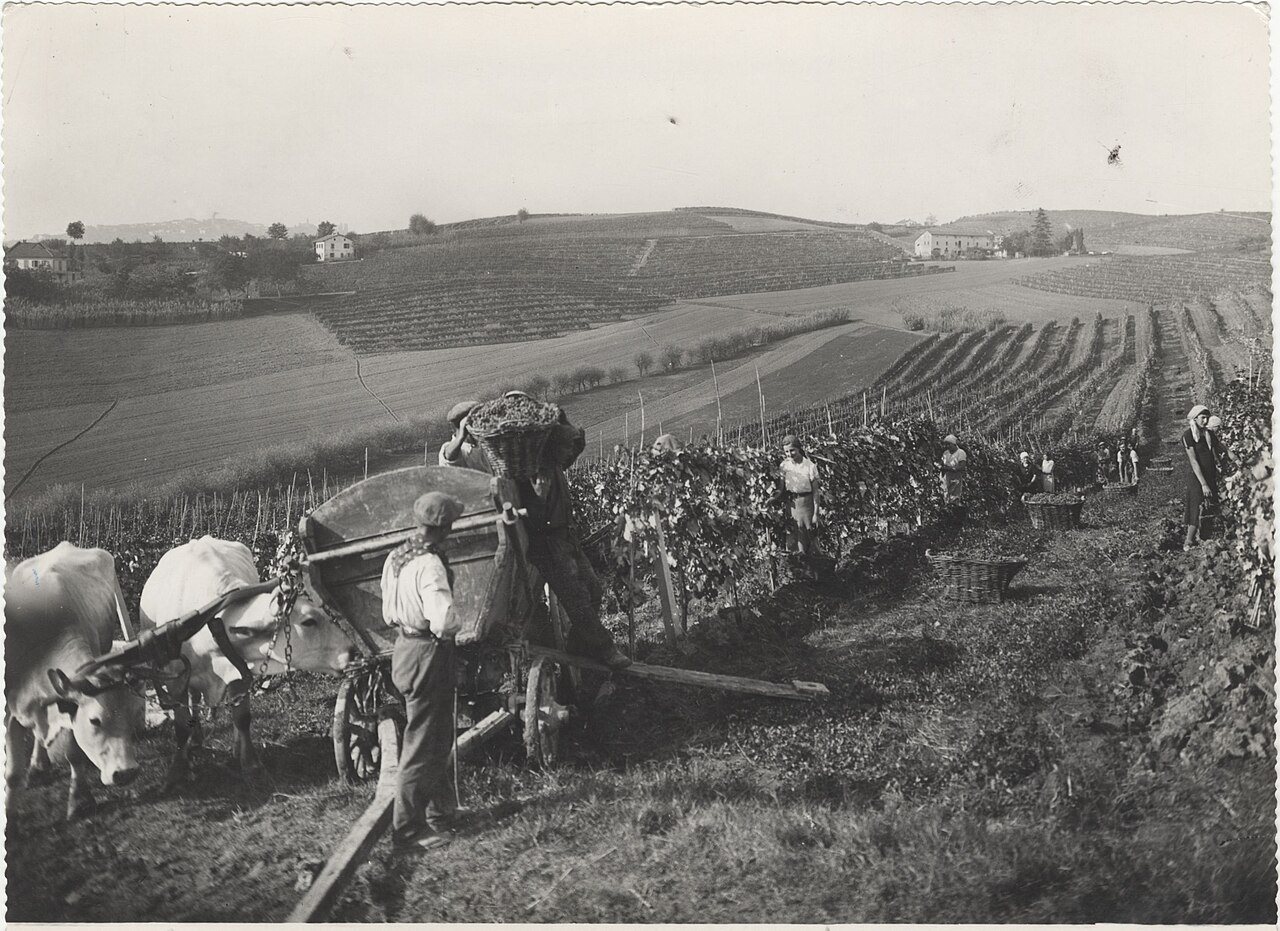
Moving to the top of the pyramid, the Barolo DOCG for international buyers is the main reference for structure, longevity and value per bottle. Produced exclusively from Nebbiolo grapes in a restricted group of municipalities south-west of Alba, this DOCG requires a minimum ageing period longer than the rest of the area, with a strict obligation to rest in wooden casks before release, which is further extended for the Riserva version.
For a B2B importer, buying Barolo means managing two clearly distinct product categories within the same denomination:
- Classic Barolo (or blended / municipal Barolo): born from the combination of different estate vineyards to offer a balanced and consistent expression of the vintage and of the municipality of origin. This is the reference that guarantees volumes for distribution and continuity on the wine list.
- Barolo with an additional Geographical Mention (MGA): comes from a single sub-zone officially delimited by the production rules (often also indicated with the term "vigna" followed by the place name). These bottles are produced in limited runs, command higher prices and are sold by the importer on allocation to starred restaurants and specialist wine shops.
The pedoclimatic differences within the Barolo zone, traditionally read by buyers through the contrast between the looser and more aromatic soils of the western side (such as La Morra and Barolo) and the more compact, calcareous-clayey and iron-rich soils of the eastern side (such as Serralunga d'Alba, Monforte d'Alba and Castiglione Falletto), give importers a solid sales argument to justify listing several labels or several crus from the same winery.
Barbaresco: the differences
The direct comparison between Barolo and Barbaresco is one of the most frequent questions asked by sommeliers and foreign buyers at trade fairs such as Grandi Langhe (which brings over 6,500 professional operators and 500 wineries to Turin) or the Barolo Barbaresco World Opening (BBWO), where over 200 producers meet the international trade.
The Barbaresco DOCG presented to importers shares with Barolo the grape base (Nebbiolo as a single variety), the DOCG rank and the system of Additional Geographical Mentions, but it is distinguished by three factors that are decisive commercially:
- Geography and microclimate: the production area lies north-east of Alba, closer to the course of the Tanaro river (in the municipalities of Barbaresco, Neive, Treiso and the hamlet of San Rocco Seno d'Elvio in Alba). The mitigating influence of the river and generally lower altitudes favour a slightly earlier phenolic ripening than Barolo.
- Ageing times and release to market: the Barbaresco production rules require a mandatory ageing period shorter than that of Barolo, both in the base version and in the Riserva version. This means your winery releases the new Barbaresco vintage one year ahead of the same Barolo vintage.
- Palate profile and positioning: while possessing an important tannic structure and considerable ageing potential, Barbaresco tends to show an earlier window of approachability in youth, with an aromatic elegance that importers easily associate with contemporary gastronomy.
For the foreign distributor, Barbaresco is never a "second wine" to Barolo, but a parallel top tier that allows the high-end range to be diversified, often with a very competitive value-for-money ratio in fine dining compared with the more renowned crus of the Barolo zone.
Prices and uses on the wine list
When building an export quotation, the ex-cellar (EXW) price scale reflects the production pyramid and the data recorded by chambers of commerce and official statistics on the value of grapes and bulk wine under denomination. An experienced buyer knows that the price differential between a Langhe Nebbiolo DOC and a Barolo DOCG is not arbitrary, but derives from precise agricultural and financial costs: the value of land suitable for Barolo and Barbaresco, the lower yields per hectare in the DOCGs and the capital tied up in the cellar for years before invoicing.
In foreign restaurants, this price scale translates into complementary uses on the wine list:
- Langhe Nebbiolo DOC: falls within the price range that allows the restaurateur to offer it by the glass while maintaining their own mark-up. It is the wine that introduces the end customer to the taste of Nebbiolo (pale colour, lively acidity, present tannin) without the price barrier of an ageing bottle.
- Nebbiolo d'Alba DOC: occupies the central section of the Italian red wine list. It is chosen at the table by guests who want a full bottle of territorial wine at an accessible price, ready to drink straight away with meat dishes or structured first courses, without the sommelier having to decant the wine hours in advance.
- Barbaresco DOCG and Barolo DOCG: occupy the upper part of the wine list. Here rotation is slower, the unit margin in currency for the restaurant is high, and the guest's purchase is guided by the sommelier's advice, the reputation of the producer, the individual MGA and the vintage.
Presenting this breakdown transparently reassures the importer: it shows that your winery understands the economics of its HoReCa clients' accounts and is not simply trying to push the most expensive bottles.
How to present them together to an importer
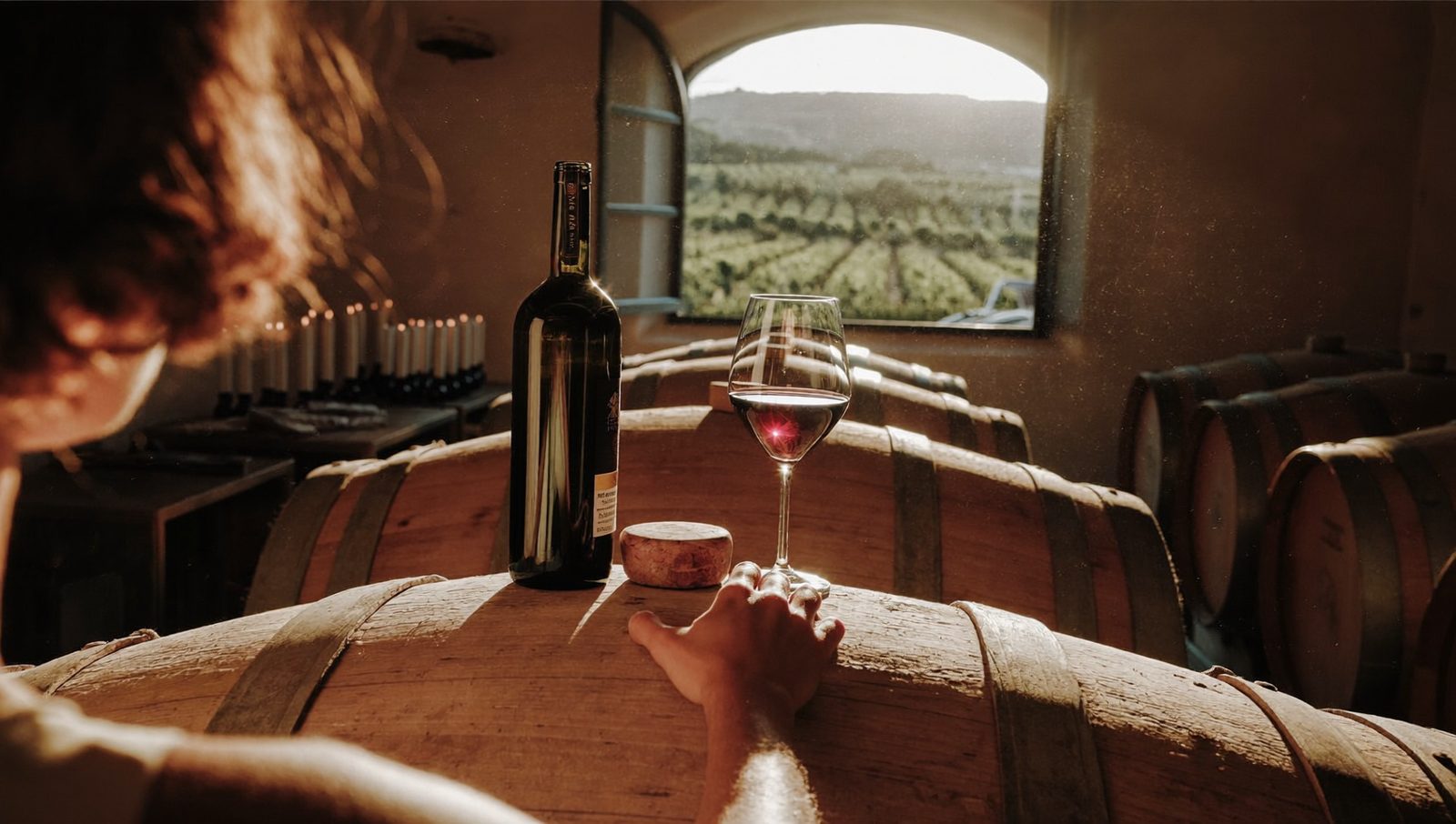
When you organise a tasting for a potential commercial partner, whether at a fair, at your winery or by sending samples, the most common mistake is to present only the Barolo or the Barbaresco, hoping that the prestige of the DOCG will be enough to close the contract. On the contrary, many importers already have price lists saturated with prestige allocation labels that struggle to move in volume, or they look for a winery able to cover the entire "Piedmont / Nebbiolo" category with a single supplier to optimise logistics and groupage.
The most solid commercial strategy is to propose an integrated package:
- Use Langhe Nebbiolo or Nebbiolo d'Alba as the volume leaders: explain to the buyer that these labels guarantee the monthly cash flow for his sales force and build loyalty to your brand among restaurateurs.
- Pair a blended Barolo or Barbaresco as the image pillar: show how the stylistic consistency between your young Nebbiolo and your classic DOCG makes it easy for the importer's agents to tell the winemaking story of your winery.
- Use MGAs and Riservas as leverage for prestige and negotiation: linking the allocation of the rarest and most requested bottles (such as single crus in great vintages) to the purchase of agreed volumes of Langhe Nebbiolo and base DOCG is an established practice that protects the positioning of your brand and ensures rotation across the whole production.
We prepare B2B technical sheets that clearly separate the origin of the vineyards, the nature of the soils (sands, calcareous marls, clays), the duration of ageing in large botti or barrique and the serving potential: giving the importer arguments already prepared for his sales network reduces the time needed to get listed.
Frequently asked questions
Why should an importer buy both Langhe Nebbiolo and Nebbiolo d'Alba?
It is not always necessary for a single importer to list both in the same channel, but a winery that produces both can use them to segment the market: Langhe Nebbiolo for quick by-the-glass service and wine shops, Nebbiolo d'Alba (often also in the Superiore version) for restaurants looking for a single-varietal wine with greater structure at a price below the DOCGs.
How do you explain the pale colour of Nebbiolo compared with other great red wines to a foreign buyer?
It is worth clarifying from the outset that Nebbiolo naturally has a lower anthocyanin content than varieties such as Cabernet Sauvignon or Syrah, with a transparency similar to Pinot Noir, but accompanied by a very high polyphenolic, tannic and acidic structure. This helps the importer's sales force anticipate visual objections from customers less familiar with Piedmontese wines.
Can a Langhe Nebbiolo DOC come from the same vineyards as Barolo?
Yes, the production rules allow grapes from vineyards located within the Barolo or Barbaresco zone to be declared or downgraded to Langhe Nebbiolo DOC. Many wineries use this option for younger vineyards or for lots they wish to bottle earlier, offering the buyer a wine with the character of a great terroir at a DOC price and drinking readiness.
What is the correct tasting order when presenting the range to a distributor?
The most effective technical order starts with Langhe Nebbiolo DOC, continues with Nebbiolo d'Alba DOC, moves up to Barbaresco DOCG and closes with Barolo DOCG (first the classic, then the individual MGAs and finally any Riservas). This progression guides the buyer's palate through increasing concentration, complexity and tannic extraction.
Sources
- Consorzio di Tutela Barolo Barbaresco Alba Langhe e Dogliani
- Ministero dell'agricoltura, della sovranità alimentare e delle foreste (MASAF) - Disciplinari di produzione
- Federdoc - Confederazione Nazionale dei Consorzi volontari per la tutela delle denominazioni dei vini italiani
- ISTAT - Istituto Nazionale di Statistica (Dati commercio estero e agricoltura)
- Wines Near Rome: Frascati, Cesanese and Castelli Romani
- Lagrein: Grape, Alto Adige DOC, Kretzer, Riserva and UGA
- Low-Alcohol Sparkling Wine: How to Make It and Legal Limits
- Kosher Wine Export: Certification, Costs and Buyers
- Lugana Wine for Restaurants: Styles, Prices and Germany
- Italian Fortified and Passito Wines: Categories and Excise