Montepulciano Wine: Vino Nobile di Montepulciano and Montepulciano d'Abruzzo Compared
Wines Export Editorial · Last updated:
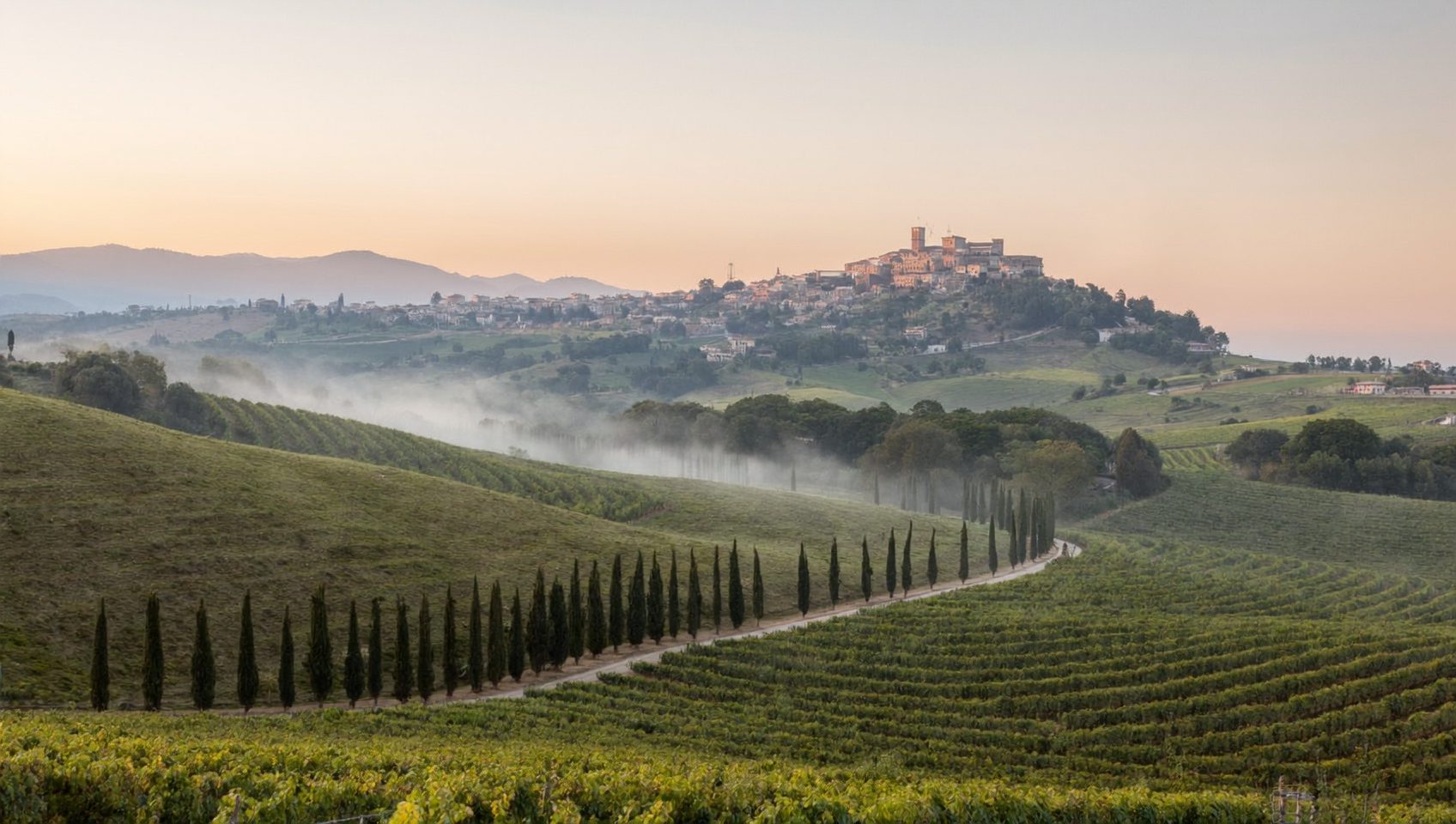
Searching for "montepulciano wine" brings up two different wines that share the same name. Vino Nobile di Montepulciano is a DOCG from the area of Montepulciano, in south-eastern Tuscany, and is made from Sangiovese. Montepulciano d'Abruzzo is a DOC named after the Montepulciano grape, which is grown mainly in Abruzzo. For importers the difference matters, because it changes the designation to write on the label, the consortium that protects it and the specification to cite in product sheets. If you want the detail on the first designation, read the guide to Vino Nobile di Montepulciano for foreign buyers.
Two different things with the same name
A common mistake comes from a word that seems to point to a single territory. Montepulciano is a place in Tuscany, and the Consorzio del Vino Nobile di Montepulciano describes this area of south-eastern Tuscany as a territory where landscape and architectural heritage together form the context of the wine. Montepulciano is also the name of a red grape variety, and the wine made from it in Abruzzo carries the name of the region in its full designation.
The second mistake is thinking that the grape name alone identifies the area. A product sheet that writes only "Montepulciano" on the label, the price list or the technical sheet leaves the importer unable to tell whether the wine comes from Tuscany or from Abruzzo. For this reason the designation should always be written in full, with the legal abbreviation and, where needed, the region or sub-zone.
Vino Nobile di Montepulciano DOCG: Sangiovese, ageing and Pieve
Vino Nobile di Montepulciano is made mainly from Sangiovese, the grape locally called Prugnolo Gentile, at no less than 70 percent. It is a DOCG and its disciplinare also sets the timing: at least two years of maturation from 1 January after the harvest, three for the Riserva, with a maximum yield of 8 tonnes of grapes per hectare (Vino Nobile di Montepulciano DOCG disciplinare, art. 2, 4 and 5).
The "Pieve" mention is no longer a proposal: it entered the disciplinare with the decree of 21 January 2025 (Italian Official Gazette no. 29 of 5 February 2025). It is used on non-Riserva Vino Nobile, followed by the name of one of the municipality's 12 additional geographical units, with at least 85 percent Sangiovese and three years of maturation, and applies from the 2021 harvest. All the rules are in the complete guide to Vino Nobile di Montepulciano.
The consortium presents the wine as a product tied to the town and its territory, and this link is the point a foreign buyer should be able to explain to their customer. Writing "Vino Nobile di Montepulciano" with the DOCG mention means indicating precisely that territory, not a generic Tuscan red wine.
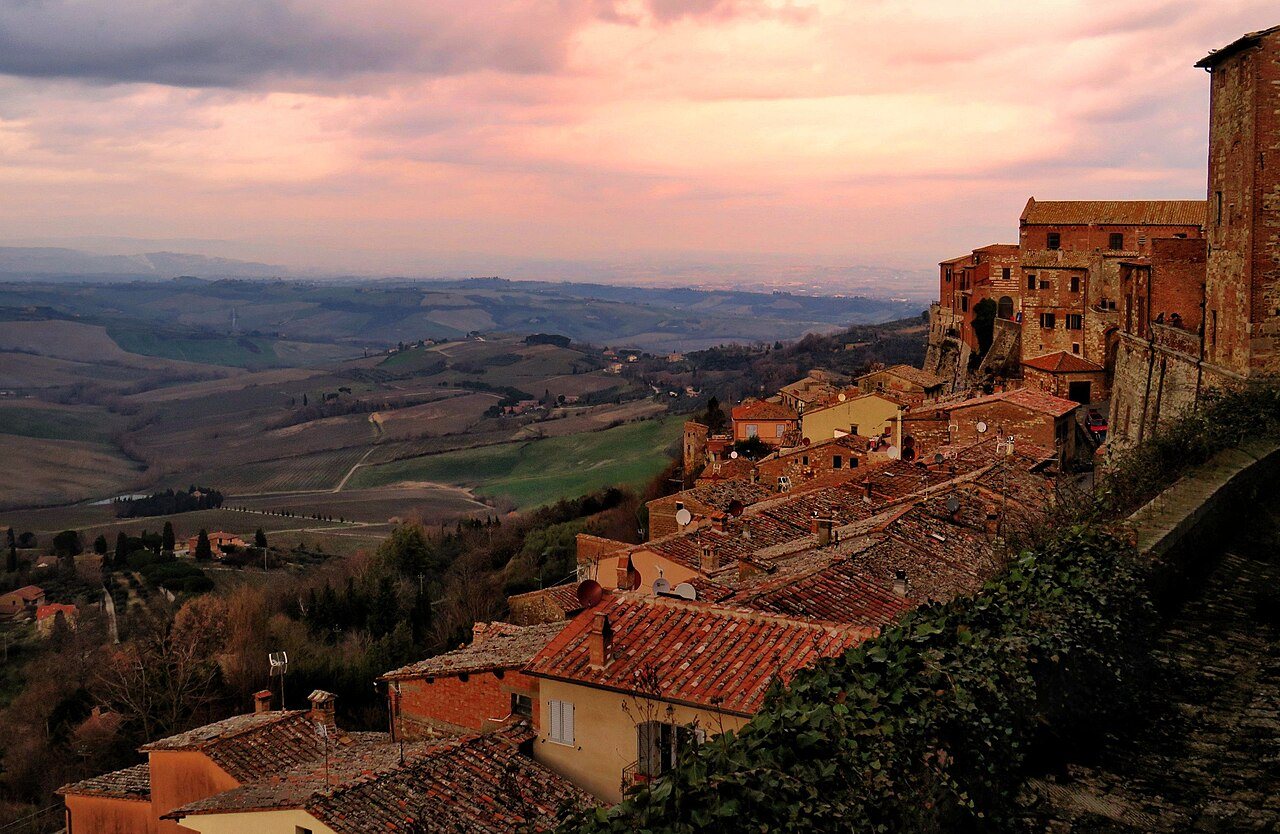
Rosso di Montepulciano DOC: the second wine of the same area
The same Tuscan area also produces Rosso di Montepulciano DOC. It is a separate designation, with its own specification, and should not be confused with Vino Nobile even though it comes from the same territory. Anyone listing it should write the exact name of the DOC and not simply say "Montepulciano red", because that wording identifies neither the designation nor the type.
For this wine too the general rule applies: the product sheet must state the designation, the type and the vintage in the same way they appear on the label. A buyer comparing several wines from the same area needs these three pieces of information so as not to mix up the types when selling.
Montepulciano d'Abruzzo DOC and Colline Teramane DOCG
Montepulciano d'Abruzzo is the wine made from the Montepulciano grape in Abruzzo. The Consorzio Vini d'Abruzzo, based in Ortona, protects the regional designations of controlled origin and lists more than 200 member wineries on its website. For foreign buyers, the consortium is the reference point for checking producers and designations in the region.
Within the Abruzzo designation there is a sub-zone with its own DOCG, Colline Teramane, in the territory of the province of Teramo. Anyone writing a product sheet must clearly distinguish Montepulciano d'Abruzzo DOC from Colline Teramane DOCG, because these are two designations with different rules and names that, read quickly, may look the same.
The grape name appears in both Abruzzo designations, which explains why confusion with Tuscany remains strong in search engines. A sheet that talks about Abruzzo should therefore state the region right away. The guide to exporting Abruzzo wine covers this point along with the documents needed to ship the goods.
Volumes and prices: what can be verified and what cannot
The comparison between the two designations also depends on production volumes and price ranges in the destination market. These figures change every year and depend on the country where the wine is sold, so the current edition of the source is always the reference. The official sources cited at the bottom do not include volumes or average prices for the two designations.
The table summarises what can be verified from official sources and where to find the rest.
| Item | Vino Nobile di Montepulciano | Montepulciano d'Abruzzo |
|---|---|---|
| Production area | South-eastern Tuscany, territory of Montepulciano | Abruzzo region, with Colline Teramane DOCG sub-zone |
| Base grape | Sangiovese (Prugnolo Gentile locally) | Montepulciano |
| Protecting body | Consorzio Vino Nobile di Montepulciano | Consorzio Tutela Vini d'Abruzzo, Ortona |
| Where to check the specification | Masaf lists and DOP specifications | Masaf lists and DOP specifications |
| Average volumes and prices | Not published in the sources cited | Not published in the sources cited |
The Masaf publishes the alphabetical list of DOPs and the production specifications, divided by letter, and also indicates the route for opening the file of each designation in the European e-Ambrosia register. The Single Document for each designation is there, and it is the reference for the technical information to include in a sheet intended for an importer.
For price ranges, it makes sense to start from the price list of those already selling in the destination country and from the retail price that the buyer can verify. Market data does not come from a generic designation, but from a comparison between wines of the same type and the same price band.
How to avoid the labelling error in labels, price lists and product sheets
The first check concerns the label. The name of the designation must appear in full, without abbreviations, and the DOC or DOCG mention must match the specification. A label that carries the word "Montepulciano" without indicating whether it is Vino Nobile or Montepulciano d'Abruzzo creates a problem already at customs and even more so for the consumer.
The second check concerns the price list. Each line must show designation, type and vintage, and the same wording must be repeated in the shipping documents. When two wines with similar names appear on the same price list without region and abbreviation, the buyer has to ask for clarification and response times get longer.
The third check concerns the product sheet. Here the grape and the designation must be kept separate: Sangiovese is the grape of Vino Nobile, Montepulciano is the grape of Montepulciano d'Abruzzo. A sheet that mixes the two terms leads to requests for correction.
Finally, there is the risk of imitation. Anyone selling abroad a wine with an Italian name may find products that use the name Montepulciano with no connection to the designations. On this point, the page on how to protect yourself from Italian sounding abroad sets out concrete steps to take. The page on Montepulciano wine and the Sienese territory also helps distinguish place from grape in a commercial presentation.
Frequently asked questions
Is Montepulciano wine Tuscan or Abruzzese?
It depends on the designation. Vino Nobile di Montepulciano is Tuscan and is made from Sangiovese, while Montepulciano d'Abruzzo is Abruzzese and is made from the Montepulciano grape. To avoid doubts, always write the full designation.
Is Vino Nobile di Montepulciano made with Montepulciano grapes?
No. Vino Nobile di Montepulciano is produced mainly from Sangiovese, the grape that locally is called Prugnolo Gentile. The Montepulciano grape is instead the base variety of Montepulciano d'Abruzzo.
Where can you check the specification of a Montepulciano wine?
The specification is in the list of DOP and IGP wines published by the Masaf, which collects the specifications divided by letter. For the technical file you can use the European e-Ambrosia register, following the route indicated by the Ministry.
What price data do you need to import a Montepulciano?
You need the price lists of those already selling in the destination country and the retail prices verified on the market. The official sources cited at the bottom do not report average prices for the two designations.
Sources
- Moscato d'Asti vs Asti DOCG: Alcohol and Pressure
- Malolactic bacteria: strains, co-inoculation and white wines
- Moscato Grape Varieties and Italian DOCs for Importers
- Lugana Wine for Restaurants: Styles, Prices and Germany
- Natural wine label rules in the EU: what you can write
- Low-Alcohol Sparkling Wine: How to Make It and Legal Limits