Moscato d'Asti and Asti Spumante DOCG: same grape, two wines — alcohol, pressure, sugar, method, volumes, markets (USA, Korea) and prices
Wines Export Editorial · Last updated:
Moscato d'Asti and Asti Spumante share the same DOCG production regulations and the same grape base: at least 97% Moscato Bianco grown in 51 municipalities across the provinces of Asti, Cuneo and Alessandria. The technical and customs difference lies in sparkling pressure and actual alcohol: Moscato d'Asti is a non-sparkling aromatic wine with a maximum overpressure of 2.5 bar and 4.5% to 6.5% vol of actual alcohol, while Asti Spumante exceeds 3 bar (reaching 5-6 bar in the bottle) with at least 6.00% vol actual alcohol and a minimum total alcohol of 11.50% vol (12.00% for the classic method), according to the Asti DOCG production rules, art. 6. This distinction changes tariff classification abroad, the packaging cost structure and the geography of buyers: the United States and South Korea drive purchases of Moscato d'Asti, while Eastern Europe, Germany and the United Kingdom absorb the largest share of Asti Spumante.
One grape and one set of regulations for two distinct wines
When you present your catalogue to a foreign importer, the first point to clarify is the regulatory structure of the designation. Unlike other wine areas where still or lightly sparkling wines and sparkling wines fall under separate consortia or regulations, here a single set of regulations, recognised as DOC in 1967 and promoted to DOCG in 1993, governs both productions under the supervision of the Consorzio per la Tutela dell'Asti, established in 1932.
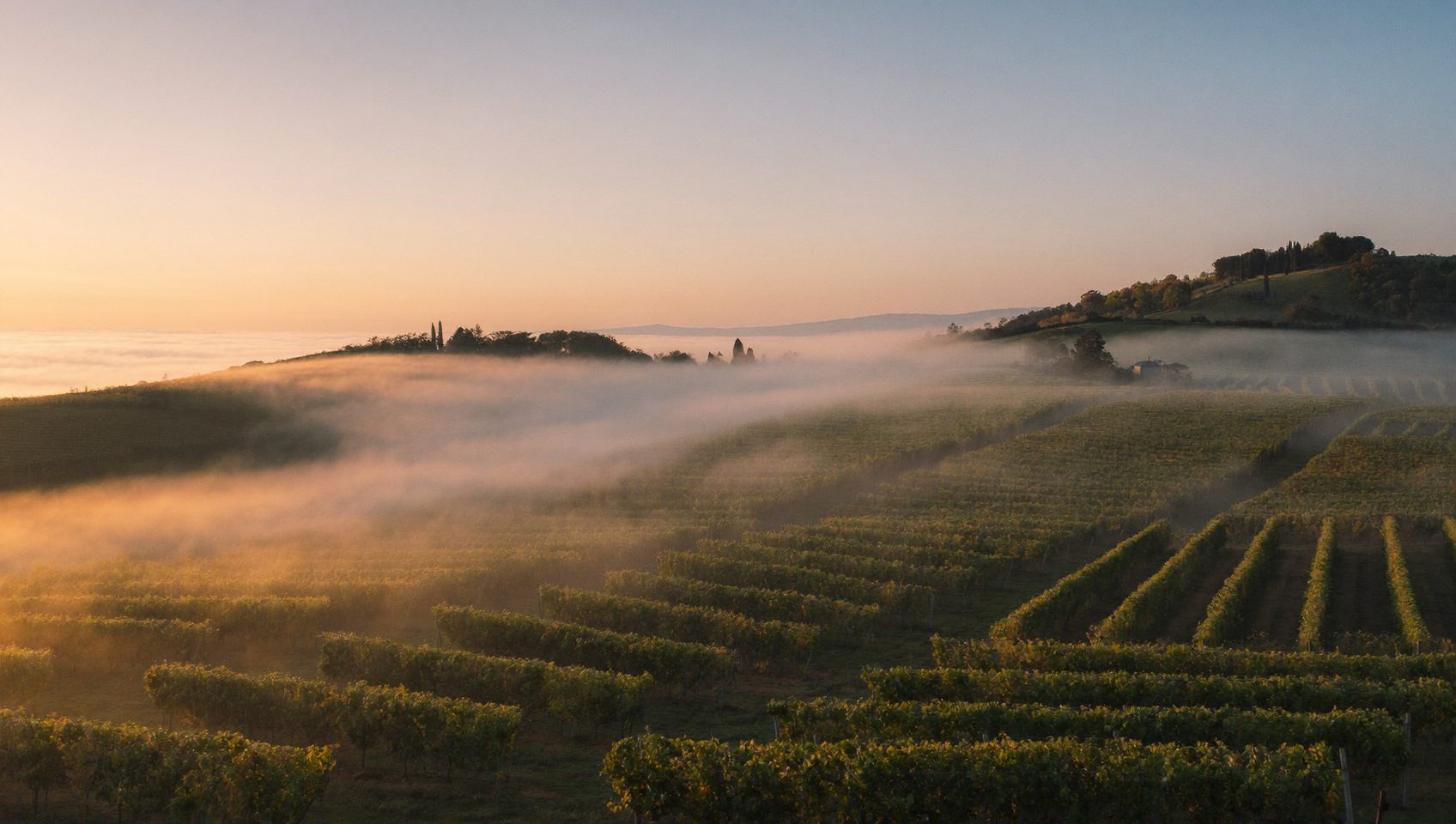
The vineyard area extends over approximately 9,900 hectares across 51 hill municipalities in the Langhe, Roero and Monferrato, within the perimeter recognised as a UNESCO World Heritage Site in 2014. The supply chain involves about 3,000 growers on limestone and calcareous-clay slopes at altitudes between 150 and 600 metres above sea level (Asti DOCG production rules, art. 9). The lower hills give the must a higher sugar concentration, while the higher sites preserve the terpene profile and the fixed acidity.
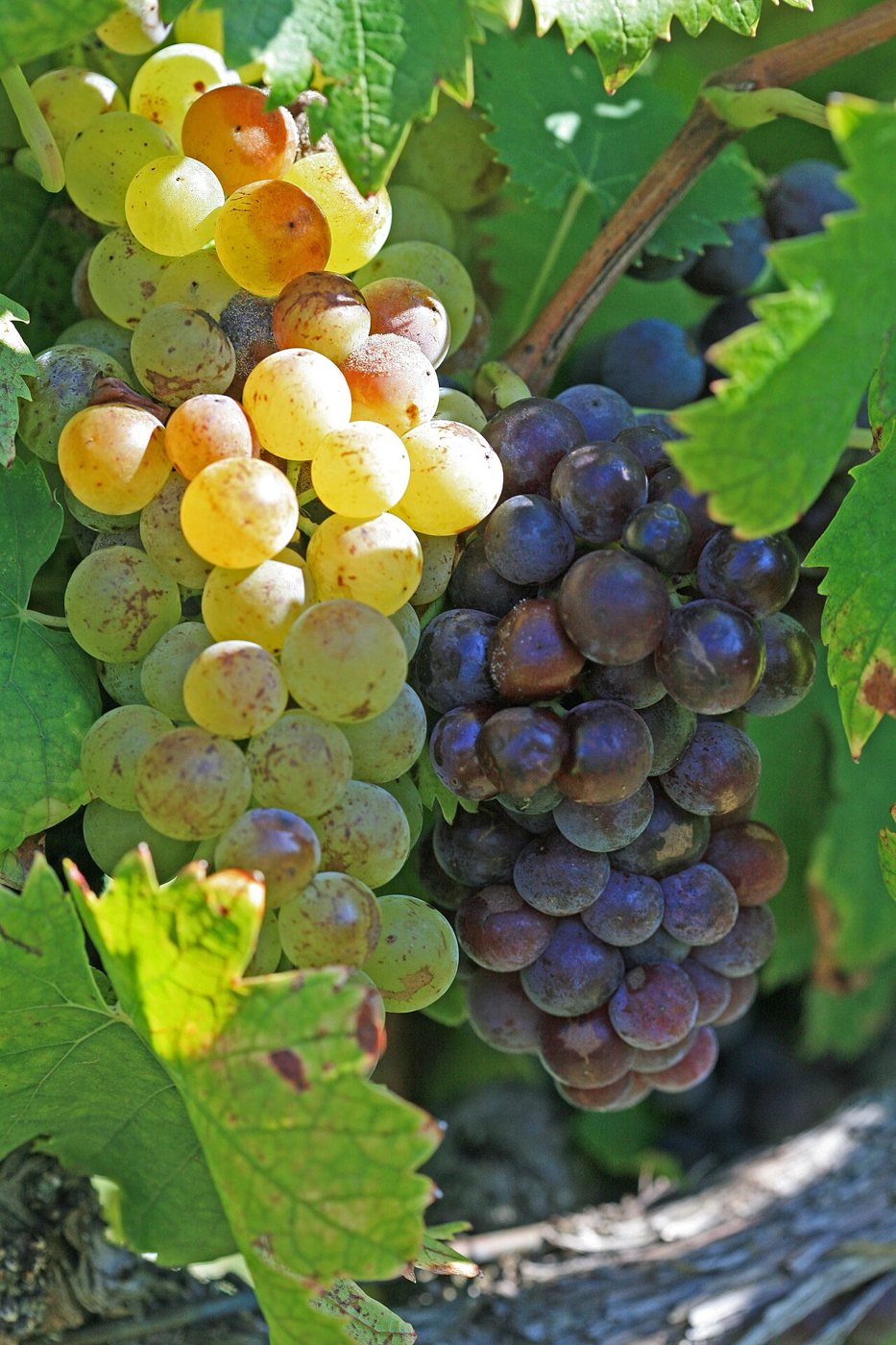
For both main types, the regulations require at least 97% Moscato Bianco for export, with a maximum remainder of 3% from other aromatic white grape varieties suitable for cultivation in the Piedmont Region. The only varietal exception concerns the rosé versions of Asti Spumante (both Martinotti method and classic method), for which the blend includes 70% to 90% Moscato Bianco alongside 10% to 30% Brachetto grapes. The maximum yield in the vineyard for the base types is set at 10 tonnes of grapes per hectare.
Switching between the two types is decided on the must: must declared as Moscato d'Asti at the annual production declaration may be used for Asti Spumante, and the reverse is allowed when the must intended for Asti has the minimum natural alcohol required for Moscato d'Asti (Asti DOCG production rules, art. 5, para. 15). To explore the individual technical sheets, you can consult the guide to the Moscato d'Asti designation for foreign buyers and the analysis dedicated to the Asti Spumante designation in international markets.
Alcohol, pressure and sugar: comparison table
From an operational standpoint, the difference between the two labels is measured in the laboratory and immediately affects the customs declaration. An error in completing the administrative document or in registering the label (such as the COLA in the United States) can hold the goods at the port of arrival or trigger the wrong excise rate.
| Technical and regulatory parameter | Moscato d'Asti DOCG | Asti Spumante DOCG |
|---|---|---|
| Commercial category | Non-sparkling aromatic white wine | Quality aromatic sparkling wine |
| Grape base | Minimum 97% Moscato Bianco (max 3% other aromatic white grapes) | Minimum 97% Moscato Bianco (70-90% plus 10-30% Brachetto in the Rosé) |
| Minimum total alcohol content | 11% vol | 11.5% vol |
| Actual alcohol in the bottle | 4.5% to 6.5% vol (commercial average 5-5.5% vol) | At least 6% vol |
| Overpressure (CO2) | Up to 2.5 bar (often around 1.7 bar) | 5-6 bar in the bottle |
| Residual sugar | Sweet (average 120-130 g/l of natural sugars) | From Pas Dosé / Brut Nature to Sweet (0-100 g/l) |
| Minimum total acidity | 4.5 g/l (5.0 g/l in the Santa Vittoria d'Alba sub-zone) | 4.5 g/l (6.0 g/l for the classic method) |
| Minimum sugar-free extract | 15 g/l | 15 g/l (17 g/l for the classic method) |
| Vintage indication | Mandatory on the label | Not mandatory (disgorgement date permitted for classic method) |
| Typical closure | Flat stopper; mushroom cork with wire cage, crown cap and mainly synthetic stoppers are banned | Mushroom stopper for sparkling wines with wire cage |
Overpressure is the first fiscal dividing line. In most customs jurisdictions worldwide, wines with pressure below 2.5 bar (or 3 bar under the combined nomenclature applied to sparkling wines) pay the excise duty applicable to still or light sparkling wines. Conversely, the 5-6 bar of Asti Spumante and the use of a mushroom stopper with wire cage place the product in the tariff band for sparkling wines, which in several countries is subject to higher specific excise duties.
The actual alcohol content also benefits both types in tax systems that scale by alcoholic strength. Staying between 4.5% and 6.5% vol for Moscato d'Asti, and around 7-7.5% vol for sweet Asti Spumante, both wines fall into the lower tax brackets in markets that levy duty on actual alcoholic strength rather than on a fixed per-litre basis.
Production method and stability in international transport
Cold-chain management is the technological element that has allowed these two wines to travel by sea to Asia and the Americas without losing the primary aromatic profile of the grape. Unlike sparkling wines obtained by refermenting a dry base wine with added liqueur de tirage, both Moscato d'Asti and Asti Spumante come from a single, incomplete alcoholic fermentation of natural must.
Immediately after harvest, which is brought forward to preserve acidity and aromatic compounds, the grapes are gently pressed. The clarified free-run must is stored in temperature-controlled tanks at or just below zero degrees Celsius. Under these conditions the yeasts remain inactive and the must retains its sugars and terpenes (linalool, geraniol, nerol) intact for months, allowing your winery to start second fermentations according to the actual orders from importers.
When the order from abroad arrives, the batch of must is transferred to an autoclave (Martinotti method) and brought to fermentation temperature:
- To produce Moscato d'Asti, the yeasts convert a small part of the sugars until the wine reaches about 5-5.5% vol of actual alcohol and a light effervescence (up to 2.5 bar). At that point fermentation is stopped by lowering the temperature again to around -4 °C.
- To produce Asti Spumante, fermentation in the closed autoclave continues for longer (with a minimum second fermentation period of one month according to the regulations, or at least nine months in bottle for the classic method version). The yeasts consume a larger share of sugars, bringing actual alcohol to at least 6% vol (often 7-7.5% vol in the sweet version, or until almost total depletion of sugars in the Dry, Brut and Pas Dosé versions) and developing a pressure of 5-6 bar.
Once the desired balance between alcohol, pressure and residual sugar is reached, both wines undergo centrifugation and sterile microbial filtration before isobaric cold bottling. This stage is vital for exporters: since 80 to 130 grams per litre of unfermented natural sugars remain in the bottle, even a minimal presence of active yeast cells would cause spontaneous refermentation in the container during ocean transit, resulting in clouding, organoleptic alteration or broken glass.
Production volumes and market geography
According to Asti DOCG Consortium data reported by WineNews on 11 March 2026, in 2025 Asti Spumante sold 49.3 million 0.75-litre bottles (-12.4%) and Moscato d'Asti 25 million (-1.8%). The Italian market accounts for 10% of production: the denomination lives on exports.
The two styles travel on different routes:
- Moscato d'Asti has its first market in the United States, with 58% of total sales in 2025. Asia accounts for 18%, and China, up 55%, became the third market. Europe held steady (-0.6%).
- Asti Spumante depends mainly on Europe, where it lost 14% in 2025 (4.2 million fewer bottles). In Asia it grew 20% (3.3 million bottles), led by Japan, the United Arab Emirates, Kazakhstan and China; in the Americas, Mexico passed one million bottles.
Why the United States and South Korea lead demand
The success of Moscato d'Asti in the United States and South Korea is not linked to occasional celebratory consumption, but to a precise integration into the food and social habits of these two countries.
In the United States, Moscato d'Asti has long since moved beyond the traditional dessert wine category. Distribution buyers (within the three-tier system) and restaurant chains position it as a versatile wine, served chilled as an aperitif or paired with fusion, Tex-Mex and Asian-American cuisine. The absence of tannins, the low alcohol content and the moderate pressure make it accessible to a young demographic and a broad female audience looking for aromatic, ready-to-drink beverages without the service formality associated with classic sparkling wines. In addition, the requirement to state the vintage on the label helps American distributors manage shelf stock rotation while guaranteeing the aromatic freshness of the product.
In South Korea, the growth of the designation (which passed one million bottles already in the first half of the last decade and continued to expand at double-digit rates in consortium surveys) rests on two cultural and gastronomic pillars:
- Pairing with local spicy and seasoned cuisine: dishes rich in gochujang (fermented chilli paste), garlic and grilled preparations penalise tannic or high-alcohol red wines, which accentuate the burning sensation. The natural residual sugar of Moscato d'Asti, combined with fresh acidity and low alcohol, balances the heat and cleanses the palate.
- Positioning in the convenience and gifting channel: in South Korea, minimarket chains and department stores lead urban consumption trends. An Italian DOCG wine from a UNESCO heritage territory, with an immediate profile of white peach, orange blossom and sage, responds precisely to the demand for identity-driven, light products to share at the end of a meal or on evenings out.
If you are evaluating entry into or consolidation of the South Korean market, you will find the list of distribution channels and customs rules in the guide to wine importers in South Korea.
Export prices, cost structure and positioning
When building an ex-cellar (EXW) price list, medium-sized wineries must account for the industrial and positioning differences that separate Moscato d'Asti from Asti Spumante.
In terms of direct production costs, Asti Spumante requires greater technical commitment in packaging and in autoclave occupancy times:
- The 5-6 bar pressure requires heavy champagne-type bottles, designed to withstand mechanical and thermal stress.
- The closure system requires a mushroom stopper for sparkling wines and a wire cage, compared with the flat stopper (or screw cap in markets that prefer it) used for Moscato d'Asti.
- The second fermentation cycle lasts at least one month in autoclave (or at least nine months for the classic method), slowing the rotation of pressure tanks compared with the faster processing of Moscato d'Asti.
Despite lower packaging costs, in international markets Moscato d'Asti often manages to achieve an average EXW positioning equal to or higher than standard Asti Spumante destined for large-scale retail. This phenomenon depends on the structure of the supply chain and on buyer perception:
- Segmentation of Asti Spumante: a significant share of Asti Spumante is marketed through large sparkling wine houses and cooperatives with high volumes in the European retail channel (Germany, United Kingdom, Eastern Europe), where price competition on the shelf and seasonal promotions compress unit margins. Medium-sized wineries that want to defend the price of Asti Spumante now focus on low residual sugar versions (Asti Dry, Brut, Pas Dosé), on Asti Rosé or on Classic Method wines aimed at the on-trade (Ho.Re.Ca.) channel.
- Enhancement of Moscato d'Asti: Moscato d'Asti has historically also been championed by medium and small farms that vinify their own grapes, enhancing individual hill slopes (the traditional Sorì), municipal selections or late-harvest types with at least one year of ageing. In markets such as the USA and South Korea, importers specialised in the on-trade channel (restaurants, wine bars, hotels) recognise a price premium for these productions linked to the vintage, vineyard traceability and aromatic stability over time.
To present a coherent offer to an international buyer, it is advisable to clearly separate the two products in the export price list: offer Asti Spumante (including the Dry and Rosé variants) to operators looking for an aromatic sparkling wine for mixology, events and modern distribution, and reserve vintage Moscato d'Asti for distributors focused on restaurants, wine shops and the Asian and North American markets.
Frequently asked questions
What is the difference in alcohol content between Moscato d'Asti and Asti Spumante?
Moscato d'Asti DOCG has an actual alcohol content between 4.5% and 6.5% vol (with a commercial average around 5-5.5% vol) and a minimum total alcohol of 11% vol. Asti Spumante DOCG has a minimum total alcohol content of 11.5% vol and an actual alcohol of at least 6% vol; the classic method requires a minimum total alcohol of 12% vol (Asti DOCG production rules, art. 6).
Why is Moscato d'Asti not classified as a sparkling wine by customs?
Moscato d'Asti is classified as a non-sparkling white wine because its carbon dioxide overpressure in the bottle does not exceed 2.5 bar (often around 1.7 bar). Asti Spumante, by contrast, reaches a bottle pressure of 5-6 bar and is closed with a mushroom stopper and wire cage, falling fully within the customs heading for sparkling wines.
Does Asti Spumante exist only in the sweet version?
No. The Asti DOCG regulations allow Asti Spumante to be produced across the full sugar range, from Pas Dosé (or Brut Nature) to Sweet, with residual sugar ranging from 0 to 100 grams per litre. Moscato d'Asti, by contrast, is produced exclusively as a sweet wine, with an average of 120-130 grams per litre of natural must sugars.
Is it mandatory to state the vintage on the label?
Stating the harvest year of the grapes on the label is mandatory for Moscato d'Asti DOCG and for Moscato d'Asti Vendemmia Tardiva. For sparkling types (Asti Spumante and Asti Spumante Rosé) the vintage is not mandatory, while for the Classic Method version it is permitted to state the disgorgement date, provided it can be documented.
Sources
- WineNews, 11 March 2026, Asti DOCG Consortium data on 2025 sales
- Consorzio per la Tutela dell'Asti DOCG — Territorio, vitigno e denominazioni
- Ministero dell'Agricoltura, della Sovranità Alimentare e delle Foreste (MASAF) — Disciplinari di produzione dei vini DOP e IGP italiani
- Federdoc — Confederazione Nazionale dei Consorzi volontari per la tutela delle denominazioni dei vini italiani
- ISTAT — Statistiche sul commercio estero e indicatori del settore agroalimentare
- Moscato Grape Varieties and Italian DOCs for Importers
- Montepulciano Wine: Vino Nobile or Montepulciano d'Abruzzo?
- Natural wine label rules in the EU: what you can write
- Malolactic bacteria: strains, co-inoculation and white wines
- Nero d'Avola: Grape, Sicilia DOC, Cerasuolo and Export
- Lugana Wine for Restaurants: Styles, Prices and Germany