Salento's Negroamaro: A Guide for Wineries Targeting International Markets
Negroamaro, an indigenous Puglian grape from Salento, represents a solid export opportunity for Italian wineries. Its name, evoking the wine's dark color and bitter notes, encapsulates a millennial history and an enological potential capable of conquering international markets. Understanding its peculiarities is fundamental to valorizing the uniqueness of this wine and intercepting the growing demand for authentic, terroir-driven products, offering clear and distinctive identity to foreign buyers. Learn more: MASAF — National Register of Vine Varieties.
What are the origins and history of the Negroamaro grape?
The origins of Negroamaro are ancient, with theories suggesting Greek or Phoenician derivations. It has established itself as the principal grape of Salento, perfectly adapting to local conditions and becoming synonymous with this land. Its robustness and hardiness make it a resilient grape, capable of adapting to various soil types and favoring sunny exposures.
Its cultivation is historically linked to the production of red and rosé wines. Its ability to produce wines of character, capable of aging, and with a distinct territorial identity makes it particularly interesting for export, responding to the demand for authentic wines with a story to tell.
What are the ampelographic characteristics of Negroamaro?
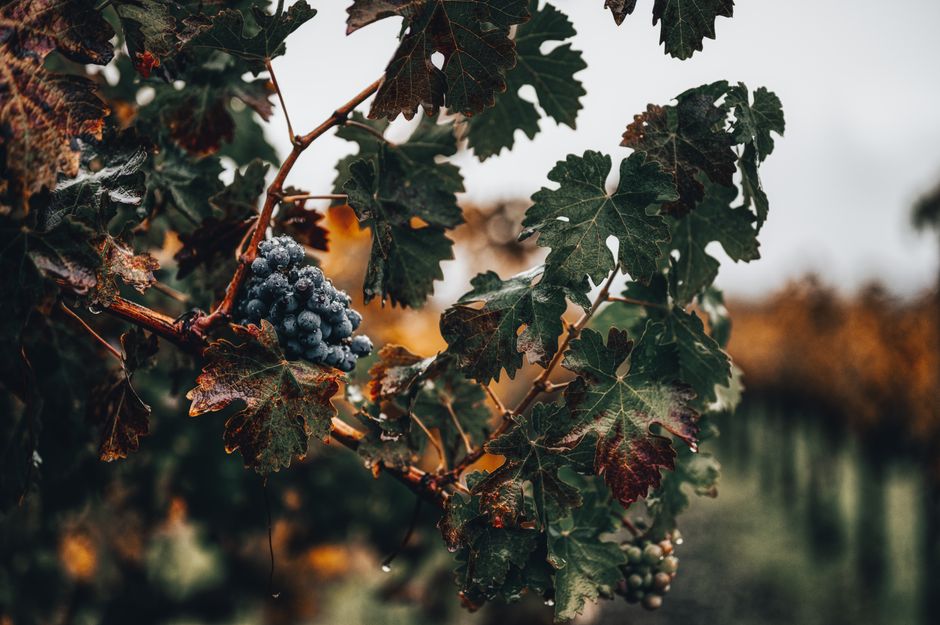
Negroamaro stands out for its vigor, hardiness, and fertility. The shoots are robust, with shoots varying in color from dark cinnamon to reddish. The bud is prominent and buds early, while the young leaf is slightly downy. The leaf is medium-sized, quinquelobate or pentatomical, with a shiny dark green color or a yellowish tint. The flower is fragrant and resistant to spring weather. The bunch is medium, conical or pyramidal, with dense, sub-round or almost cylindrical berries, of a deep, glossy blue color.
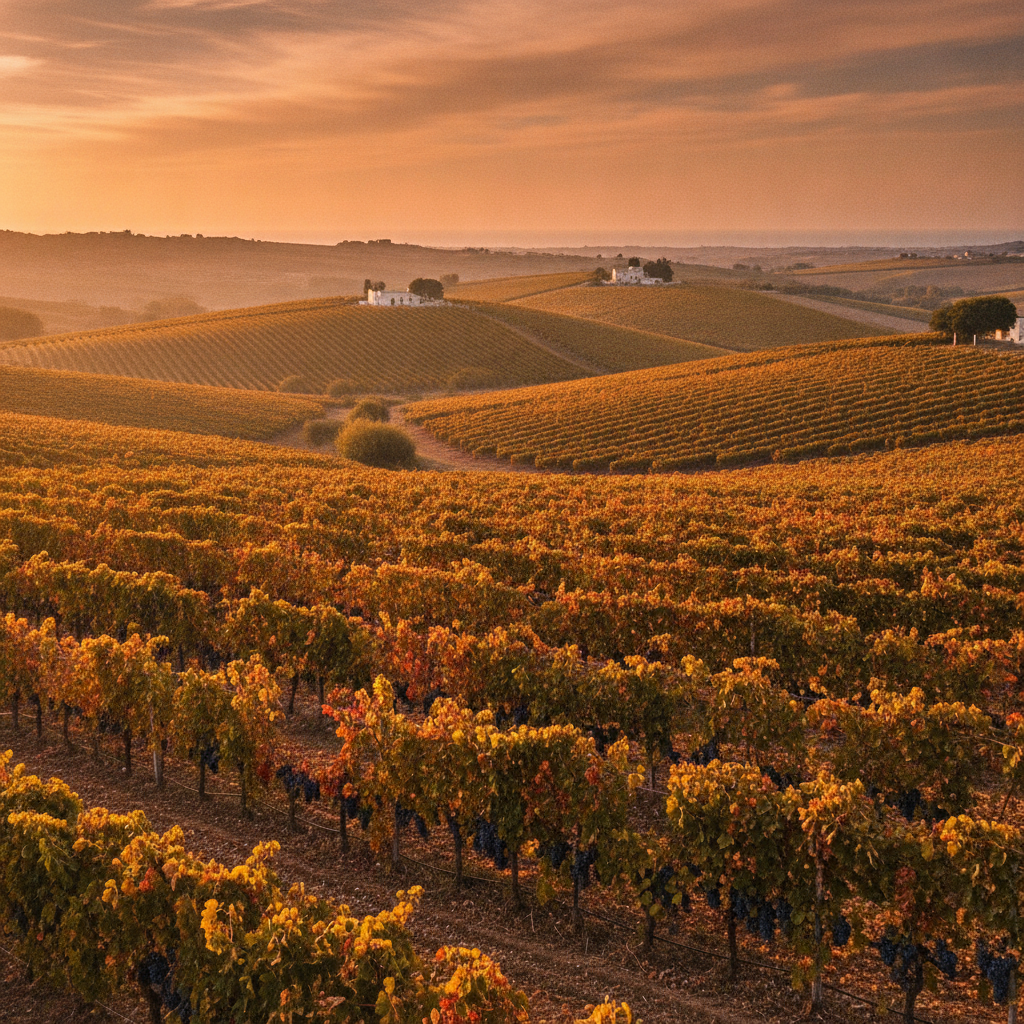
What type of wine does Negroamaro produce?
Negroamaro is renowned for producing intense red wines and elegant rosés, both with a strong connection to the territory. Red wines exhibit a beautiful purplish ruby red color, while rosés have the typical color of the category. They are characterized by high acidity and are rich in tannins, providing a full, complex structure and significant longevity. On the nose, they can offer varietal aromas, while on the palate, fruity notes are perceived.
What is the aging potential of Negroamaro wines?
The tannic richness and acidity give Negroamaro-based wines excellent aging potential. This characteristic allows them to evolve over time, gaining greater complexity and nuances, making them interesting for markets that appreciate wines with good maturation capacity.
How is Negroamaro used in blends and appellations?
Negroamaro is a protagonist in many Puglian appellations, particularly in Salento. It is the main grape for Salice Salentino Rosso (minimum 75%), often blended with Malvasia Nera to contribute color, alcohol content, and softness,Smoothing out the tannins and providing balance. It is also the base for excellent rosé wines, produced either as a single varietal or in blends.
What are the export opportunities for Negroamaro?
Negroamaro represents an excellent export opportunity thanks to its history, authenticity, and quality. Foreign consumers seek wines that tell a story and are expressions of indigenous grape varieties, and Negroamaro perfectly meets this need. Its versatility in producing both structured reds and elegant rosés makes it suitable for various market preferences. Its ability to pair with international cuisines, even exotic and spicy ones, is a further strength.
Which markets are interested in Negroamaro?
Countries like the United States, Canada, Germany, and the United Kingdom show growing interest in quality Italian wines, particularly those from indigenous grape varieties. Emerging markets in Asia and South America are also potentially interested. Negroamaro has the potential to conquer these markets thanks to its uniqueness and value for money.
Frequently Asked Questions
Is Negroamaro suitable for all soil types?
Negroamaro adapts to various soil types, favoring light, mixed clay, tuffaceous, calcareous, and gravelly soils.
What are the main characteristics of Negroamaro wine?
Negroamaro wines are characterized by a beautiful purplish ruby red color (for reds) or the typical color of the category (for rosés), high acidity, richness in tannins, full and complex structure, and good aging potential.
Is Negroamaro only used as a single varietal?
No, Negroamaro is often blended with other grape varieties, particularly Malvasia Nera, to provide greater balance and softness to the wines, especially in Salice Salentino Rosso.
Salento's Negroamaro is an ideal ambassador for Made in Italy worldwide, capable of evolving and responding to the challenges of the global market. Its unique characteristics and deep connection to its territory make it a product of excellence, authentic, and rich in history, ideal for building lasting relationships with importers and quality-conscious consumers.