Negroamaro: Bringing Your Apulian Wine to the World
Negroamaro, a native Apulian grape variety, represents one of Southern Italy's oenological gems with increasingly recognized export potential in international markets. Its name evokes a blend of "black" and "bitter," perfectly describing the distinctive characteristics of the wines derived from it: intense color, robust structure, and a complex, enveloping flavor profile. This article explores the historical origins, ampelographic peculiarities, wine characteristics, and, above all, the opportunities that Negroamaro offers Italian wineries looking to expand their presence in foreign markets.
Where Do Negroamaro's Roots Lie?
The roots of Negroamaro are deeply embedded in the Salento region of Puglia. Although its exact origin is debated, most ampelographic studies agree on its antiquity and its inseparable link to this region. Some sources suggest a possible introduction by the Greeks during Magna Graecia, while other hypotheses connect it to later migrations. What is certain is that Negroamaro has been cultivated in Salento for centuries, becoming a symbol and a pillar of local viticulture.
What Are Negroamaro's Ampelographic Characteristics?
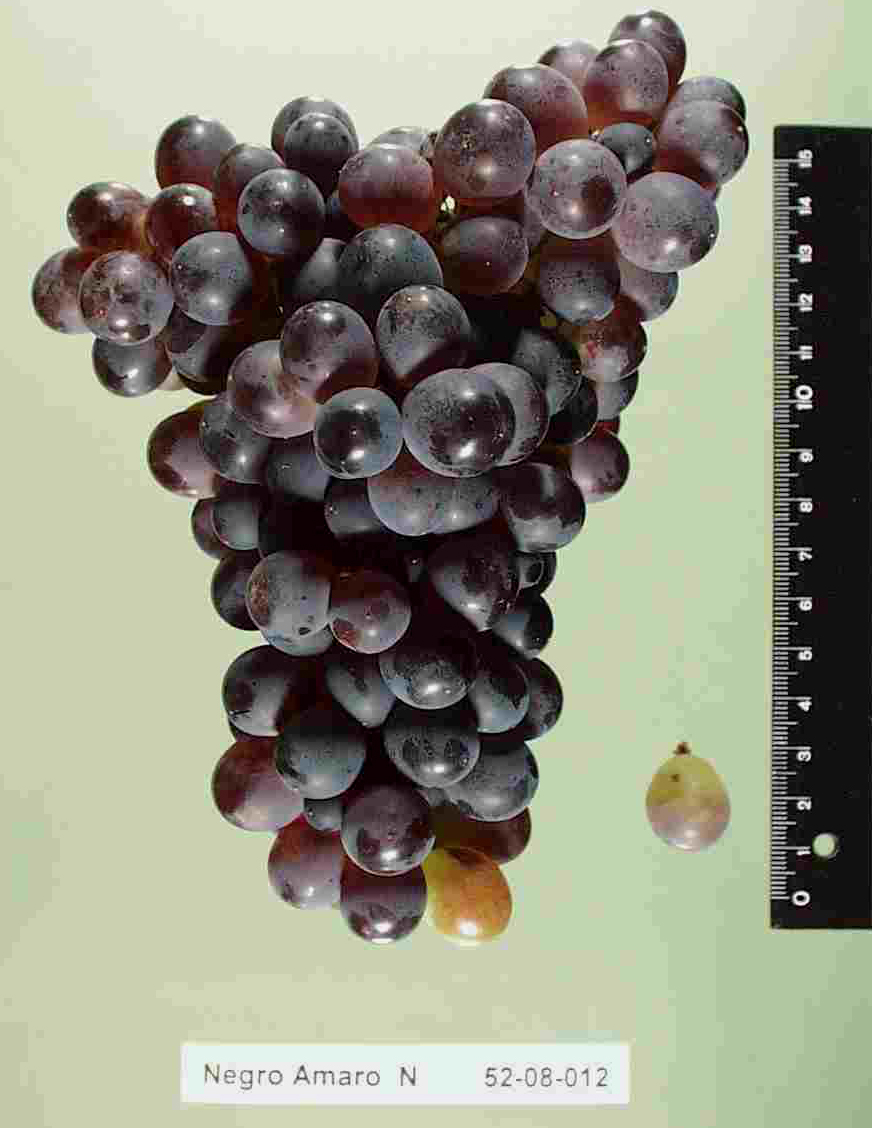
Negroamaro is distinguished by a series of ampelographic traits that define its personality and resilience. The shoot has a woolly, yellow-bronze apex with pink margins. The adult leaf is medium to large, orbicular, with three or five lobes and a slightly folded surface. The shoots are light or dark cinnamon in color, vigorous, and robust. The flower opens in mid-season or early.
Is Negroamaro a Disease-Resistant Grape Variety?
The Negroamaro grape variety shows some susceptibility to downy mildew, powdery mildew, and phylloxera. However, other sources describe it as robust and rustic, suffering little from fungal diseases and showing low susceptibility to the main fungal diseases of the vine. This apparent contradiction might stem from different pedoclimatic conditions and agronomic practices.
What Are Negroamaro's Environmental and Cultivation Needs?
Negroamaro demonstrates remarkable adaptability to various soil types, favoring cool, fertile, and deep soils. It also thrives in clay-limestone, light and mixed clay, and tuffaceous soils. It loves sunny exposures, which promote sugar accumulation and complete ripening, counteracting the grape's inherent acidity and tannins. It adapts well to expanded training systems with long prunings.
What Are the Characteristics of Negroamaro Must and Wine?
Negroamaro grapes yield musts with an acidity ranging between 7.0-10.0%o (with lower values reported in other sources) and sugars generally between 17.0-20.0%. The resulting wine is renowned for its intense ruby red color, velvety and harmonious body, and a dry, fresh, fruity flavor with a slightly bitter finish. It exhibits a good balance between acidity and tannins, contributing to its longevity.
What Is Negroamaro's Export Potential?
Negroamaro is gaining increasing attention in international markets, thanks to its well-defined territorial identity and the quality of the wines produced. Its characteristics make it particularly interesting for markets that favor structured and fruity red wines, such as the United States, Canada, Germany, and Nordic markets. Consumers seeking authenticity and history appreciate its strong connection to the Apulian territory.
What Are Foreign Buyers Looking for in Negroamaro?
Foreign buyers look for a wine in Negroamaro that tells the story of Puglia and Salento, with an aromatic and gustatory profile characterized by ripe fruity notes and good structure. They appreciate its gastronomic versatility, its ability to pair with various dishes, and, for higher-end versions, its aging potential. The growing interest in health benefits, linked to antioxidant compounds, is another attractive factor.
How Is Negroamaro Used, and What Potential Crosses Exist?
Traditionally, Negroamaro was used for common table wines or as a base for sparkling wines. Today, its primary vocation is the production of quality still wines, both as a varietal or in blends with other indigenous or international grape varieties. Genetic improvement is underway through crosses with other varieties to enhance its qualitative characteristics.
Frequently Asked Questions
What are the main organoleptic characteristics of Negroamaro wine?
Negroamaro wine is distinguished by its intense ruby red color, velvety and harmonious body, and a dry, fresh, fruity flavor with a slightly bitter finish.
Is Negroamaro suitable for aging?
Higher-end versions of Negroamaro have the capacity to evolve positively in the bottle, indicating aging potential.
Which international markets show interest in Negroamaro?
Markets such as the United States, Canada, Germany, and Nordic markets show interest in Negroamaro, appreciating structured and fruity red wines.
Negroamaro is much more than just a grape variety; it is an authentic expression of the Apulian territory, an ambassador of history, culture, and unique flavors. Its intrinsic characteristics, combined with growing interest from international markets, make it an ideal candidate for Italian wineries' export strategies. Fully understanding its peculiarities, valuing its history, and effectively communicating its potential are fundamental steps to conquering new markets and strengthening the position of Italian wine in the world.
- Historical Source (archive.org)
- Historical Source (archive.org)
- Negroamaro metabolome characterization
- Nutraceutical properties of Apulian wines
- Historical Source (archive.org)
Wines Export and the Territory: Our pool of diverse partner wineries includes producers who cultivate and vinify the Negroamaro grape variety, with a particular focus on Apulian appellations.