Tocai Friulano: History, Characteristics, and Market Opportunities for Italian Wine
Wines Export Editorial · Last updated:

The full guide is here: Friulano, formerly Tocai Friulano.
Tocai Friulano is a white grape variety grown in Friuli-Venezia Giulia since at least the second half of the 19th century; DNA analyses have shown it to be identical to Sauvignonasse (Sauvignon vert), so its origin is debated. It should not be confused with Hungarian Tokaj: since 31 March 2007 the name "Tocai" can no longer appear on the labels of Italian wines, which name the variety Friulano in Friuli-Venezia Giulia, Tai in Veneto and Tuchi in Lombardy. The wine is straw-yellow, with notes of bitter almond and green apple and a softness that comes from its low acidity. In this guide you will find its origins, its characteristics and the factors that support its export. In-depth look: MASAF — National Register of Vine Varieties.
What is the history and origin of Tocai Friulano?
Tocai Friulano is a grape variety historically cultivated in the Friuli Venezia Giulia region, and it shares only its name with Hungarian "Tokay". Ampelographic observations carried out in Conegliano and molecular analyses in 2004 showed that it is identical to Sauvignonasse, a French variety grown in the Gironde in the 19th century (Costacurta, Italian Academy of Vine and Wine – “Il post Tocai” (in Italian)); in the international VIVC catalogue its prime name is Friulano (VIVC passport of Friulano). The 1993 agreement between the European Community and Hungary reserved the name for the Tokaj designation, and since 31 March 2007 "Tocai" can no longer be used for Italian wines (judgment of the EU Court of Justice, case C-347/03). In the Italian National Register of Grapevine Varieties the variety is still listed as "Tocai friulano", with the synonyms to be used on labels: Friulano in Friuli-Venezia Giulia, Tai in Veneto, Tuchi in Lombardy. The first confirmed cultivations in Friuli date back at least to the second half of the 19th century, with diffusion aided by the consumption of white wines in the region.
What are the ampelographic and phenological characteristics of Tocai Friulano?
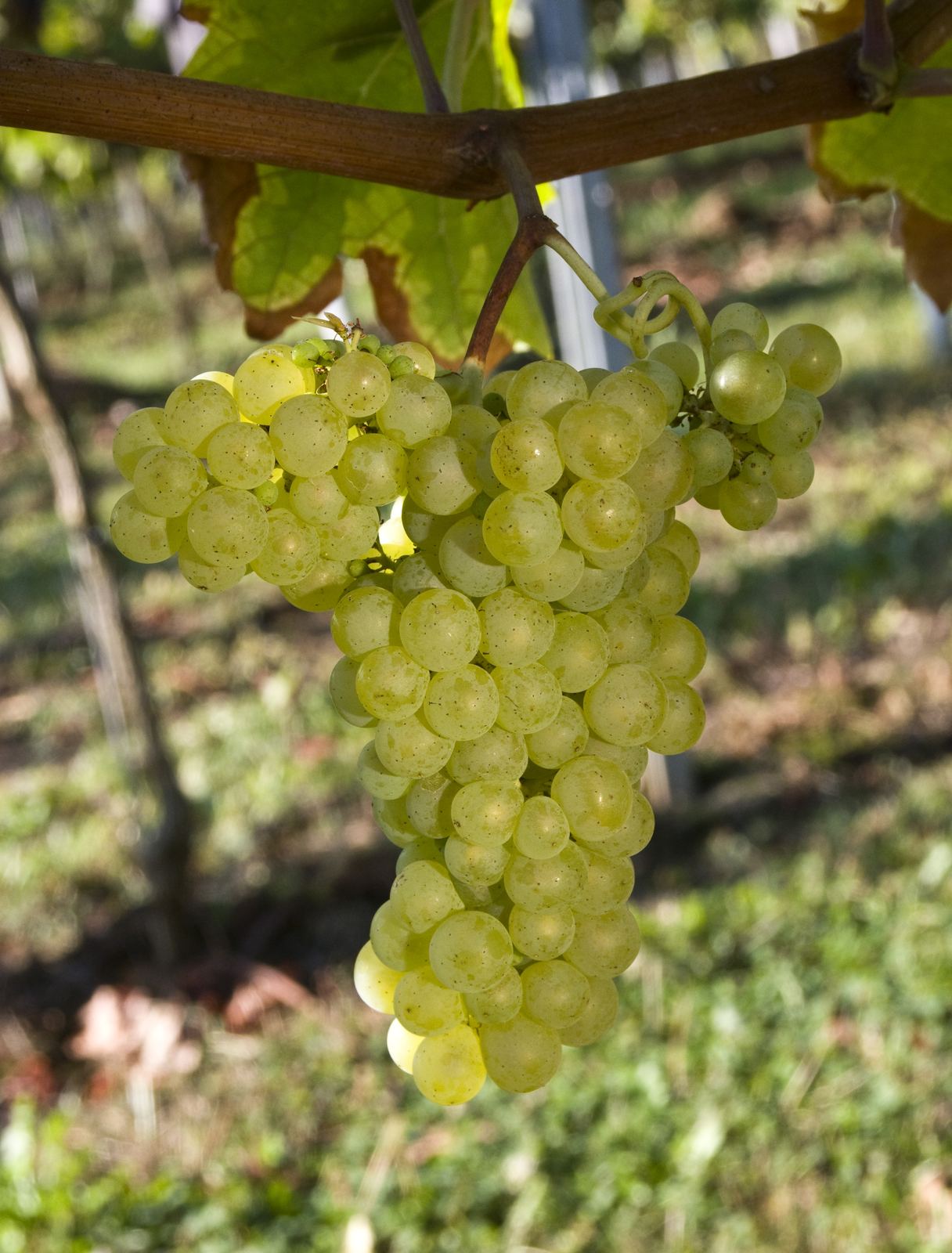
Tocai Friulano exhibits considerable intra-varietal variability, with two main biotype groups: green and yellow. Ampelographic characteristics include an almost globose bud apex, medium, rounded adult leaves, medium-sized conical or cylindrical clusters, and medium, rounded yellow berries. The bud burst, flowering, and veraison periods are typically recorded between the third week of April, the first ten days of June, and the first ten days of August, respectively.
The variety does not present particular multiplication problems but requires serious phytosanitary control against Botrytis, to which it is highly susceptible, especially with rain close to harvest, and against powdery mildew; the National Register reports normal resistance to downy mildew. Adequate green pruning is necessary to ensure better vegetation balance.
What are the organoleptic characteristics of Tocai Friulano wine?
The wine obtained from the monovarietal vinification of Tocai Friulano is distinguished by a straw-yellow color with greenish hues. On the nose, it offers a fresh, fine, and delicate aroma, with hints of bitter almond and green apple. On the palate, it is fruity, fine, soft, full, and rich, with a notable note of bitter almond. Its particular velvety texture is attributed to its low fixed acidity and high glycerin content.
These characteristics make it a versatile wine, ideal as an aperitif and to pair with lean appetizers, soups, and sauced fish dishes.
Where is Tocai Friulano geographically distributed, and what is its market potential?
Tocai Friulano is cultivated in all the viticultural areas of Friuli and in some neighboring areas of Veneto and Lombardy. In Friuli-Venezia Giulia, Friulano is included in the production rules of the Collio, Friuli Colli Orientali, Friuli Isonzo, Friuli Grave, Friuli Aquileia, Friuli Annia and Friuli Latisana DOCs. In the Portogruaro plain, across the provinces of Venice, Treviso and Pordenone, the Lison DOCG requires at least 85% Tai; south of Lake Garda, across the provinces of Brescia and Verona, the San Martino della Battaglia DOC requires at least 80% Tocai friulano.
What is the export potential of Tocai Friulano?
Tocai Friulano possesses significant export potential thanks to its uniqueness, history, and distinctive organoleptic characteristics. The growing global demand for autochthonous and quality wines represents a significant opportunity. Key factors for export include its strong Friulian territorial identity, a distinctive organoleptic profile with notes of bitter almond, its gastronomic versatility, and its rich history to narrate.
Correct nomenclature and distinction from Hungarian Tokay are crucial for strengthening the Italian variety's identity.
Frequently Asked Questions
How is Tocai Friulano distinguished from Hungarian Tokay?
Tocai Friulano is a white grape variety traditionally grown in Friuli-Venezia Giulia, while the Hungarian term "Tokay" refers to a geographical area and a designation of origin whose wines, including the sweet Tokaji Aszú, are made from Furmint, Hárslevelű and four other varieties (amendment application for the Tokaj PDO, EU Official Journal C/2026/1380). For this reason, since 31 March 2007 Italian wines can no longer use "Tocai" on the label and name the variety Friulano, Tai or Tuchi.
What are the ideal food pairings for Tocai Friulano?
Tocai Friulano is versatile, ideal as an aperitif and to accompany lean Italian appetizers, clear and rich soups, and sauced fish dishes, thanks to its velvety texture and bitter almond notes.
What are the main cultivation areas for Tocai Friulano?
The variety is grown in all the viticultural zones of Friuli and in some neighbouring areas of Veneto and Lombardy. Friulano appears in the Collio, Friuli Colli Orientali, Friuli Isonzo, Friuli Grave, Friuli Aquileia, Friuli Annia and Friuli Latisana DOCs; as Tai it is the basis of the Lison DOCG in the Portogruaro plain, and as Tocai friulano of the San Martino della Battaglia DOC, south of Lake Garda.
Tocai Friulano is an Italian enological heritage with a promising future in exports. Its authenticity, history, and unique characteristics make it a wine of great interest for international markets.
- Tocai Friulano Wine: Grape Profile, Name Issue and Export
- Syrah in Italy: Cortona, Sicily, DOCs and percentages
- Traminer: Aromatico vs Gewürztraminer, Label and DOCs
- Spergola Grape: Scandiano's White Variety and Its DOC
- Trebbiano Romagnolo: Romagna DOC, Rubicone and Rules
- Serprino: the Glera of the Colli Euganei, DOC and rules