Friulano: From its Origins to Success in Global Markets
Friulano, once known as Tocai Friulano, represents one of the most authentic and historic expressions of the viticultural heritage of Friuli-Venezia Giulia. This native grape variety, with roots extending far into the past, is experiencing a rediscovery that highlights its peculiarities and opens doors to international markets. Its ability to produce wines of character, capable of evolving over time, makes it an ideal candidate for export, responding to the growing demand for authenticity and quality from foreign consumers and importers.
What are the historic origins of the Friulano grape variety?
The first evidence of Friulano cultivation dates back to ancient times, with references placing it among prized grape varieties as early as the Middle Ages. Various historical sources attest that the grape was already widely known and appreciated. Despite periods of decline, Friulano has endured, with its classification as a first-category grape at the 1921 exhibition underscoring its intrinsic quality.
In recent decades, renewed interest in native grape varieties has led to its rediscovery and valorization. Forward-thinking wineries have invested in its cultivation and vinification, bringing to light its enological potential and opening new prospects for its future, including in foreign markets.
- Historical Source (archive.org)
- Historical Source (archive.org)
- Historical Source (archive.org)
- Historical Source (archive.org)
What are the ampelographic characteristics of Friulano?
Friulano exhibits well-defined ampelographic characteristics. The bud has an open apex, with the fourth leaf from the apex being green with reddish hues and slight fuzziness. The shoot's habit is semi-upright. The adult leaf is variable in shape, from cuneate to orbicular, entire or trilobed, with a petiole sinus open like a parenthesis. The lower surface of the leaf has no or very light fuzziness. The teeth on the leaf margins are generally straight or convex.
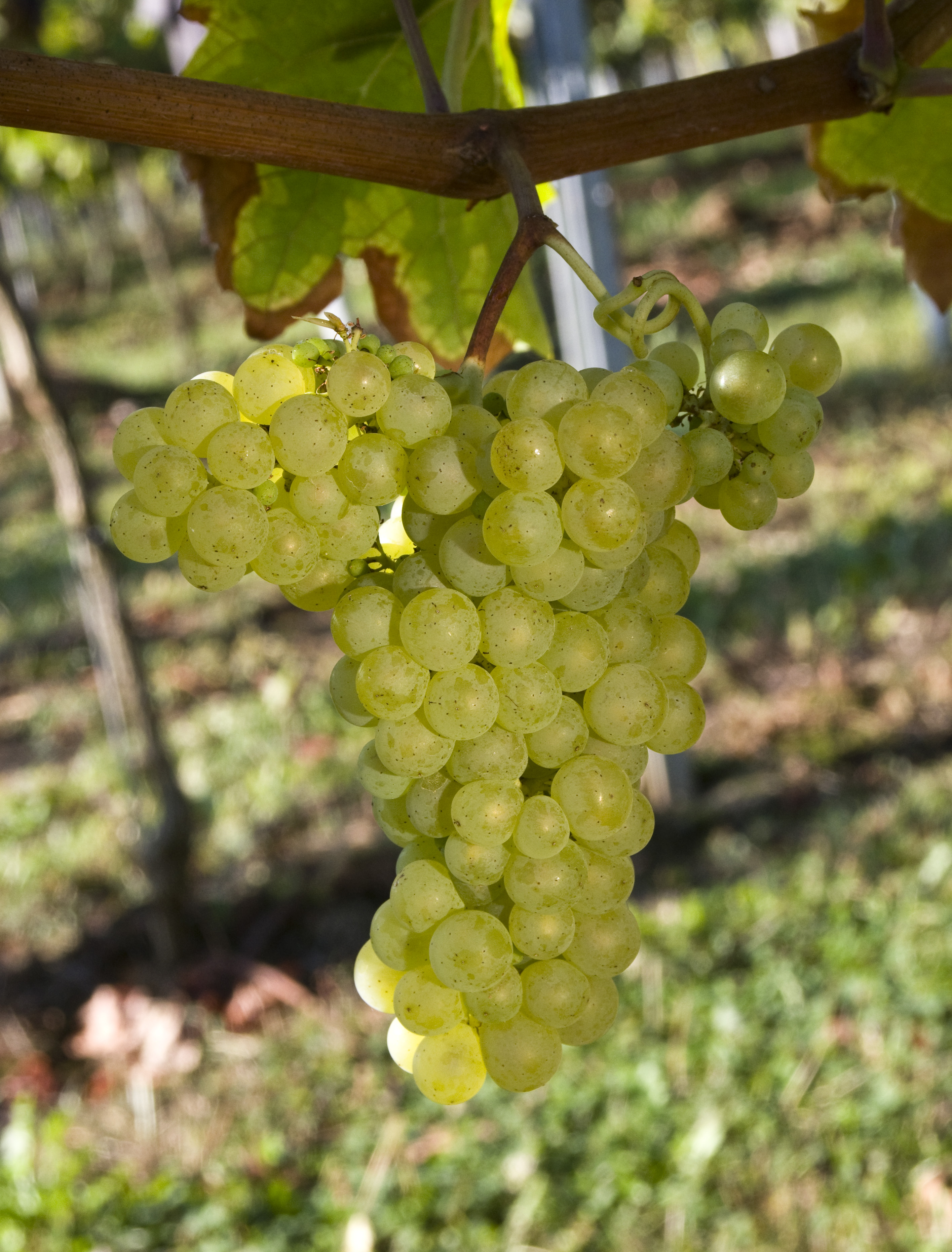
The bunch, when mature, is medium-sized, cylindrical or cylindrical-conical in shape, often with two wings, and of medium compactness. The peduncle is short. The berry is medium, rounded, with a green-yellowish skin. The pulp is juicy and of soft or medium consistency, with colorless juice.
How is the Friulano grape variety cultivated and what are its needs?
From an agronomic perspective, Friulano shows strong vigor. Environmental and cultural requirements indicate a preference for clay soils of origin and temperate climates, preferably in hilly areas. It adapts to various situations but favors soils that are not excessively deep and are stony. Its characteristic of having female flowers can lead to reduced fruit set and low yields in non-ideal environments, but of high quality. The production per vine is approximately 2.1 kg, with an average bunch weight of 228 g.
Is Friulano sensitive to diseases or adverse conditions?
Friulano demonstrates good general resistance to the main vine diseases. However, it shows particular sensitivity to powdery mildew. Resistance to botrytis, on the other hand, is considered good. Agronomic management must therefore take these specificities into account to ensure the health of the vineyard and the quality of the grapes.
What are the characteristics of Friulano must and wine?
The characteristics of the must vary slightly depending on the sources and vintages. For example, sugar values (°Brix) around 20.2 are recorded, with an Acidity (g/l) of 6.0 and a pH of 3.45. Other readings indicate Sugar (°Brix) 14.7, Acidity (g/l) 12.8, and pH 3.0, or Sugar (°Brix) 18.2, Acidity (g/l) 6.7, and pH 3.41.
The wine obtained from Friulano is known for its versatility and aging potential. It can present with a deep straw-yellow color, but also with greenish reflections that disappear with aging. On the nose, the aromas are intensely fruity, delicate, and gentle, evoking the grape itself, with notes reminiscent of elderflower, yellow bell pepper, exotic fruit, and acacia flowers. On the palate, the wine is full-bodied, well-structured, and persistent, harmonious, with contained acidity. It can be described as alcoholic, delicately fragrant, harmonious, dry, or sweet.
What is the export potential of the Friulano grape variety?
The growing global interest in native grape varieties and wines that tell a story and evoke a territory makes Friulano a significant export opportunity for Italian wineries. Its uniqueness, historical roots, and ability to produce high-quality wines, in both fresh and evolved styles, perfectly meet the demands of international markets.
Foreign buyers seek authenticity, a connection to the territory, quality, and aging potential in Friulano. Its gastronomic versatility and ability to stand out in a crowded market are further strengths. To fully leverage this potential, Italian wineries should focus on narrating the history of the grape and its link to the Friulian territory.
Frequently Asked Questions
How does Friulano differ from other Italian grape varieties?
Friulano is distinguished by its deep historical roots in Friuli-Venezia Giulia and its ability to produce wines with fruity, delicate, and gentle aromas that can evolve with aging.
What are the main characteristics of Friulano wine?
Friulano wine is known for its versatility, presenting a deep straw-yellow color or with greenish reflections. On the nose, it offers fruity and floral aromas, while on the palate it is full-bodied, structured, and harmonious, with contained acidity.
Is Friulano suitable for export?
Yes, Friulano has significant export potential due to the growing interest in native grape varieties, its uniqueness, the quality of the wines it produces, and its ability to tell a territorial story.
Wines Export and the Territory The Friulano grape variety, with its historical roots in Friuli-Venezia Giulia, represents an excellence that could interest various producers in our network, further expanding our offering of Italian native grape varieties for export.
Want to discover how to export Italian native wines like Friulano?
Request a personalized demo to understand the export opportunities for your winery.