Traminer aromatico or Gewürztraminer: what it is, what it is called on the label, Italy's DOCs, Termeno, food pairing and export
Wines Export Editorial · Last updated:
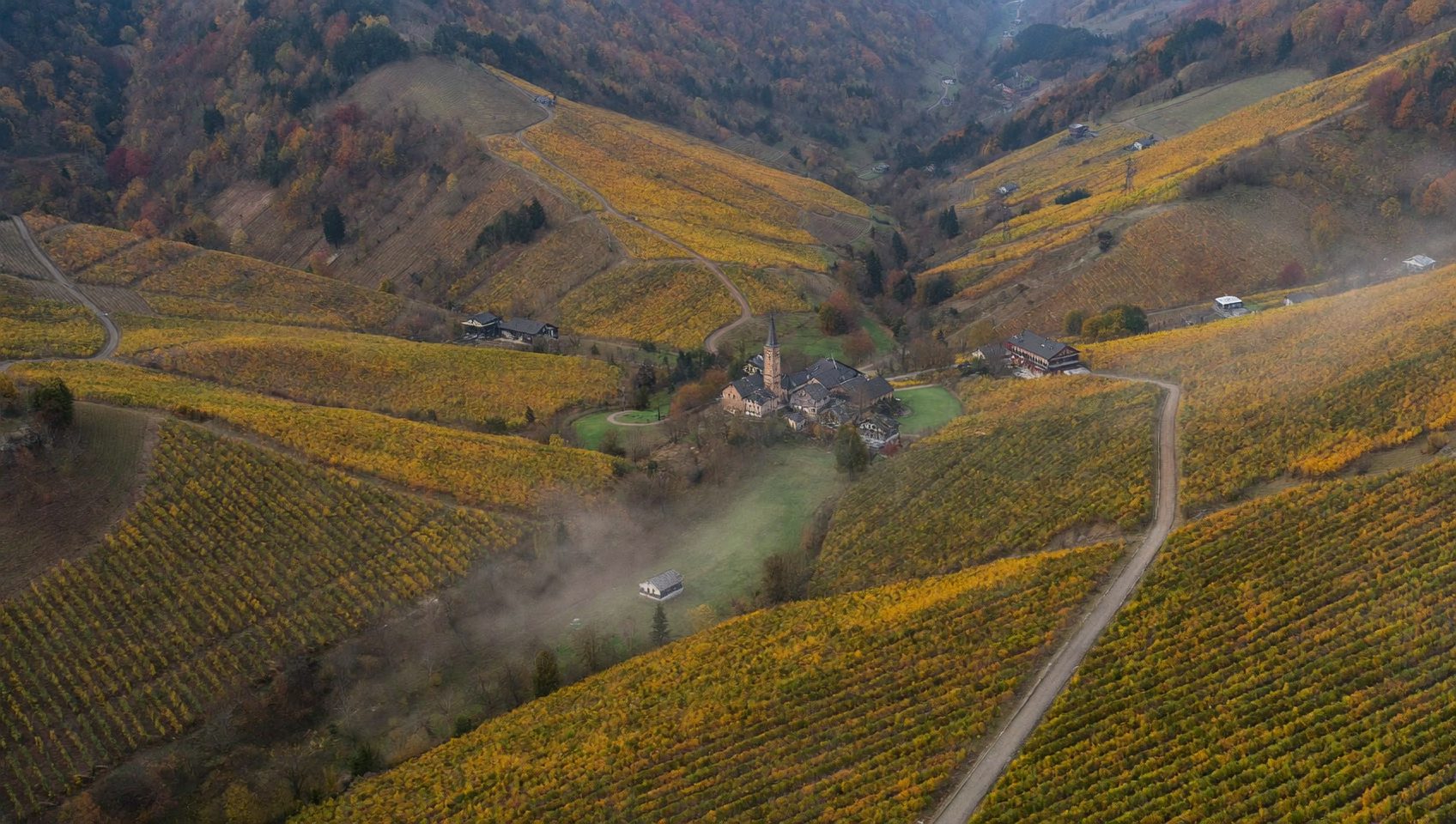
Traminer aromatico and Gewürztraminer are the same grape: the first is the official Italian name, the second the German synonym, which the Italian National Register of Vine Varieties allows for wines from the provinces of Trento and Bolzano (Italian Vitis Database, Traminer aromatico Rs., code 238). In Italy the reference area is Alto Adige, where in 2024 Traminer aromatico covered 630.7 of 5,833.1 hectares, the fourth white grape by area (IRE, Bolzano Chamber of Commerce, October 2025); a wine labelled with the variety also needs at least 85 percent Traminer aromatico in the Trentino, Valle d'Aosta, Friuli and Collio DOCs (disciplinari, art. 2). The Alto Adige rules allow it dry, as Riserva, late harvest (vendemmia tardiva) and passito, with a maximum yield of 12 tonnes of grapes per hectare and at least 11.50 percent alcohol (Alto Adige DOC disciplinare, art. 1, 4 and 6). The name Traminer is tied to the village of Termeno, Tramin in German, in the Bassa Atesina, but the grape was not born there: it is an aromatic form of Savagnin, believed to come from north-eastern France or south-western Germany (Italian Vitis Database; Consorzio Vini Alto Adige).
This page is the full guide to the grape, including what a buyer abroad should check before listing it. The wines of the province are in exporting wine from Bolzano and the two provinces together in Trentino-Alto Adige export guide; the other key Alto Adige grape is in Lagrein: grape, DOC and export markets.
What Traminer aromatico is
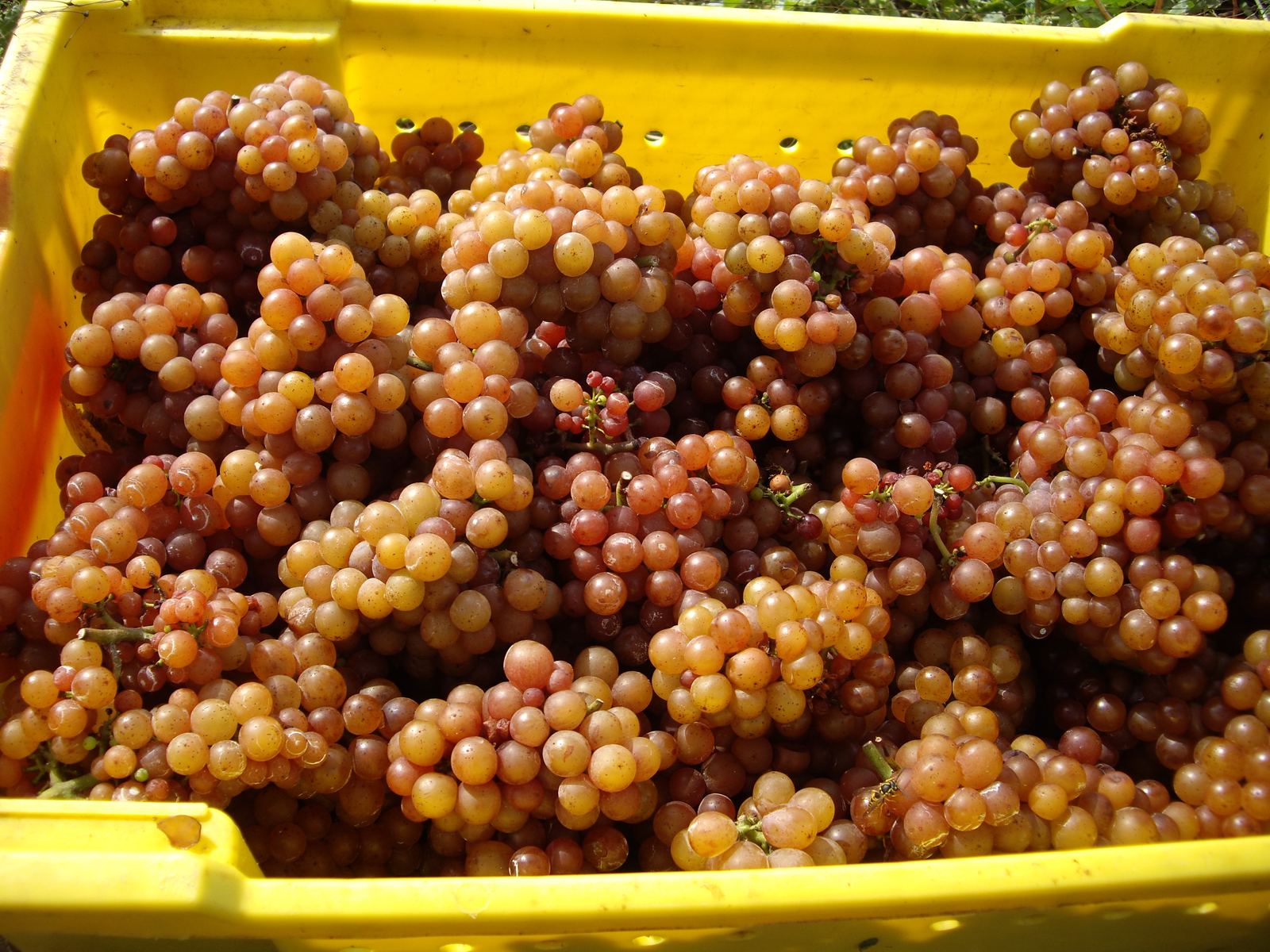
Traminer aromatico is a pink-berried grape that makes aromatic white wines: the National Register lists it as "Traminer aromatico Rs.", where the abbreviation gives the berry colour (Italian Vitis Database). The Alto Adige disciplinare describes the wine as straw yellow to golden, with a nose from lightly aromatic to intense and a full palate, from dry to off-dry (art. 6), and names the scent of rose as the trait that makes Alto Adige Traminer aromatico recognisable (art. 9).
The Consorzio Vini Alto Adige describes aromas of rose, clove, lychee and tropical fruit and a generous structure; it notes that producers now look for more acidity, for fresher and more elegant wines, and that the wine can take a few years in bottle (Consorzio Vini Alto Adige, Gewürztraminer page). How yeast shapes the aromas of whites like this is covered in selecting yeast for aromatic white wines; what "aromatic" means in wine in wine culture: aromatic.
What it is called on the label: Traminer aromatico, Gewürztraminer or Traminer
The name on the label depends on the denomination, not on the winery's preference.
| Where | Name allowed | Source |
|---|---|---|
| National Register of Vine Varieties | Traminer aromatico Rs.; official synonym Gewürztraminer for Trento and Bolzano | Italian Vitis Database, code 238 |
| Alto Adige DOC | "Traminer Aromatico"; label terms may be used in Italian and/or German under the bilingualism rules of the Province of Bolzano | Alto Adige disciplinare, art. 1 and 7.1 |
| Trentino DOC and Trentino Superiore | "Traminer aromatico" | Trentino disciplinare, art. 2 and Title II, art. 1 |
| Valle d'Aosta DOC | "Traminer aromatico o Gewürztraminer", and for the passito "Traminer aromatico passito o Gewürztraminer flétri" | Valle d'Aosta disciplinare, art. 1 |
| Friuli DOC and Collio DOC | "Traminer aromatico" | Friuli and Collio disciplinari, art. 1 and 2 |
That is why Alto Adige bottles so often read Gewürztraminer: it is the synonym the Register allows for the province, combined with the bilingualism rule. In Valle d'Aosta the synonym is written into the name of the wine type itself.
Where it is made in Italy: the Traminer aromatico DOCs
In every denomination in the table below, a wine named after the variety needs at least 85 percent Traminer aromatico in the estate's vineyards; yields and alcohol levels differ.
| Denomination | Maximum grape yield | Minimum natural alcohol of the grapes | Minimum alcohol on release | Source |
|---|---|---|---|---|
| Alto Adige | 12 t/ha | 11 percent | 11.50 percent, of which 11.00 actual | art. 4 and 6 |
| Alto Adige with an additional geographical unit | 9 t/ha | 11.50 percent | 11.50 percent | art. 4 and 6 |
| Alto Adige Valle Isarco | 10 t/ha | 11 percent | 11.50 percent | art. 4 and 6 |
| Alto Adige Valle Venosta | 9 t/ha | 10.5 percent | 11.50 percent | art. 4 and 6 |
| Trentino | 14 t/ha (98 hl) | 11.0 percent | 11.50 percent | art. 4 and 6 |
| Trentino Superiore | 10 t/ha (70 hl) | 11.5 percent | 12.50 percent | Title II, art. 4 and 6 |
| Valle d'Aosta | 10 t/ha (70 hl) | 10.50 percent | 11 percent | art. 4 and 6 |
| Friuli | 13 t/ha | 10 percent | 10.5 percent | art. 4 and 6 |
| Collio | 11 t/ha | 10.50 percent | 11.5 percent | art. 4, 5 and 6 |
Sources: Alto Adige, Trentino, Valle d'Aosta, Friuli and Collio disciplinari, texts of the Italian Ministry of Agriculture.
Some specific rules. In Trentino, Traminer aromatico may not be part of the 15 percent of other grapes allowed in the other single-variety wines, may not be added as must or wine to other types, and is not among the wines that may become Riserva (Trentino disciplinare, art. 2 and 5). Trentino Superiore Traminer aromatico must come from well-exposed foothill or hillside vineyards no higher than 600 metres, age at least 10 months from 1 November of the harvest year and be closed with a cork stopper flush with the bottle mouth (Title II, art. 3, 5 and 8). In the Collio the grape may make up no more than 15 percent of Collio Bianco, like Müller Thurgau (Collio disciplinare, art. 2). In Friuli the grape-to-wine yield goes up to 75 percent, against 70 percent in Alto Adige (Friuli and Alto Adige disciplinari, art. 5).
The individual regions are covered in Valle d'Aosta wine, Friuli Venezia Giulia wine, Collio DOC white wines for importers and exporting wine from Trento.
Alto Adige: the rules for Traminer aromatico
In the province of Bolzano Traminer aromatico has its widest range: it is allowed in the Alto Adige DOC without a sub-zone and in the Valle Isarco and Valle Venosta sub-zones, in each case also as passito, late harvest and Riserva (disciplinare, art. 1).
| Rule | What the Alto Adige disciplinare requires | Source |
|---|---|---|
| Grape | at least 85 percent Traminer Aromatico; up to 15 percent of other grapes of the same colour authorised in the province of Bolzano | art. 2.1 |
| Planting density | at least 3,300 vines per hectare for new plantings and replantings | art. 4.2 |
| Grape-to-wine yield | no more than 70 percent | art. 5.4 |
| Riserva | at least two years of ageing from 1 October of the harvest year, grapes with at least 11.5 percent natural alcohol | art. 5.5 |
| Where the wine is made | only in the Autonomous Province of Bolzano, except for exemptions already granted | art. 5.1 |
| Analysis on release | total acidity at least 4.0 g/l, dry extract at least 16.0 g/l | art. 6 |
| Vintage | compulsory on the label | art. 7.4 |
| Adjectives | extra, fine, scelto, selezionato, vecchio and similar are banned | art. 7.1 |
| Bottles | glass, ceramic or wood containers of 0.375 or 0.750 litres and multiples, 0.5 litres other than the "uni" type, 5 litres; all closures allowed by law | art. 8.1 |
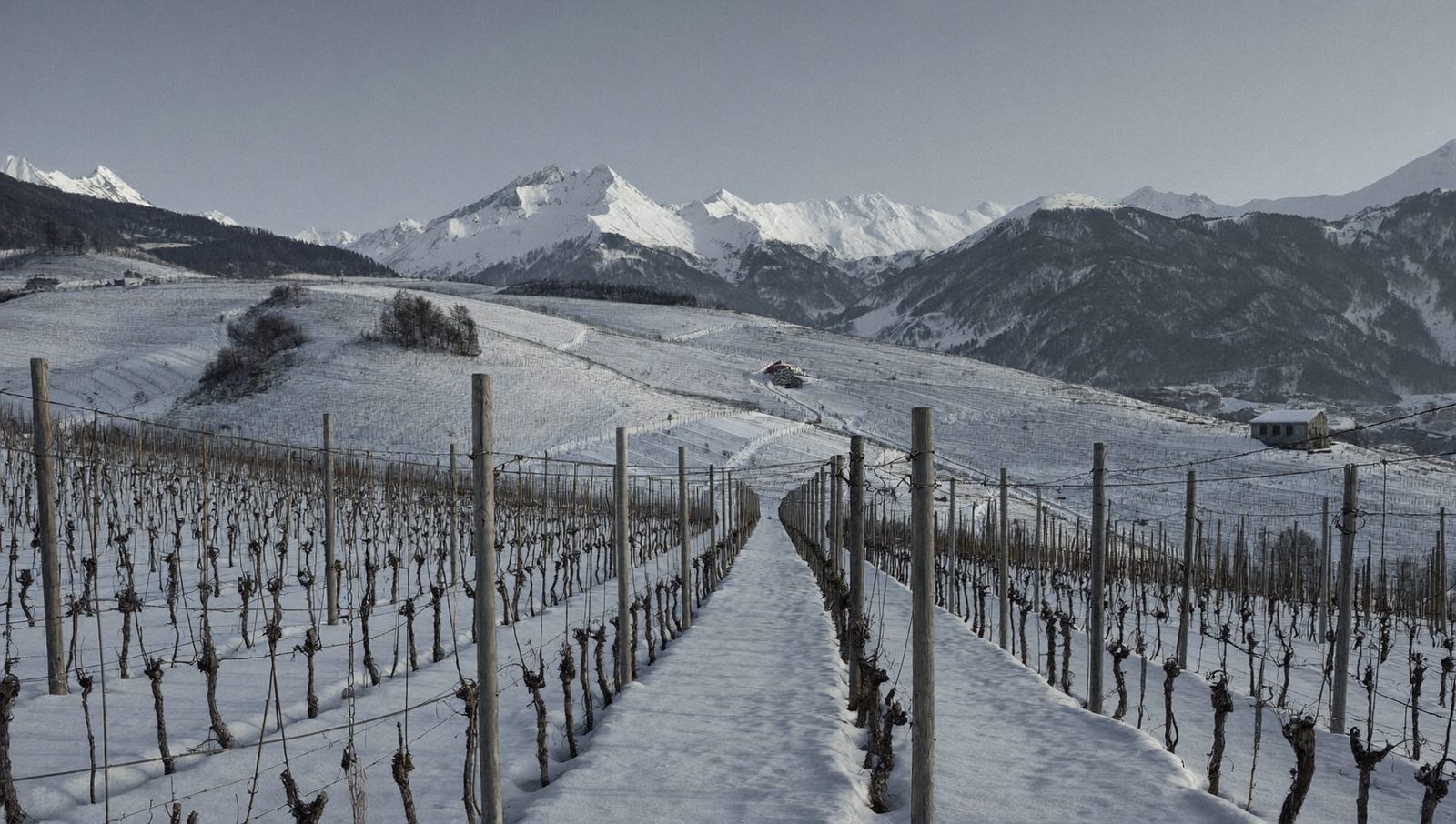
The disciplinare describes vineyards from 220 to over 1,000 metres, with wide swings between day and night temperatures, and limestone soils from weathered dolomite rock in the south of the province (art. 9). The Consorzio names calcareous and loamy soils in warm, airy sites of southern Alto Adige as the best conditions for Gewürztraminer (Consorzio Vini Alto Adige). According to the disciplinare, Traminer aromatico arrived in Alto Adige in the nineteenth century, together with Riesling and Silvaner, among the Rhine varieties (art. 9). The text in force is the one amended by the ministerial decree of 8 October 2024 (Gazzetta Ufficiale n. 244, 17 October 2024); compliance is checked by the Bolzano Chamber of Commerce (art. 10).
Termeno and the additional geographical units
The Alto Adige disciplinare allows an additional geographical unit (unità geografica aggiuntiva) after the name of the DOC, that is, the official name of a locality, with a pictogram on the label and 100 percent of the grapes from that locality (art. 2.6, 4.1 and 7.2). For Traminer aromatico the yield falls to 9 t/ha and the minimum natural alcohol rises to 11.50 percent (art. 4.4).
In the municipality of Termeno, four units have a form reserved for Traminer aromatico alone:
| Additional geographical unit | Grapes allowed | Form reserved for Traminer aromatico only | Source |
|---|---|---|---|
| Söll | Traminer Aromatico, Pinot Bianco, Pinot Grigio, Chardonnay | Tramin-Söll | art. 2.6 and 7.2 |
| St. Jacob | Traminer Aromatico, Merlot | Tramin-St. Jacob | art. 2.6 and 7.2 |
| Plon | Traminer Aromatico, Chardonnay | Tramin-Plon | art. 2.6 and 7.2 |
| Rungg | Traminer Aromatico, Merlot, Cabernet | Tramin-Rungg | art. 2.6 and 7.2 |
Traminer aromatico is also allowed in units of other municipalities, for example Paulsner Feld in Appiano (art. 2.6). The boundaries are in the vineyard register and on the website of the Autonomous Province of Bolzano (art. 7.2).
Dry, late harvest and passito
Traminer aromatico is sold in three styles, each with its own rules.
| Type | Alto Adige | Trentino Superiore | Valle d'Aosta |
|---|---|---|---|
| Dry | at least 11.50 percent; dry to off-dry | 12.50 percent; dry or off-dry | at least 11 percent |
| Late harvest (vendemmia tardiva) | grapes partly dried on the vine, at least 13.5 percent natural alcohol, no more than 50 hl/ha, no enrichment; on release 13.50 percent, of which at least 7.00 actual, medium-sweet or sweet | yield 50 hl/ha, at least 15.0 percent natural alcohol, 12 months of ageing from 1 November; on release 15.00 percent, of which at least 11.00 actual | natural drying on the vine, grape-to-wine yield no more than 60 percent, at least 250 g/l of sugar; on release 15 percent, of which at least 12 actual |
| Passito | dried on the vine or after picking to at least 16 percent, no more than 40 hl/ha, concentrated musts banned; on sale from 1 June of the year after harvest | not provided for | "Traminer aromatico passito o Gewürztraminer flétri": dried after picking to at least 26 percent sugar; 16.5 percent, of which 13 actual; on sale from 1 November of the year after harvest |
Sources: Alto Adige disciplinare, art. 5.3 and 6; Trentino disciplinare, Title II, art. 4, 5 and 6; Valle d'Aosta disciplinare, art. 4 and 6.
For an importer the distinction matters: in Italy "vendemmia tardiva" is a term set by each disciplinare, with different thresholds from one area to the next, and it should not be confused with the Alsace terms.
Food pairing: what to drink Gewürztraminer with
The Consorzio Vini Alto Adige suggests it as an aperitif, with fish, crustaceans and shellfish, with vegetable dishes, with Oriental cuisine, with blue cheeses and with desserts (Consorzio Vini Alto Adige). The practical rule that follows: the dry wine goes with spiced or aromatic dishes and with fish, the late harvest and passito versions with blue cheeses and desserts. The Alto Adige rules allow an off-dry ("abboccato") style even for the standard wine (art. 6), so the technical sheet should state the residual sugar, because the pairing depends on it.
Traminer, Savagnin and Termeno: where the name comes from
The Italian Vitis Database treats Traminer as a very old variety of spontaneous origin, probably from north-eastern France or south-western Germany, in the Rhine valley. The earliest known mention is a 1242 document printed in Bolzano referring to the wines of Tramin, that is Termeno; according to the same entry, however, those wines were not made from this grape, which was not grown there at the time, and the name later passed to the variety in Württemberg. DNA analyses have shown that Traminer and Savagnin are the same vine, with a direct parent-offspring link to Pinot (Italian Vitis Database).
The Consorzio Vini Alto Adige writes that the grape probably owes its name to the village of Termeno and that by the thirteenth century it was already known as "Traminer" in German-speaking lands. In German, "Gewürz" means spice: Gewürztraminer is the spicy Traminer, in other words the aromatic form.
Selling Traminer aromatico abroad
No export statistics are published for Traminer aromatico alone; the most useful figures are those for Alto Adige. Between 2018 and 2024 the area under Traminer aromatico in Alto Adige rose from 587.5 to 630.7 hectares, up 7.3 percent, while white grapes passed two thirds of the province's vineyard (IRE, October 2025). In 2024 the 19 largest producers, who bottle more than 80 percent of the DOC wine, sold 4.253 million bottles of Alto Adige Traminer Aromatico DOC, 13.1 percent of their sales and their second wine after Pinot Grigio DOC (IRE, table A-3).
For all the wines of those producers, the 2024 markets were Alto Adige itself (27.4 percent), the rest of Italy (39.0), Germany (9.1) and the United States (8.3), with Switzerland growing; the producers saw the most potential in Japan and Canada, and among other countries in Sweden and the Far East. Restaurants and hotels took 55.4 percent of the bottles (IRE, October 2025).
These figures point to the channels worth a look: wine importers in Germany and exporting wine to Germany, wine importers in the United States, wine importers in Switzerland, wine importers in Japan and exporting wine to Japan, wine importers in Canada and exporting wine to Canada, and the wine importers by country hub.
Before listing, check five points on the technical sheet: a label name that matches the denomination (Gewürztraminer is an allowed synonym for Trento and Bolzano and for Valle d'Aosta); the vintage, compulsory in Alto Adige; the residual sugar, because the dry wine may be off-dry; for a late harvest, the thresholds of that DOC; for an additional geographical unit, the pictogram and 100 percent of the grapes from the named locality.
Frequently asked questions
Are Traminer aromatico and Gewürztraminer the same?
Yes. Traminer aromatico is the official name in the National Register of Vine Varieties, Gewürztraminer the official synonym allowed for wines from the provinces of Trento and Bolzano (Italian Vitis Database, code 238). In Valle d'Aosta the DOC uses the form "Traminer aromatico o Gewürztraminer" (Valle d'Aosta disciplinare, art. 1).
What is the difference between Traminer and Gewürztraminer?
Traminer is the same vine as Savagnin; Gewürztraminer, or Traminer aromatico, is its aromatic, pink-berried form, listed in the Italian Register under code 238 (Italian Vitis Database).
Where is Gewürztraminer made in Italy?
Mainly in Alto Adige, where it covered 630.7 hectares in 2024 (IRE, October 2025). It is also allowed under the variety name in the Trentino, Trentino Superiore, Valle d'Aosta, Friuli and Collio DOCs (disciplinari, art. 1 and 2).
Does the name come from Termeno?
The Consorzio Vini Alto Adige says it probably does, from the village of Termeno, Tramin in German. The Italian Vitis Database adds that the Tramin wines mentioned in 1242 were not made from this grape and that its origin is probably between north-eastern France and south-western Germany.
Is Gewürztraminer dry or sweet?
Both. The standard wine ranges from dry to off-dry; the late harvest and passito versions are medium-sweet or sweet (Alto Adige disciplinare, art. 6).
What food goes with Gewürztraminer?
The Consorzio Vini Alto Adige suggests it as an aperitif and with fish, crustaceans, vegetables, Oriental cuisine, blue cheeses and desserts.
Sources
- Alto Adige DOC disciplinare, text of the Italian Ministry of Agriculture, amended by DM 8 October 2024 (GU n. 244, 17 October 2024), list of PDO and PGI disciplinari
- Trentino DOC, Valle d'Aosta DOC, Friuli DOC and Collio DOC disciplinari, texts of the Italian Ministry of Agriculture, in the same list
- Italian Vitis Database, Traminer aromatico Rs. (National Register, code 238)
- Consorzio Vini Alto Adige, Gewürztraminer
- IRE, Bolzano Chamber of Commerce, The large wine producers of Alto Adige 2018-2024, October 2025 (Italian)
- Autonomous Province of Bolzano, wine (boundaries of the additional geographical units)
- Trebbiano Romagnolo: Romagna DOC, Rubicone and Rules
- Tocai Friulano Wine: Grape Profile, Name Issue and Export
- Trebbiano Toscano: Synonyms, Orvieto, Vin Santo, Rules
- Tocai Friulano: Wine Export Guide
- Verdeca Grape: Locorotondo, Martina Franca, DOCs, Export
- Syrah in Italy: Cortona, Sicily, DOCs and percentages