Primitivo di Manduria DOC explained: Riserva, Dolce Naturale DOCG, zone, Zinfandel and export
Wines Export Editorial · Last updated:
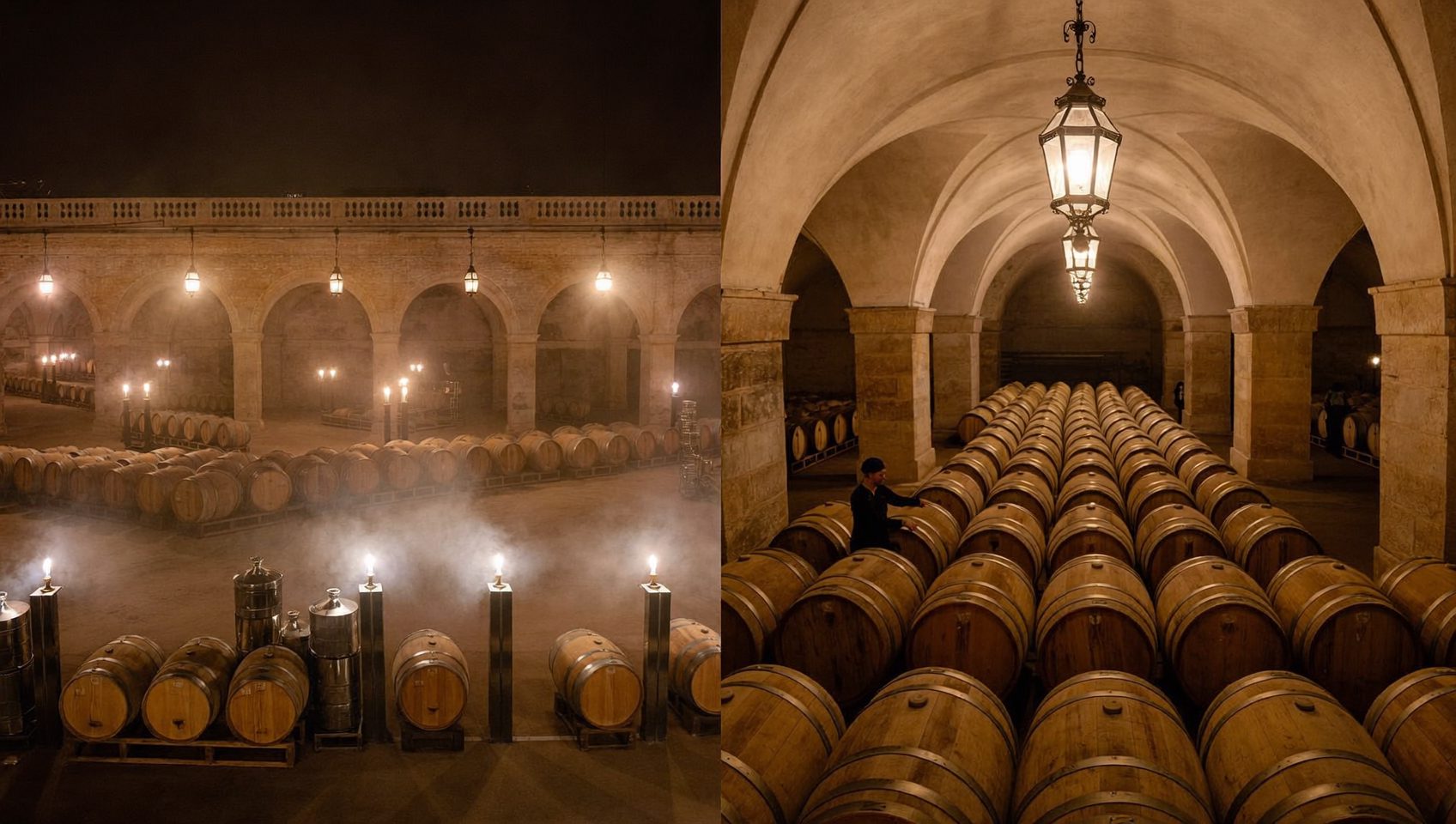
Primitivo di Manduria DOC is a full-bodied red wine from the Ionian side of Puglia, made from at least 85 percent Primitivo in 18 municipalities of the provinces of Taranto and Brindisi (Primitivo di Manduria DOC disciplinare, art. 2 and 3). It comes in two types, Primitivo di Manduria and Riserva, with minimum alcohol of 13.50 and 14.00 percent and a taste that may range from dry to off-dry, up to 18 g/l of residual sugar (DOC disciplinare, art. 1 and 6). The DOC dates from the presidential decree of 30 October 1974; the sweet wine from dried grapes, Primitivo di Manduria Dolce Naturale, has been a separate DOCG since the ministerial decree of 23 February 2011 (Gazzetta Ufficiale n. 57, 10 March 2011). The trade press reports 29 million bottles in 2025, up 12.46 percent (ItaliaOggi, May 2026).
This page is the full guide to the denomination. The region as a whole is covered in Puglia wine for export, and the grape on its own in the Primitivo grape export guide.
What Primitivo di Manduria is and what makes it different
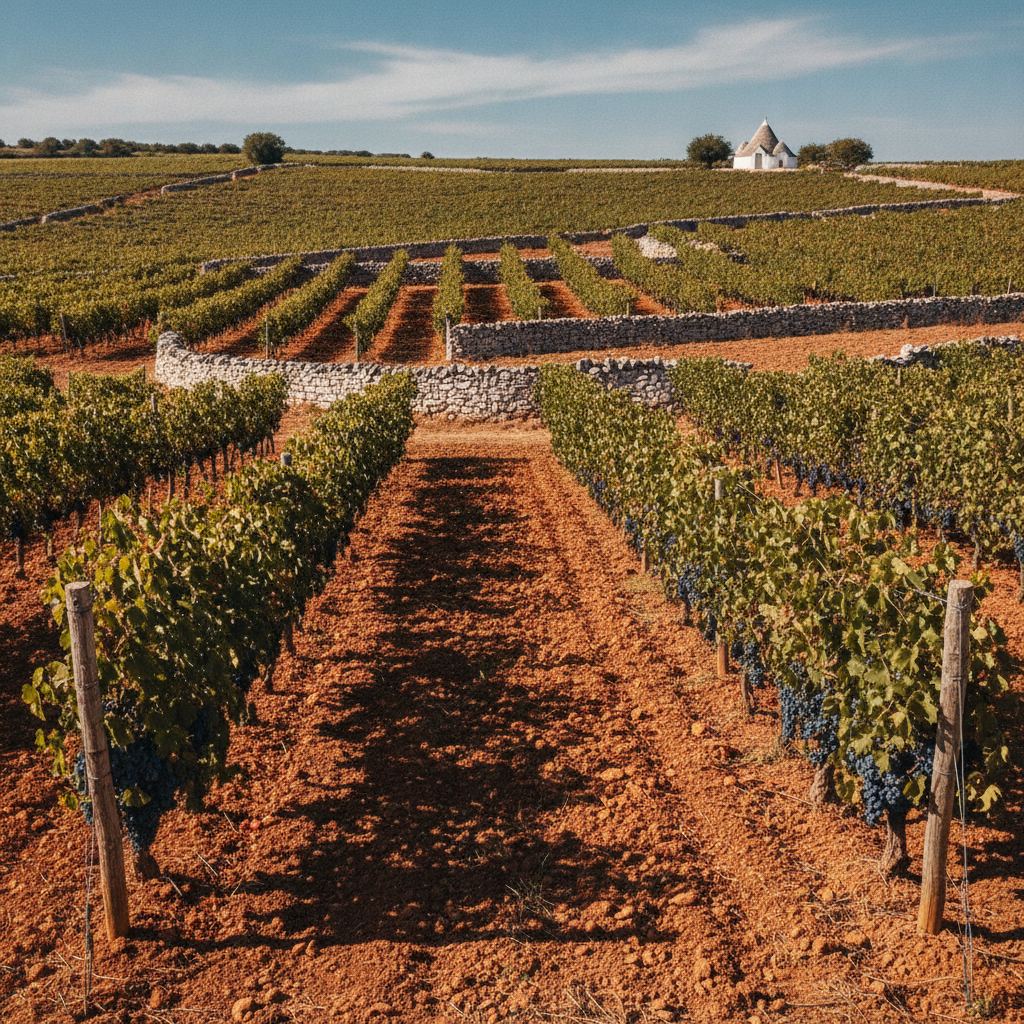
The disciplinare describes two landscapes: the Ionian arc along the coast, around Manduria, Maruggio, Lizzano and Pulsano, a plain that steps down in terraces to a line of dunes, and the Salento side around Avetrana, Oria and Erchie, where flat land alternates with low limestone ridges. The climate is Mediterranean, with mean winter minimums of 6 to 7 °C, mean summer maximums of 25 to 26 °C and about 650 mm of rain a year, mostly in winter. Deep clay loams in the west turn sandy and thin towards the coast, where rock often lies 25 to 50 cm down (DOC disciplinare, art. 9). The consortium describes iron-red earth over limestone inland and sand near the sea (Consorzio, terroir page).
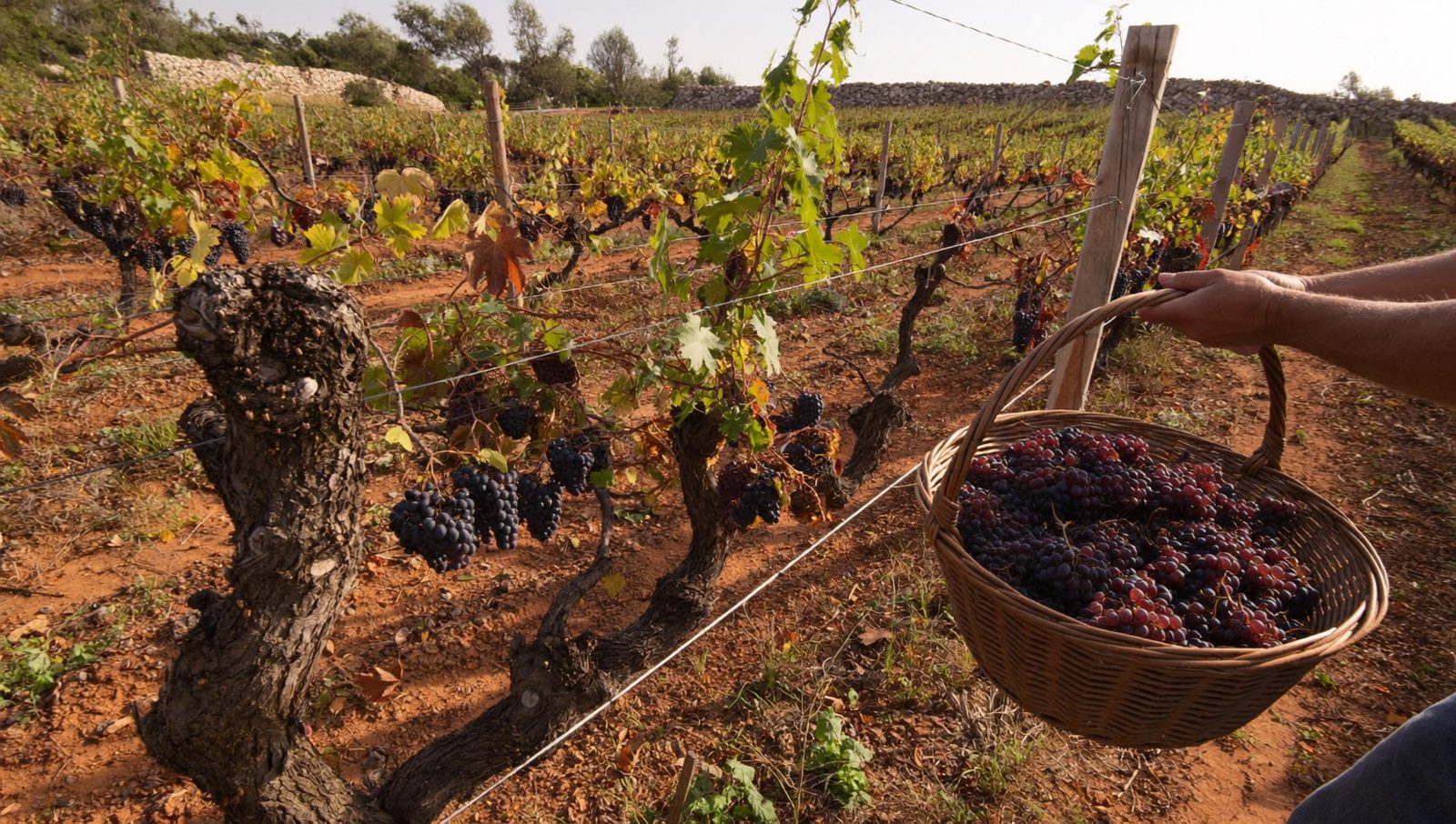
Two rules explain the style. Drying of the grapes is allowed, the grapes must reach 13.00 percent natural alcohol (13.50 for the Riserva), and enrichment of must or wine is forbidden (DOC disciplinare, art. 4 and 5): the alcohol comes from ripe, sometimes partly dried, fruit, not from added sugar. And only the first crop counts. Primitivo produces secondary bunches, the femminelle or racemi, which ripen about a month after the main harvest and were once vinified on their own; the rules now exclude them from every type (DOC disciplinare, art. 4 and 9).
The name refers to the grape's early ripening (DOC disciplinare, art. 9). The Consorzio di Tutela del Primitivo di Manduria, founded in 1998, has held the erga omnes mandate for the DOC and the DOCG since 2015, so it acts for the whole denomination (Consorzio, vision and mission page).
Grapes and viticulture: what the disciplinare allows
The blend is calculated on the estate's vineyards. The DOC text was approved by presidential decree of 30 October 1974, published in Gazzetta Ufficiale n. 60 of 4 March 1975, and last amended by ministerial decree of 7 March 2014 (DOC disciplinare, header).
| Rule | Primitivo di Manduria DOC and Riserva | Primitivo di Manduria Dolce Naturale DOCG | Source |
|---|---|---|---|
| Primitivo | at least 85 percent | 100 percent | DOC art. 2; DOCG art. 2 |
| Other grapes | non-aromatic black grapes authorised in Taranto and Brindisi, up to 15 percent | none | DOC art. 2; DOCG art. 2 |
| Training | alberello pugliese (bush vine) or espalier with Guyot or spurred cordon, fruiting zone no higher than 1 metre | same | DOC art. 4; DOCG art. 4 |
| Density of new vineyards | at least 3,500 vines per hectare | same | DOC art. 4; DOCG art. 4 |
| Maximum grape yield | 9 tonnes per hectare | 7 tonnes per hectare | DOC art. 4; DOCG art. 4 |
| Natural alcohol of the grapes | 13.00 percent; 13.50 for Riserva | 16 percent | DOC art. 4; DOCG art. 4 |
| Maximum grape-to-wine yield | 70 percent | 60 percent, equal to 42 hl per hectare | DOC art. 5; DOCG art. 5 |
| Secondary bunches (femminelle) | excluded | excluded | DOC art. 4; DOCG art. 4 |
In generous years the quantity claimed must be brought back within these caps, provided the total crop does not exceed them by more than 20 percent, and the Puglia Region can lower the yield at the consortium's reasoned request (DOC disciplinare, art. 4). Emergency irrigation is allowed, forcing is forbidden, and winemaking must take place inside the zone (DOC disciplinare, art. 4 and 5). For the Dolce Naturale, a grape-to-wine yield above 60 percent costs the whole lot its DOCG, not just the excess (Primitivo di Manduria Dolce Naturale DOCG disciplinare, art. 5).
The production zone: 18 municipalities between Taranto and Brindisi
The zone is the same for the DOC and the DOCG (DOC disciplinare, art. 3; DOCG disciplinare, art. 3).
| Province | Municipalities | Source |
|---|---|---|
| Taranto | Manduria, Avetrana, Carosino, Faggiano, Fragagnano, Leporano, Lizzano, Maruggio, Monteparano, Pulsano, Roccaforzata, San Giorgio Ionico, San Marzano di San Giuseppe, Sava, Torricella | DOC art. 3 |
| Taranto, part of the city territory | the Talsano district and the enclaves between Fragagnano and Lizzano | DOC art. 3 |
| Brindisi | Erchie, Oria, Torre Santa Susanna | DOC art. 3 |
The grape came from the Murgia. The DOCG disciplinare places its first selection at Gioia del Colle, near Bari, at the end of the eighteenth century, and its arrival at Manduria probably at the end of the nineteenth, when cuttings from Altamura were planted on the dunes of Campomarino, near Maruggio; the first known label, "Campo Marino", dates from 1891 (DOCG disciplinare, art. 9).
The vineyard has grown fast: 3,140 hectares in 2019 (Gazzetta del Gusto, October 2019), 3,922 in 2021 (Italian Wine Central) and about 5,000 today, with 274 companies and 4,890 growers (Consorzio, home page). For 2025 to 2030 the consortium has blocked new vineyards from claiming the name: new plantings are possible, but their grapes cannot be sold as Primitivo di Manduria (Il Sole 24 Ore, 5 March 2025).
DOC, Riserva and Dolce Naturale DOCG: the three wines compared
| Parameter | Primitivo di Manduria DOC | Primitivo di Manduria Riserva DOC | Primitivo di Manduria Dolce Naturale DOCG | Source |
|---|---|---|---|---|
| Minimum total alcohol | 13.50 percent | 14.00 percent | 16.00 percent, of which at least 13.00 actual | DOC art. 6; DOCG art. 6 |
| Residual sugar | no more than 18.0 g/l | no more than 18.0 g/l | at least 50.0 g/l | DOC art. 6; DOCG art. 6 |
| Taste in the rules | dry to off-dry | dry to off-dry, full-bodied, velvety | sweet, velvety | DOC art. 6; DOCG art. 6 |
| Minimum dry extract | 26.0 g/l | 26.0 g/l | 30.0 g/l | DOC art. 6; DOCG art. 6 |
| Compulsory ageing | none | 24 months from 1 November of the harvest year, at least 9 in wood | none beyond the release date | DOC art. 5; DOCG art. 5 |
| Earliest release | after 31 March following the harvest | two years after 31 March following the harvest | 1 June of the year after the harvest | DOC art. 5; DOCG art. 5 |
| Containers | glass up to 15 litres; screw cap only up to 0.25 litres | glass up to 15 litres; no screw cap | glass up to 6 litres; screw cap only up to 0.25 litres | DOC art. 8; DOCG art. 8 |
Primitivo di Manduria. Intense red tending to garnet with age, broad and complex nose, total acidity of at least 5.0 g/l, vintage compulsory on the label (DOC disciplinare, art. 6 and 7). It is the bulk of the denomination: 91.6 percent of bottled Primitivo di Manduria in 2020 (consortium figures reported by Rivista di Agraria, April 2021).
Riserva. Riper grapes, more alcohol and two years of ageing, at least 9 months of it in wood; the rules mention a scent of plum and a full-bodied, velvety palate (DOC disciplinare, art. 4 to 6). It made up 7.9 percent of bottled volumes in 2020 (Rivista di Agraria, April 2021).
Dolce Naturale DOCG. Pure Primitivo from grapes that may be dried on the vine, on racks, in crates outdoors or in rooms with temperature, humidity or ventilation control (DOCG disciplinare, art. 5). Labels may not use qualifiers such as riserva, superiore or classico, while a registered "vigna" name is allowed (DOCG disciplinare, art. 7). It was 0.5 percent of bottled volumes in 2020 (Rivista di Agraria, April 2021), and Italian Wine Central records 19 hectares in 2021. The consortium calls it the first Apulian wine to obtain a DOCG (Consorzio, vision and mission page). On the weight of the four letters in trade talks, see the DOCG market for importers.
The state seal. Since 1 January 2023 Primitivo di Manduria DOC and Riserva must carry the contrassegno di Stato on the neck (Consorzio, vision and mission page); the DOCG already had one (MixerPlanet). The seals are printed by the Istituto Poligrafico e Zecca dello Stato with a progressive number for each bottle (MixerPlanet). In January 2025 the consortium refused to recognise as authentic Primitivo di Manduria DOC a batch of bottles without it (Dissapore, January 2025): the neck is the first thing to check on any lot.
The DOC is reserved for red wines (DOC disciplinare, art. 1), so a rosé from the same zone cannot use the name; that category is covered in Primitivo rosé for export.
What it tastes like and how to serve it
| Wine | Consortium tasting notes | Consortium pairings |
|---|---|---|
| Primitivo di Manduria DOC | plum, cherry, blackberry and small berries; fresh and fragrant when young, with lively tannins; rich, warm palate | orecchiette with tomato sauce and cacioricotta, meat ragù, tomato-based fish soups, spiced Asian dishes |
| Riserva | deep ruby; balsamic, menthol, tobacco, toasted and spicy notes from the wood; soft, elegant tannins | game, roasts, grilled meat |
| Dolce Naturale DOCG | intense red with garnet hints; sometimes jam and dried figs; sweet, velvety | dry pastries, dark chocolate, blue cheeses and cheeses aged over 36 months, or on its own |
Source: Consorzio, wine and pairings page. Read the label before pouring: a DOC may hold up to 18 g/l of sugar and taste off-dry, a Dolce Naturale at least 50 g/l (DOC disciplinare, art. 6; DOCG disciplinare, art. 6). The consortium does not publish serving temperatures, so the producer's technical sheet is the reference for each label.
Primitivo and Zinfandel: the same grape
The Vitis International Variety Catalogue lists the variety under the prime name Primitivo, number 9703, with Zinfandel, Crljenak Kastelanski, Pribidrag and Kratosija among its synonyms (VIVC, passport 9703). Foundation Plant Services at UC Davis states that the DNA profiles of Primitivo, Zinfandel, Crljenak kaštelanski and Pribidrag are identical, with some clonal divergence after long separation, and gives Primitivo as the name approved by the TTB, the US federal agency for wine labels (FPS, UC Davis).
Same grape does not mean same label. The TTB does not allow the two names as synonyms: a wine of at least 75 percent Primitivo clone is labelled Primitivo, one of at least 75 percent Zinfandel clone Zinfandel, while the European Union treats the names as equivalent (Wine Spectator, September 2015). According to the same source, an Italian Primitivo may therefore also be labelled Zinfandel and sold in the United States; the name of the appellation remains Primitivo di Manduria in any case. Details for importers: Primitivo and Zinfandel on US labels.
Primitivo di Manduria vs Gioia del Colle Primitivo vs Salento IGT
Buyers often find three kinds of Apulian Primitivo on the same list. They share the grape, not the rules.
| Primitivo di Manduria DOC | Gioia del Colle Primitivo DOC | Salento IGT Primitivo | |
|---|---|---|---|
| Where | 18 municipalities in Taranto and Brindisi (DOC disciplinare, art. 3) | 15 municipalities of the province of Bari plus Altamura, minus the Gravina DOC area (Gioia del Colle DOC disciplinare, art. 3) | provinces of Brindisi, Lecce and Taranto (Italian Wine Central) |
| Primitivo share | at least 85 percent | 100 percent (Gioia del Colle disciplinare, art. 2) | at least 85 percent to name the variety (Italian Wine Central) |
| Maximum grape yield | 9 tonnes per hectare | 8 tonnes per hectare (Gioia del Colle disciplinare, art. 4) | not published in the sources listed |
| Natural alcohol of the grapes | 13.00 percent | 13.50 percent (Gioia del Colle disciplinare, art. 4) | not published in the sources listed |
| Minimum total alcohol | 13.50 percent; Riserva 14.00 | 13.00 percent; Riserva 14.00 actual (Gioia del Colle disciplinare, art. 6 and 7) | 12.0 percent for still red (Italian Wine Central) |
| Residual sugar | up to 18 g/l | up to 10 g/l if slightly sweet (Gioia del Colle disciplinare, art. 6) | not published in the sources listed |
| Riserva | 24 months from 1 November, 9 in wood | two years from 1 November, no wood requirement in the text (Gioia del Colle disciplinare, art. 7) | no Riserva type (Italian Wine Central) |
| Recognised | 1974 | 1987 (Gioia del Colle disciplinare, header) | 1995 (Italian Wine Central) |
| Vineyard area | about 5,000 hectares (Consorzio) | 123 hectares in 2021 (Italian Wine Central) | 11,591 hectares in 2018, all grapes (Italian Wine Central) |
Gioia del Colle, on the Murgia plateau near Bari, asks for pure Primitivo, riper grapes and a lower yield, but sets a lower final minimum and a tighter sugar ceiling, and it is far smaller. Salento IGT covers the whole peninsula, Manduria's provinces included, with none of the DOC's ageing or state-seal rules. See Primitivo Salento rules for importers, and for the neighbouring Negroamaro denomination Salice Salentino for importers.
Buying Primitivo di Manduria abroad: importers and export
| Year | Bottles | Source |
|---|---|---|
| 2018 | 20 million; about 70 percent of turnover from export | Gambero Rosso International, June 2019 |
| 2019 | 22.7 million | Rivista di Agraria, December 2020 |
| 2020 | over 28 million | Rivista di Agraria, April 2021 |
| 2021 | over 30 million | Rivista di Agraria, March 2022 |
| 2025 | 29 million, up 12.46 percent | ItaliaOggi, May 2026 |
The same ItaliaOggi report puts stocks at 84.5 million bottles in March 2026, almost three times annual output. For 2026 the consortium announced healthy grapes, a crop about 20 percent smaller and bottling of the DOP up 12.6 percent in the latest data (Consorzio, 17 September 2026).
Export is the core market: the consortium put the share of production sold abroad at 70 percent for 2020 (Rivista di Agraria, April 2021), without a breakdown by country. In 2019 its president named the United States and Canada as markets where the wine is still little known (Gazzetta del Gusto, October 2019). In 2025 it took two stands at ProWein to strengthen its position in Germany (Il Sole 24 Ore, March 2025). Its legal actions show where the name circulates: by 2022 it had won cases in China, Chile, Spain, South Africa, Germany, Portugal and France, and in 2020 it blocked a misleading trademark in Switzerland (Rivista di Agraria, March 2022 and December 2020). In the United Kingdom both names are registered as protected designations of origin (Defra register).
For an importer that gives four entry points. Germany, where the name is known and the consortium invests: Italian wine suppliers in Germany and wine importers in Germany. Switzerland: wine importers in Switzerland. The United States, where the wine sells as Primitivo next to Zinfandel: US wine importers and what they need and wine importers in the United States. Canada: wine importers in Canada. All markets are on the wine importers by country hub.
Food and drinks companies should know one more rule. Since April 2026 using the name on a processed product needs the consortium's authorisation, valid three years per product: the wine must be a significant ingredient with its percentage declared, the name appears in smaller characters, in quotation marks, followed by DOC or DOCG, and the official logos may not be used (Consorzio, 24 April 2026).
Vintages and ageing: what to expect from a bottle
A base Primitivo di Manduria reaches the market after 31 March following the harvest, and the rules expect its colour to move towards garnet with age (DOC disciplinare, art. 5 and 6). The Riserva may be sold only two years after that date, after 24 months of ageing with at least 9 in wood: it is the type the rules build for a longer life in bottle (DOC disciplinare, art. 5). The Dolce Naturale is released from 1 June of the year after the harvest (DOCG disciplinare, art. 5). Neither the rules nor the consortium set a drinking window, so the producer's technical sheet is the reference.
The vintage is compulsory on all three labels (DOC disciplinare, art. 7; DOCG disciplinare, art. 7). The 2025 harvest was about 10 percent larger than 2024 (askanews via Quotidiano di Sicilia, September 2025); 2026 brought healthy grapes in a volume about 20 percent lower (Consorzio, September 2026).
What to check on a Primitivo di Manduria offer
The rules a buyer can verify on the bottle, the label and the technical sheet are few, and all of them are written in the two disciplinari. Ask for the paperwork of each lot so that every item can be checked at a glance.
| Check | What you should find | Source |
|---|---|---|
| State seal | a contrassegno di Stato on every bottle of DOC and Riserva since 2023 | Consorzio, vision and mission page |
| Vintage | stated on the label of DOC, Riserva and Dolce Naturale | DOC art. 7; DOCG art. 7 |
| Type and sugar | DOC and Riserva up to 18 g/l; Dolce Naturale at least 50 g/l | DOC art. 6; DOCG art. 6 |
| Riserva | not on sale before two years from 31 March after the harvest; 24 months of ageing, at least 9 in wood | DOC art. 5 |
| Dolce Naturale label terms | "riserva", "superiore", "extra", "fine", "scelto", "selezionato" and "classico" are banned; "vigna" only with a registered place name | DOCG art. 7 |
| Size and closure | glass up to 15 litres (DOC) or 6 litres (DOCG); flush stopper, screw cap only up to 0.25 litres and never on the Riserva | DOC art. 8; DOCG art. 8 |
| Colour | red only: there is no Primitivo di Manduria rosé or white | DOC art. 1 |
The annual check on compliance is carried out by the Chamber of Commerce of Taranto, the public authority designated by the Italian Ministry of Agriculture, with systematic and sample checks on vineyards, winemaking and bottling (DOC disciplinare, art. 10; DOCG disciplinare, art. 10). On volumes, the Puglia Region can cut the claimable yield at the reasoned request of the consortium (DOC disciplinare, art. 4): in a year with yield cuts there is less certified wine to go round, so agree volumes early.
Frequently asked questions
What grapes is Primitivo di Manduria made from?
At least 85 percent Primitivo, with up to 15 percent of other non-aromatic black grapes authorised in Taranto and Brindisi; the Dolce Naturale DOCG must be 100 percent Primitivo (DOC disciplinare, art. 2; DOCG disciplinare, art. 2).
What is the difference between Primitivo di Manduria DOC and Riserva?
The Riserva needs grapes at 13.50 instead of 13.00 percent natural alcohol, reaches 14.00 instead of 13.50 percent in the bottle, and ages 24 months from 1 November of the harvest year, at least 9 in wood (DOC disciplinare, art. 4 to 6).
Is Primitivo di Manduria sweet?
The DOC is dry to off-dry, with up to 18 g/l of residual sugar. The sweet wine is a separate denomination, Primitivo di Manduria Dolce Naturale DOCG, with at least 50 g/l of sugar and 16 percent total alcohol (DOC disciplinare, art. 6; DOCG disciplinare, art. 6).
Are Primitivo and Zinfandel the same grape?
Yes: their DNA profiles are identical, also to the Croatian Crljenak kaštelanski and Pribidrag (FPS, UC Davis). In the United States, however, the two names cannot be swapped on the label (Wine Spectator, September 2015).
Where is Primitivo di Manduria produced?
In 15 municipalities of the province of Taranto, among them Manduria, Sava and Avetrana, part of the city of Taranto, and Erchie, Oria and Torre Santa Susanna near Brindisi (DOC disciplinare, art. 3).
How much is produced and exported?
29 million bottles in 2025 (ItaliaOggi, May 2026). The consortium put the export share at 70 percent of production for 2020 (Rivista di Agraria, April 2021); no breakdown by country is published on the consortium pages listed below.
Who checks Primitivo di Manduria?
The Chamber of Commerce of Taranto, designated by the Ministry, checks every year that the DOC and DOCG rules are respected along the whole chain (DOC disciplinare, art. 10; DOCG disciplinare, art. 10). The consortium, which has held the erga omnes mandate since 2015, runs its own inspectors and sampling in Italy, abroad and online (Consorzio, vision and mission page).
Sources
- Primitivo di Manduria DOC disciplinare, DPR 30 October 1974 and modifications up to DM 7 March 2014 (copy hosted by AIS)
- Primitivo di Manduria Dolce Naturale DOCG disciplinare, DM 23 February 2011 and modifications (copy hosted by AIS)
- Gazzetta Ufficiale n. 57 of 10 March 2011, recognition of the Primitivo di Manduria Dolce Naturale DOCG
- Gioia del Colle DOC disciplinare (copy hosted by AIS)
- Consorzio di Tutela del Primitivo di Manduria, with the pages on the DOC disciplinare, the DOCG disciplinare, terroir, wine and pairings and vision and mission
- Consorzio news: 17 September 2026, the 2026 harvest and 24 April 2026, the name in processed products
- VIVC, Vitis International Variety Catalogue, passport of Primitivo (9703)
- Foundation Plant Services, UC Davis, Primitivo record
- Wine Spectator, 7 September 2015, requirements to label a wine as Primitivo
- Italian Wine Central: Primitivo di Manduria DOC, Dolce Naturale DOCG, Gioia del Colle DOC and IGP Salento
- ItaliaOggi, 6 May 2026, Primitivo stocks at three times production
- Il Sole 24 Ore, 5 March 2025, five-year stop on new Primitivo di Manduria vineyards
- Quotidiano di Sicilia (askanews), 16 September 2025, quality harvest in a fragile market
- Rivista di Agraria: 10 December 2020, counterfeits in Switzerland, South Africa and Italy, 15 April 2021, the 2020 figures and 7 March 2022, the 2021 figures
- Gambero Rosso International, 11 June 2019, false wines blocked in Italy, Chile and Portugal
- Gazzetta del Gusto, 2 October 2019, Primitivo di Manduria in Rome
- MixerPlanet, state seal compulsory on Manduria DOC bottles from 2023 and Dissapore, 13 January 2025, the consortium and the bottles without seal
- Defra, protected food and drink names: Primitivo di Manduria and Primitivo di Manduria Dolce Naturale
Which wineries are in Manduria?
The wineries based in Manduria (Puglia) that we know, with the wines they declare; the most common denominations here are Primitivo. The Wines Export database covers the whole trade: this section is rebuilt from the database at every publication (23 November 2026). No contacts here: the full profile is in the directory.
- Vespa Vignaioli per Passione — Bruno Salento, Bianca Terra Salento, Flarò Salento
- Le Vigne di Luca Attanasio (since 1936)
- Gianfranco Fino Viticoltore — ES Red Salento Primitivo, Sedicimila Salento Fiano
- Tenute Blasi — Donblasi
- Azienda Agricola Bramato — Supremus Primitivo Di Manduria, Primitivo Di Manduria Ines, Primitivo Rosato
- Consorzio Tutela e Valorizzazione DOC Nardò — Sonetto Primitivo di Manduria, Elegia, Abatemasi Negroamaro Salento (since 1932, sold in Sweden)
- Consorzio Produttori Vini Manduria — Sonetto Primitivo di Manduria, Elegia, Abatemasi Negroamaro Salento (since 1932)
- Cantine Erario — Baldoria, Baldoria Salento Bianco Frizzante, Crocevia Primitivo di Manduria
- Cantine Pliniana — Linea Pliniana, Primitivo di Manduria, Primitivo di Manduria Riserva
- Cantina Sociale CANTOLIO — 15 Di Mare, 14 Di Terra, F2 Cento (since 2008)
- Vigne Monache — Exprimo, Assiade Primitivo di Manduria Riserva, Assiade Primitivo di Manduria
- Masseria Cuturi — Tumà, Zacinto, Segreto di Bianca (organic)
- Azienda Agricola Antica Terra — Primitivo di Manduria, Primitivo Rosso Salento, Primitivo Rosso Puglia
- Cantine Soloperto SRL — Martina Franca, Locorotondo, Rosato Salento
- Azienda Agricola Attanasio Giuseppe — Riserva Primitivo di Manduria, Primitivo di Manduria, Passito Primitivo di Manduria (since 2000, sold in Sweden)
- Donblasi — Amarieddu Salento, Jazzu Salento
- Anastasia Tommasino — Austero Primitivo di Manduria, Austero Dolce Naturale Primitivo di Manduria, Audace Negramaro
- Luccarelli — Negroamaro, Old Vines Primitivo di Manduria, Rosso Puglia (sold in Sweden)
- Pirro Varone — Pirro Varone Riserva Primitivo di Manduria, Pirro Varone Oro Primitivo di Manduria, Le Vigne Rare Rosso (organic, Biologico (certificato di conformità ICEA))
- Antico Palmento — Acini Spargoli Primitivo di Manduria Riserva, Chiodi di Garofano Primitivo di Manduria, Acini Spargoli Primitivo di Manduria
- Morella — Old Vines, La Signora, Primitivo Malbec (sold in Sweden)
- Terribile — Carattere, Riva
- Cantine Di Maggio — Rosato Frizzante
- Tenute Casinovi — Primitivo di Manduria, Bianco Salento, Affinato in Barriques
- Antiche Terre del Salento — Cerva Regia Primitivo di Manduria, Feudo del Conte Primitivo di Manduria, Aleatico di Puglia Passito
- Promovi — Grandi Mura Primitivo, Bosco Marino Primitivo di Manduria, Canale Varrone Negroamaro
- Felline
- produttorivinimanduria.it (since 1932)
- Cantore di Castelforte (sold in Sweden)
- Tenuta Cardinale
- Cantine Pervini - Accademia dei Racemi
- Studio Legale Chimienti Avv. Ugo
- Surani
Who produces Primitivo?
According to the Wines Export Observatory (November 2026), among the retailer and online-shop lists we read worldwide, the countries where Primitivo weighs most are Germany (22%), Vietnam (9%) and the Netherlands (9%); the foreign buyers carrying it are mostly in Germany, the Netherlands and the United Kingdom. It ranks no. 2 among the Italian denominations most carried by wine buyers abroad.
The towns where the wineries declaring Primitivo are concentrated, with a few names for each.
Manduria (Puglia)
Vespa Vignaioli per Passione · Cantina Sociale CANTOLIO · Vigne Monache · Masseria Cuturi · Azienda Agricola Antica Terra
Sava (Puglia)
Tenuta Santo Stasi · Azienda Agricola Giovanni Ludovico · Notte Rossa · Terracalò · Campi Deantera
Gioia del Colle (Puglia)
Agricole Pietraventosa · Fatalone · Tenuta Patruno Perniola · I Parieti - Matteo Santoiemma · Cantine Polvanera
Lecce (Puglia)
Contino · Azienda Agricola Piernicola Tondo · Tenuta Monacelli · Cantina Vaglio MASSA · Vigneti Puglia. Azienda vinicola Puglia. Azienda vinicola Pugliese. Produttore vinicolo Puglia.
Brindisi (Puglia)
Cantine Pandora · Tenute Lu Spada · Tenute Rubino · Masseria Masciullo · Baroni-Nuovi
Martina Franca (Puglia)
Puglia Pop · Tenute Girolamo · Vineka on the road · Cantine Palesi · Cantina I Pàstini
Cerignola (Puglia)
Antica Enotria - Azienda agricola di Luigi Di Tuccio · Cantine Paradiso · Tenuta Ripa Alta · Cantine Calvio · Le.Vin. Sud
Taranto (Puglia)
Masseria Capoforte - Vini · Cantine Battendieri – Eredità senza tempo · Vetrère · La Torretta · Tenuta Trefontane
Who buys Primitivo abroad?
Importers and distributors that say they carry Primitivo, in the countries where we count the most, in order. Each company's profile, with the contact, is in the Wines Export directory.
Germany
Wein & Genuss GmbH (Langenau) · Mövenpick Wein (Dortmund) · Calgros GmbH (Harrislee) · Vinoscout (Kleinmachnow)
The Netherlands
De Moriaan (Middelburg) · Wijnhandel Appeldoorn (Velp) · Winebizz (Roosendaal) · Vindict (Amsterdam)
The United Kingdom
Matthew Clark Bibendum (London) · Avant Garde Drinks Ltd (Sheffield) · Ops Wines Ltd (London) · Barton Brownsdon and Sadler (Horsham)
Brazil
MERCOVINO COMERCIO E IMPORTACAO LTDA (Ribeirao Preto) · Obra Prima (Curitiba) · Vinik Importadora Ltda. (Sao Paulo) · Mistral (São Paulo)
Switzerland
Casa del Vino (Dietikon) · Nauer Weine (Bremgarten) · Archetti Vini d'Italia AG (Wetzikon ZH) · Jeggli Weine (Buchs)
Vietnam
Royal Wine - Rượu Vang Nhập Khẩu (Thành phố Hồ Chí Minh) · Winemart (Quận 1) · Shop Rượu Hải Gia Cát (Ngũ Hành Sơn, Đà Nẵng) · Red Apron (Tây Hồ)
The Czech Republic
APERITIVO by justWINE (Brno) · the italians wine food a.s. (Praha) · Český archív vín (Praha 5) · Drink Good Wine (Praha)
The United States
Cuvee Imports, LLC (Buffalo) · WinesU (Eddystone) · Big Hammer Wines (Poway) · IWK USA IMPORTERS, LLC (Miami)
Where is Primitivo sold around the world?
Retailers and online shops with at least one Primitivo on their list, in the countries where we find the most, in order. A snapshot of the price lists read from the database on 23 November 2026: it changes every week.
Germany
Vinokral.sk · Vinregal · weinfuerst.de · wein.cc · VINELLO · Versanel
The Netherlands
wijnjuweel.nl · Vanouds de Zwaan Wijnimporteurs · Vanouds de Zwaan · Tannico · PerfecteWijn · wijnspecialist.nl
Vietnam
winebasic.vn · Wine Vn - Cửa Hàng Rượu Vang & Rượu Mạnh Cao Cấp Hà Nội · Shop Rượu 247 · Rượu Vang 89 Khâm Thiên · Rượu nhập · WineCorp.vn KHO RƯỢU VANG NHẬP KHẨU. RƯỢU VANG SÀI GÒN
The United Kingdom
Tannico · italianwines.co.uk · Fine Wine Company · Cellar Steals · Drink Finder · clubvini.co.uk
The United States
OROWINE · Bottle of Italy · Cellar Prestige · Wine and Rye · The Wine Feed · Modern Liquors
Belgium
Vanouds de Zwaan Wijnimporteurs · Tannico · Perfecte Wijn Belgium · Profijtwijn.be · AVINA · MATTIAS DE REGGE
Switzerland
Tannico · Drink-Shop.ch · AlpsDiscovery · Weinvogel SA · OTTO'S AG · weinbestellung.ch
Brazil
EMPÓRIO ITIÊ · ADEGA SANTA JOANA LTDA · Emporio Vignamazzi · Via Vini · EMPORIO DOS VINHOS LTDA · winetrader.com.br
Names read from the Wines Export database (company registers, websites, customs data, retailers' price lists). No contacts on this page.