The Gallo Nero of Chianti Classico: history, who may use it, the difference from Chianti DOCG, Annata-Riserva-Gran Selezione, the UGA and what the mark tells an importer
Wines Export Editorial · Last updated:
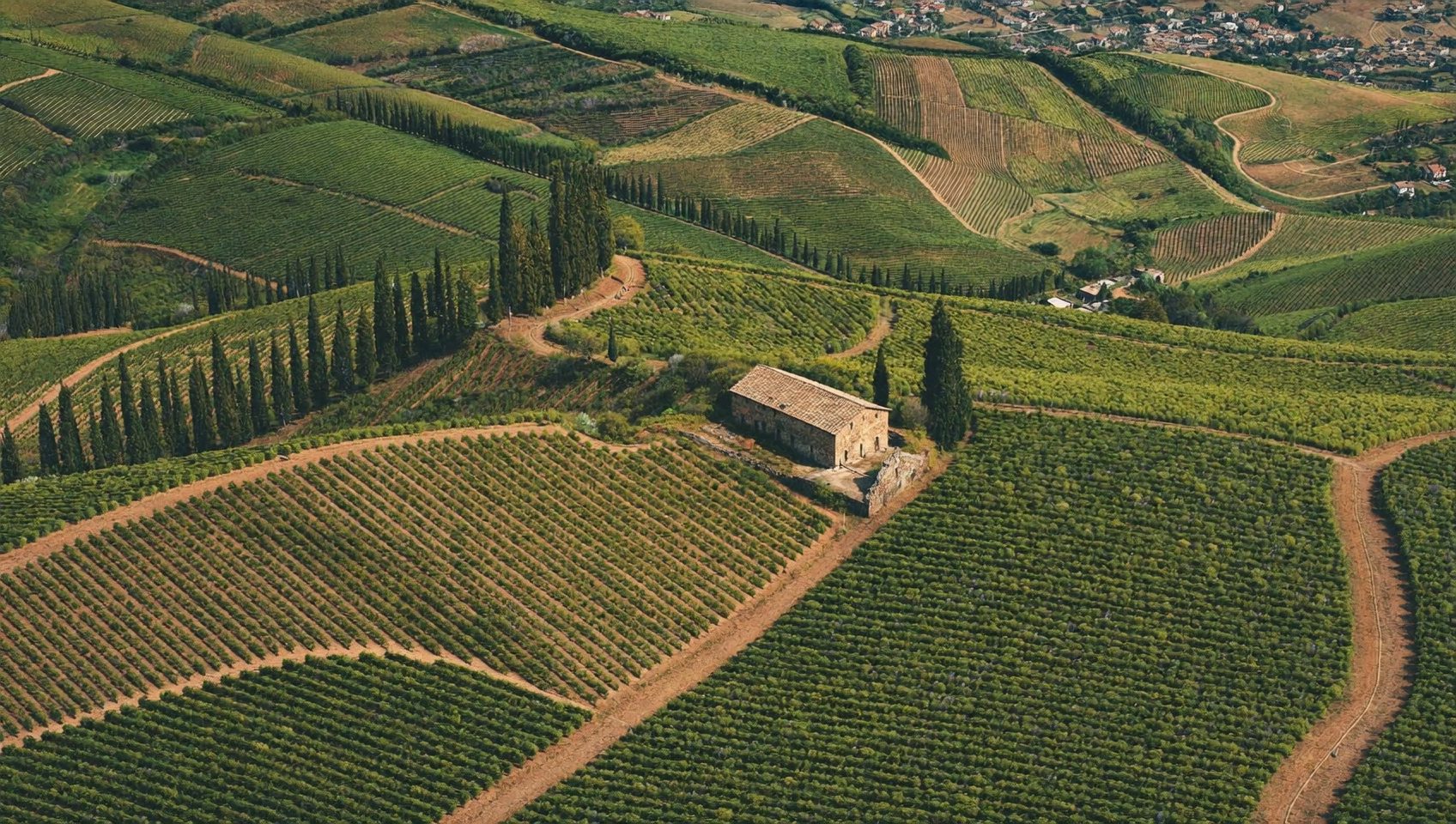
The Gallo Nero mark exclusively identifies wine produced within the Chianti Classico DOCG, located in the historic area between Florence and Siena, and clearly distinguishes it from the larger Chianti DOCG. Since 14 May 1924, the date the Consortium was founded in Radda in Chianti, this symbol certifies territorial origin and compliance with a strict production regulation based on the Sangiovese grape. For your winery, or for those who select labels for international distribution, the Gallo Nero represents an immediate indicator of traceability, alongside the State strip seal and a quality pyramid divided into Annata, Riserva and Gran Selezione. With the introduction of the 11 Unità Geografiche Aggiuntive (UGA, Additional Geographical Units), the mark also tells foreign buyers the specific municipal or hamlet sub-area where the grapes come from.
The Gallo Nero mark: history and who can use it on the label
The administrative history of the Chianti territory goes back to 1716, when the boundaries of the production area between the provinces of Florence and Siena were first delimited. Modern protection, however, dates from 14 May 1924 in Radda in Chianti, when a group of producers established the first wine protection consortium in Italy, choosing the Gallo Nero, a historic military and political symbol of the Lega del Chianti, as its collective emblem.
For decades the Gallo Nero was the mark reserved solely for members of the Consorzio Vino Chianti Classico. With the evolution of national and European legislation on Protected Designations of Origin, and with the recognition of the erga omnes protection role by the Ministry of Agriculture (MASAF), the symbol became the distinctive sign of the entire Chianti Classico DOCG. This means that every bottle of Chianti Classico released for consumption must mandatorily bear the Gallo Nero logo, placed on the neck of the bottle or on the label, regardless of whether the individual winery has voluntarily joined the Consortium.
If you manage exports for your winery or work with foreign distributors, clarifying this regulatory point prevents misunderstandings during negotiations: the Gallo Nero is not a private promotional seal, but a compliance requirement linked to passing the chemical-physical and organoleptic checks set out in the production regulation. To explore the commercial aspects of product selection, you can consult the dedicated page on what a foreign buyer should know about the Gallo Nero Chianti designation.
Chianti and Chianti Classico: two separate designations and two consortia
In international trade in Italian wine, the lexical overlap between Chianti DOCG and Chianti Classico DOCG remains one of the points that requires the greatest communicative precision from export managers. They are not a sub-zone and a general designation, but two autonomous DOCGs, each governed by its own ministerial regulation and represented by a distinct body: the Consorzio Vino Chianti Classico on one side and the Consorzio Vino Chianti on the other.
The Chianti Classico territory covers a total area of 70,000 hectares between Florence and Siena. This area includes in full the four municipalities of Castellina in Chianti, Gaiole in Chianti, Greve in Chianti and Radda in Chianti, as well as portions of the municipalities of Barberino Tavarnelle, Castelnuovo Berardenga, Poggibonsi and San Casciano in Val di Pesa. No grapes harvested outside this perimeter may produce a wine bearing the Gallo Nero.
| Regulatory feature | Chianti Classico DOCG | Chianti DOCG |
|---|---|---|
| Reference consortium | Consorzio Vino Chianti Classico (founded 1924) | Consorzio Vino Chianti |
| Identifying mark | Mandatory Gallo Nero symbol on the bottle | No Gallo Nero (DOCG State strip seal) |
| Geographical area | 70,000 historic hectares between Florence and Siena (8 municipalities) | Wide regional territory in the provinces of Florence, Siena, Arezzo, Pisa, Pistoia, Prato |
| Ampelographic base (Sangiovese) | Minimum 80% for Annata and Riserva; minimum 90% for Gran Selezione | Minimum 60% Sangiovese since the 2026 amendment (previously 70%) |
| Territorial articulation | 11 Unità Geografiche Aggiuntive (UGA) | Geographical sub-zones (e.g. Rufina, Colli Senesi, Colli Fiorentini, Montalbano, Montespertoli, Colli Aretini, Colline Pisane) |
When you present your price list to an importer, making this separation clear from the first meeting helps justify the different ex-works price positioning. Buyers looking for larger volumes and entry-level price bands for organised retail often turn to the production characteristics of the Chianti DOCG designation for foreign buyers, while Chianti Classico holds the premium segments of the on-trade (HoReCa) and specialist wine shops.
The quality pyramid: Annata, Riserva and Gran Selezione
In 2014 the Ministry of Agriculture approved a structural reform of the Chianti Classico regulation, introducing for the first time in Italy a third tier at the top of an existing DOCG: the Gran Selezione. The Gallo Nero quality pyramid is articulated in three distinct levels according to grape origin, ageing times, analytical parameters and grape composition.
- Chianti Classico Annata: forms the base of the pyramid and the most immediate expression of the territory. It requires a minimum of 80% Sangiovese grapes, with a maximum of 20% of other authorised red grape varieties cultivated in the Tuscany region. The production rules set no minimum ageing period: the wine simply may not be released for consumption before 1 October of the year following the harvest. The minimum alcoholic strength by volume is set at 12% vol.
- Chianti Classico Riserva: occupies the intermediate tier and is intended for greater longevity. It keeps the minimum ampelographic base of 80% Sangiovese (up to 100%), but requires a minimum ageing of 24 months calculated from 1 January of the year following the harvest, of which at least 3 months are bottle ageing. The minimum alcoholic strength rises to 12.5% vol. You can find the technical details of this category in the guide on what a foreign buyer should know about Chianti Classico Riserva.
- Chianti Classico Gran Selezione: constitutes the top of the pyramid. It may be produced exclusively from grapes coming from vineyards farmed directly by the bottling winery (single vineyard or selection of vocational plots owned by the estate), excluding the purchase of grapes or bulk wine on the market. The minimum ageing is 30 months, including at least 3 months of bottle ageing, and the minimum alcoholic strength is 13% vol. With the regulatory changes linked to the introduction of the UGA, the Gran Selezione blend has been narrowed: it requires at least 90% Sangiovese and a maximum of 10% reserved solely for authorised autochthonous red grape varieties (such as Canaiolo, Colorino or Malvasia Nera), excluding international varieties such as Merlot or Cabernet Sauvignon.
| Regulatory parameter | Chianti Classico Annata | Chianti Classico Riserva | Chianti Classico Gran Selezione |
|---|---|---|---|
| Minimum Sangiovese share | 80% | 80% | 90% |
| Other varieties permitted | Max 20% authorised reds (autochthonous or international) | Max 20% authorised reds (autochthonous or international) | Max 10% autochthonous red varieties only |
| Grape origin | Registered vineyards (purchase of grapes/wine permitted) | Registered vineyards (purchase of grapes/wine permitted) | Exclusively estate-owned/estate-farmed vineyards |
| Minimum ageing | none set (release from 1 October of the year after the harvest) | 24 months, of which at least 3 months in bottle | 30 months, of which at least 3 months in bottle |
| Minimum alcoholic strength | 12.0% vol | 12.5% vol | 13.0% vol |
The 11 UGA: the Unità Geografiche Aggiuntive explained for the trade
To respond to the demand of international markets, increasingly oriented toward parcel-based zoning and the recognisability of individual villages, in 2021 the Consortium's General Assembly approved the division of the Chianti Classico territory into 11 Unità Geografiche Aggiuntive (UGA, Additional Geographical Units). Officially in force from July 2023 following the completion of the ministerial and European procedure, the UGA identify areas with greater pedoclimatic and historical homogeneity.
The 11 Additional Geographical Units provided for by the regulation are:
- Castellina
- Castelnuovo Berardenga
- Gaiole
- Greve
- Lamole (located within the municipality of Greve in Chianti)
- Montefioralle (located within the municipality of Greve in Chianti)
- Panzano (located within the municipality of Greve in Chianti)
- Radda
- San Casciano
- San Donato in Poggio (including the territories falling within the municipalities of Barberino Tavarnelle and Poggibonsi)
- Vagliagli (located in the western part of the municipality of Castelnuovo Berardenga)
In the first phase of regulatory application, the mention of a UGA on the label is reserved exclusively for the Gran Selezione category. If your winery produces a Gran Selezione whose grapes come entirely from one of these 11 zones, you may add the UGA name next to the designation on the label. For professional buyers and foreign sommeliers, this system offers an immediate reading key to distinguish, for example, the fresher, more vertical profiles of the altitudes of Lamole or Radda from the broader structure of the southern slopes of Castelnuovo Berardenga.
Positioning, pyramid data and price list architecture
The introduction of the Gran Selezione and the UGA has changed the way distributors build their portfolios of Tuscan wines. In 2021 Gran Selezione was made by 154 estates with 182 wines, 6 percent of production (WineNews, 16 June 2021); at Chianti Classico Collection in February 2026, 185 of the 680 labels shown were Gran Selezione (Consorzio Vino Chianti Classico, 17 February 2026). This expansion shows that the top of the pyramid has not remained an image exercise for a few historic estates, but has become a commercial tool adopted by a substantial part of the production base.
For wineries that export, the three-tier pyramid makes it possible to segment distribution channels within the same foreign market without creating price conflicts:
- Annata works as a rotation product for by-the-glass service in mid- and upper-range restaurants, as well as for specialist distribution and qualified retail.
- Riserva sits on the wine lists of gastronomic restaurants and independent wine shops, offering a meeting point between tertiary complexity and recognisability with the end consumer.
- Gran Selezione (with UGA) competes in the fine wine and collecting segment, sitting in buyers' allocations alongside the other major regional red designations.
To frame your offer correctly within the regional competitive context and understand how importers balance purchases across the different DOPs, you can consult our wine export guide for Tuscany and the comparative analysis in the encyclopaedic entry on Brunello di Montalcino and Chianti Classico.
What the Gallo Nero mark tells a foreign importer
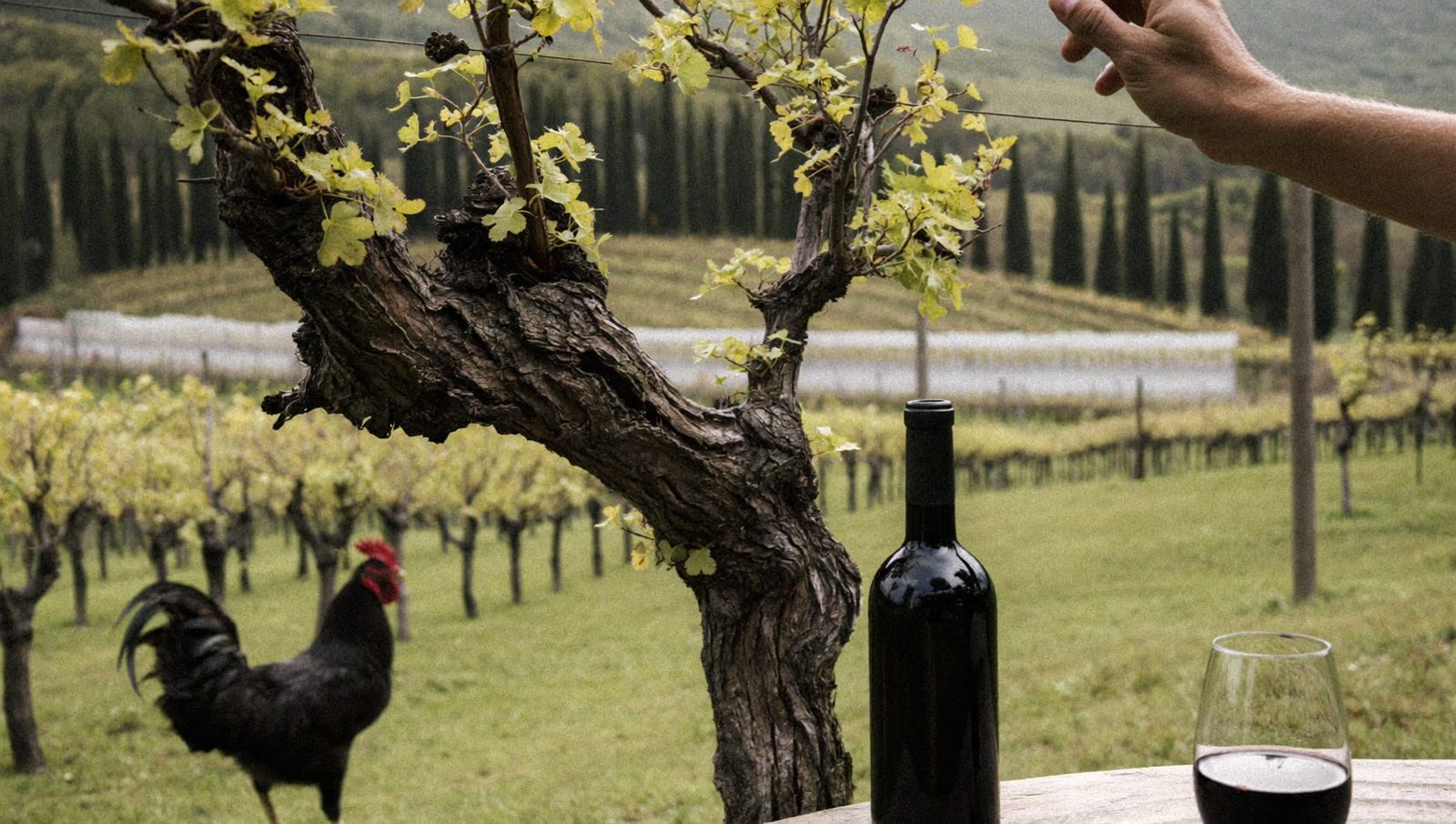
When an importer in Germany, the United States, the United Kingdom or Asian markets evaluates adding a Chianti Classico to its catalogue, the presence of the Gallo Nero provides three operational guarantees that reduce the commercial risk of the purchase:
- Legal protection and anti-counterfeiting: the Consorzio Vino Chianti Classico, in coordination with Federdoc, MASAF and international organisations such as the Wine Origins Alliance and the Comité Champagne, safeguards the intellectual property of the mark on global markets and on e-commerce platforms. The combination of the Gallo Nero and the DOCG State strip seal, carrying alphanumeric codes, allows the buyer to verify the traceability of every individual bottled lot.
- Clarity of origin for the trade: unlike region-based designations, the Gallo Nero confines origin to a historically defined hill territory. With the addition of the UGA on the Gran Selezione and the ban on international varieties in this category, the message for the sales force trainers of the distributor is straightforward: Sangiovese (minimum 90%) and only autochthonous varieties from estate-owned vineyards.
- Quality continuity: the obligation to vinify exclusively grapes grown within the 70,000 hectares of the historic zone, and the constraints on minimum ageing times (12, 24 and 30 months), prevent quality fluctuations linked to sourcing from external high-yield areas, protecting the shelf value of the mark over the medium and long term.
Further reading: Chianti DOCG rules on grapes, yields and ageing.
Frequently asked questions
Who can put the Gallo Nero mark on the bottle?
The Gallo Nero mark is the identifying symbol of the entire Chianti Classico DOCG designation. It must be applied to all bottles of wine that have passed the analytical and organoleptic checks set out in the Chianti Classico regulation, regardless of whether the bottling winery is a member of the protection consortium or not.
Can a Chianti DOCG wine use the Gallo Nero?
No. Chianti DOCG and Chianti Classico DOCG are two distinct designations of origin, with separate regulations, production areas and protection consortia. The Gallo Nero symbol belongs exclusively to the Chianti Classico DOCG designation and may under no circumstances appear on labels of Chianti DOCG or of its sub-zones (such as Chianti Rufina or Chianti Colli Senesi).
What are the requirements for Chianti Classico Gran Selezione?
Gran Selezione must be produced exclusively from grapes coming from vineyards farmed directly by the bottling winery. It requires a minimum of 90% Sangiovese and a maximum of 10% of only the authorised autochthonous red grape varieties under the regulation (international varieties are excluded), a minimum alcoholic strength of 13% vol and ageing of at least 30 months, of which 3 months in bottle.
On which bottles can the 11 UGA of Chianti Classico be indicated?
The 11 Unità Geografiche Aggiuntive (Castellina, Castelnuovo Berardenga, Gaiole, Greve, Lamole, Montefioralle, Panzano, Radda, San Casciano, San Donato in Poggio and Vagliagli) may be shown on the label, in this first phase of application of the regulation that came into force in July 2023, exclusively on wines belonging to the Chianti Classico Gran Selezione category.
Sources
- Consorzio Vino Chianti Classico – Territory, Gallo Nero mark, categories and UGA
- Consorzio Vino Chianti – Institutional information on the Chianti DOCG designation
- MASAF – Ministry of Agriculture, Food Sovereignty and Forests – DOP and IGP regulations
- Federdoc – National Confederation of Voluntary Consortia for the Protection of Italian Wine Designations
- Official Journal of the European Union C/2026/5719, 30 October 2026, amendment to the Chianti PDO (Sangiovese minimum lowered from 70 to 60 percent)
- WineNews, 16 June 2021, the UGAs and more Sangiovese in Gran Selezione
- Consorzio Vino Chianti Classico, Chianti Classico Collection 2026, 17 February 2026
- Grapevine BBCH growth stages: how to identify them
- Friuli passito wine: Ramandolo, Picolit, Verduzzo
- How to make rosé wine: saignée, direct pressing, maceration
- Fragolino: Meaning, Grape and Why It Is Not Wine in the EU
- Vineyard Insecticides: Permitted Products, Targets, Timing
- Fortified Wine Production: Added Alcohol, EU Rules, Excise