Prosecco DOC explained: production rules, zone, Glera, spumante, frizzante and still, Rosé, Treviso and Trieste, sweetness levels and export
Wines Export Editorial · Last updated:
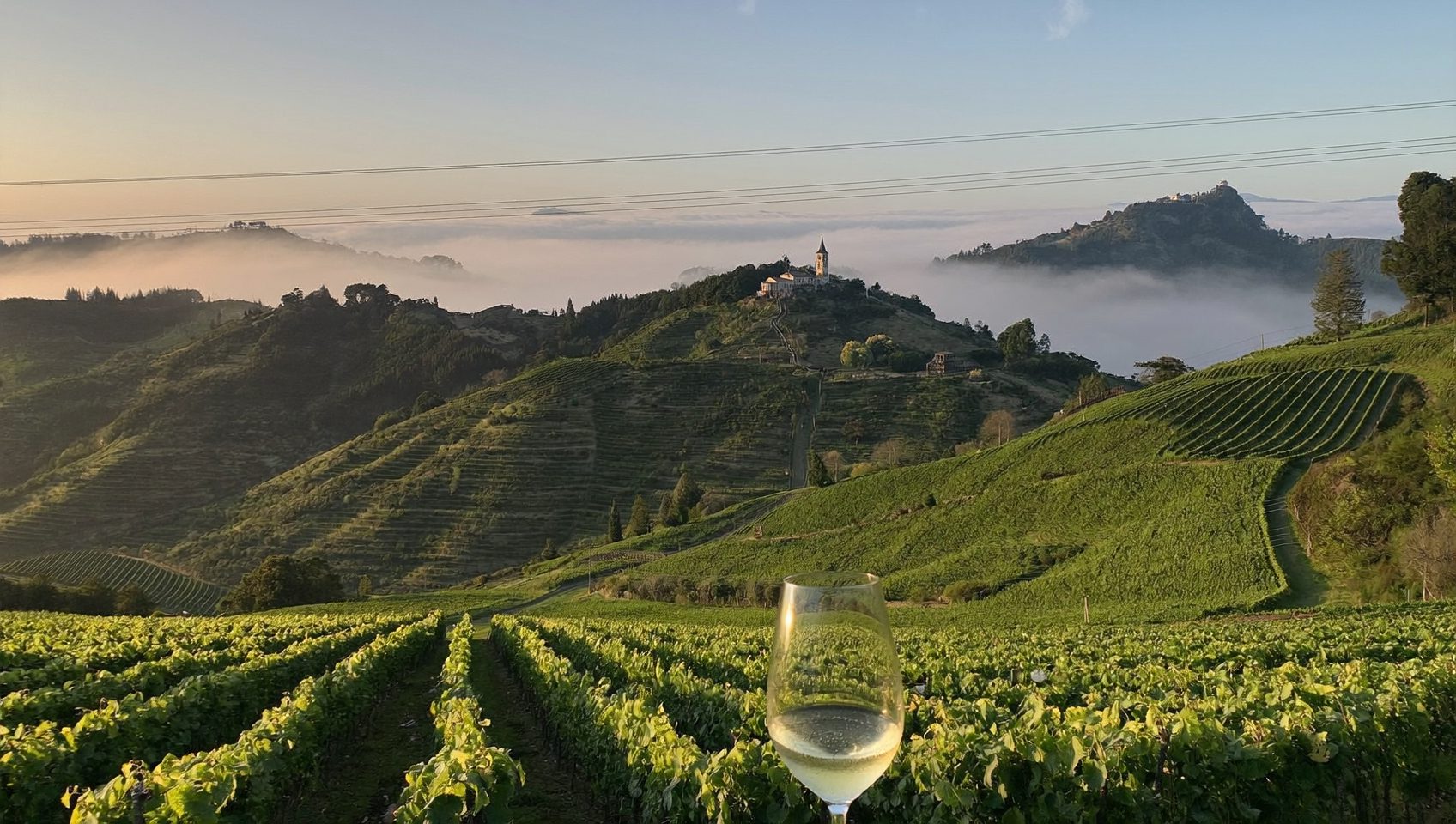
Prosecco DOC is the controlled designation of origin that covers nine provinces across Veneto and Friuli-Venezia Giulia: Belluno, Gorizia, Padova, Pordenone, Treviso, Trieste, Udine, Venezia and Vicenza (Prosecco DOC disciplinare, art. 3). It is made from Glera grapes, with up to 15 percent of eight other varieties allowed, and comes in four types: still Prosecco, Prosecco spumante, Prosecco spumante rosé and Prosecco frizzante (disciplinare, art. 1 and 2). The spumante can only be made by second fermentation in pressure tanks, the Rosé contains 10 to 15 percent Pinot Nero vinified as a red, and its label must always carry "millesimato" with the vintage (disciplinare, art. 2, 5 and 7). The DOC was recognised by ministerial decree on 17 July 2009; the latest amendment dates from 22 September 2025 (Gazzetta Ufficiale n. 227, 30 September 2025). In 2025 the Consorzio certified 667 million bottles, 1.1 percent more than in 2024, and more than 82 percent of them were sold abroad (askanews in Quotidiano di Sicilia, 9 January 2026).
This page is the full guide to the denomination, including what a buyer abroad should check before listing it. The two DOCGs that sit inside the same area are covered in Conegliano Valdobbiadene Prosecco Superiore and Asolo Prosecco Superiore; the comparison of the labels, with Rive and Cartizze, is in Prosecco DOC or DOCG.
What is Prosecco DOC and where does the name come from?
Prosecco DOC is a white wine, almost always sparkling, made from Glera, a grape the disciplinare describes as semi-aromatic, with moderate sugar accumulation and good acidity: the result is a light, fragrant base wine that suits sparkling production (disciplinare, art. 9). The name is a place name. The first documents that mention a Prosecco wine date from the late 1600s and describe a delicate white from the Karst above Trieste, in particular from the territory of Prosecco. In the 1700s and 1800s production moved to the hills between Veneto and Friuli: a text from 1754, "Il Roccolo", speaks of "questo perfetto Prosecco", and the 1869 "Collezione Ampelografia provinciale Trevigiana" lists it among the best aromatic white grapes (disciplinare, art. 9).
The legal history has three steps. In 1969 the DOC "Prosecco di Conegliano Valdobbiadene" was created; under the decree of 31 December 1977 Prosecco entered the list of table wines with a geographical indication; in 2009 the DOC "Prosecco" was recognised across nine provinces, partly to protect the name internationally (disciplinare, art. 9). On the same day, 17 July 2009, the two historic hill areas became DOCGs (Conegliano Valdobbiadene Prosecco DOCG and Asolo Prosecco DOCG disciplinari, header). In the rules the grape is called Glera: Prosecco is the name of the denomination, not of the variety. The dispute with Australia, where Prosecco is still used as a grape name, is explained in Prosecco in Australia: the name, the grape and the EU deal.
Which provinces make Prosecco DOC?
The grapes must come from nine provinces: five in Veneto (Belluno, Padova, Treviso, Venezia, Vicenza) and four in Friuli-Venezia Giulia (Gorizia, Pordenone, Trieste, Udine) (disciplinare, art. 3). Winemaking, second fermentation, stabilisation, sweetening, bottling and packaging must also take place inside this territory. There are three exceptions: estate or cooperative wineries in the municipalities of the province of Verona bordering the zone, only for grapes from vineyards farmed as of 30 November 2011; plants in neighbouring provinces with an individual ministerial authorisation, for firms that can document at least five consecutive vintages of the practice before 2009; and traditional practices predating 1 March 1986, authorised case by case (disciplinare, art. 5, paragraphs 1-3).
The disciplinare describes a mostly flat area with some hills. The Alps to the north block cold northern air, the Adriatic to the south brings the scirocco wind and summer rain; at the end of summer the dry bora wind brings wide swings between day and night temperatures, which preserve acidity and aroma. Soils are mainly alluvial, with a clay-silt texture and stony material of Dolomitic and river origin that drains well (disciplinare, art. 9).
Two geographical terms are allowed on the label, and only these two:
| Term | Condition | Source |
|---|---|---|
| "Treviso" or "provincia di Treviso" | all grapes from vineyards in the province of Treviso; processing and packaging in the same province | art. 7, para. 2 |
| "Trieste", "provincia di Trieste", "Pokrajina Trst" or "Trst" | all grapes from vineyards in the province of Trieste; processing and packaging in Friuli-Venezia Giulia | art. 7, para. 3 |
| Any other municipality, village, area or locality name | not allowed | art. 7, para. 4 |
The Trieste term recalls where the name was born; the Treviso term the province from which cultivation spread onto the plains (disciplinare, art. 9). What the Treviso term means for sellers is covered in Prosecco DOC Treviso: what to know for export.
Which grapes are used: Glera and permitted varieties
| Type | Glera | Other grapes | Source |
|---|---|---|---|
| Prosecco, spumante and frizzante | at least 85 percent | up to 15 percent, alone or together: Verdiso, Bianchetta trevigiana, Perera, Glera lunga, Chardonnay, Pinot Bianco, Pinot Grigio, Pinot Nero vinified as a white | art. 2, para. 1 |
| Prosecco spumante rosé | 85 to 90 percent | Pinot Nero vinified as a red, 10 to 15 percent | art. 2, para. 1 |
The percentage is calculated at estate level. For spumante and frizzante the rules also allow wines from Chardonnay, Pinot Bianco, Pinot Grigio and Pinot Nero vinified as a white to be added up to 15 percent, provided the Glera vineyard is planted as a single variety or the minor varieties together stay within that 15 percent; for the Rosé, red-vinified Pinot Nero wine is added at 10 to 15 percent (disciplinare, art. 5, paragraphs 6 and 7). The Pinot and Chardonnay grapes must come from vineyards inside the zone, entered in a dedicated section of the vineyard register (disciplinare, art. 2, paragraphs 2 and 3).
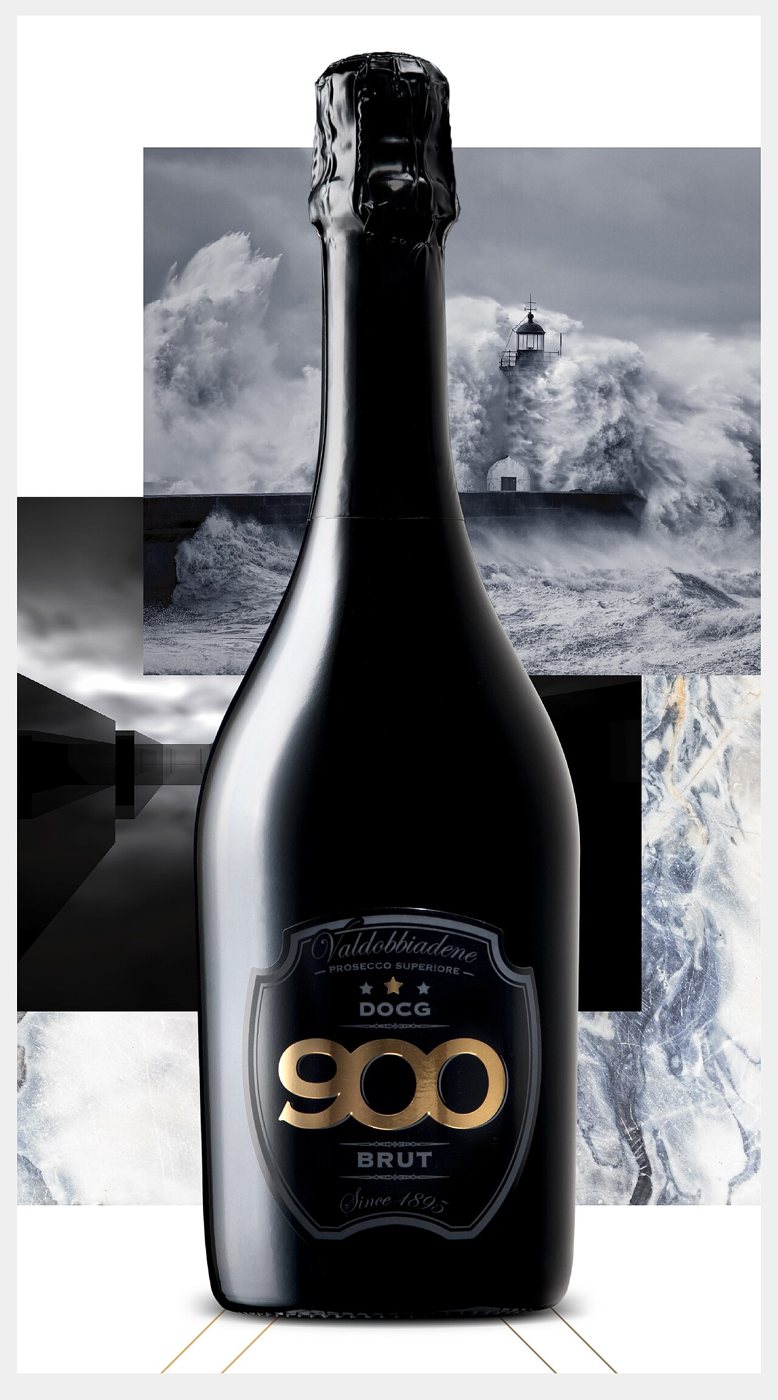
Which styles exist: still, frizzante, spumante and Rosé
| Type | How it is made | Permitted taste | Minimum total alcohol | Source |
|---|---|---|---|---|
| Prosecco (still) | still wine | dry to medium-sweet (amabile) | 10.50 percent | art. 6 |
| Prosecco frizzante | second fermentation in bottle or in pressure tank | dry to medium-sweet (amabile) | 10.50 percent | art. 5 and 6 |
| Prosecco spumante | second fermentation in pressure tank only | brut nature to demi-sec | 11.00 percent | art. 5 and 6 |
| Prosecco spumante rosé | pressure tank only, at least 60 days | brut nature to extra dry | 11.00 percent | art. 5 and 6 |
For every type the minimum total acidity is 4.5 g/l and the minimum sugar-free extract 14.0 g/l (disciplinare, art. 6). A frizzante refermented in the bottle may be slightly hazy: in that case the label must say "rifermentazione in bottiglia", minimum acidity drops to 4.0 g/l and the rules allow notes of bread crust and yeast (disciplinare, art. 6). The still wine is a small production, described as fruitier, more savoury and fuller than the sparkling versions (disciplinare, art. 9).
The sparkling method is the Martinotti method, in which the base wine referments in large pressure tanks, or autoclaves (disciplinare, art. 9). The rules make it compulsory: Prosecco spumante is obtained "exclusively by natural fermentation in autoclave" (art. 5, para. 4). A sparkling wine refermented in bottle by the traditional method cannot be sold as Prosecco DOC spumante.
Sweetness levels: what Brut, Extra Dry and Dry mean
Prosecco spumante may be sold in six styles: brut nature, extra brut, brut, extra dry, dry and demi-sec; the Rosé only in the first four, up to extra dry (disciplinare, art. 5, para. 4). These are the terms shared by all European sparkling wines, and the grams of sugar behind each one are set not in the disciplinare but in EU labelling law. What confuses foreign buyers is the order: Extra Dry is sweeter than Brut, and Dry is sweeter than Extra Dry. The ranges are explained in Brut, Extra Brut, Brut Nature and Brut versus Extra Dry.
Prosecco Rosé: Pinot Nero and a compulsory vintage
The Rosé is the newest type. The Consorzio took the proposal to the Ministry's National Wine Committee, which approved it unanimously; the change entered the disciplinare with the decree of 31 July 2020, published in Gazzetta Ufficiale n. 200 of 11 August 2020 and then in the Official Journal of the European Union C 362 of 28 October 2020 (Consorzio Prosecco DOC; disciplinare, header).
The rules for the Rosé:
| Rule | What the disciplinare requires | Source |
|---|---|---|
| Grapes | Glera 85 to 90 percent, Pinot Nero vinified as a red 10 to 15 percent | art. 2 |
| Maximum yield | Glera 18 t/ha, Pinot Nero 13.5 t/ha | art. 4, para. 6 |
| Method | pressure tank only, at least 60 days | art. 5, para. 4 |
| Dosage | brut nature, extra brut, brut, extra dry | art. 5, para. 4 |
| Colour | pale pink of varying intensity, brilliant, persistent mousse | art. 6 |
| Label | "millesimato" followed by the harvest year is compulsory | art. 7, para. 8 |
On the nose the disciplinare describes red as well as white flowers, strawberry and raspberry (disciplinare, art. 9). In 2025 certified Rosé came to 60,360,239 bottles, against 606,891,509 bottles of Prosecco DOC (askanews in Quotidiano di Sicilia, 9 January 2026).
Millesimato, vintage and labelling
The vintage is optional for Prosecco, but if it appears it must also be recorded in the registers and accompanying documents (disciplinare, art. 7, para. 6). A spumante labelled "millesimato" must contain at least 85 percent wine of the stated year, and the year must be shown (art. 7, para. 7); for the Rosé, millesimato and the year are always compulsory (art. 7, para. 8).
Other labelling and packaging rules:
- adjectives such as "fine", "scelto" (choice) or "selezionato" (selected) are banned; non-laudatory company names and brands are allowed (art. 7, para. 1);
- optional terms may not be printed larger than the denomination (art. 7, para. 5);
- spumante is sold only in glass bottles of up to 9 litres; the part of the stopper in contact with the wine must be at least 51 percent cork; screw caps or plastic pull-off closures are allowed up to 0.200 litres (art. 8, para. 2);
- frizzante is sold in bottles of up to 5 litres, with a flush cork, a screw cap or the traditional string tie; crown caps are allowed for the bottle-refermented version and for frizzante without the Treviso or Trieste terms (art. 8, para. 3);
- spumante and frizzante bottles must be of a single colour and shade (art. 8, para. 4);
- still Prosecco is sold in glass bottles with a flush cork, with screw caps allowed up to 0.375 litres; direct sale to consumers in glass demijohns of up to 60 litres is permitted (art. 8, para. 1).
Spumante, frizzante and Rosé may not be released by the producer before 1 January of the year after the harvest; the Regions may bring the date forward by up to three months, at the Consorzio's request, in particular vintages or market conditions (disciplinare, art. 5, para. 11).
Yields, alcohol and vineyard rules
| Parameter | Prosecco DOC | Source |
|---|---|---|
| Maximum grape yield | 18 t/ha for all types; 13.5 t/ha for the Rosé's Pinot Nero | art. 4, para. 6 |
| Permitted excess | up to 20 percent, to be brought back within limits by sorting; it cannot become IGT or a varietal sparkling wine labelled Glera | art. 4, para. 6 |
| Minimum natural alcohol of the grapes | 9.5 percent for still; 9.0 for spumante, frizzante and Rosé | art. 4, para. 6 |
| Grape-to-wine ratio | 75 percent; between 75 and 80 the excess loses the DOC, above 80 the whole batch loses it | art. 5, para. 5 |
| Training systems in new vineyards | single or double vertical trellis only; pergolas and radial systems excluded | art. 4, para. 3 |
| Minimum density | 2,300 vines per hectare | art. 4, para. 3 |
| Bud load | maximum 80,000 per hectare | art. 4, para. 3 |
| Harvest reserve | in good years the Regions may raise the yield by up to 20 percent, with the wine held in bulk until they decide | art. 4, para. 7; art. 5, paras. 8 and 9 |
The Regions of Veneto and Friuli-Venezia Giulia may also lower the yield and restrict the registration of new vineyard area, on the Consorzio's proposal (disciplinare, art. 4, paragraphs 4 and 6). The DOC and DOCG alcohol minimums side by side are in Prosecco alcohol content: DOC and DOCG minimums.
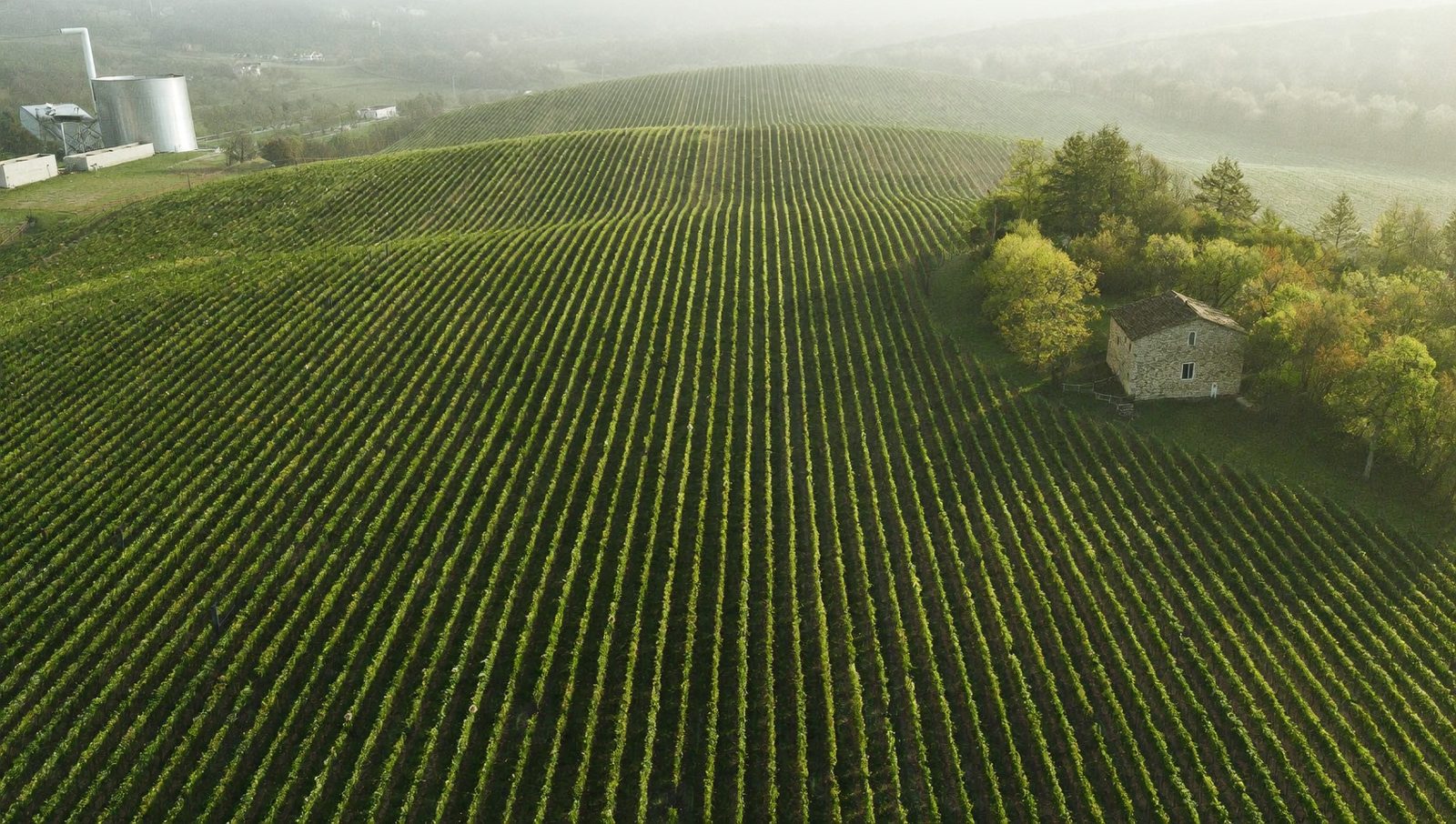
Prosecco DOC, Conegliano Valdobbiadene DOCG and Asolo DOCG: the differences
Both DOCGs lie inside the DOC zone and both are in the province of Treviso (DOCG disciplinari, art. 3).
| Prosecco DOC | Conegliano Valdobbiadene Prosecco DOCG | Asolo Prosecco DOCG | |
|---|---|---|---|
| Zone | nine provinces of Veneto and Friuli-Venezia Giulia | hill land of 15 municipalities between Conegliano and Valdobbiadene | 3 whole municipalities and part of 16 more between Asolo and the Montello |
| Grapes | Glera; up to 15 percent of eight other varieties, Pinots and Chardonnay included | Glera; up to 15 percent Verdiso, Bianchetta trevigiana, Perera, Glera lunga | Glera; up to 15 percent Verdiso, Bianchetta trevigiana, Perera, Glera lunga |
| Maximum grape yield | 18 t/ha | 13.5 t/ha; 13 for Rive, 12 for Cartizze | 13.5 t/ha |
| Grape-to-wine ratio | 75 percent | 70 percent | 70 percent |
| Spumante | brut nature to demi-sec | spumante Superiore extra brut to demi-sec; "sui lieviti" brut nature | spumante Superiore extra brut to demi-sec |
| Rosé | yes | no | no |
| Own label terms | Treviso, Trieste, millesimato | Rive with the village name, Superiore di Cartizze, sui lieviti | sui lieviti |
| Where it is made sparkling | in the nine provinces, with the exceptions in the rules | province of Treviso | bottling inside the zone, with exemptions for firms already bottling outside |
Sources: Prosecco DOC disciplinare, art. 2-7; Conegliano Valdobbiadene Prosecco DOCG disciplinare, art. 1-5; Asolo Prosecco DOCG disciplinare, art. 1-5.
In practice the DOC is the plains-and-volume denomination, while the DOCGs are the historic hills, with lower yields and a spumante always labelled Superiore. In the Conegliano Valdobbiadene DOCG the grapes for Superiore di Cartizze, Rive and sui lieviti must be picked by hand (Conegliano Valdobbiadene disciplinare, art. 4, para. 6). The hills of Conegliano and Valdobbiadene are covered in Conegliano Valdobbiadene Prosecco Superiore DOCG; Asolo in Asolo Prosecco Superiore DOCG.
What it tastes like
The legal description of the spumante: straw yellow of varying intensity, brilliant, persistent mousse; fine nose, typical of the grapes; fresh, characteristic taste (disciplinare, art. 6). The section on the link with the territory adds floral notes of white flowers and fruit notes of apple, pear, tropical fruit and citrus, a balance between sugar and acidity that, with saltiness, gives freshness and softness, and a fine perlage (disciplinare, art. 9). According to the rules, spumante and frizzante are "typically dry"; the still wine has more fruit and body.
Selling Prosecco DOC abroad: the Consorzio's figures
According to figures released by the Consorzio in January 2026, 667 million bottles were certified in 2025, 1.1 percent more than in 2024, with a value of 3.6 billion euros; more than 82 percent went abroad, to 164 countries (askanews in Quotidiano di Sicilia, 9 January 2026).
For the first nine months of 2025 the Consorzio reported:
| Market | Position | January-September 2025 |
|---|---|---|
| United States | first | 23.8 percent of total exports, +8 percent |
| United Kingdom | second | +1.1 percent |
| France | third, ahead of Germany | +21.1 percent |
| Germany | fourth | +3.1 percent |
Source: Consorzio Prosecco DOC, as reported by askanews in Quotidiano di Sicilia, 9 January 2026, and by Vinetur, 12 January 2026, which also reports growth in Greece (+22.4 percent) and Mexico (+14.5 percent).
What an importer asks before listing a Prosecco DOC:
- the exact type: spumante, frizzante or Rosé, because method, dosage and permitted closures differ;
- the dosage: Brut and Extra Dry sell to different markets, and the buyer needs to know that Extra Dry is the sweeter of the two;
- the vintage: always on the label for the Rosé; for spumante only when millesimato, with at least 85 percent of the stated year;
- geographical terms: Treviso or Trieste are the only ones allowed, and other place names on the label are not permitted;
- the name in the destination country: in some countries outside the EU Prosecco is not protected as a name of origin, and this is worth checking before registering a brand or a label.
How the price builds up between the winery and a foreign shelf is explained in Prosecco export price: where the margin is.
Frequently asked questions
Which regions make Prosecco DOC?
Veneto, in the provinces of Belluno, Padova, Treviso, Venezia and Vicenza, and Friuli-Venezia Giulia, in the provinces of Gorizia, Pordenone, Trieste and Udine (Prosecco DOC disciplinare, art. 3).
What grapes is Prosecco made from?
At least 85 percent Glera; the rest may be Verdiso, Bianchetta trevigiana, Perera, Glera lunga, Chardonnay, Pinot Bianco, Pinot Grigio and Pinot Nero vinified as a white. The Rosé has 10 to 15 percent Pinot Nero vinified as a red (disciplinare, art. 2).
What is the difference between Prosecco DOC and Prosecco DOCG?
The DOC covers nine provinces; the Conegliano Valdobbiadene and Asolo DOCGs are two hill areas in the province of Treviso, with a maximum yield of 13.5 t/ha against 18, a grape-to-wine ratio of 70 percent against 75, a spumante labelled Superiore and no Rosé (DOC and DOCG disciplinari, art. 1, 4 and 5).
Is Prosecco made by the Charmat method?
Yes: Prosecco DOC spumante is made only by second fermentation in pressure tanks, the Martinotti or Charmat method. The frizzante may also referment in the bottle, in which case the label says "rifermentazione in bottiglia" (disciplinare, art. 5 and 6).
Does Prosecco Rosé always show a vintage?
Yes. The term "millesimato" and the harvest year are compulsory on the label; the wine referments in pressure tanks for at least 60 days and is sold from brut nature to extra dry (disciplinare, art. 5 and 7).
What does Treviso mean on a Prosecco DOC label?
That all the grapes come from vineyards in the province of Treviso and that second fermentation and packaging took place in the same province. The Trieste term works the same way for the province of Trieste, with processing in Friuli-Venezia Giulia (disciplinare, art. 7).
How much alcohol does Prosecco have?
The minimum is 11 percent for spumante and Rosé, 10.5 percent for frizzante and still Prosecco (disciplinare, art. 6).
Sources
- Prosecco DOC disciplinare, consolidated text after the decree of 22 September 2025 (Italian Ministry of Agriculture, section on PDO and PGI wines); copy hosted by AIS
- Conegliano Valdobbiadene Prosecco DOCG disciplinare (copy hosted by AIS)
- Asolo Prosecco DOCG disciplinare, consolidated text after the decree of 9 September 2024 (Italian Ministry of Agriculture, section on PDO and PGI wines)
- Gazzetta Ufficiale n. 200, 11 August 2020, decree of 31 July 2020 amending the Prosecco DOC disciplinare
- Consorzio Prosecco DOC, approval of Prosecco DOC Rosé production
- askanews in Quotidiano di Sicilia, 9 January 2026, Consorzio Prosecco DOC: 667 million bottles sold in 2025
- Vinetur, 12 January 2026, Prosecco DOC exports top 82% as production hits 667 million bottles in 2025
- eAmbrosia, the EU register of geographical indications
Who produces Prosecco?
According to the Wines Export Observatory (November 2026), among the retailer and online-shop lists we read worldwide, the countries where Prosecco weighs most are the United States (18%), Germany (9%) and the United Kingdom (8%); the foreign buyers carrying it are mostly in Germany, the United States and the United Kingdom. It is the Italian denomination most carried by wine buyers abroad.
The towns where the wineries declaring Prosecco are concentrated, with a few names for each.
Valdobbiadene (Veneto)
Azienda Agricola La Casa Vecchia · Bortolomiol Spa · Bastia Valdobbiadene · Colderove · Azienda Agricola Roccat
Conegliano (Veneto)
BiancaVigna · Borgo Antico · Azienda Agricola Giavi · Zardetto · L'Antica Quercia
Farra di Soligo (Veneto)
Perlage · Home - Lilly's farm · Valternette Prosecco · Vigna del Gal · Le Rive de Nadal
San Pietro di Feletto (Veneto)
Mani Sagge · Azienda Vitivinicola "Il Colle" · Le Manzane · Azienda Agricola Ceschin Giulio · De Riz
Vidor (Veneto)
Sorelle Bronca · Azienda Agricola Micel · Adami - Sorapiana Wine Tasting & Shop · La Tordera Prosecco · Jaya Prosecco
Vo' (Veneto)
Cantina Colli Euganei sca · Vinicola Pegoraro · Az. Agricola La Rocca e Frantoio Martini · Azienda vitivinicola Parco del Venda · La Costa
Ormelle (Veneto)
Vini Bellese · Azienda Agricola Marchetto Matteo · Società Agricola Baccichetto · Espedito Vini · Cantine San Bartolomeo - F.lli Paladin
Susegana (Veneto)
Azienda Agricola Conte Collalto · UveVettoretti winery store · Borgoluce · Società Agricola Valdellovo · Terre Boscaratto
Who buys Prosecco abroad?
Importers and distributors that say they carry Prosecco, in the countries where we count the most, in order. Each company's profile, with the contact, is in the Wines Export directory.
Germany
Weinhaus Otto Paus (Wesel) · Wein & Genuss GmbH (Langenau) · Mövenpick Wein (Dortmund) · Castiglione GmbH. (Köln)
The United States
Cuvee Imports, LLC (Buffalo) · WinesU (Eddystone) · ALLIED BEVERAGE GROUP, L.L.C. (Carlstadt) · Pazzione Wine Imports Llc (Bradenton)
The United Kingdom
International Spirits & Wines (Village/Town of Mount Kisco) · Avant Garde Drinks Ltd (Sheffield) · Hops & Barley (Merseyside) · ONE STOP DRINKS LIMITED (Nottingham)
Australia
Alepat Taylor (VIC) · Mona Cellars (Morwell) · Gourmet Basket (Belrose) · Just Wines (Sydney)
The Netherlands
De Moriaan (Middelburg) · Wijnhandel Appeldoorn (Velp) · Van Ravenzwaaij Wijnimport (Nizza) · enoteca.nl (Tiel)
The Czech Republic
Stramis trans s.r.o. (Havířov) · La-Vin s.r.o. (Praha 22 – Uhříněves) · Soare sekt a.s. (Brno) · APERITIVO by justWINE (Brno)
Belgium
Maison Nicolas Belgique (Bruxelles) · Young Charly (Aartselaar) · Cordier BE (Hasselt) · INTRADE BV (Beernem)
Switzerland
Casa del Vino (Dietikon) · Pavin (Winterthur) · Archetti Vini d'Italia AG (Wetzikon ZH) · Jeggli Weine (Buchs)
Where is Prosecco sold around the world?
Retailers and online shops with at least one Prosecco on their list, in the countries where we find the most, in order. A snapshot of the price lists read from the database on 23 November 2026: it changes every week.
The United States
Bottle of Italy · buywinesonline.com · Wine On Sale · Globuzz · Liquor Cork · WineOnlineDelivery
Germany
Bondston · VINELLO · wein.cc · Bottle Hero · Alkoholidee · Vinoscout
The United Kingdom
Tannico · champagneandgifts.co.uk · Fine Wine Company · Easy Wine Shop · LOVE BEER BARS LTD · GREAT WINES DIRECT LTD
Australia
BKG Liquor · Liquor Wine Cave · Bottle Stop · worldwine.com.au · yourwines.com.au · Grand Wine Cellar
The Netherlands
Tannico · L'ARCO Shop · PerfecteWijn · Bottle Hero · E-Winery · wijny.nl
The Czech Republic
Zlaté bobule · AlkoBoss.cz · Vinný Bar Ken&Oliver · vinotekafany.cz · Svět nápojů · AlkoholHK.cz
Austria
Tannico · Vinoboutique · Vinogina · Austrian Supermarket · Weinlinz · Wine Anthology
Switzerland
Tannico · Weinvogel SA · Weingenuss.ch · Weinonline.ch · Proseccheria · Drinks.ch
Names read from the Wines Export database (company registers, websites, customs data, retailers' price lists). No contacts on this page.