Rosso Conero DOC and Cònero DOCG explained: Montepulciano, seven municipalities, Riserva and rosato, requirements, labelling and export
Wines Export Editorial · Last updated:
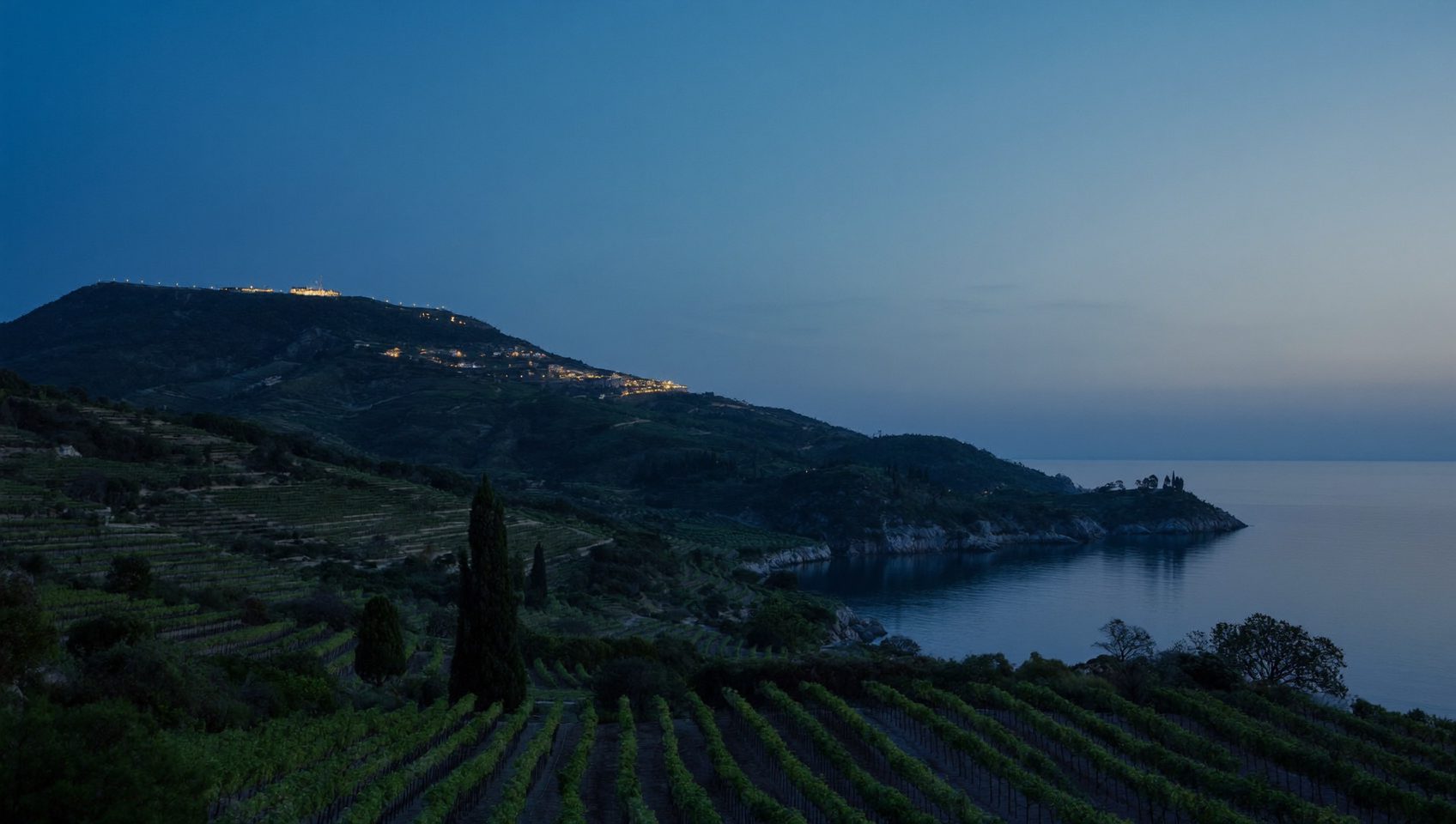
Rosso Conero DOC and Cònero DOCG are the two denominations for the Montepulciano-based reds grown around Monte Conero, the headland that rises from the Adriatic just south of Ancona. The grapes come from the same seven municipalities: all of Ancona, Offagna, Camerano, Sirolo and Numana, and part of Castelfidardo and Osimo (Rosso Conero DOC disciplinare, art. 3; Cònero DOCG disciplinare, art. 3). Rosso Conero requires at least 85 percent Montepulciano and sets no minimum ageing; Cònero DOCG, created in 2004 from the former Riserva version, now has two types: the red Riserva, aged at least two years, and since the 2025 vintage a rosato (Cònero DOCG disciplinare, art. 1, 2 and 5). Rosso Conero has been a DOC since the presidential decree of 21 July 1967, and the text in force is the one set by the ministerial decree of 8 April 2022 (Gazzetta Ufficiale n. 91, 19 April 2022); the Cònero rules were amended by the decree of 24 June 2025 and republished by the decree of 13 October 2026 (Gazzetta Ufficiale n. 247, 23 October 2026).
This page is the full guide to both denominations, including what a buyer abroad should check before listing them. Montepulciano from the rest of the Marche is covered in Rosso Piceno DOC and Offida DOCG; Montepulciano from Abruzzo in Montepulciano d'Abruzzo DOC. The province's wineries are in exporting wine from Ancona, the regional picture in Marche wine: export guide.
Rosso Conero and Cònero: what they are and how they differ
They are two separate denominations sharing one zone: a DOC for the everyday red and a DOCG for the Riserva and the rosato. Rosso Conero DOC has a single type, the red, and its rules forbid any qualification on the label that they do not provide for, including adjectives such as fine, scelto and selezionato (Rosso Conero DOC disciplinare, art. 1 and 7). There is therefore no Riserva within Rosso Conero DOC.
The Riserva belongs to the DOCG, which the rules simply call «Cònero». The Cònero text records that the denomination was recognised as a DOC by the decree of 21 July 1967 and as a DOCG by the ministerial decree of 1 September 2004 (Gazzetta Ufficiale n. 212, 9 September 2004). Until 2025 the DOCG had only one wine, and the word «Riserva» had to appear on the label below the words «denominazione di origine controllata e garantita» (Cònero DOCG disciplinare as amended on 7 March 2014, art. 1 and 7). The decree of 24 June 2025 created two types: «Conero» Riserva and «Conero» rosa or rosato (Cònero DOCG disciplinare, art. 1, text republished in Gazzetta Ufficiale n. 247, 23 October 2026).
The same vineyard can serve both denominations: vineyards registered for Cònero may also be registered for Rosso Conero (Cònero DOCG disciplinare, art. 2). The choice is made in the cellar, according to yields and the wine the producer wants to make. The DOCG amendments were requested by the Istituto Marchigiano di Tutela Vini (IMT), the consortium that groups sixteen Marche denominations including Conero Riserva (decree of 13 October 2026; askanews, 15 April 2026). Annual compliance checks on Rosso Conero are carried out by the control body Valoritalia (Rosso Conero DOC disciplinare, art. 10); for Cònero the rules refer to the list of control bodies published by the Ministry (art. 10). How to read a disciplinare is explained in Italian wine production regulations: how to read them.
Grapes: Montepulciano at 85 percent or more
The shares are calculated on the estate's vineyards, not on each bottle, and here the two denominations differ.
| Denomination | Montepulciano | The rest | Source |
|---|---|---|---|
| Rosso Conero DOC | at least 85 percent | up to 15 percent of other non-aromatic red grape varieties authorised for cultivation in the Marche | Rosso Conero DOC disciplinare, art. 2 |
| Cònero DOCG, Riserva and rosato | at least 85 percent | Sangiovese only, up to 15 percent | Cònero DOCG disciplinare, art. 2 |
Sangiovese is the only permitted partner in the DOCG, whereas in Rosso Conero DOC it competes with any other non-aromatic red grape authorised in the region; in practice the most common partner is still Sangiovese (Quotidiano.net, 25 May 2026). The DOCG rosato uses the same grape base as the Riserva (art. 2; askanews, 15 April 2026).
The rules describe Montepulciano as a black-berried variety once confused with Sangiovese grosso, well suited to ageing, fond of warm, dry sites and sunny exposures, late to bud and so able to escape spring frosts, and not very prone to grey rot (Rosso Conero DOC disciplinare, art. 9). The grape's name has nothing to do with the Tuscan town: the difference is explained in Montepulciano: Vino Nobile from Tuscany or the Abruzzo grape; Sangiovese is covered in Sangiovese: the grape and export.
The zone: seven municipalities around Monte Conero
| Municipality | How much is in the zone | Source |
|---|---|---|
| Ancona, Offagna, Camerano, Sirolo, Numana | the whole municipal territory | art. 3 of both disciplinari |
| Castelfidardo, Osimo | the part between the municipalities above and a line following via San Vittore, the SS16 Adriatica road to the Loreto boundary, the former Flaminia road, the Val Musone provincial road and the former via della Venturina to Offagna | art. 3 of both disciplinari |
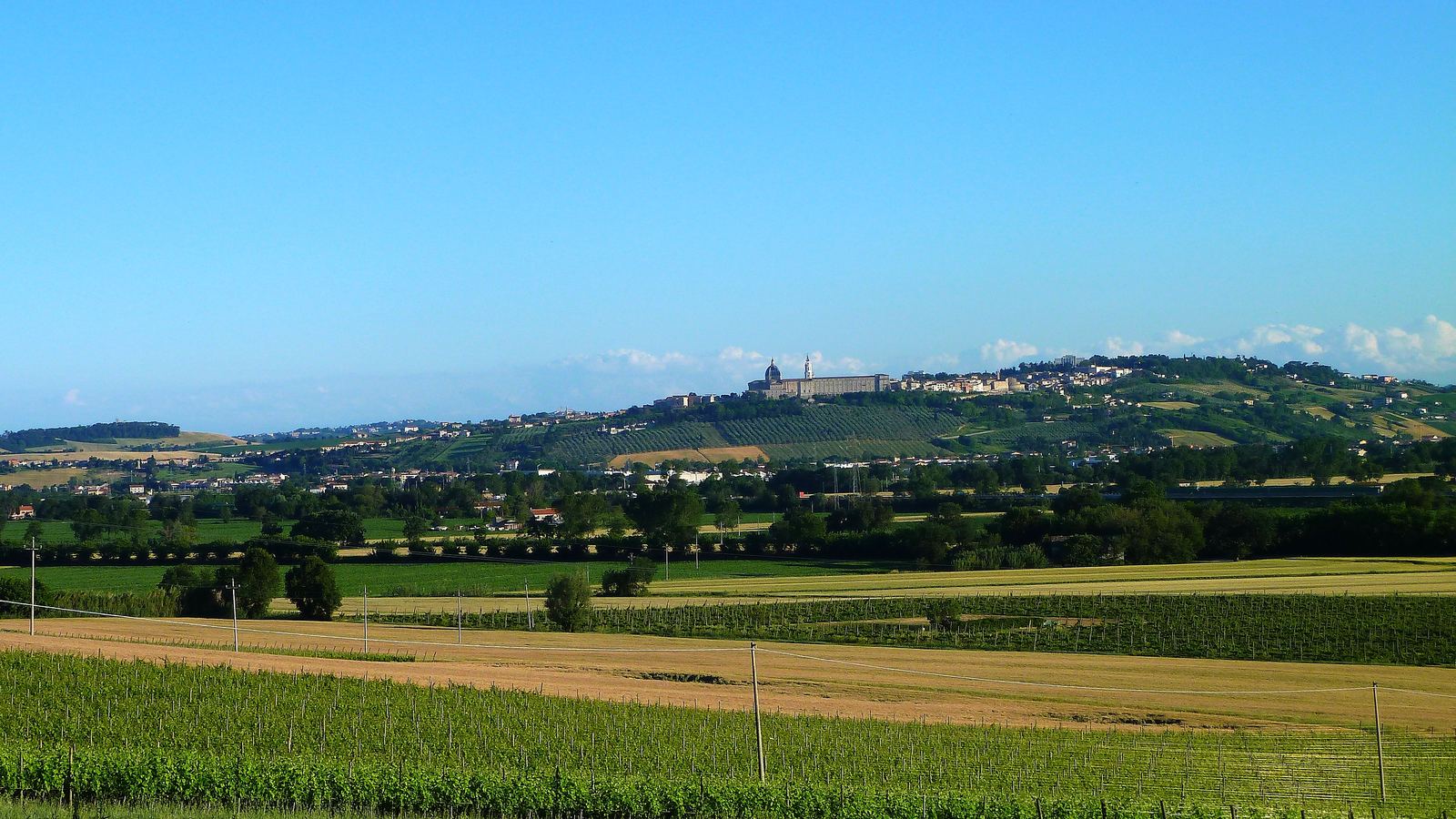
All seven municipalities are in the province of Ancona. The rules describe a strip of land jutting into the sea, with Monte Conero, 572 metres high, shielding the vineyards from cold northern winds. The hills average about 200 metres, but 70 percent of the vineyards lie between 20 and 140 metres and only 1 percent reaches 550; on about 80 percent of the area slopes run between 2 and 25 percent, and 80 percent of the land faces south-west. Soils derive from limestone and Cretaceous rocks that resurface along the coast; the climate is Mediterranean, with 775 mm of rain a year, concentrated in September and October (Rosso Conero DOC disciplinare, art. 9). The whole area lies within the Conero Park (Cònero DOCG disciplinare, art. 9).
The history told in the rules starts with the Greek colonists who founded Ancona, moves through Pliny, who mentioned a «Pretoriano» wine from the Ancona area, and Apicius, who recalled a red, full-bodied «anconetanum», and arrives at the 1960s, when vineyard renewal led to the denomination (art. 9). The Rosso Conero zone is carved out of the Rosso Piceno zone that surrounds it (Rosso Piceno o Piceno DOC disciplinare, art. 3).
Requirements: yields, alcohol, ageing and release
| Requirement | Rosso Conero DOC | Cònero DOCG Riserva | Cònero DOCG rosato | Source |
|---|---|---|---|---|
| Maximum grape yield | 13 t/ha | 9 t/ha | 12 t/ha | art. 4 |
| Grape-to-wine yield | 70 percent | 70 percent | 70 percent | art. 4 DOC, art. 5 DOCG |
| Minimum natural alcohol of the grapes | 11.50 percent | 12.00 percent | 10.50 percent | art. 5 DOC, art. 4 DOCG |
| Minimum total alcohol | 11.50 percent | 12.50 percent | 11.00 percent | art. 6 |
| Minimum total acidity | 4.5 g/l | 4.5 g/l | 5.0 g/l | art. 6 |
| Minimum non-reducing extract | 22.0 g/l | 24.0 g/l | 16.0 g/l | art. 6 |
| Vine density | not set | at least 3,330 vines per hectare for plantings since 2004 | as for the Riserva | art. 4 DOCG |
| Ageing or release | no minimum period | at least two years from 1 November of the harvest year | not before 1 January of the year after the harvest | art. 6 DOC, art. 5 DOCG |
| Vintage on the label | mandatory | mandatory | mandatory | art. 7 |
At a 70 percent grape-to-wine yield, 13 tonnes give at most 91 hectolitres of wine per hectare, 9 tonnes 63 hectolitres and 12 tonnes 84 hectolitres (calculated from the limits in art. 4 and 5). In generous years the surplus grapes must be brought back within the limit; if production exceeds the maximum yield by more than 20 percent the whole crop loses the denomination, and if the wine yield exceeds 75 percent the whole batch loses it (art. 4 and 5 of both disciplinari). How these calculations work is explained in wine yields under DOC and DOCG rules.
In practice: a 2025 Rosso Conero may be sold as soon as it is ready, a 2024 Cònero Riserva not before 1 November 2026 and a 2025 Cònero rosato not before 1 January 2026. Neither set of rules requires oak: both allow wine kept in wooden vessels to show a light hint of wood (art. 6). What «Riserva» means in general is explained in traditional wine terms: Riserva, Superiore, Classico, Vigna.
Where the wine is made
Winemaking must take place inside the zone, or for Cònero in the municipalities that fall wholly or partly within it, and also in the localities of Barcaglione and Guastuglia in the municipality of Falconara Marittima (Rosso Conero DOC disciplinare, art. 5; Cònero DOCG disciplinare, art. 5). The Ministry may authorise, or has already authorised, estate cellars just outside the zone but still in the province of Ancona, only for grapes from the estate's own registered vineyards (same articles). Sweetening is allowed under EU and national rules (art. 5).
Labels, bottles and closures
This is where the two denominations really part ways.
| Rule | Rosso Conero DOC | Cònero DOCG | Source |
|---|---|---|---|
| Containers | glass, and also a multilayer plastic bag inside a cardboard or other rigid outer case | glass bottles only, up to 3 litres; 6, 9 and 12 litre formats only for promotional, non-commercial use | art. 8 |
| Closures | any closure allowed by EU and national rules | any allowed closure except crown caps and pull-off caps | art. 8 |
| Additional qualifications | forbidden, including fine, scelto, selezionato | forbidden unless provided for in the rules | art. 7 |
| «Vigna» (single vineyard) | not provided for in the rules | allowed under current law | art. 7 |
| Brands and company names | allowed if not laudatory or misleading | allowed, including consortia, if not laudatory or misleading | art. 7 |
The DOCG text in force until 2025 was much stricter: dark-glass Bordeaux bottles of up to 5 litres closed with a flush cork (Cònero DOCG disciplinare, 2014 version, art. 8). A technical sheet that still quotes those rules reflects the old text.
The 2025 amendment had also introduced the option of naming the wider geographical area «Marche» on the label. After a request from the European Commission and the IMT's withdrawal of that change, the decree of 13 October 2026 deleted those two paragraphs of art. 7 from 24 October 2026, the day after publication (Gazzetta Ufficiale n. 247, 23 October 2026). According to I Grandi Vini the decree contains no transitional provisions for labels already printed (I Grandi Vini, 24 October 2026).
Cònero rosato and the sparkling wine in the pipeline
The rosato is the DOCG's newest type. The rules require a pink colour of varying intensity, floral, fruity and delicate aromas and a dry, fresh, harmonious palate, and note that some Conero producers have made rosato from Montepulciano since the 1970s (Cònero DOCG disciplinare, art. 6 and 9). The type made its debut at Vinitaly in April 2026. According to the IMT the first vintage, 2025, should yield about 100,000 bottles, with a target of 500,000 over the following four years (askanews, 15 April 2026). The rules common to all rosé wines are in rosé wine: the category.
A second amendment, a «Union amendment», was published as a proposal in Gazzetta Ufficiale n. 264 of 13 November 2025: it adds a «Cònero» rosa or rosato quality sparkling wine made by the classic method, refermented in bottle with at least 18 months on the lees, 12 tonnes per hectare, at least 11.50 percent alcohol and a mushroom-shaped cork (proposed Union amendment to the Cònero disciplinare, Ministry of Agriculture). The text republished in October 2026 does not yet include the sparkling wine: until the amendment is approved it is not a DOCG type. The market for bottle-fermented sparkling wine is covered in sparkling wine importers: Prosecco and metodo classico.
What Rosso Conero and Cònero Riserva taste like
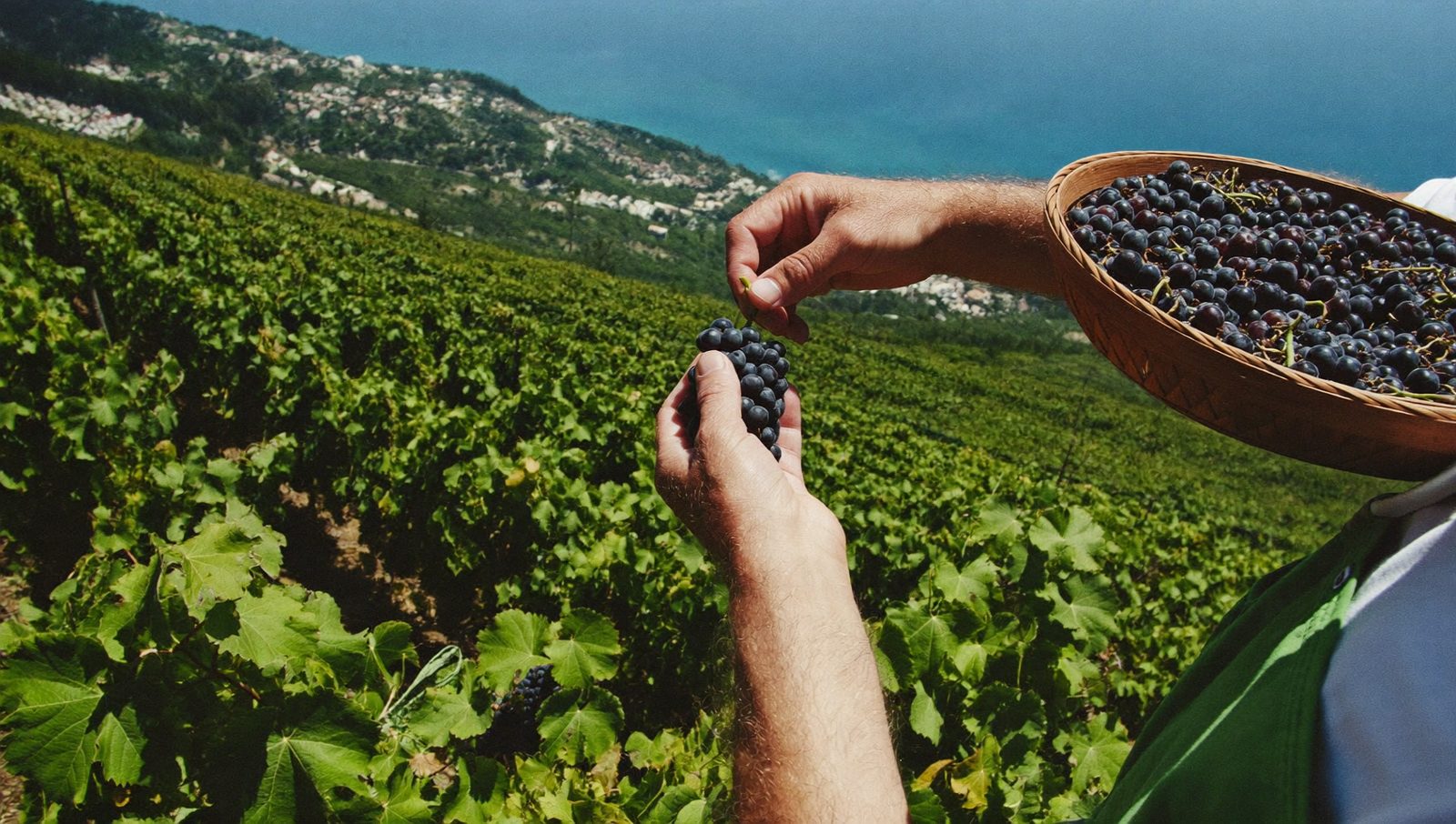
For Rosso Conero the rules require a ruby red colour, a pleasant, vinous nose and a sapid, harmonious, dry, full-bodied palate (art. 6). The section on the link with the territory adds that when young the wine is deep ruby with violet tints and moves towards garnet and orange as it matures, which can take more than ten years; the tannin, sharp in the first year, softens, and the fruit moves from initial vinosity to almost jam-like notes (art. 9).
Cònero Riserva has the same basic descriptors, ruby, vinous, harmonious, dry and full-bodied, with more alcohol and extract (Cònero DOCG disciplinare, art. 6). The rules describe it as dry, sapid, properly tannic, with wood maturation adding softness, and link it to the game the area used to supply (art. 9).
Rosso Conero, Rosso Piceno and Montepulciano d'Abruzzo compared
| Rosso Conero DOC | Cònero DOCG Riserva | Rosso Piceno DOC | Montepulciano d'Abruzzo DOC | |
|---|---|---|---|---|
| Grapes | Montepulciano at least 85 percent | Montepulciano at least 85 percent, Sangiovese up to 15 | Montepulciano 35 to 85 percent, Sangiovese 15 to 50 | Montepulciano at least 85 percent |
| Zone | seven Conero municipalities, province of Ancona | as Rosso Conero | hills of four Marche provinces, excluding the Conero zone | hills of the four Abruzzo provinces |
| Maximum grape yield | 13 t/ha | 9 t/ha | 13 t/ha; 12 for Superiore | 15 t/ha |
| Minimum alcohol at release | 11.50 percent | 12.50 percent | 11.5 percent; 12 for Superiore | 12.00 percent |
| Ageing or release | no minimum period | two years from 1 November of the harvest | Superiore from 1 November of the year after the harvest | not before 1 February of the year after the harvest |
Sources: Rosso Conero DOC, Cònero DOCG, Rosso Piceno o Piceno DOC and Montepulciano d'Abruzzo DOC disciplinari, art. 2-6.
Rosso Conero is close to a pure Montepulciano, like Montepulciano d'Abruzzo, but from a zone of seven municipalities rather than four provinces. Rosso Piceno is a true blend in which Sangiovese must be present. The full guides are Rosso Piceno DOC and Montepulciano d'Abruzzo DOC.
Buying Rosso Conero and Cònero abroad: data and what to check
These are small denominations. Italian Wine Central gives Rosso Conero 53 registered hectares in 2021 and an average output of 9,900 hectolitres over five years, and Cònero DOCG 173 hectares in 2021 and an average of 2,470 hectolitres; since the same vineyard can be registered for both, the areas should not be added together. For the rosato the IMT speaks of more than 163 hectares (askanews, 15 April 2026). The latest public sales figure is the IMT's at Vinitaly 2025: in 2024 Conero lost 14 percent in volume, partly because of the collapse of the Moncaro cooperative, while its presence abroad grew 1.5 percent and accounts for more than 30 percent of sales (Gambero Rosso International, 10 April 2025). There are no public figures by destination country.
What to check on a technical sheet or label:
- DOC or DOCG. «Rosso Conero» is the DOC; «Cònero» followed by Riserva or rosato is the DOCG. A DOC «Rosso Conero Riserva» does not exist: the DOC rules forbid qualifications they do not provide for (art. 1 and 7).
- Riserva release. At least two years from 1 November of the harvest year: a 2024 Riserva cannot be on sale before 1 November 2026 (Cònero DOCG disciplinare, art. 5).
- Blend. In the DOCG the non-Montepulciano 15 percent can only be Sangiovese; in the DOC it can be another non-aromatic red grape authorised in the Marche (art. 2).
- Format. Bag-in-box and other plastic bags are allowed only for Rosso Conero DOC; Cònero goes only in glass up to 3 litres, and large formats cannot be sold (art. 8).
- Rosato. It exists as a DOCG from the 2025 vintage and is released no earlier than 1 January of the following year; a sparkling Cònero is not yet provided for in the rules in force.
- «Marche» on the label. On Cònero DOCG the wider geographical name is no longer provided for from 24 October 2026 (Gazzetta Ufficiale n. 247, 23 October 2026).
To find buyers by market, see wine importers by country.
Frequently asked questions
What is the difference between Rosso Conero DOC and Cònero DOCG?
Same zone and the same minimum of 85 percent Montepulciano. Rosso Conero is a DOC with no compulsory ageing and yields of up to 13 tonnes per hectare; Cònero is a DOCG with two types, the Riserva, with 9 tonnes per hectare, at least 12.50 percent alcohol and two years of ageing, and the rosato (Rosso Conero DOC and Cònero DOCG disciplinari, art. 1-6).
Is Cònero DOCG always a Riserva?
The red is: the DOCG's only red type is the Riserva. Since the decree of 24 June 2025 there is also a Cònero rosato, which is not a Riserva and is released from 1 January of the year after the harvest (Cònero DOCG disciplinare, art. 1 and 5).
How long must Cònero Riserva age?
At least two years, counted from 1 November of the harvest year. The rules set no minimum period in wood (Cònero DOCG disciplinare, art. 5 and 6).
What grapes go into Rosso Conero?
At least 85 percent Montepulciano; the rest, up to 15 percent, may come from other non-aromatic red varieties authorised in the Marche. In Cònero DOCG the partner grape can only be Sangiovese (Rosso Conero DOC and Cònero DOCG disciplinari, art. 2).
Where is Rosso Conero produced?
In the whole of Ancona, Offagna, Camerano, Sirolo and Numana and in part of Castelfidardo and Osimo, all in the province of Ancona. Cònero DOCG has the same zone (art. 3 of both disciplinari).
Can Rosso Conero be sold in bag-in-box?
Yes: the DOC rules allow a multilayer plastic bag inside a cardboard or other rigid case. Cònero DOCG cannot; it must be sold only in glass bottles of up to 3 litres (art. 8 of both disciplinari).
Sources
- Rosso Conero DOC disciplinare, Ministry of Agriculture text last amended by the DM of 8 April 2022, copy hosted by AIS
- Gazzetta Ufficiale n. 91 of 19 April 2022, DM 8 April 2022 amending the Rosso Cònero disciplinare, with the consolidated text
- Gazzetta Ufficiale n. 247 of 23 October 2026, decree of 13 October 2026 partially revoking the decree of 24 June 2025 and republishing the Conero DOCG disciplinare
- Cònero DOCG disciplinare as amended on 7 March 2014, copy hosted by AIS
- Gazzetta Ufficiale n. 264 of 13 November 2025, proposed Union amendment to the Cònero disciplinare and text of the proposal on the Ministry of Agriculture website
- Ministry of Agriculture, applications to amend PDO and PGI wine rules, 2025
- Rosso Piceno o Piceno DOC disciplinare, copy hosted by AIS
- askanews, 15 April 2026, the Conero DOCG rosato type debuts at Vinitaly with IMT
- I Grandi Vini, 24 October 2026, Cònero DOCG: the «Marche» mention revoked
- Gambero Rosso International, 10 April 2025, the Moncaro collapse impacts Marche wines
- Quotidiano.net, 25 May 2026, Tra mare e vigne
- Italian Wine Central, Rosso Cònero DOC and Cònero DOCG
Who produces Rosso Conero?
The towns where the wineries declaring Rosso Conero are concentrated, with a few names for each.
Ancona (Marche)
Piantate Lunghe · Ballarini Vini · Cantina Castellani · Fattoria Lucesole · Arco dei Angeli
Camerano (Marche)
Cantina Strologo Silvano · Angeli di Varano · Azienda Agricola Oriano Mercante · Fattoria Gens Camuria
Castelfidardo (Marche)
Fioretti Brera · San Rocchetto
Offagna (Marche)
Azienda Agricola Malacari · Vigna Della Cava
Osimo (Marche)
Umani Ronchi Viticoltori in Marche e Abruzzo · Umani Ronchi Wine Shop
San Paolo di Jesi (Marche)
Cantina Brunori · Pontemagno
Staffolo (Marche)
Tombolini Vini · Azienda Agricola Zaccagnini
Numana (Marche)
Azienda Agricola Conte Leopardi · Le Terrazze
Where is Rosso Conero sold around the world?
Retailers and online shops with at least one Rosso Conero on their list, in the countries where we find the most, in order. A snapshot of the price lists read from the database on 23 November 2026: it changes every week.
Italy
vinodalproduttore.it · ENOTECA MAGGIOLINI · Tannico · Enoteca Rocchi Enoteche e Distribuzione · saywine.it · aidavini.com
The United States
Bottle of Italy · Wine and Rye · Modern Liquors · 67 Wine & Spirits · Stella’s Juice Box · Barriques
Germany
Uveggiando · Weinhandel-Italien · Centro Italia Online-Shop · Francos Hofladen · Baumann - Welt der Weine · vineola.de
The United Kingdom
Tannico · Blanco & Gomez Wine Merchants · clubvini.co.uk · Fine Wine Company · HARD TO FIND WINES LIMITED · Buon Vino Ltd
Australia
The Wine Providore · ACURIO BARRIGA NELSON NEPTALI · DiVino · Eccellenza™ · vinoitaliano.com.au · Wine More Cellars
The Netherlands
L'ARCO Shop · Tannico · Wijnkoperij Europa · Bottle Hero · VinuMundi · winelist.nl
Switzerland
Weinonline.ch · Tannico · Weinvogel SA · vinovin.ch · wineshopit · Cantina Divina Online Winery
Austria
Weinlinz · Tannico · Ventis · Bottles With History
Names read from the Wines Export database (company registers, websites, customs data, retailers' price lists). No contacts on this page.