Fragolino and the Strawberry Grape: What the Law Says, What Is Sold and What a Foreign Buyer Should Check
Wines Export Editorial · Last updated:
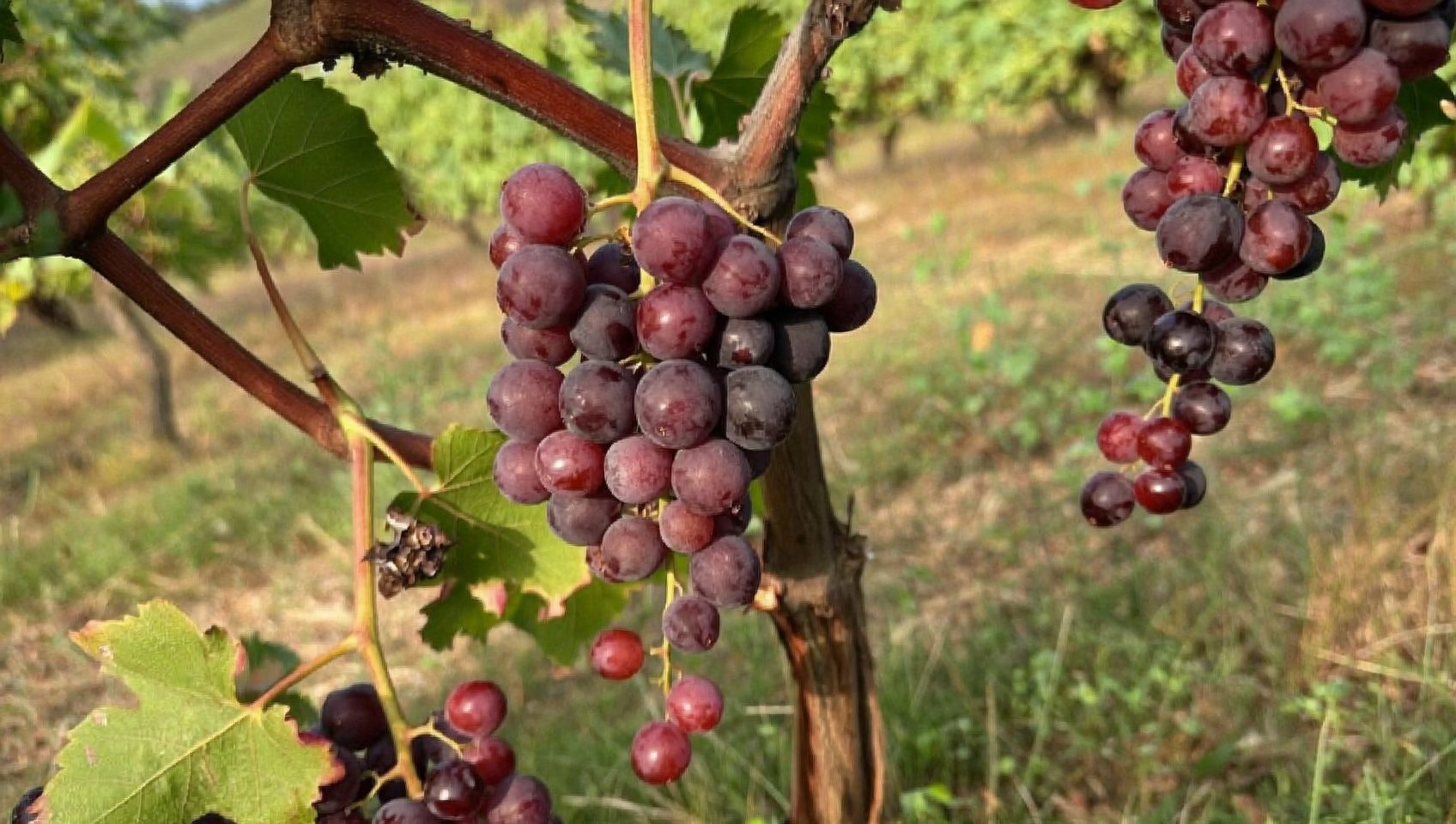
Fragolino is not a grape variety and, when it is made from "uva fragola" (strawberry grape), it cannot be wine in the European Union: the grape behind the name is Isabella, an American cross between Vitis labrusca and Vitis vinifera that Regulation (EU) No 1308/2013 excludes by name from wine grape varieties (Art. 81). In Italy, Isabella is listed in the National Register of Vine Varieties only as a table grape and a "special purpose" variety, and vinifying it is penalised by the Italian Wine Act (Law 238/2016, Art. 70).
What can be sold legally under a fancy name such as Fragolino is an aromatised wine product; at the strength of a table wine the category is the aromatised wine-based drink: at least half wine from permitted varieties, added strawberry flavouring, actual alcoholic strength between 4.5 and 14.5% vol (Regulation (EU) No 251/2014, Art. 3). This page explains where the strawberry grape comes from, what EU and Italian rules say, what is actually on the market and what a foreign buyer should check. The difference from disease-resistant varieties is covered in our guide to PIWI grape varieties.
Is Fragolino a grape variety?
No. The Italian National Register of Vine Varieties has no variety called Fragolino, either among wine grapes or in any other section (official Register export downloaded on 13 November 2026; the site states the data are updated to the Ministerial Decree of 2 July 2024). Fragolino is a trade name that recalls the aroma of strawberries; "uva fragola" is the common Italian name for Isabella and, more broadly, for American grapes with a similar scent.
Isabella is a black-berried variety that originated in the United States. The Vitis International Variety Catalogue (VIVC, entry no. 5560) classifies it as an interspecific cross: the breeder described it as labrusca × vinifera, and genetic marker analysis confirmed Vitis labrusca × Meslier Petit. Its taste is described as "foxy", the musky, fruity note typical of labrusca that Italian consumers associate with strawberries.
The National Register lists no synonyms for Isabella, and none of the 522 Italian PDO and PGI production rules consulted for this guide names Isabella or uva fragola among the permitted varieties. That is why the table "appellation → minimum share of the variety" found in our other grape guides stays empty here: there is no DOCG, DOC or IGT that Fragolino can enter.
| What | Data | Source |
|---|---|---|
| "Fragolino" variety | not registered | National Register of Vine Varieties |
| Isabella N. | registered as a table variety (code 576) and special-purpose variety (code 701), Ministerial Decree of 5 May 1997, Official Gazette no. 163 of 15 July 1997 | National Register of Vine Varieties |
| Isabella among wine varieties | absent | National Register of Vine Varieties |
| Species | interspecific cross, Vitis labrusca × Meslier Petit (genetic markers) | VIVC, entry 5560 |
| Country of origin | United States | VIVC, entry 5560 |
| Italian appellations that allow it | none | 522 production rules published by the Ministry of Agriculture (Masaf) |
The fact sheets circulating online that describe Fragolino as a Friulian variety related to Ribolla, with leaf shapes, bunches and must acidity, have no basis in the National Register and should not be used in a technical sheet.
What EU law says
Regulation (EU) No 1308/2013, which organises the wine market in the Union, states that grapevine products made in the Union (wine, sparkling, semi-sparkling and liqueur wine and the other categories of Annex VII, Part II) may only be obtained from varieties that can be classified as wine grape varieties (Art. 81(1)). Member States may classify a variety only if it belongs to Vitis vinifera or comes from a cross between Vitis vinifera and other species of the genus Vitis, and if it is not one of these six: Noah, Othello, Isabelle, Jacquez, Clinton and Herbemont (Art. 81(2)). Isabella is therefore excluded by name, even though it is a cross with vinifera.
| Rule | What it says | Source |
|---|---|---|
| Grapes for grapevine products made in the Union | only varieties classifiable as wine grape varieties | Reg. (EU) 1308/2013, Art. 81(1) |
| Classifiable varieties | Vitis vinifera or crosses between Vitis vinifera and other species of the genus Vitis | Art. 81(2)(a) |
| Varieties excluded by name | Noah, Othello, Isabelle, Jacquez, Clinton, Herbemont | Art. 81(2)(b) |
| Varieties removed from the classification | grubbed up within 15 years of removal | Art. 81(2) |
| Vineyards planted in breach | grubbed up, unless production is only for the grower's family consumption | Art. 81(5) |
| Vineyards of unclassified varieties for purposes other than wine | no obligation to grub up | Art. 81(6), added by Reg. (EU) 2021/2117 |
| Definition of wine | product of the alcoholic fermentation of fresh grapes or grape must, with at least 8.5 or 9% vol depending on the wine-growing zone | Annex VII, Part II, point 1 |
The so-called wine package, Regulation (EU) 2026/471 of 24 February 2026, changed several provisions of Regulation 1308/2013 and of the aromatised wine regulation, but it did not touch Article 81: the exclusion of Isabella remains in force.
What Italian law says
The Italian Wine Act, Law no. 238 of 12 December 2016, applies the EU rule and adds penalties. For grapevine products, only varieties listed in the National Register and classified for the relevant region as suitable for cultivation or under observation may be planted, replanted or grafted (Art. 5(1)). Unclassified varieties must be grubbed up, except areas of up to 1,000 square metres whose production is entirely for family consumption (Art. 5(2)).
| Rule | What it says | Source |
|---|---|---|
| Usable varieties | listed in the National Register and classified for the region as suitable or under observation | Law 238/2016, Art. 5(1) |
| Family consumption | areas up to 1,000 m² with production only for the family are exempt from grubbing up | Art. 5(2) |
| Designations of origin | not allowed for wines made even partly from varieties not classified as suitable or from interspecific hybrids between Vitis vinifera and American or Asian species | Art. 33(6) |
| Vinifying grapes not classified as wine grapes | administrative fine | Art. 70(3) |
| Table grapes in a winery | administrative fine and temporary closure of the plant for two months to one year | Art. 70(2) |
| Flavourings and drinks other than wine in a winery | prohibited in wine-making establishments, save for permitted cases | Art. 15(1) |
| Aromatised wine products in a winery | may be held and packaged after registration; drinks made even partly from table grapes remain excluded | Art. 16(1) and (2) |
In practice an Italian winery cannot buy Isabella grapes, vinify them and sell the result as wine: not in Italy, not in another EU country, not outside the EU. The rule concerns the place of production, not the destination market. A winery that wants to package an aromatised Fragolino in its own establishment must go through the registration provided for in Article 16, because flavourings and drinks other than wine cannot be kept in a wine-making facility without this derogation (Art. 15).
What is sold under the name Fragolino
Regulation (EU) No 251/2014 governs aromatised wine products, that is, drinks obtained from wine-sector products to which flavourings are added. There are three categories: aromatised wine, aromatised wine-based drink and aromatised wine-product cocktail (Art. 3). A strawberry-flavoured product based on wine normally falls into the second.
| Category | Minimum share of wine-sector products | Actual alcoholic strength | Source |
|---|---|---|---|
| Wine | 100% grapes or must from wine grape varieties | at least 8.5 or 9% vol, depending on the wine-growing zone | Reg. (EU) 1308/2013, Annex VII, Part II |
| Aromatised wine | 75% | from 14.5 to less than 22% vol, total at least 17.5% vol | Reg. (EU) 251/2014, Art. 3(2) |
| Aromatised wine-based drink | 50%, no added alcohol except the cases in Annex II | from 4.5 to less than 14.5% vol | Art. 3(3) |
| Aromatised wine-product cocktail | 50%, no added alcohol | above 1.2 and below 10% vol | Art. 3(4) |
Three points matter for Fragolino. First, the base must be a grapevine product within the meaning of Regulation 1308/2013, so wine from permitted varieties: the strawberry aroma comes from flavouring, not from Isabella grapes. Second, the label must carry the sales denomination of the category, for example "aromatised wine-based drink", which may be supplemented by a customary name (Art. 5(1)); a drink that does not meet the requirements may not be linked to a sales denomination with words such as "type", "style" or "flavour" (Art. 5(3)). Third, the sales denomination may not be supplemented by a wine PDO or PGI (Art. 5(5)): no "Fragolino DOC" or "Fragolino IGT".
Since 2026, Regulation 2026/471 also allows aromatised products below the minimum alcohol thresholds, provided they are made from wholly or partly dealcoholised wine products, with the corresponding term in the sales denomination (new Art. 3(5) and Art. 5(1a) of Regulation 251/2014). The ingredient and e-label rules that apply to wine are explained in our guide to EU wine labels.
What it means for a foreign buyer
For an importer, the word Fragolino on a price list or a fact sheet does not tell you what is in the bottle. What counts is the sales denomination on the label and the category declared in the documents. An Italian supplier offering "Fragolino wine" from strawberry grapes is describing a product that cannot be produced as wine in Italy; a supplier offering an aromatised wine-based drink must be able to prove it with a consistent label, fact sheet and documents.
| What to ask the supplier | Why |
|---|---|
| The exact sales denomination on the label | it separates wine, aromatised wine, aromatised wine-based drink and aromatised wine-product cocktail (Reg. 251/2014, Annex II) |
| The percentage of wine in the finished product | at least 50% for an aromatised wine-based drink, 75% for an aromatised wine (Art. 3) |
| The varieties of the base wine | it must be wine from classified varieties; Isabella is excluded (Reg. 1308/2013, Art. 81) |
| The actual alcoholic strength | it places the product in the right category and determines the tax treatment in the country of arrival |
| The source of the strawberry aroma | added flavourings, juice or other ingredients must be declared under labelling rules |
| No DOC, DOCG or IGT on the label | a wine PDO or PGI may not supplement the sales denomination (Art. 5(5)) |
For imports into the Union of products under the wine customs headings, Regulation 1308/2013 requires compliance with EU definitions and oenological practices, a certificate from an authority of the country of origin and an analysis report (Art. 90). Article 81, by contrast, binds production inside the Union: whether an Isabella product made outside the Union can enter as wine must be checked case by case with the customs authority of the country of arrival, and cannot be inferred from the label alone.
Outside the Union, categories and names change from country to country. The question to ask the importer is the same: in which category was the product declared to customs in the country of origin, and does that category exist under the same name in the destination country.
Strawberry aromas in real wines
A strawberry aroma is not exclusive to the strawberry grape. Italian production rules cite it for Vitis vinifera wines: the Bardolino rules describe, for Chiaretto, small red berries typical of the area's traditional varieties, "strawberry and raspberry in particular", and the Prosecco rules recognise hints of strawberry and raspberry in the sparkling rosé. A buyer looking for a rosé or red with strawberry notes can therefore find products that are wine in every respect: our guides to Bardolino and Chiaretto and to Prosecco DOC explain grapes and rules.
Disease-resistant varieties, known as PIWI, are a different case: they are crosses with Vitis vinifera that EU law allows to be classified (Art. 81(2)(a)), whereas Isabella remains excluded by name. Our guide to PIWI grape varieties explains where they are allowed.
Frequently asked questions
Is Fragolino a grape variety?
No. There is no variety called Fragolino in the Italian National Register of Vine Varieties. The name comes from the strawberry grape, that is Isabella, an American cross between Vitis labrusca and Vitis vinifera registered in Italy only as a table grape and a special-purpose variety.
Why can't Fragolino from strawberry grapes be sold as wine?
Because Regulation (EU) No 1308/2013 excludes Isabella from the varieties from which grapevine products may be obtained in the Union (Art. 81). In Italy, vinifying grapes not classified as wine grapes is penalised under Law 238/2016 (Art. 70(3)).
Can an Italian winery make Fragolino as wine only for export outside the EU?
No. The rule covers products made in the Union, whatever the destination market. The only exception is production solely for the grower's family consumption, which cannot be sold.
So what is the Fragolino on sale?
If it is wine-based and legally sold in the Union, it is an aromatised wine product; at the strength of a table wine it is an aromatised wine-based drink: at least 50% wine from permitted varieties, added strawberry flavouring, alcohol between 4.5 and 14.5% vol (Reg. (EU) 251/2014, Art. 3). The exact category is printed on the label as the sales denomination.
Can Fragolino be DOC, DOCG or IGT?
No. No Italian production rule allows Isabella, Law 238/2016 excludes wines from interspecific hybrids from designations of origin (Art. 33(6)), and Regulation 251/2014 prohibits supplementing the sales denomination of an aromatised product with a wine PDO or PGI (Art. 5(5)).
Are there real wines with strawberry aromas?
Yes. The Bardolino and Prosecco production rules cite strawberry and raspberry notes in Chiaretto and in the sparkling rosé, both made from Vitis vinifera varieties.
Sources
- Regulation (EU) No 1308/2013, common market organisation, Art. 81, Art. 90 and Annex VII, EUR-Lex
- Regulation (EU) 2021/2117, amendment of Art. 81 (paragraph 6), EUR-Lex
- Regulation (EU) 2026/471 of 24 February 2026, wine package, EUR-Lex
- Regulation (EU) No 251/2014, aromatised wine products, Art. 3 and 5 and Annex II, EUR-Lex
- Law no. 238 of 12 December 2016, Italian Wine Act, consolidated text, Art. 5, 15, 16, 33 and 70, Normattiva
- Italian National Register of Vine Varieties, Masaf and CREA
- VIVC, Vitis International Variety Catalogue, Isabella entry no. 5560
- Bardolino DOC and Prosecco DOC production rules, Masaf list of PDO and PGI production rules
- Friuli passito wine: Ramandolo, Picolit, Verduzzo
- Fortified Wine Production: Added Alcohol, EU Rules, Excise
- Gallo Nero Chianti Classico Mark: What Importers Should Know
- Fiano di Avellino DOCG: rules, villages, Apianum, Riserva
- Grapevine BBCH growth stages: how to identify them
- Wine Closures for Export: Cork, Technical or Screw Cap