Chianti Classico DOCG explained: zone between Florence and Siena, Sangiovese, Annata, Riserva, Gran Selezione, UGAs, Vin Santo and export
Wines Export Editorial · Last updated:
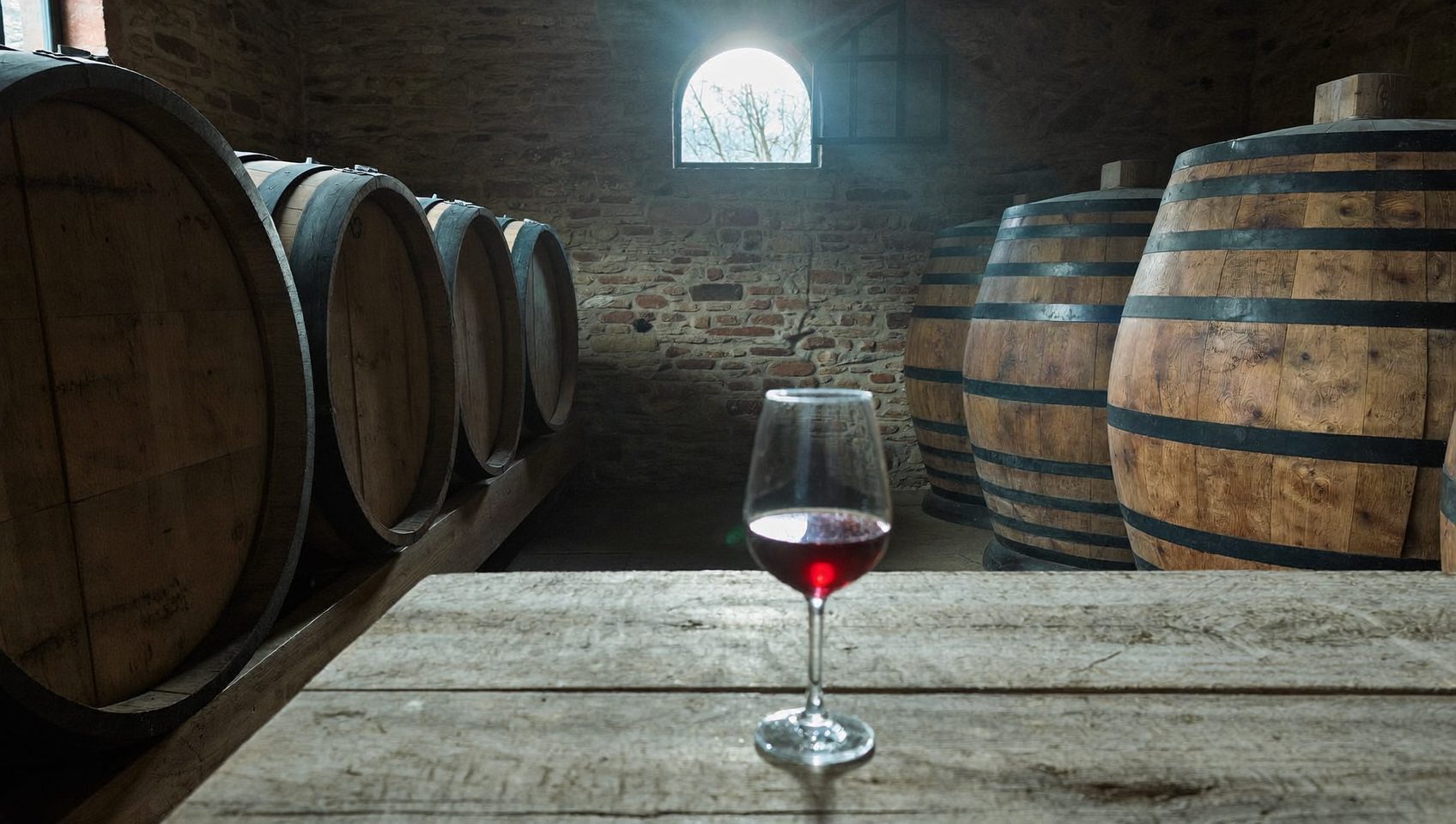
Chianti Classico DOCG is a red wine made with at least 80 percent Sangiovese in the historic Chianti zone between Florence and Siena: 71,800 hectares that take in the whole of Greve in Chianti, Castellina in Chianti, Radda in Chianti and Gaiole in Chianti and parts of San Casciano Val di Pesa, Barberino Tavarnelle, Castelnuovo Berardenga and Poggibonsi (Chianti Classico DOCG disciplinare, art. 2, 3 and 9; annex 3). It has three tiers: the Annata is released from 1 October of the year after the harvest, the Riserva after at least 24 months of ageing and the Gran Selezione after at least 30, both with at least 3 months in bottle; only the Gran Selezione may add one of 11 Unità Geografiche Aggiuntive, the UGAs, to its label (disciplinare, art. 5 and 7). Every bottle carries the Gallo Nero, the black rooster mark, which is compulsory (art. 7). Chianti Classico became a DOC in 1967 and a DOCG in 1984, has had production rules separate from Chianti since 1996, and the text in force is the one amended by the ministerial decree of 22 June 2023 (Gazzetta Ufficiale n. 152, 1 July 2023). In 2025 the denomination's sales grew 1.2 percent in volume and 2.6 percent in value, and Riserva and Gran Selezione together made up 43 percent of volume and 55.2 percent of value (WineNews, 17 February 2026).
This page is the full guide to the denomination, including what matters when selling or buying it abroad. The mark is explained in the Gallo Nero and what it means for importers, pricing in Chianti Classico export price bands; the denomination it is most often confused with has its own guide in Chianti DOCG: subzones, Superiore, Riserva. The grape is covered in Sangiovese: export guide, the rest of the region in exporting wine from Tuscany.
What Chianti Classico is and where it comes from
Chianti Classico is the denomination of the oldest part of the Chianti area, with its own rules and its own mark. The disciplinare reserves the name for red wine only, with the mentions Riserva and Gran Selezione (art. 1).
The disciplinare records that the first notarial deed naming Chianti as the wine of this area dates from 1398 and that exports to England were already regular in the 1600s. In 1716 a proclamation by Cosimo III, Grand Duke of Tuscany, drew the boundaries of Chianti by law, "from Spedaluzzo to Greve; from there to Panzano, with the whole Podesteria of Radda", and the text calls it the first wine zone in the world defined by law. Between 1834 and 1837 Baron Bettino Ricasoli promoted his formula: 70 percent Sangioveto, 15 percent Canaiolo, 15 percent Malvasia (art. 9).
When the wine began to be imitated elsewhere, 33 producers founded the Consorzio for the defence of Chianti wine and its mark of origin on 14 May 1924, in Radda in Chianti according to the Consorzio itself; in 1932 an interministerial decree gave the wine of the oldest zone the right to be called "Classico". After a process lasting seventy years, the decree of 5 August 1996 gave Chianti Classico a disciplinare separate from Chianti (art. 9). The Consorzio Vino Chianti Classico manages the denomination; annual checks are carried out by the control body Valoritalia (art. 9 and 10).
The zone: the municipalities between Florence and Siena
The zone is the one mapped by the interministerial decree of 31 July 1932 (disciplinare, art. 3). Four municipalities lie wholly inside it, the others only in part.
| Municipality | Province | Share inside the zone | Source |
|---|---|---|---|
| Greve in Chianti | Florence | the whole municipality | art. 9 |
| Castellina in Chianti, Radda in Chianti, Gaiole in Chianti | Siena | the whole municipality | art. 9 |
| San Casciano Val di Pesa, Barberino Tavarnelle | Florence | the part inside the boundary described in art. 3 | art. 3 and 9; annex 3 |
| Castelnuovo Berardenga, Poggibonsi | Siena | the part inside the boundary described in art. 3 | art. 3; annex 3 |
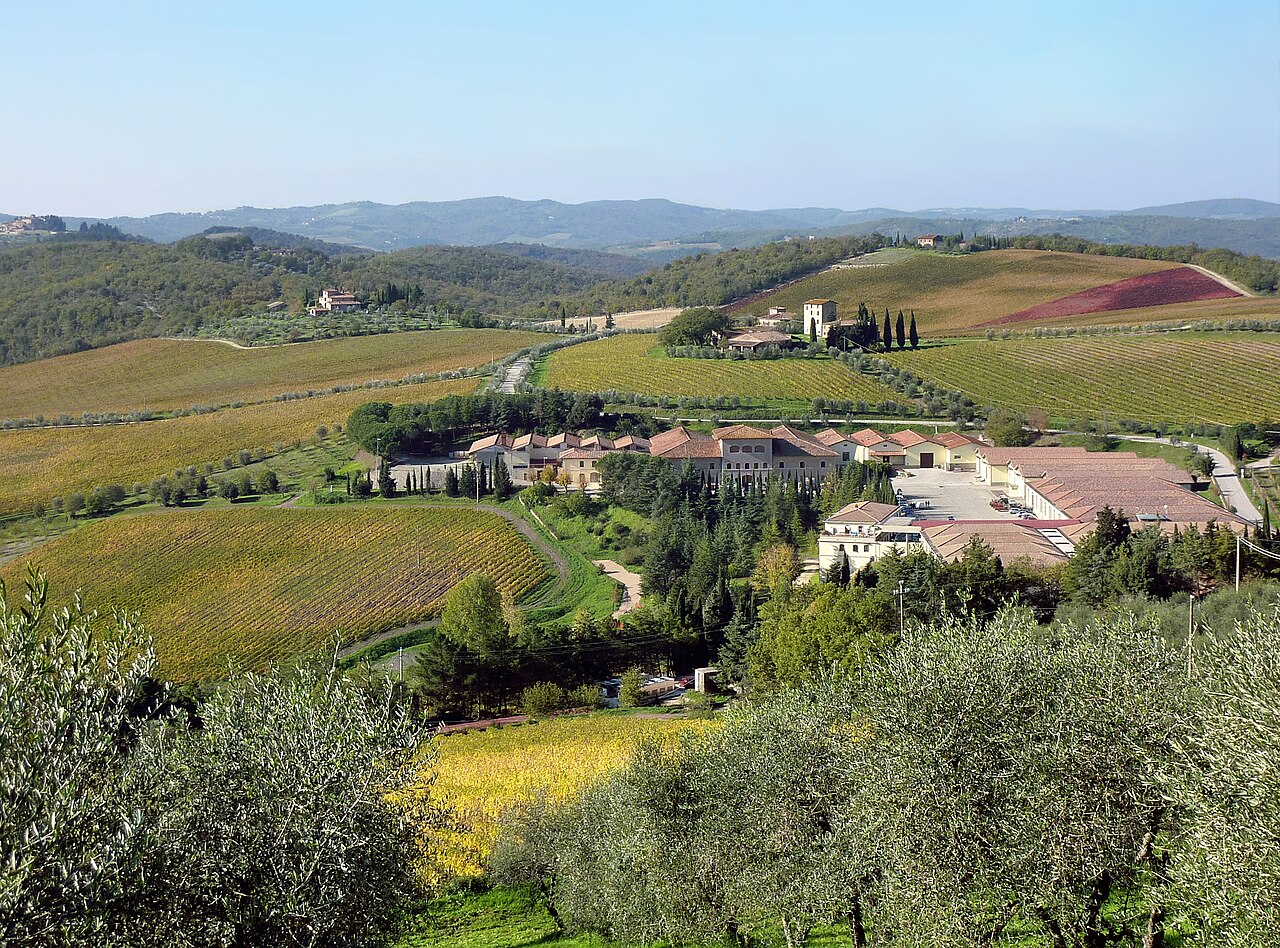
Article 9 still names Tavarnelle Val di Pesa and Barberino Val d'Elsa, now merged as Barberino Tavarnelle; Poggibonsi enters the zone with the slice included in the San Donato in Poggio UGA (annex 3). Of the 71,800 hectares, 30,400 are in the province of Florence and 41,400 in the province of Siena (art. 9). According to figures reported by WineNews in 2026, about 70,000 hectares of territory hold 10,000 hectares of vineyard, 6,800 of them for Chianti Classico (WineNews, 16 February 2026).
The disciplinare describes a hilly upland between about 200 and 600 metres, closed to the east by the Monti del Chianti, with shallow soils of galestro shale, scaly clays, alberese limestone and fine calcareous sandstone. The climate is continental, with winters below 4 to 5 °C and summers that often pass 35 °C; rainfall is 800 to 900 mm a year, mostly in late autumn and spring (art. 9). The vineyard rules:
| Rule | What the disciplinare requires | Source |
|---|---|---|
| Permitted sites | hillsides up to 700 metres, on sandstone, calcareous marl, clay schist, sand and pebble substrates | art. 4, para. 3 |
| Excluded sites | damp land, valley floors, soils dominated by Pliocene clay or heavily clay | art. 4, para. 4 |
| Training | no overhead tendone pergola and no forcing; emergency irrigation allowed | art. 4, para. 2 |
| Density of new plantings | at least 4,400 vines per hectare | art. 4, para. 6 |
| Maximum grape yield | 7.5 tonnes per hectare, no more than 2 kg per vine | art. 4, para. 7 |
| Grape-to-wine yield | 70 percent; between 70 and 75 the excess loses the DOCG, above 75 the whole wine does | art. 4, para. 10 |
| Minimum natural alcohol of the grapes | 11.50 percent | art. 4, para. 11 |
| Young vineyards | production from the third year after planting, capped at 3 tonnes per hectare that year | art. 4, para. 15 |
| Chianti inside the zone | no vineyards may be registered for Chianti DOCG and no Chianti or Chianti Superiore may be made | art. 4, para. 5 |
At 7.5 tonnes and a 70 percent yield, one hectare gives at most 52.5 hectolitres of wine, which the disciplinare calls the lowest yields in Italy (art. 9). How such limits are calculated is set out in grape and wine yield limits.
The grapes: Sangiovese and complementary varieties
The blend is calculated on the estate's vineyards, not on the single bottle (disciplinare, art. 2).
| Tier | Sangiovese | Other grapes allowed | Source |
|---|---|---|---|
| Chianti Classico and Riserva | 80 to 100 percent | up to 20 percent of red grapes authorised in Tuscany, listed in annex 1 (among them Canaiolo Nero, Colorino, Merlot, Cabernet Sauvignon, Syrah) | art. 2, para. 1; annex 1 |
| Gran Selezione | 90 to 100 percent | up to 10 percent of Colorino, Canaiolo, Ciliegiolo, Mammolo, Pugnitello, Malvasia Nera, Foglia Tonda, Sanforte | art. 2, para. 2 |
White grapes are not allowed: annex 1 lists red varieties only. The Gran Selezione rule applies from the fifth harvest after approval of the 2023 amendment; until then, vineyards that meet the 80 percent rule also qualify for Gran Selezione (art. 2, para. 3). Italian Wine Central places the switch at the 2027 vintage. The Consorzio's assembly voted the change in June 2021, with the aim of taking international varieties out of the top tier (WineNews, 16 June 2021).
The disciplinare states that Chianti Classico may also be 100 percent Sangiovese, and that the "Chianti Classico 2000" research project, launched in 1987, selected and registered new clones of Sangiovese and Colorino (art. 9). The grape's profile is in Sangiovese: export guide.
Annata, Riserva and Gran Selezione: the requirements
The three tiers share the zone, the yields and the grape-to-wine ratio; blend, grape origin, timing and analytical limits differ.
| Requirement | Chianti Classico (Annata) | Riserva | Gran Selezione | Source |
|---|---|---|---|---|
| Sangiovese | 80-100 percent | 80-100 percent | 90-100 percent, the rest only from the listed native varieties | art. 2 |
| Origin of the grapes | registered vineyards, bought-in grapes allowed | registered vineyards, bought-in grapes allowed | only vineyards farmed by the bottling estate; cooperatives must vinify and bottle these separately | art. 4, para. 14 |
| Enrichment | allowed with concentrated must from the zone, rectified concentrated must or grape sugar | as Annata | no external products; increase of no more than 1 percent vol | art. 5, para. 10 and 11 |
| Minimum ageing | none set | 24 months, at least 3 in bottle | 30 months, at least 3 in bottle | art. 5, para. 13 and 14 |
| Counted from | — | 1 January after the harvest | 1 January after the harvest | art. 5, para. 16 |
| Release | from 1 October of the year after the harvest | at the end of ageing | at the end of ageing | art. 5, para. 12-14 |
| Minimum total alcohol | 12.00 percent | 12.50 percent | 13.00 percent | art. 6 |
| Minimum dry extract | 24.0 g/l | 25.0 g/l | 26.0 g/l | art. 6 |
| Minimum total acidity | 4.5 g/l | 4.5 g/l | 4.5 g/l | art. 6 |
| Tuscan fiasco | allowed | not allowed | not allowed | art. 8 |
| UGA on the label | no | no | yes, optional | art. 7, para. 4 |
In practice, from the 2023 harvest a Chianti Classico could be released from 1 October 2024, a Riserva from 1 January 2026 and a Gran Selezione from 1 July 2026. The Consorzio's parameters page gives "12 months" of minimum ageing for the Annata; the disciplinare sets no ageing period, only the 1 October date.
Winemaking, storage, ageing, bottling and bottle ageing take place inside the zone; the exception is authorised cellars within 10 kilometres of the boundary, existing before 1 January 2008, that vinify their own grapes (art. 5, para. 1-6). Bottle ageing of Riserva and Gran Selezione may take place outside the winemaking zone if the bottles already carry the label and the state seal after certification (art. 5, para. 15). Each lot can be sold only with the suitability certificate issued by the control body (art. 4, para. 13). The state seal is explained in the DOCG and DOC state seal.
According to the Consorzio, Gran Selezione entered the production rules in 2014 and no other denomination has used it (Vinetur, 6 November 2026). In 2021 it was made by 154 estates with 182 wines, 6 percent of production (WineNews, 16 June 2021); in 2022 it accounted for 5 percent of volume and 13 percent of value (WineNews, 13 February 2023). At Chianti Classico Collection in February 2026, 185 of the 680 labels shown were Gran Selezione (Consorzio Vino Chianti Classico, 17 February 2026). According to Vinetur, on 4 November 2026 the Italian Senate gave final approval to a measure that reserves the Gran Selezione mention for Chianti Classico and bars other Italian denominations from using it; the article does not name the law (Vinetur, 6 November 2026).
The UGAs: 11 additional geographical units
The UGAs state where the grapes of a Gran Selezione come from. There are eleven, each with boundaries set out in annex 3 of the disciplinare.
| UGA | Territory | Source |
|---|---|---|
| Castellina | municipality of Castellina in Chianti | annex 3 |
| Castelnuovo Berardenga | the part of Castelnuovo Berardenga inside the zone, excluding Vagliagli | annex 3 |
| Gaiole | municipality of Gaiole in Chianti | annex 3 |
| Greve | part of the municipality of Greve in Chianti | annex 3 |
| Lamole | part of the municipality of Greve in Chianti | annex 3 |
| Montefioralle | part of the municipality of Greve in Chianti | annex 3 |
| Panzano | part of the municipality of Greve in Chianti | annex 3 |
| Radda | municipality of Radda in Chianti | annex 3 |
| San Casciano | the Chianti Classico zone within San Casciano in Val di Pesa | annex 3 |
| San Donato in Poggio | the Chianti Classico zone within Barberino Tavarnelle and Poggibonsi | annex 3 |
| Vagliagli | western part of the municipality of Castelnuovo Berardenga | annex 3 |
The labelling rules are precise: a UGA is allowed only on Gran Selezione and only if the grapes really come from that area; the name follows "Gran Selezione", in the same field of vision as the compulsory particulars, in letters no taller than those of "Chianti Classico" and "Gran Selezione" (disciplinare, art. 7, para. 4). Lamole, Montefioralle and Vagliagli may be used from the end of the third year after the 2023 amendment came into force; estates that labelled their wines Greve or Castelnuovo Berardenga during those three years may keep doing so permanently, after notifying the Consorzio and the certification body (art. 7, para. 4).
UGAs are not a quality ladder: they state an origin. The Consorzio presents them as a first phase reserved for Gran Selezione (Consorzio Vino Chianti Classico, UGA page), and in 2021 WineNews reported the intention to extend them to the other two tiers in future, with no date (WineNews, 16 June 2021). The disciplinare in force allows them on Gran Selezione only.
The label: Gallo Nero, vintage, vineyard names and bans
The denomination is identified exclusively and compulsorily by the Gallo Nero mark, paired with the name Chianti Classico; the Consorzio supplies it or has it printed on the label under its own regulation, which also binds non-members (disciplinare, art. 7, para. 1 and 2). The other rules:
| Rule | What the disciplinare requires | Source |
|---|---|---|
| Vintage | always compulsory | art. 7, para. 5 |
| "Classico" | always directly after "Chianti", in the same type | art. 7, para. 7 |
| "Vigna" (vineyard) | allowed with the place name if the wine is made and stored separately, the mention appears in the harvest declaration, registers and documents, and the vineyard is on the regional list | art. 7, para. 3 |
| Banned adjectives | "extra", "fine", "scelto", "selezionato", "superiore", "vecchio" and similar | art. 7, para. 6 |
| Bottles | glass, Bordeaux-style bottle in all permitted sizes and the Tuscan fiasco; other traditional shapes with the Consorzio's authorisation | art. 8, para. 1 |
| Closure | cork stopper flush with the mouth; crown cap or tear-off capsule only up to 0.25 litres | art. 8, para. 3 |
The ban on "superiore" is the quickest way to tell the two denominations apart: a "Chianti Superiore" is always Chianti DOCG.
Chianti Classico and Chianti DOCG: how not to mix them up
They are two separate DOCGs, with two disciplinari and two consortia. The Chianti Classico rules forbid registering vineyards for Chianti DOCG and making Chianti or Chianti Superiore inside the Classico zone (art. 4, para. 5).
| Chianti Classico DOCG | Chianti DOCG | |
|---|---|---|
| Zone | the historic zone mapped in 1932, between Florence and Siena | hills in six Tuscan provinces, excluding the Chianti Classico zone |
| Sangiovese | at least 80 percent; 90 for Gran Selezione | at least 60 percent since the 2026 amendment, previously 70 |
| Mentions | Riserva, Gran Selezione, 11 UGAs on Gran Selezione only | Superiore, Riserva and eight subzones, including Terre di Vinci from 2026; a rosé since 2026 |
| Mark | Gallo Nero compulsory | no Gallo Nero |
| "Superiore" on the label | banned | a category of its own |
Sources: Chianti Classico disciplinare, art. 1, 2, 3, 4 and 7; for Chianti, Vinetur, 5 November 2026, Gambero Rosso, 16 June 2026, and the dedicated guide.
Blend, yields and release dates of Chianti DOCG, changed by the 2026 amendment, are in Chianti DOCG: subzones, Superiore, Riserva. The Chianti consortium had proposed a Gran Selezione of its own, contested by Chianti Classico, and shelved it in 2026 (Gambero Rosso, 16 June 2026). The other great Sangiovese reds of the province of Siena are in Brunello di Montalcino and Vino Nobile di Montepulciano; Tuscan reds outside the denominations in Supertuscans and Toscana IGT.
Vin Santo del Chianti Classico DOC
Vin Santo del Chianti Classico is a separate DOC, created by the decree of 24 October 1995 and last amended by the decree of 22 March 2022 (Gazzetta Ufficiale n. 113, 16 May 2022). The grapes come from the same zone as Chianti Classico, where Vin Santo del Chianti may not be made (Vin Santo del Chianti Classico DOC disciplinare, art. 3).
| Rule | Vin Santo del Chianti Classico | Occhio di Pernice | Source |
|---|---|---|---|
| Grapes | Trebbiano Toscano, Malvasia Bianca Lunga and Malvasia Bianca di Candia at least 60 percent; other grapes authorised in Tuscany up to 40 | Sangiovese at least 80 percent; other authorised grapes up to 20 | art. 2 |
| Maximum grape yield | 8 tonnes per hectare | 8 tonnes per hectare | art. 4 |
| Drying | natural, in suitable rooms; sugar of at least 27 percent before crushing; no enrichment | as left | art. 5 |
| Ageing | at least 24 months from 1 January after the harvest, in wooden caratelli of up to 3 hectolitres | as left | art. 5 |
| Release | not before 1 November of the third year after the harvest | as left | art. 5 |
| Yield in wine | no more than 35 percent of the fresh grapes in the third year of ageing | as left | art. 5 |
| Minimum total alcohol | 16.00 percent, at least 10.5 of it actual | 16.00 percent, 10.5 actual | art. 6 |
| Bottle | Bordeaux-style, up to 3 litres; vintage compulsory | as left | art. 7 |
The disciplinare allows a style "from dry to sweet" (art. 6) and links the name to a wine served in Florence during the church council of 1439 (art. 8). The other DOCs that use the Vin Santo mention are covered in Vin Santo: rules and importers.
What Chianti Classico tastes like
The legal description changes with the tier. Annata: ruby red of varying depth, an intense, floral nose, a dry, fresh, savoury palate with light tannins. Riserva: deep ruby turning garnet, an intense, fruity, persistent nose, a dry, balanced palate. Gran Selezione: a spicy, persistent nose and a dry, persistent, balanced palate. All may show a light hint of wood (disciplinare, art. 6). The disciplinare credits the sandstone soils with the scent of iris and violet and the limestone with the aroma of wild berries (art. 9).
Recent vintages
Every February the Consorzio presents the new releases at Chianti Classico Collection, at the Stazione Leopolda in Florence: the 2026 edition had 223 wineries and 680 labels, 190 of them Riserva (Consorzio Vino Chianti Classico, 17 February 2026).
| Vintage | What happened in the vineyard | Production | Source |
|---|---|---|---|
| 2023 | July above 30 °C, August peaks of 40 °C and little rain, September warmer than average; harvest from mid-September to mid-October; soft wines with a Mediterranean profile, sometimes short on freshness | about 200,000 hectolitres, cut by downy mildew | WineNews, 17 February 2026 |
| 2024 | frequent rain from late May into June, a less torrid summer than usual, rain again in September; harvest running almost to late October; fragrant wines, some with slight structure | about 305,000 hectolitres | WineNews, 17 February 2026 |
Selling Chianti Classico abroad
The United States is the first market. For 2022 the Consorzio gave this split of bottles sold: United States 37 percent, Italy 19, Canada 10, United Kingdom 7, Germany 6, Scandinavia 5, Switzerland and Benelux 3 each, Japan and South Korea 2 each; average output was 35 to 38 million bottles, sold in 160 countries (WineNews, 13 February 2023). In a November 2025 article the United States took 36 percent of production, with Canada growing (ItaliaOggi, 5 November 2025). In 2025 sales grew in volume and value on the strength of Riserva and Gran Selezione, while Germany was among the markets held back by recession (WineNews, 16 and 17 February 2026).
| Market | Share of bottles in 2022 | Where to read more |
|---|---|---|
| United States | 37 percent | wine importers in the United States, US wine importers and what they need |
| Canada | 10 percent | wine importers in Canada, exporting wine to Canada: monopolies, agents, CETA |
| United Kingdom | 7 percent | wine importers in the United Kingdom |
| Germany | 6 percent | wine importers in Germany |
| Japan | 2 percent | exporting wine to Japan |
Source of the shares: WineNews, 13 February 2023, Consorzio figures for 2022. The full list of markets is in the wine importers by country hub; the weight of the DOCG seal in B2B talks in exporting DOCG wines; the wineries of the two provinces in wine from Florence and wine from Siena.
Before listing, check five points on the technical sheet: the tier (Annata, Riserva or Gran Selezione) on the first line; the real blend, with 90 percent Sangiovese and only the listed native grapes for a Gran Selezione from the vintages the new rule covers; a release date that matches the tier; a UGA only on a Gran Selezione and spelled exactly as in annex 3; the Gallo Nero and the state seal on every bottle, and a flush cork above 0.25 litres.
Frequently asked questions
How much Sangiovese must Chianti Classico contain?
At least 80 percent for Annata and Riserva, with the rest from red grapes authorised in Tuscany. For Gran Selezione at least 90 percent, with the rest only from Colorino, Canaiolo, Ciliegiolo, Mammolo, Pugnitello, Malvasia Nera, Foglia Tonda or Sanforte, from the fifth harvest after the 2023 amendment (Chianti Classico DOCG disciplinare, art. 2).
What is the difference between Chianti Classico, Riserva and Gran Selezione?
The Annata is released from 1 October of the year after the harvest with at least 12 percent alcohol. The Riserva ages at least 24 months, 3 in bottle, with 12.50 percent. The Gran Selezione ages at least 30 months, 3 in bottle, with 13 percent, from the estate's own grapes only (disciplinare, art. 4 to 6).
What are the UGAs of Chianti Classico?
Eleven additional geographical units: Castellina, Castelnuovo Berardenga, Gaiole, Greve, Lamole, Montefioralle, Panzano, Radda, San Casciano, San Donato in Poggio and Vagliagli. They state where the grapes come from and may appear only on Gran Selezione, after the mention (disciplinare, art. 7; annex 3).
Which municipalities are in Chianti Classico?
Wholly Greve in Chianti, Castellina in Chianti, Radda in Chianti and Gaiole in Chianti; partly San Casciano Val di Pesa, Barberino Tavarnelle, Castelnuovo Berardenga and Poggibonsi, in the provinces of Florence and Siena (disciplinare, art. 3 and 9; annex 3).
Are Chianti and Chianti Classico the same wine?
No. They are two DOCGs with different zones, rules and consortia; Chianti may not be made in the Chianti Classico zone, and only Chianti Classico carries the Gallo Nero (Chianti Classico disciplinare, art. 4 and 7).
Is Vin Santo del Chianti Classico a Chianti Classico?
No, it is a separate DOC from the same zone: dried white grapes, at least 60 percent Trebbiano Toscano and Malvasia, or at least 80 percent Sangiovese for Occhio di Pernice, aged at least 24 months in small casks and released no earlier than 1 November of the third year (Vin Santo del Chianti Classico DOC disciplinare, art. 2 and 5).
Sources
- Chianti Classico DOCG disciplinare, text including the DM of 22 June 2023 (Ministry of Agriculture, copy hosted by AIS)
- Vin Santo del Chianti Classico DOC disciplinare, text including the DM of 22 March 2022 (copy hosted by AIS)
- Consorzio Vino Chianti Classico, home page, parameters of the tiers and UGA page
- Consorzio Vino Chianti Classico, Chianti Classico Collection 2026, 17 February 2026
- WineNews, 17 February 2026, Chianti Classico Collection 2026 and the 2023 and 2024 vintages and WineNews, 16 February 2026, the Black Rooster and the 2025 market
- WineNews, 13 February 2023, Chianti Classico, 2022 markets and the UGAs
- WineNews, 16 June 2021, the UGAs and more Sangiovese in Gran Selezione
- ItaliaOggi, 5 November 2025, Chianti Classico takes on the crisis
- Vinetur, 6 November 2026, Italy's Senate reserved Gran Selezione for Chianti Classico
- Vinetur, 5 November 2026, European Union approves Chianti rules allowing rosé wines
- Gambero Rosso, 16 June 2026, what is new in Chianti DOCG
- Italian Wine Central, Chianti Classico DOCG
- Collio DOC: Zone, Grapes, Collio Bianco, Riserva, Rules
- Charmat-Martinotti method: autoclave, yeasts and timing
- Valpolicella grape varieties: Corvina, Corvinone, Rondinella
- Cannonau di Mamoiada wineries: sales and export markets
- Wine bottle dimensions: height, diameter, EU shapes
- Bonarda wine: three different wines under one name