Non-Saccharomyces yeasts in the winery: Torulaspora, Metschnikowia, Lachancea, when to use them
Wines Export Editorial · Last updated:
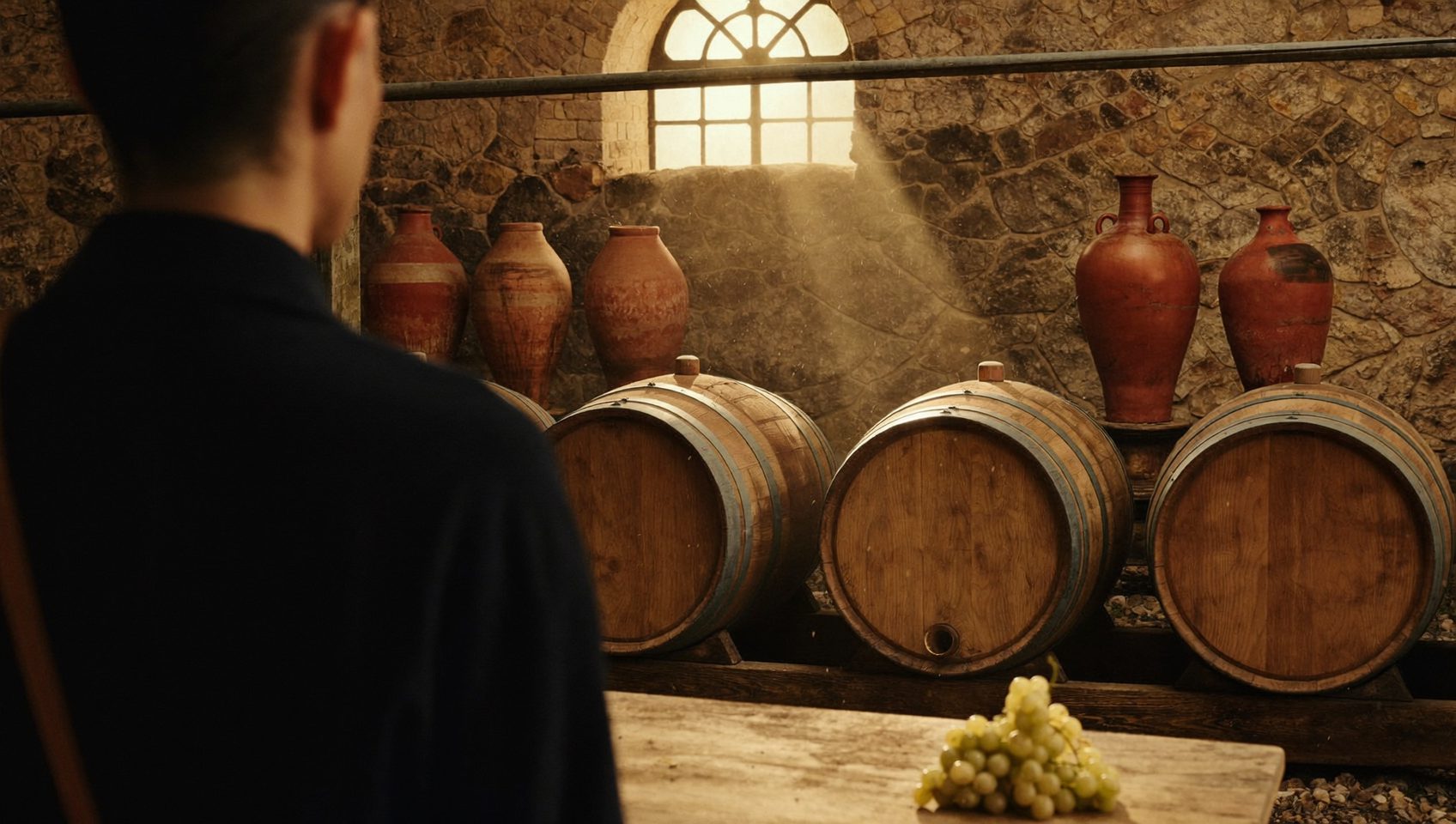
Non-Saccharomyces yeasts are yeast species other than Saccharomyces cerevisiae, the yeast that carries out fermentation in the great majority of wines. In supplier catalogues three genera appear most often: Torulaspora, Metschnikowia and Lachancea. They are used alone or, more often, in sequential inoculation before a Saccharomyces strain, and they serve to modify aroma profile, acidity, the pressure of unwanted microorganisms and, in part, alcohol level. Before you order them, you need to know which effect you are looking for and at which stage to introduce them. The general background is in the pages on selected and indigenous yeasts and on organic and indigenous commercial yeasts.
What non-Saccharomyces yeasts are and why they entered supplier catalogues
Non-Saccharomyces is a broad group of species, many of which are present on the grape and in the must before Saccharomyces takes control of fermentation. For decades the aim in the winery was to eliminate them or reduce their weight, relying almost only on Saccharomyces. Today commercial preparations allow you to choose a strain, dose it and inoculate it at a precise moment, which spontaneous flora does not allow. This explains the growth in the offer, but it does not mean every strain works in every winery. The result depends on the must, the temperature and the management of the subsequent fermentation. For an average winery the practical question is not which species is more interesting, but which problem of the wine you want to solve: a wider aroma profile, acidity that is lacking, or a flora that forces you to dose more sulphur. Each goal leads to a different choice of strain and a different protocol. Anyone who buys a yeast without having defined the goal often uses it badly, and attributes to the product errors that depend on the method.
The OIV Codex distinguishes non-Saccharomyces yeasts from other products
The International Oenological Codex of the OIV treats yeasts as separate entries. Its index includes monographs for selected yeasts of the Saccharomyces genus and for those of non-Saccharomyces species, alongside inactivated yeasts and lactic acid bacteria. For buyers the distinction is useful: the two groups have their own entry and should therefore be verified separately.
| OIV Codex entry | Note for the winery |
|---|---|
| Saccharomyces spp. selected yeasts | Selected yeasts of the Saccharomyces genus, the reference for main fermentation |
| Non saccharomyces spp. selected yeasts | Selected yeasts of other species, to be used with an inoculation strategy |
| Inactivated yeasts | Preparations of non-living yeasts, with a function different from the yeast that ferments |
| Lactic acid bacteria | Bacteria for malolactic fermentation, to be managed separately from yeasts |
The Codex also contains entries for liquid sulphur dioxide and for various sulphites and bisulphites. This matters when you talk about partly replacing SO2, because a non-Saccharomyces yeast is not an antioxidant and does not remove the need to manage sulphur. Doses per stage and limits can be found on the page on sulphur dioxide doses by stage and EU limits.
Torulaspora delbrueckii: aromas and fewer volatiles, with a trade-off
Torulaspora delbrueckii is the non-Saccharomyces most often cited for aromatic complexity. In many strains it ferments with less energy than Saccharomyces and tends to produce less alcohol, which is why it is introduced first and then followed by a strain that completes the sugar conversion. Its contribution is especially noticeable in white wines and aromatic varieties, where it can emphasise floral and fruity notes; for an overview of that choice, the page on yeasts for aromatic, fruity and floral white grapes is useful.
The weak side is its dependence on the strain and the must. Two products with the same species can give different results, and the same strain changes behaviour if the temperature rises or if the must is poor in nitrogen. Before extending use to the whole lot, run a trial on a small volume, with a control fermented only with Saccharomyces, and compare the profile by tasting.
Metschnikowia pulcherrima: bioprotection and less sulphur
Metschnikowia pulcherrima is the non-Saccharomyces that suppliers present as a partial alternative to sulphur. The principle is bioprotection: in the early stages, when the grape and the must host a variable flora, this yeast occupies space and resources and limits the development of unwanted species. The advantage is therefore control of the flora present on the grape, rather than a substitution for sulphur as an antioxidant during ageing.
Here too the limit is practical. In most wineries sulphur remains necessary, and reduction is a goal to be verified through analysis and tasting, not a certainty. A prudent use consists of reducing the initial dose only on healthy grapes in good condition, while keeping monitoring of volatile acidity, residual sugar and flora. If the grape arrives with sanitary damage, biological protection alone is not enough.
Lachancea thermotolerans: lactic acid and less flat wines
Lachancea thermotolerans produces lactic acid during fermentation. This is the reason it is chosen in hot vintages or on musts poor in acidity, where the wine risks being flat and lacking dynamism. Biological acidification is softer than acidification with added acids, because the acid forms together with the wine's profile and is not added separately.
This practice requires the same regulatory attention as traditional acidification. Rules on acidification vary from country to country and, in destination markets, may impose declarations or limits. The sources listed at the end do not give figures on this point: check the regulations of the country where you sell before setting up the treatment. The choice of strain should also be made on the basis of an analysis of the starting acidity, not out of habit.
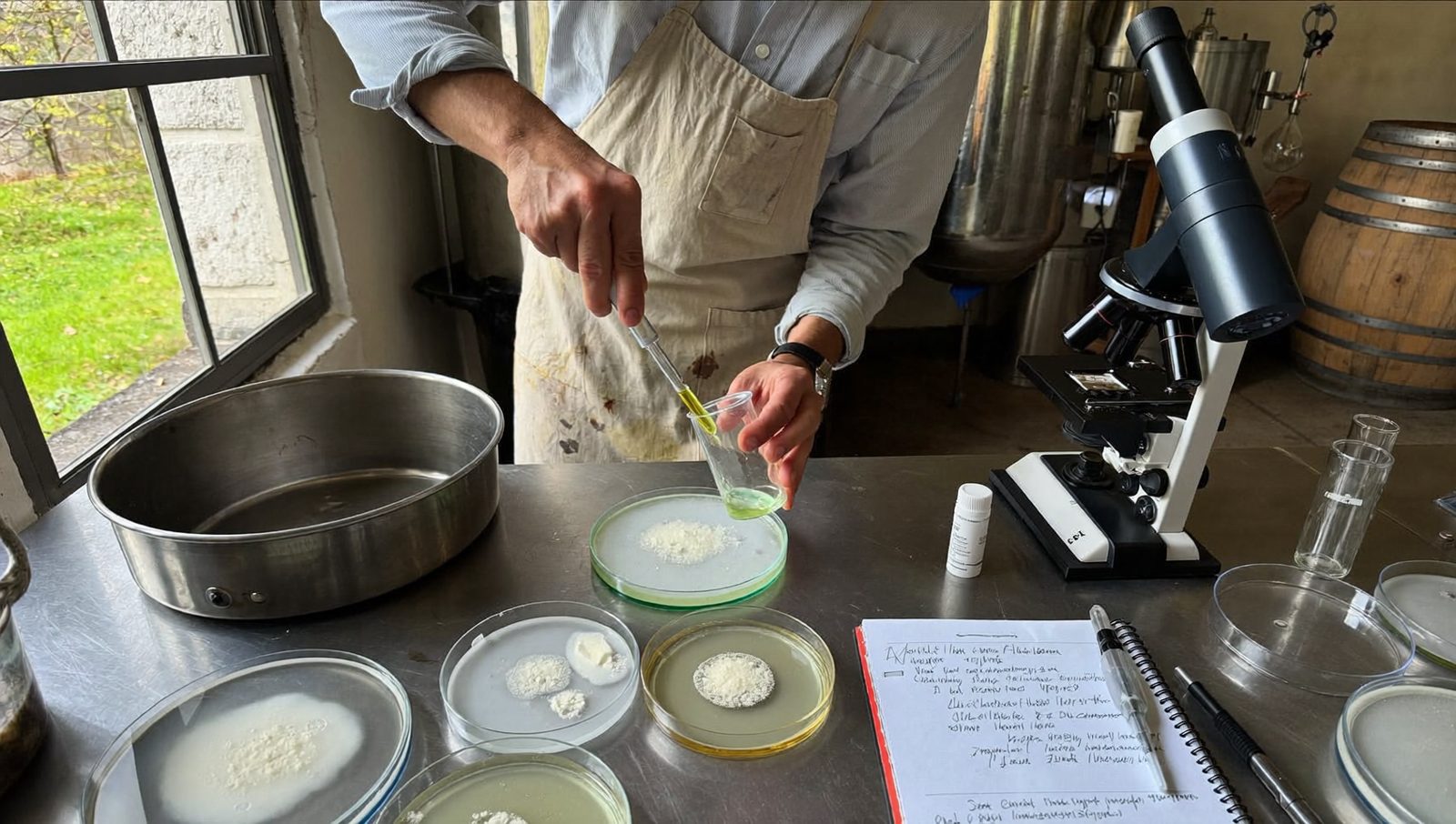
Sequential inoculation: timing, doses, nutrition
The logic of sequential inoculation is simple. The non-Saccharomyces is inoculated into the must and left to work for a period, then a Saccharomyces strain is added to complete fermentation. The second inoculation has no fixed date: it is decided by observing density, residual sugar and temperature, with daily checks in the first days. An excessive delay lets spontaneous flora dominate, while an inoculation that is too early can reduce the effect of the first strain.
The point most often forgotten is nutrition. Yeasts working in sequential inoculation need assimilable nitrogen and vitamins, and a must poor in these elements can produce slow or incomplete fermentations. Guidance is on the page on yeast nutrients: nitrogen and thiamine, how much and when. Inoculation doses must be taken from the technical data sheet of the chosen preparation and not from this article, because each product has its own indications and those are the only ones to follow.
When not to use them
Non-Saccharomyces yeasts are not a universal solution. They are not advisable when the must is short of nitrogen and you cannot correct it, because fermentation risks stalling. Nor are they advisable when the winery lacks temperature control, because strains react differently to fluctuations and the result becomes unpredictable. If the wine is meant for quick consumption and the traditional profile of your wine is already what the market requests, the cost of the protocol rarely pays off.
It is worth recording every inoculation: date, strain, lot, temperature, density and residual sugar at regular intervals. With these data, at the end of the harvest, you can compare the lots and understand whether the choice produced the expected effect. Without a record, every year starts again from scratch and the comparison relies on memory.
Capacity for control also matters. Sequential inoculation requires frequent analyses, a fermentation log and someone who follows them day by day. If you do not have this organisation, it is better to work with a single Saccharomyces strain and concentrate resources on sulphur management and cellar hygiene.
Frequently asked questions
Can non-Saccharomyces yeasts replace Saccharomyces?
As a rule, no. Saccharomyces remains the yeast that completes alcoholic fermentation reliably. Non-Saccharomyces yeasts are used before or together with it, to modify aroma, acidity or flora control, and almost always require a Saccharomyces strain to finish the work.
Is a Saccharomyces strain needed after a non-Saccharomyces yeast?
In most cases, yes. Many non-Saccharomyces yeasts ferment with less energy and can leave residual sugar. The second inoculation should be planned according to the density of the must and the temperature, and recorded so that results can be compared.
Which non-Saccharomyces yeasts reduce alcohol?
Some strains of Torulaspora delbrueckii and of other species tend to produce less alcohol than Saccharomyces, but the effect depends on the strain and the must. There is no guaranteed reduction: before using them, run a trial on a small volume and check the final alcohol level.
Does Lachancea thermotolerans replace traditional acidification?
It can reduce the need for added acids, because it produces lactic acid during fermentation. It does not replace it in every case, and the regulations of the destination country must be checked before setting up the treatment.
Sources
- Offida DOCG: Pecorino Wine, Passerina and Rosso
- Nero d'Avola: Grape, Sicilia DOC, Cerasuolo and Export
- Organic and Indigenous Commercial Wine Yeasts: What They Are
- Natural wine label rules in the EU: what you can write
- Pesticide-free wine: residues, testing and buyer demands
- Moscato Grape Varieties and Italian DOCs for Importers