Red Wine Maceration: Pumping Over, Délestage, Punch-Downs and Contact Times in the Tank
Wines Export Editorial · Last updated:
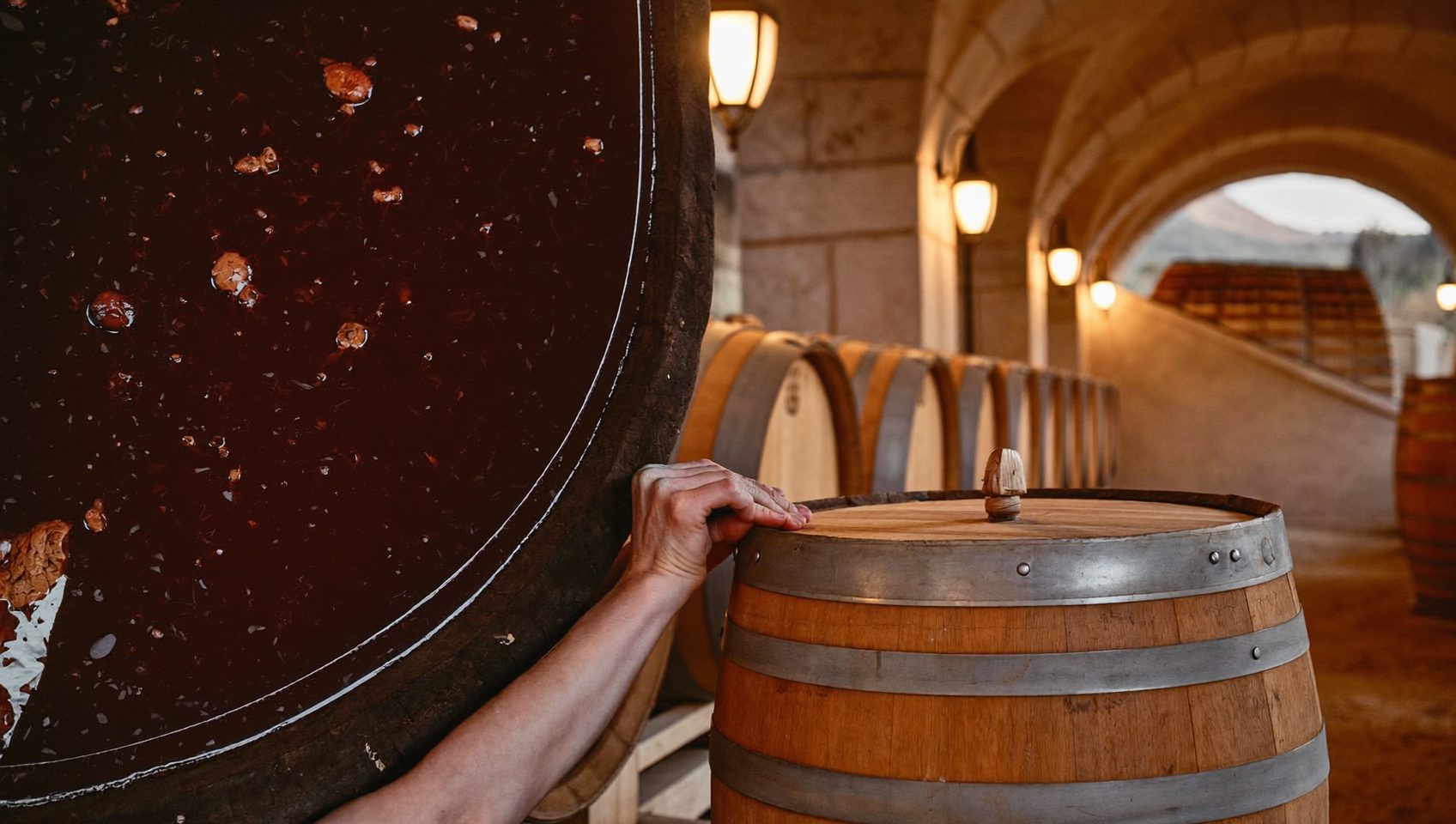
Maceration of red wine is the period during which the must stays in contact with the skins. How the cap, that is the mass of skins that rises to the surface during fermentation, is managed determines how much colour and how much tannin pass into the wine. The most common operations are pumping over, délestage and punch-downs, and they differ in the energy applied, in the share of the mass that comes into contact with the liquid, and in the moment they are carried out. The choice of the most suitable yeasts for long macerations is covered in yeasts for red grapes and long macerations, while this article focuses on working the cap in the tank. If it makes sense to start contact at low temperature, before alcoholic fermentation begins, the final section explains how to approach that decision.
What is extracted from the skins and in what order
The skins contain different compounds, and not all of them leave at the same time. Anthocyanins, which give the red colour, are extracted more easily in the early stages, when the must is rich in sugars and the alcohol level rises gradually. Tannins come largely from the skins and seeds, take longer to extract and require more energetic work, and tend to give a sensation of astringency if the process is pushed too hard. In the final phase of maceration, polysaccharides and other compounds also enter the wine and round out its structure.
For this reason, contact time is not a single fixed number: it depends on the type of compound you want to obtain. If the wine is still young and low in colour, the work focuses on extracting anthocyanins. If the wine already has enough colour but lacks structure, you work on the tannin fraction with slower and more controlled operations. Enzymes used to improve maceration also appear among the treatments described in the OIV International Code of Oenological Practices, which classifies them as an aid to the extraction of substances from grapes. Those evaluating the use of these products can consult the guide pectolytic enzymes for extraction and fining.
The techniques compared in the tank
The three main operations differ in energy and in their effect on the mass of skins. The table summarises the differences that matter when choosing.
| Technique | What it does | Energy on the skins | Typical effect | When it makes sense |
|---|---|---|---|---|
| Pumping over | Draws liquid from the bottom and pumps it over the cap | Medium, distributed | Regular extraction of colour and tannin | Fermentation in medium-volume tanks |
| Délestage | Drains part of the must, leaves the cap, then returns the liquid | Medium, with a pause for the cap | More controlled extraction, less compact cap | When the cap tends to harden |
| Punch-down | Pushes the cap into the liquid by hand or with a tool | High, with mechanical breaking of the cap | Intense extraction of colour and tannin | Small containers, open tanks |
None of the three is always the right choice: the difference lies in the result the wine should have at the end. The data to record in the cellar are the temperature and density of the must, together with the condition of the cap, because these indicate whether an intervention is really needed.
Pumping over: open or closed, frequency and duration
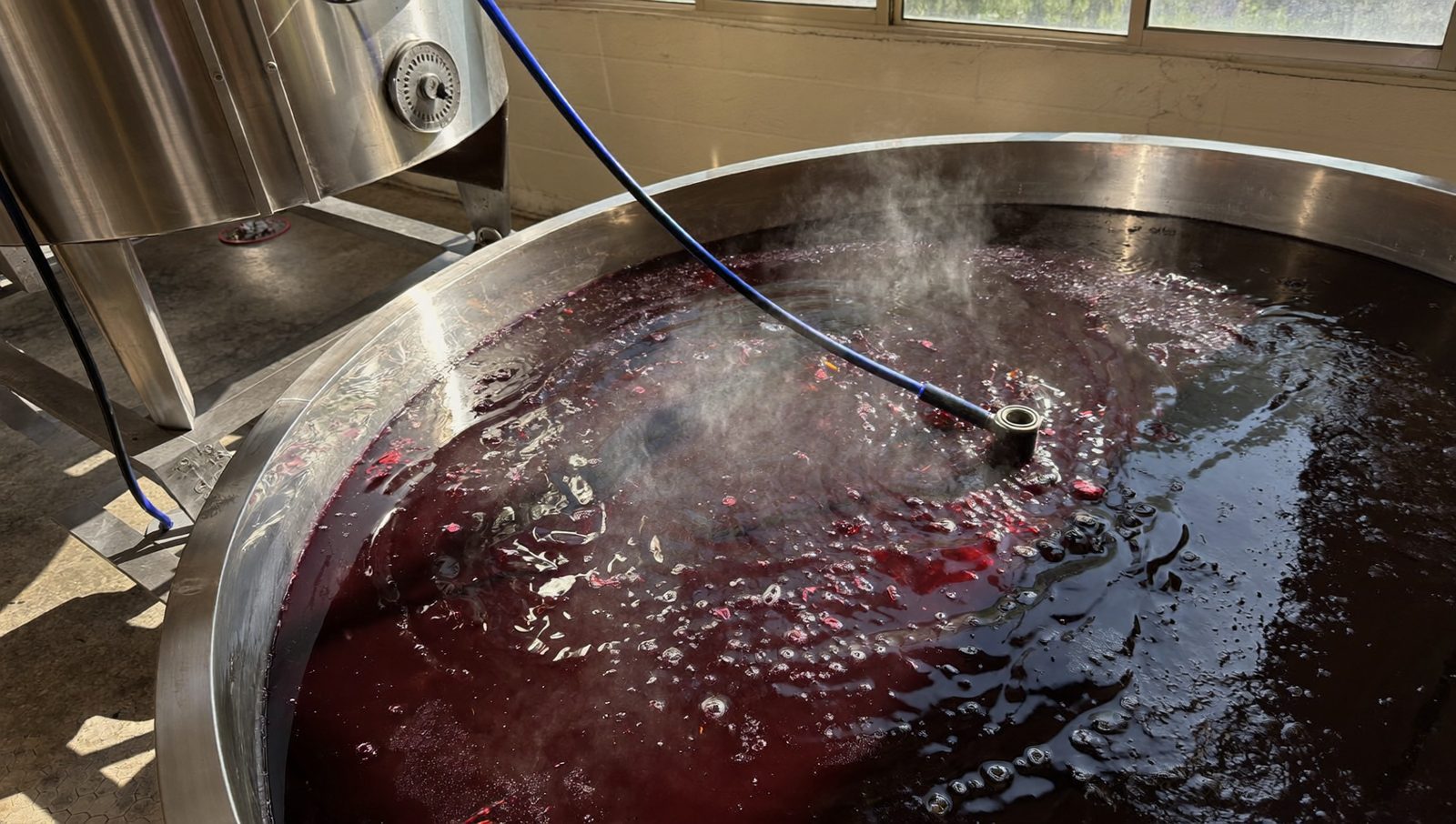
Pumping over consists of drawing liquid from the bottom of the tank and returning it over the cap, so that the liquid wets the dry skins and extracts their compounds. In an open tank the cap rises to the surface and dries out, so pumping over mainly serves to keep it moist. Pumping over can be done in contact with air, which supplies oxygen, or in a closed system, limiting contact with air: the choice depends on how much oxygen the must needs at that stage.
The frequency is not set on a calendar. It is repeated when the cap compacts or dries on the surface, and it becomes less frequent as fermentation slows, because carbon dioxide production decreases and the mass moves less. The duration of each pass is the time needed to wet the entire cap, and it is checked by tasting the liquid and observing the colour. Those working with small tanks can intervene more often with a reduced volume, while in large tanks pumping over tends to take longer and requires suitable pumps.
A detail that is often overlooked is the relationship between temperature and intervention. The IFV notes on the 2026 vintage indicate that temperature is one of the levers to adapt in winemaking, together with harvesting during cool hours and other interventions, when heat accelerates ripening. This means that pumping over carried out at high temperature extracts more quickly and must be calibrated accordingly.
Délestage and punch-downs: differences and when to choose them
Délestage is an operation that separates the liquid from the cap for part of the time. A portion of the must is drained from the tank, the cap is left to drip, and then the liquid is returned over the mass. The result is more even extraction and a less compact cap, which usually gives wines with a more balanced structure. It is useful when the cap hardens and the wine risks becoming harsh.
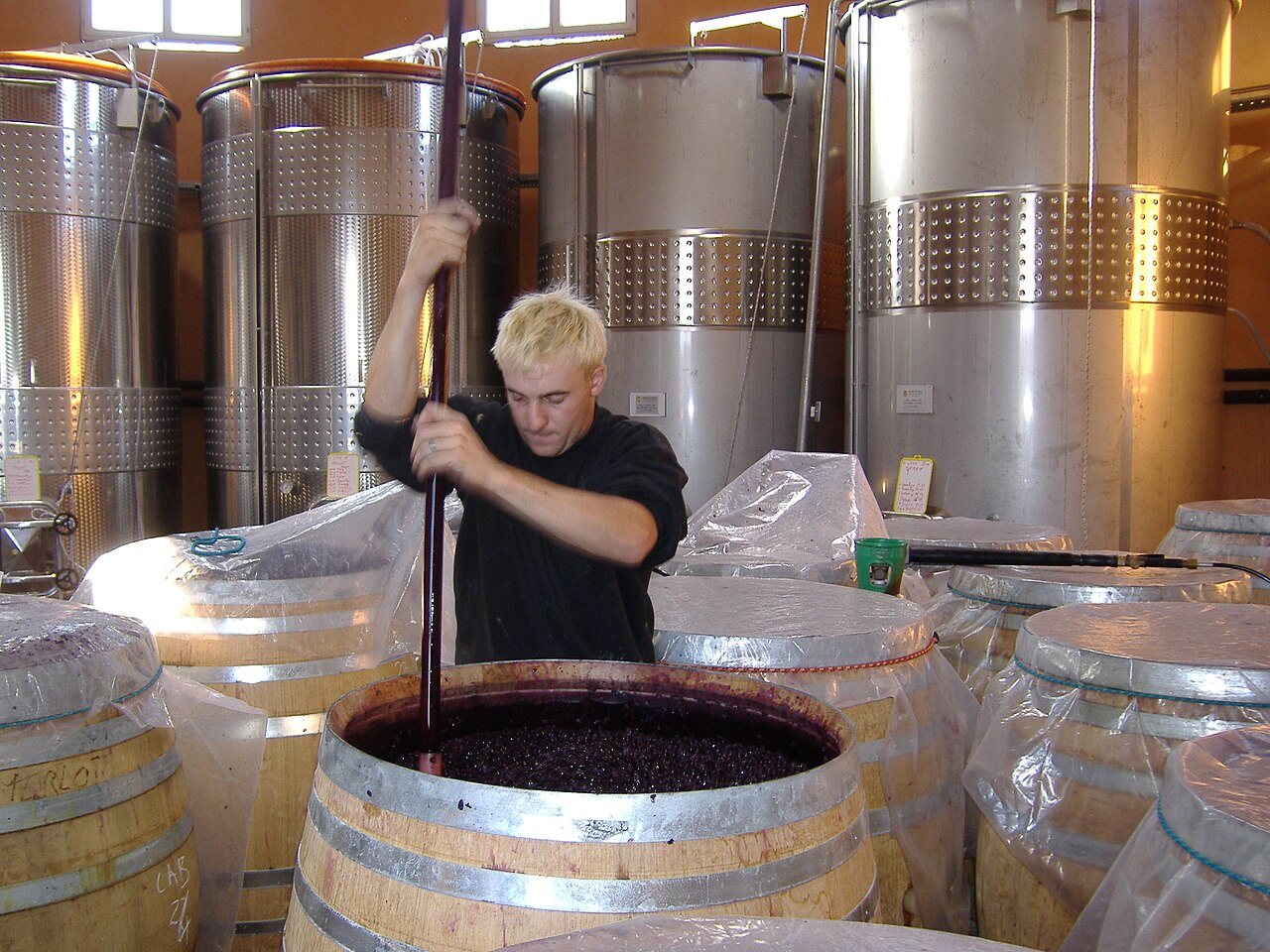
Punch-down is the action of pushing the cap down into the liquid, by hand or with a tool. It is suited to small containers and open tanks. In punch-downs the mechanical energy on the cap is high, so the extraction of colour and tannin is intense and must be dosed through the frequency and force of the interventions, especially towards the end of fermentation.
Choosing between the two is not a question of quality, but of how much energy and time the wine requires. When the cellar does not have equipment that allows délestage, punch-down remains the simplest solution.
Cold pre-fermentation maceration
Cold pre-fermentation maceration consists of keeping the must in contact with the skins for a period before alcoholic fermentation begins, at a low temperature. The OIV Code lists it as a distinct practice for red wines, alongside the one for white wines. The aim is to extract colour and aromatic compounds without fermentation, with its temperature, pushing the extraction of harder tannins.
The advantage is more stable colour and a more evident fruity profile. The limit is time: the must stays still for longer before fermenting and must be kept under control, because a contact that is too long at low temperature can lead to unwanted odours. In very warm vintages, cold maceration can be a tool for delaying fermentation and modulating extraction.
Those considering this practice should also take into account the dissolved oxygen during the contact phase, because must exposed to air oxidises more quickly. The guide oxygen in winemaking, microoxygenation, when and how much covers the topic in more detail.
Post-fermentation maceration and long macerations
Post-fermentation maceration occurs when the wine stays on the skins after alcoholic fermentation has finished. In this phase fermentation is complete, so there are no further pumping-over interventions and no risk of overheating, but extraction continues slowly and mainly yields tannins. The risk is that the wine becomes astringent if contact lasts longer than necessary, and for this reason the moment of racking should be decided by tasting and by the structure you want to achieve.
Long macerations are a special case: the cap remains in contact with the liquid for weeks, with reduced interventions. They serve wines intended for ageing and require suitable yeasts and conditions. One practical detail is that malolactic fermentation often takes place while the wine is still on the skins, and the choice of when to separate the wine from the mass affects the final result. Those planning the work can read malolactic fermentation in red wine to understand the timing of this phase.
On the subject of tannins, which become the central point in long macerations, the note winemaking culture on tannins discusses the differences between skin tannins and seed tannins.
Total duration by style and by target market
The overall length of maceration depends on the style the wine should have. A soft red, with evident fruit and colour and smooth tannins, requires shorter contact and frequent but gentle interventions. A structured red, intended for ageing, requires longer contact and cap management that extracts tannin gradually.
The target market weighs on this choice. Buyers' requests often include different style indications: some importers look for softer reds that are easy to drink right away, others for more structured wines. These are trends to verify case by case with the importer, not fixed market data. For this reason the maceration plan should be defined together with the required profile, before winemaking begins, and not changed at the end.
A practical approach is to set three objectives: minimum colour at racking, tannin balance and aromatic intensity. Pumping over, délestage or punch-downs, and post-fermentation contact are decided on the basis of these three points. In this way the winemaking plan stays consistent with the profile agreed with the importer.
Frequently asked questions
How many pumping-overs does a red wine need?
There is no fixed number. Pumping over is repeated when the cap dries out or compacts on the surface, and its frequency decreases as fermentation slows. Control is carried out by tasting the liquid and observing the colour.
Can délestage be done in a small tank?
Yes, but it requires a container with enough space to separate the liquid from the cap and return it. In small tanks punch-down may be more practical, but it gives intense extraction and must be dosed carefully.
Does cold maceration change red wine?
Yes, because the must stays in contact with the skins before fermentation and colour is extracted without the push of temperature. The wine often shows more stable colour and a more evident fruity profile, but the cold period must be monitored.
How long should maceration last for a specific market?
Duration depends on the style requested by the importer, not on a figure valid for everyone. It is advisable to ask the buyer for the desired profile and define the contact plan before starting fermentation.
Sources
- Yeast for White Wines: Fruity, Floral, Thiol Strains
- Prosecco DOC or DOCG: DOP, Rive and Cartizze for importers
- Classic Method vs Charmat Sparkling Wine: Buyer Guide
- Primitivo vs Zinfandel: US Label Rules for Importers
- Stuck Fermentation in Wine: Causes and How to Restart
- Is Primitivo Sweet or Dry? Dolce Naturale DOCG and Sugar