Primitivo and Zinfandel: One Grape, Two Names, What the US Label Requires
Wines Export Editorial · Last updated:
Primitivo and Zinfandel are the same grape from a genetic point of view, but on the label the two names follow different rules in Italy and in the United States. The Italian National Register of Grapevine Varieties lists Zinfandel as an official synonym of Primitivo. In the United States, the federal list of approved names for American wines treats Primitivo and Zinfandel as two distinct varieties, while for imported wines the TTB refers to the rules of the producing country. The name of the variety therefore affects the label, the way the product is presented and the documents and customs procedures for shipping wine to the United States. This page explains where the grape comes from, what the naming rules say, which Apulian appellations matter and how Primitivo is presented on export markets.
Primitivo, Zinfandel and Crljenak: the genetic story
The starting point is DNA. The DNA profile of Primitivo, Zinfandel, Crljenak kaštelanski and Pribidrag, a Croatian variety, is identical. The grape is therefore the same, even though commercial names change from one country to another. The Foundation Plant Services database at the University of California, Davis reports this identity and traces the path of the grape from Croatia to Apulia.
In Italy, the first documented presence of Primitivo is placed at Gioia del Colle, a town in Apulia. The same catalogue indicates that the name Primitivo is the varietal name approved by the TTB, the US federal agency that regulates wine labels. In Apulia the grape has kept its historical name, while in California it has remained linked to the name Zinfandel.
The reference catalogue for these cases is the VIVC, the Vitis International Variety Catalogue. The database was founded in 1984 at the Geilweilerhof grapevine breeding institute and today holds about 23,000 varieties, crossing lines and Vitis species. It is the reference we point to for genetic records, bibliography and the correct citation of synonym names.
What the US and EU rules say about the name on the label
The label question is the one that matters most to exporters, and in the United States the rule has two parts. For American wines, a grape variety name may be used as a type designation only if the TTB has approved it, and at least 75 percent of the wine must come from that variety (27 CFR 4.23). In the list of approved names, synonyms are shown in parentheses next to the variety, and Primitivo and Zinfandel appear as two separate entries with no cross-reference (27 CFR 4.91): a Californian producer therefore cannot use them as synonyms. The TTB states, however, that this list does not apply to imported wines: an imported wine may carry a grape variety name if the producing country has approved that name for wines sold for consumption within that country (TTB, Grape Variety Designations on American Wine Labels).
In Italy and the European Union the rule starts from the national register. A wine may carry the name of a single variety if at least 85 percent of it comes from that variety, and for wines produced in the Union the permitted names and synonyms are those of the national classification (Delegated Regulation (EU) 2019/33, Art. 50(1)). In the Italian National Register of Grapevine Varieties, Primitivo N., code 199, has Zinfandel as its official synonym. For DOP and IGP wines the production rules also apply: those of IGT Salento, for example, allow the variety to be stated «or its synonyms» and list it as «Primitivo n.» (Art. 2). The same EU regulation also lists «Primitivo» among the variety names that contain a DOP, Primitivo di Manduria, and allows Italy, Australia, the United States and Croatia to use it on the label only for DOP or IGP wines made from that variety (Annex IV, Part B, entry 37, and the annex note limiting it to PDO and PGI wines). Importers who bring wine into the United States and then resell it in several countries must keep the two rules separate. For this reason the back label needs careful preparation: how to set up the back label for importers in the USA, Canada, Japan and China lists the fields the importer checks.
The practical advice is simple: the variety declared in the documents must match the name on the label, and the name must be allowed by the wine's production rules. Before printing a label with «Zinfandel» for the United States, check with the importer, who must obtain TTB COLA approval for that label.
Style differences: Apulia and California compared
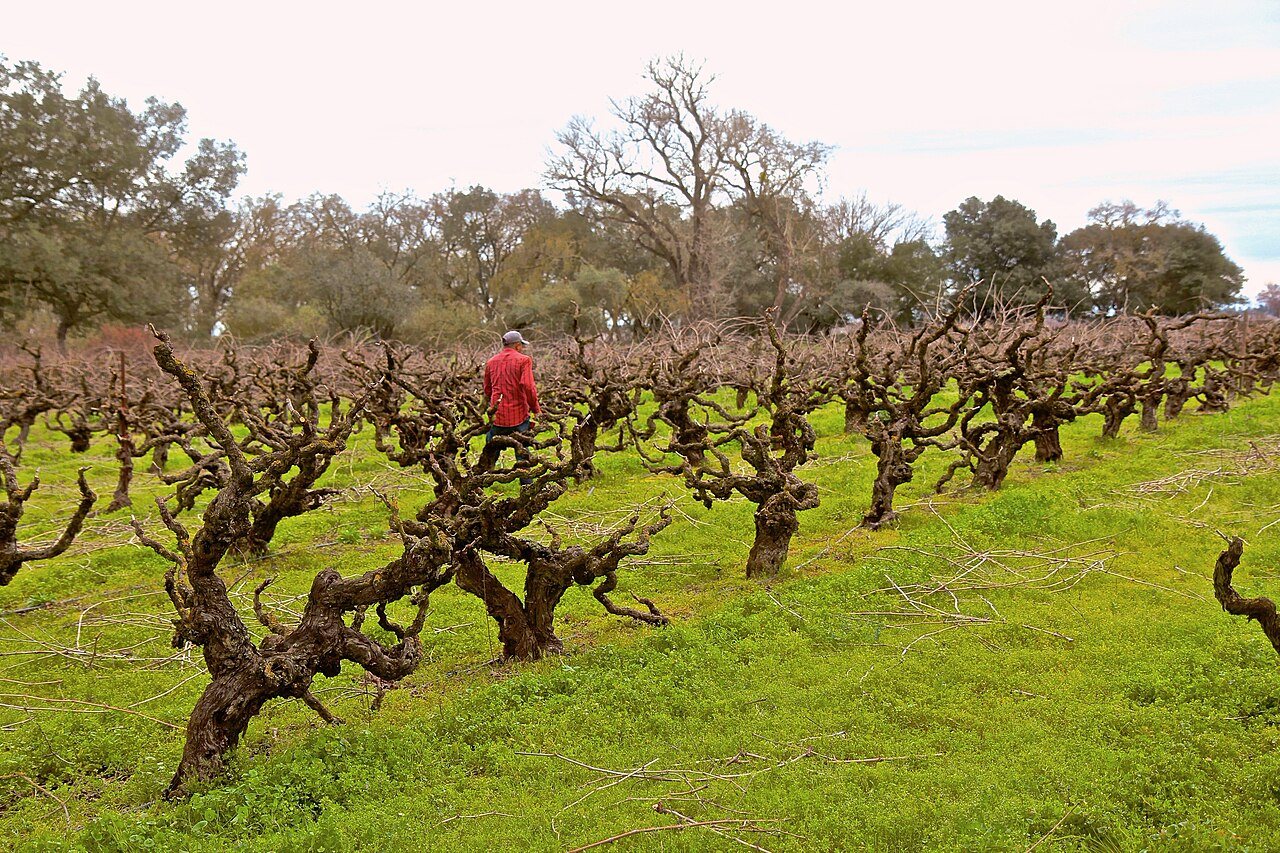
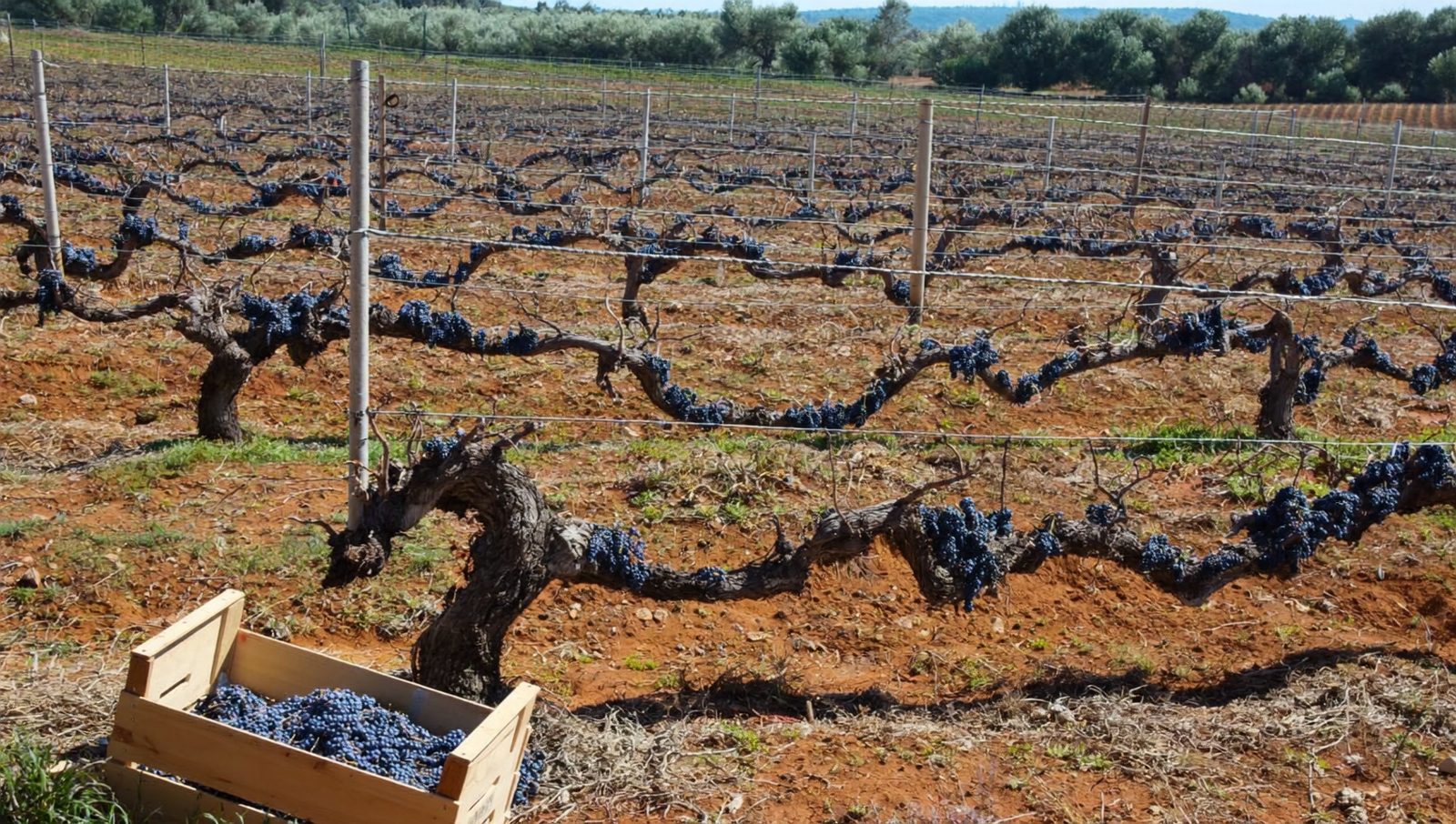
The grape is the same, but the wine changes with climate, soil and the winemaker's hand. As a rule, Apulian Primitivo comes from the warm Mediterranean climate, from often old vineyards trained as bush vines (alberello), and tends to produce wines with ripe fruit, structure and Mediterranean scrub notes. California, on the other hand, produces Zinfandel with ripening and winemaking practices that vary widely from one area to another, and the name has become synonymous with full, fruity red.
These differences are useful in commercial presentation, but they should not be written on the label as if they were a legal requirement. A US importer buying an Italian Primitivo expects a different wine from a Californian Zinfandel, and the wine sheet must say so in precise words. The name «Primitivo» evokes an Italian origin, while «Zinfandel» recalls the Californian tradition: both associations have commercial value and can be used in the product description without breaking the naming rule.
For a winery that wants to position its Primitivo on the American market, the most concrete difference concerns the description. The name on the label is normally «Primitivo», as in the production rules, while the story can speak of Apulia, old vines and a Mediterranean climate. Those who want to understand how an Italian grape is presented on the market can read the export guide to Primitivo, which covers the choice of channels and markets.
Primitivo di Manduria DOC and DOCG: the appellations to cite
The Consorzio di Tutela del Primitivo di Manduria protects the Primitivo di Manduria appellation in Apulia. The Consortium states that it was founded in 1998 with ten companies, both cooperatives and private firms, and that it obtained legislative recognition in 2002. Today the vineyards of the appellation cover about 5,000 hectares, spread across 18 municipalities between Taranto and Brindisi. The Consortium's website publishes separate production rules for the DOC and the DOCG, and anyone exporting must cite the correct one for the wine they are shipping.
The difference between DOC and DOCG matters both for the label and for the wine description. The production rules set out the requirements, including those on wine type, and Primitivo di Manduria is also made in a naturally sweet version. The guide to Primitivo di Manduria DOC naturally sweet and DOCG describes the rules for these wines and the way the Consortium presents them abroad.
The Ministry of Agriculture publishes the official list of Italian appellations, with production rules divided by letter and the alphabetical list of DOP and IGP wines. The Masaf database of DOP and IGP wines counts 411 production rules for DOP wines. For anyone writing a label, this is the reference to check, because the name of the appellation must match exactly what is registered.
Where Primitivo is grown and how large the appellation is
Primitivo is not grown only in the Manduria area, but the appellation gives a concrete idea of the scale of the grape in Apulia. The Consortium also reports the number of companies and growers, and the number of bottles the appellation puts on the market. These figures help to judge whether Primitivo di Manduria is a large or small appellation compared with other Apulian ones, and to prepare a credible presentation for an importer.
| Data | Value | Source |
|---|---|---|
| Vineyards of the Primitivo di Manduria appellation | about 5,000 hectares | Consorzio di Tutela del Primitivo di Manduria |
| Municipalities producing Primitivo di Manduria | 18, between Taranto and Brindisi | Consorzio di Tutela del Primitivo di Manduria |
| Companies in the appellation | 274 | Consorzio di Tutela del Primitivo di Manduria |
| Growers | 4,890 | Consorzio di Tutela del Primitivo di Manduria |
| Bottles placed on the market | 29 million | Consorzio di Tutela del Primitivo di Manduria |
| Varieties in the VIVC genetic catalogue | about 23,000 | VIVC, Vitis International Variety Catalogue |
| Production rules for DOP wines | 411 | Masaf, lists and production rules for DOP and IGP wines |
The table shows how structured the appellation is. For a comparison of export volumes by country, the United Nations Comtrade database is the source to consult; the sources listed below give no export figures for this grape.
How Primitivo is sold abroad: price and sweetness
The question importers ask most often is how much the wine costs and whether it is sweet. No market prices are given here, because the sources listed below do not give figures that can be compared by country and price tier. The importer price depends on the appellation, the wine type, the channel and the transport and customs costs of the destination country. Anyone preparing a proposal must calculate it case by case, starting from their own cost structure.
On sweetness, Primitivo must be described precisely. There are dry wines and naturally sweet types, and the importer must know which of the two they are buying. The wine sheet and the back label must state the exact type, without using the term «Primitivo» as a synonym for sweet or dry wine. For the American market, the declaration of the grape sits alongside the other mandatory information, which the export guide to the United States covers in detail.
An importer evaluating Primitivo usually asks for three documents: the technical sheet with the wine type, the certificate of the appellation and the information on the variety. The genetic data helps answer the naming question: the VIVC record shows that Primitivo and Zinfandel are the same variety, while the name on the label depends on the rules of the producing country and the production rules, and in the United States it goes through COLA approval.
Frequently asked questions
Are Primitivo and Zinfandel really the same wine?
They are the same variety from a genetic point of view, because the DNA is identical. However, the wine also depends on area, climate and cellar practices, so two wines from the same grape can be very different. The name on the label, however, follows the rules of the producing country and of the production rules.
Can I write Zinfandel on a Primitivo wine sold in the United States?
For an imported wine the TTB refers to the rules of the producing country, and in Italy Zinfandel is an official synonym of Primitivo in the National Register of Grapevine Varieties; for a DOP or IGP wine the production rules also apply. The ban on using the two names as synonyms concerns the list of approved names for American wines (27 CFR 4.91). The label must still be approved through a COLA: before printing «Zinfandel», check with your importer.
Can Primitivo di Manduria be sweet?
Yes, the appellation also includes a naturally sweet type, alongside the dry version. The wine sheet must state the exact type and the reference production rules, DOC or DOCG.
How many hectares does the Primitivo di Manduria appellation cover?
The Consortium declares about 5,000 hectares of vineyards, spread across 18 municipalities between Taranto and Brindisi. This figure should be checked on the Consortium's website before quoting it in a presentation, because vineyard areas change over time.
Where can I find Primitivo export volumes by country?
The United Nations Comtrade database collects trade data by country and customs code. The official sources listed below give no export figures for this grape.
Sources
- VIVC, Vitis International Variety Catalogue, record and history of the database
- Foundation Plant Services, UC Davis, Primitivo varietal record
- Consorzio di Tutela del Primitivo di Manduria DOC e DOCG
- Masaf, lists and production rules for DOP and IGP wines
- Italian National Register of Grapevine Varieties, Primitivo N., code 199, official synonym Zinfandel
- IGT Salento production rules, from the National Register of Grapevine Varieties
- Delegated Regulation (EU) 2019/33, Art. 50 and Annex IV (EUR-Lex)
- 27 CFR 4.91, list of approved grape variety names for American wines
- 27 CFR 4.23, varietal (grape type) labeling
- TTB, Grape Variety Designations on American Wine Labels
- Prosecco DOC or DOCG: DOP, Rive and Cartizze for importers
- Is Primitivo Sweet or Dry? Dolce Naturale DOCG and Sugar
- Red wine maceration: pumping over, délestage and punch-downs
- PIWI resistant grape varieties: what and where allowed
- Yeast for White Wines: Fruity, Floral, Thiol Strains
- Pinot Grigio delle Venezie DOC: Zone, Rules, Ramato, Export