Is Primitivo sweet? Usually not: why it tastes sweet (alcohol, fruit), what Primitivo di Manduria Dolce Naturale DOCG is and what importers ask
Wines Export Editorial · Last updated:
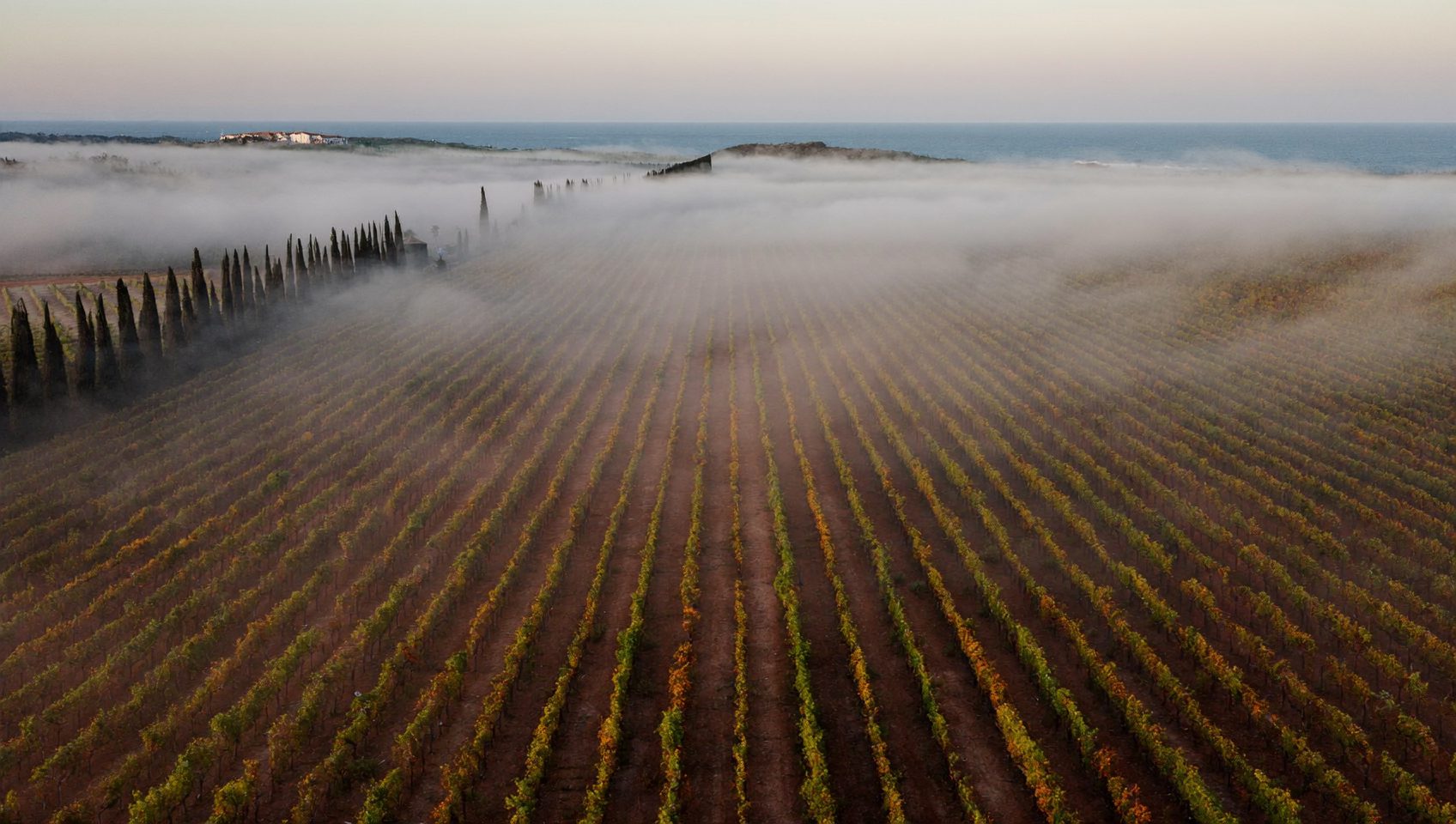
Primitivo on the market is almost always a dry red wine or, in many bottlings aimed at international mass retail, a slightly off-dry one. The distinct sense of softness that drinkers notice on the palate does not turn these bottles into dessert wines. It comes from high alcohol content, glycerol, aromas of ripe black fruit and a few grams of residual sugar left at the end of fermentation to balance the structure. The only truly sweet version codified at the top of the Apulian quality pyramid is Primitivo di Manduria Dolce Naturale DOCG, made from dried grapes and with at least 50 grams per litre of residual sugar. When you present your catalogue to foreign buyers, distinguishing on the technical sheet between perceived fruitiness and analytical data avoids misunderstandings about shelf positioning.
The short answer: is Primitivo a dry or sweet wine?
If a foreign distributor or purchasing manager asks whether your Primitivo is sweet, the technical answer is no for all ordinary production under the IGT Puglia, Gioia del Colle DOC, Primitivo di Manduria DOC and Primitivo di Manduria Riserva DOC labels. These wines are made to accompany the whole meal, grilled meats and structured dishes, not to close dinner with pastry.
The doubt arises mainly in Anglo-Saxon and North American markets, where searches about the grape's taste profile are very frequent among trade operators and final consumers. In the United States the grape is historically known for its genetic identity with Zinfandel, a variety that for decades was vinified both in very extract-rich red versions and in the hugely popular semi-sweet rosé versions (White Zinfandel). Those approaching Apulian labels for the first time therefore fear buying a cloying wine, or deliberately look for a soft, round style without knowing how to read it through the parameters of European regulation. To clarify this historical overlap, you can consult the article on the genetic and commercial link between Primitivo and Zinfandel in the United States.
In Apulian production, the large majority of the 29 million bottles that make up the supply chain protected by the Consorzio di Tutela del Primitivo di Manduria (spread over about 5,000 hectares and 18 municipalities across the provinces of Taranto and Brindisi, with 274 wineries and 4,890 grape growers) belong to the still table wine category, vinified dry or with residual sugar within the off-dry threshold. True dessert wine is a historic and craft niche, strictly separated from the rest of production through a dedicated Denominazione di Origine Controllata e Garantita.
Why Primitivo tastes sweet even when it is not
Confusing sweet wine with soft wine is one of the most common topics during B2B tastings at international trade fairs. When an importer tastes a dry Primitivo and comments on the "sweetness" of the sip, they are in fact reacting to four specific chemical and sensory factors that characterise this grape's physiology in the hot climate of southern Italy:
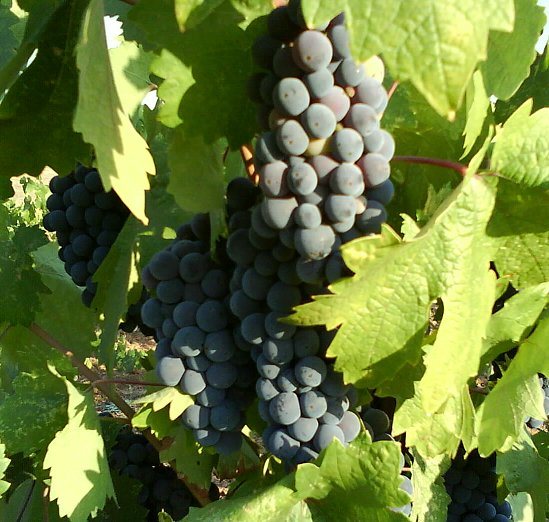
- Ethyl alcohol and glycerol: Primitivo ripens early (hence the name of the variety, linked to early flowering and harvesting compared with other black-skinned grapes), accumulating a considerable quantity of sugars in the berries. Once alcoholic fermentation is complete, these sugars become a significant alcohol content (minimum 13.50% vol for Primitivo di Manduria DOC and 14.00% vol for the Riserva version, but often higher in hot vintages). Alcohol and polyols such as glycerol stimulate the tongue's receptors, giving a warm, enveloping, pseudo-caloric tactile sensation that the human brain instinctively associates with sweet taste.
- Ripe fruit and jam aromas: the grape's primary aromatic profile, amplified by Apulian sunshine, recalls dried plum, morello cherry in spirit, ripe blackberry and carob. If the wine matures in barrique or tonneau, tertiary notes of vanilla, cocoa and sweet spices are added. The interaction between retronasal smell and taste creates a perceived sweetness (called the sweetness illusion in sensory literature) even in the total absence of residual glucose and fructose.
- Moderate acidity and velvety tannin: unlike grapes such as Nebbiolo or Sangiovese, which have a sharp acidic backbone and an astringent tannic structure that dries the gums, Primitivo often has a higher pH and soft tannins. With no hard contrast from acidity and astringency, the wine's roundness dominates the tasting.
- Targeted use of residual sugar from blending or fermentation arrest: many wineries working large export volumes choose not to bring fermentation to zero sugar, or they soften the finished wine by leaving between 6 and 12 grams per litre of residual sugar. This amount is not enough to make the wine a passito, but it rounds off the edges of the alcohol and suits the tastes of Northern European, Asian and North American markets. If you want to explore the international positioning of these styles, details are available in the export guide to the Primitivo grape.
Residual sugar: what EU regulation and the production rules say
To talk with the buyers of state monopolies (such as Systembolaget in Sweden, Vinmonopolet in Norway, Alko in Finland or the Canadian monopolies LCBO and SAQ) and with specialised importers, taste impressions are not enough: certified laboratory figures are needed.
At EU level, the classification of still wines by sugar content (expressed as the sum of glucose and fructose) is governed by Annex III, Part B of Commission Delegated Regulation (EU) 2019/33, which supplements Regulation (EU) No 1308/2013. The four legal categories for still wines (excluding sparkling wines, which follow the scale from Brut Nature to Doux) are summarised in the table below.
| EU legal term (IT / EN) | Residual sugar allowed | Acidity offset rule | Where Primitivo sits |
|---|---|---|---|
| Secco / Dry | Maximum 4 g/l | Up to 9 g/l if the total acidity (expressed in g/l of tartaric acid) is not lower by more than 2 g/l than the residual sugar content | Craft versions, Gioia del Colle DOC, old-vine selections and structured Riserva |
| Abboccato / Medium dry | Above the dry limit and up to 12 g/l | Up to 18 g/l if the total acidity (in g/l of tartaric acid) is not lower by more than 10 g/l than the residual sugar content | Many Primitivo IGT Puglia and Primitivo di Manduria DOC wines destined for international retail and Ho.Re.Ca. channels |
| Amabile / Medium sweet | Above the off-dry limit and up to 45 g/l | No acidity-based derogation | Special versions provided for by specific regional IGT or DOC rules |
| Dolce / Sweet | At least 45 g/l | No acidity-based derogation | Primitivo di Manduria Dolce Naturale DOCG (which by its rules requires at least 50 g/l) |
This table explains a commercially decisive point for exporters. A still Primitivo that registers 8 grams per litre of residual sugar and 6.2 grams per litre of total acidity in chemical analysis falls fully within the legal category of dry (Secco) thanks to the 2-gram gap between sugar and acidity allowed by Brussels. If instead a label shows 10 or 11 grams per litre of residual sugar and 5.5 grams per litre of total acidity, European law classifies it as off-dry (Abboccato / Medium dry).
For your professional buyers in the United Kingdom, Germany or the United States, a wine with 10-12 g/l of sugar is perceived as a soft, commercial food red (smooth red wine). However, in Scandinavian monopoly tenders, exceeding the 4 g/l or 9 g/l threshold can automatically exclude the sample if the tender requires a strictly dry red. To understand all the parameters buyers request for this denomination, you can read the dedicated page on what a foreign buyer should know about Primitivo di Manduria.
Primitivo di Manduria Dolce Naturale DOCG: the historic exception
If ordinary production plays on the balance between dry and off-dry, there is one case in which Primitivo is a true sweet wine for contemplation and dessert: Primitivo di Manduria Dolce Naturale DOCG. This style, which once formed part of the DOC rules, was separated and elevated to the rank of Denominazione di Origine Controllata e Garantita (the first DOCG in Puglia) to protect its traditional production method.
The name itself contains the technical key that every export manager must be able to explain to a foreign client: it is called Dolce Naturale because its sweetness and alcohol content derive entirely from dried grapes, with no addition of ethyl alcohol or wine spirit. It is therefore not a liqueur or fortified wine in the style of Portuguese Port or French Banyuls, but a natural passito wine in which fermentation stops spontaneously when yeasts can no longer work due to the high combined concentration of sugar and alcohol.
The requirements set by the production rules of Primitivo di Manduria Dolce Naturale DOCG are strict:
- Grape base: 100% Primitivo grapes (whereas in the base and Riserva Primitivo di Manduria DOC the grape must make up at least 85% of the blend, with any remainder up to 15% of other authorised non-aromatic black grape varieties).
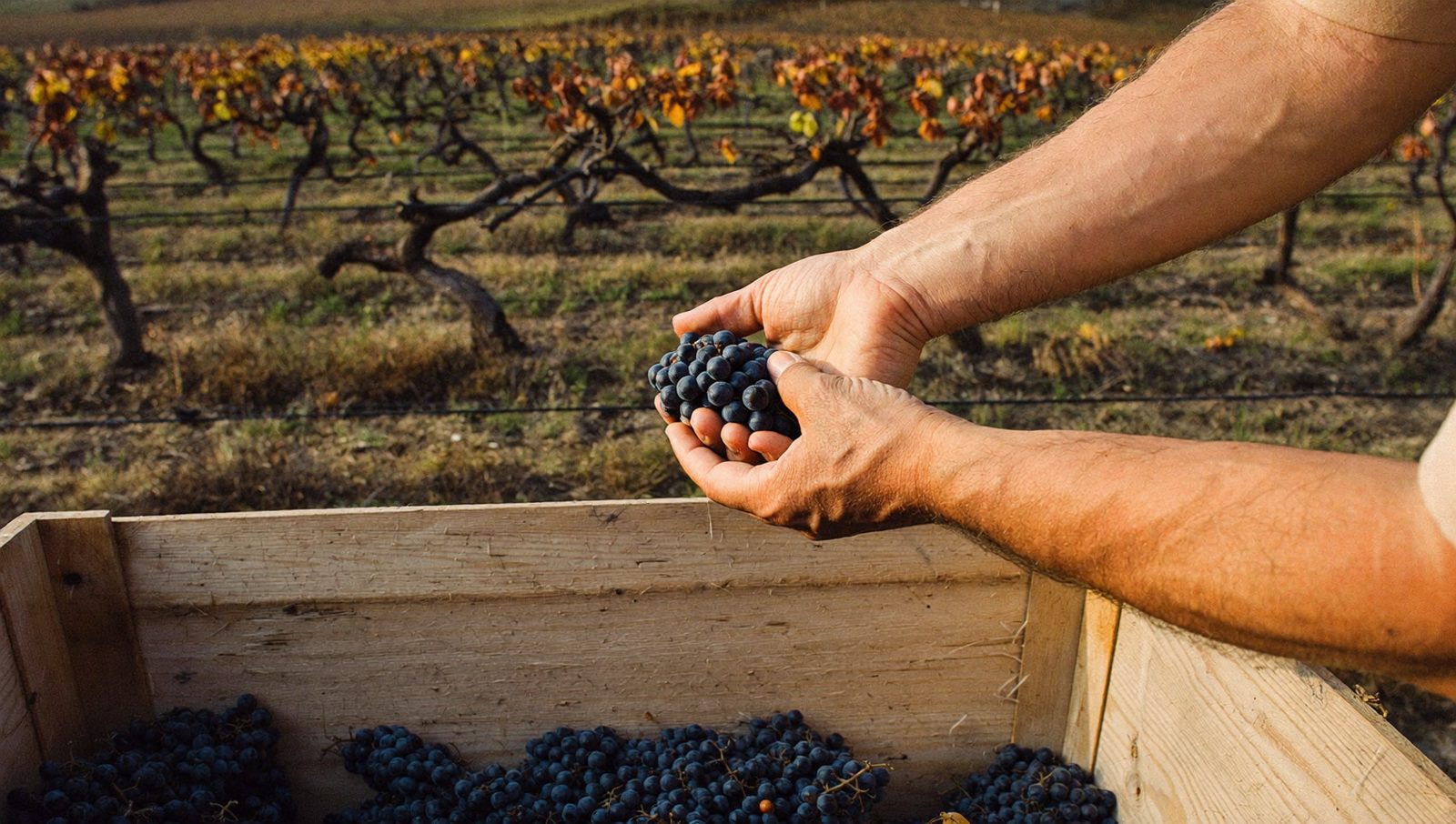
- Grape drying: the grapes must undergo natural drying on the vine (often aided by twisting the stem once ripeness is reached) or after harvest, on racks, in perforated crates or in a drying loft, until the must is concentrated.
- Prohibition of enrichment: the rules forbid any practice of enriching the must or wine to increase alcohol content.
- Alcohol content and residual sugar: the wine must have a minimum total alcohol content of 16.00% vol, of which at least 13.00% vol actual, and a minimum residual sugar content of 50 grams per litre.
- Release for sale: it cannot be placed on the market before 1 June of the year following the vintage (whereas the base DOC is released from 31 March after harvest).
For wineries operating in the wine territory of Manduria and the province of Taranto, Dolce Naturale DOCG is not a high-volume product but a prestigious calling card for fine dining, specialist wine shops and international sommeliers looking for a territorial pairing with aged blue cheeses, dry almond pastries and dark chocolate.
What to put on the technical sheet for foreign importers
When you send samples or price lists to an importer, leaving ambiguity about the sugar content of your Primitivo slows negotiations or leads to the wine being tasted by the wrong client. A distributor supplying contemporary bistros and looking for craft wines with less than 2 g/l of sugar will immediately discard a sample at 11 g/l if not warned in advance. Conversely, a buyer for German or US mass retail seeking a soft, round red might find a dry Primitivo at 1.5 g/l too austere.
To make your B2B documentation transparent and immediate, always include these four analytical data points on the technical sheet (in both Italian and English) for every vintage on the market:
- Residual Sugar (RS) expressed in g/l: avoid vague terms such as "dry" or "soft" without a number. Writing Residual Sugar: 3.2 g/l or Residual Sugar: 9.5 g/l allows the buyer to understand the winery's stylistic approach at a glance.
- Total Acidity (TA) expressed in g/l of tartaric acid, and pH: as laid down by Delegated Regulation (EU) 2019/33, the ratio between total acidity and residual sugar determines not only the legal labelling category but also the taste balance in the glass.
- Actual alcohol content (% vol) and net dry extract (g/l): declaring the real alcohol strength avoids surprises in excise calculations in countries where wine tax rises by alcohol bands (as in the United Kingdom or Scandinavian markets), and in US customs duties, which vary above and below the 14% vol threshold.
- Winemaking and ageing method: specify whether the grapes are harvested at physiological ripeness or in slight overripeness (late harvest / slightly overripe grapes), so as to technically justify the richness of the fruit even when the wine has fully fermented out its sugars.
Frequently asked questions
How many grams of sugar does a dry Primitivo have?
According to Delegated Regulation (EU) 2019/33, a still wine may be labelled dry if its maximum residual sugar is 4 grams per litre. The threshold rises to 9 grams per litre provided that the total acidity (expressed in grams of tartaric acid per litre) is not lower by more than 2 grams than the residual sugar content.
What is the difference between Primitivo di Manduria DOC and Dolce Naturale DOCG?
Primitivo di Manduria DOC (including the Riserva version) is a dry or off-dry table wine, made with at least 85% Primitivo grapes and with a minimum total alcohol content of 13.50% vol (14.00% vol for the Riserva). Primitivo di Manduria Dolce Naturale DOCG, by contrast, is a sweet dessert and contemplation wine made from 100% dried Primitivo grapes, with at least 16.00% vol of total potential alcohol (minimum 13.00% vol actual) and at least 50 g/l of residual sugar.
Is Primitivo Dolce Naturale DOCG a fortified wine?
No, it is not a liqueur or fortified wine. Unlike Port or Marsala, the rules of Primitivo di Manduria Dolce Naturale DOCG forbid any addition of alcohol or enrichment of the must: the residual sugars (minimum 50 g/l) come exclusively from the natural drying of the grapes and the spontaneous stopping of fermentation.
Why do American importers always ask for the residual sugar of Primitivo?
In the United States Primitivo is associated with Zinfandel, a genetically identical grape that the American market has long vinified in semi-sweet rosé versions (White Zinfandel) or in red wines with high residual sugar. Declaring the grams per litre of sugar on the technical sheet allows US importers to correctly place the Apulian label among quality dry red wines.
Sources
- Consorzio di Tutela del Primitivo di Manduria DOC e DOCG — Data on the denomination and production rules
- EUR-Lex — Commission Delegated Regulation (EU) 2019/33, Annex III, Part B (Indication of sugar content for still wines)
- Ministry of Agriculture, Food Sovereignty and Forestry (MASAF) — Production rules for Italian DOP and IGP wines
- Federdoc — National Confederation of Voluntary Consortia for the Protection of Italian Wine Denominations
- OIV — International Organisation of Vine and Wine, technical standards and oenological definitions
- Primitivo vs Zinfandel: US Label Rules for Importers
- PIWI resistant grape varieties: what and where allowed
- Prosecco DOC or DOCG: DOP, Rive and Cartizze for importers
- Pinot Grigio delle Venezie DOC: Zone, Rules, Ramato, Export
- Red wine maceration: pumping over, délestage and punch-downs
- Pesticide-free wine: residues, testing and buyer demands