White grape pressing: pneumatic press, must fractions and wine yield
Wines Export Editorial · Last updated:
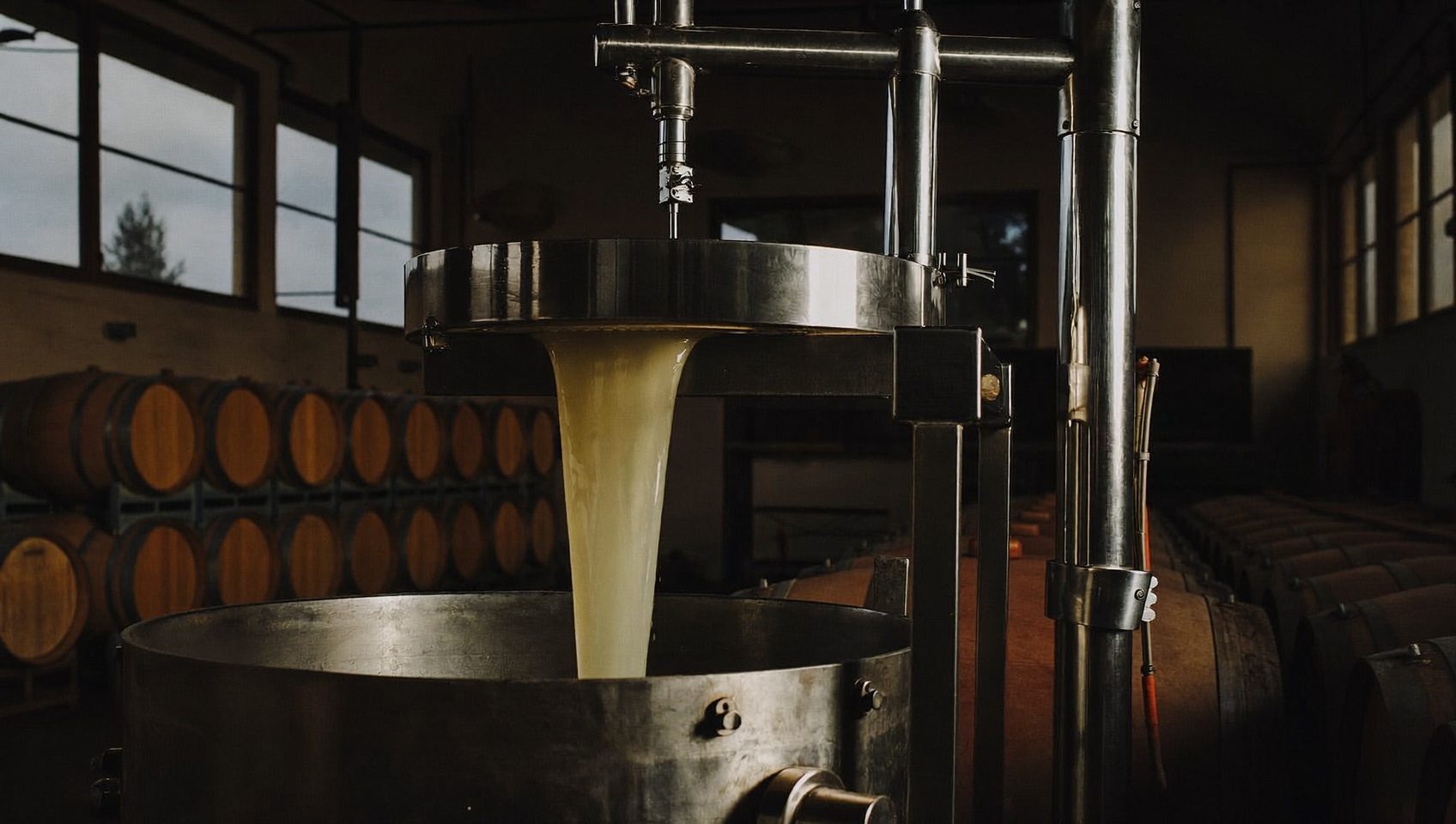
Pressing determines how much juice from white grapes enters the must and with what extract load. In the winery, you first decide whether to destem or press whole clusters, then which press to use, and finally how to separate the fractions: free-run must, first press and second press. For aromatic varieties, the pressing cycle and the cutting of fractions matter as much as the choice of yeast, which should be read together with the guide to yeasts for aromatic white grapes. If you use pectolytic enzymes, they act before pressing and change yield and clarity, as explained in the entry on pectolytic enzymes, dosages for extraction and fining.
Destemming or pressing whole clusters: what changes in the must
Destemming separates the stems from the berries before pressing. Whole clusters, by contrast, go into the press as they are. The difference lies in how the stems behave. With whole clusters, the stems form channels that facilitate the flow of juice, and pressing takes place with less contact between skins and must. The result is a must that is generally less loaded with herbal tannins and skin extract, with a free-run fraction that tends to stay clearer.
Destemming is more suitable when the grapes have suffered rot, when the stems are underripe, or when your press cannot handle whole clusters well. With destemming, the stems do not enter the process, and the must depends more on pressure and contact time. The advantage is finer control over pressing. The drawback is that part of the natural drainage the stems provide is lost.
No single choice is valid for every variety. A Greco or a Malvasia with delicate aromas may react differently from a Chardonnay pressed as whole clusters, and the choice should be tested on small lots before deciding for the entire harvest. For each lot, record the type of destemming, the maximum pressure and the time, so that you can compare the results objectively.
Pneumatic, plate and hydraulic presses: what changes in the winery
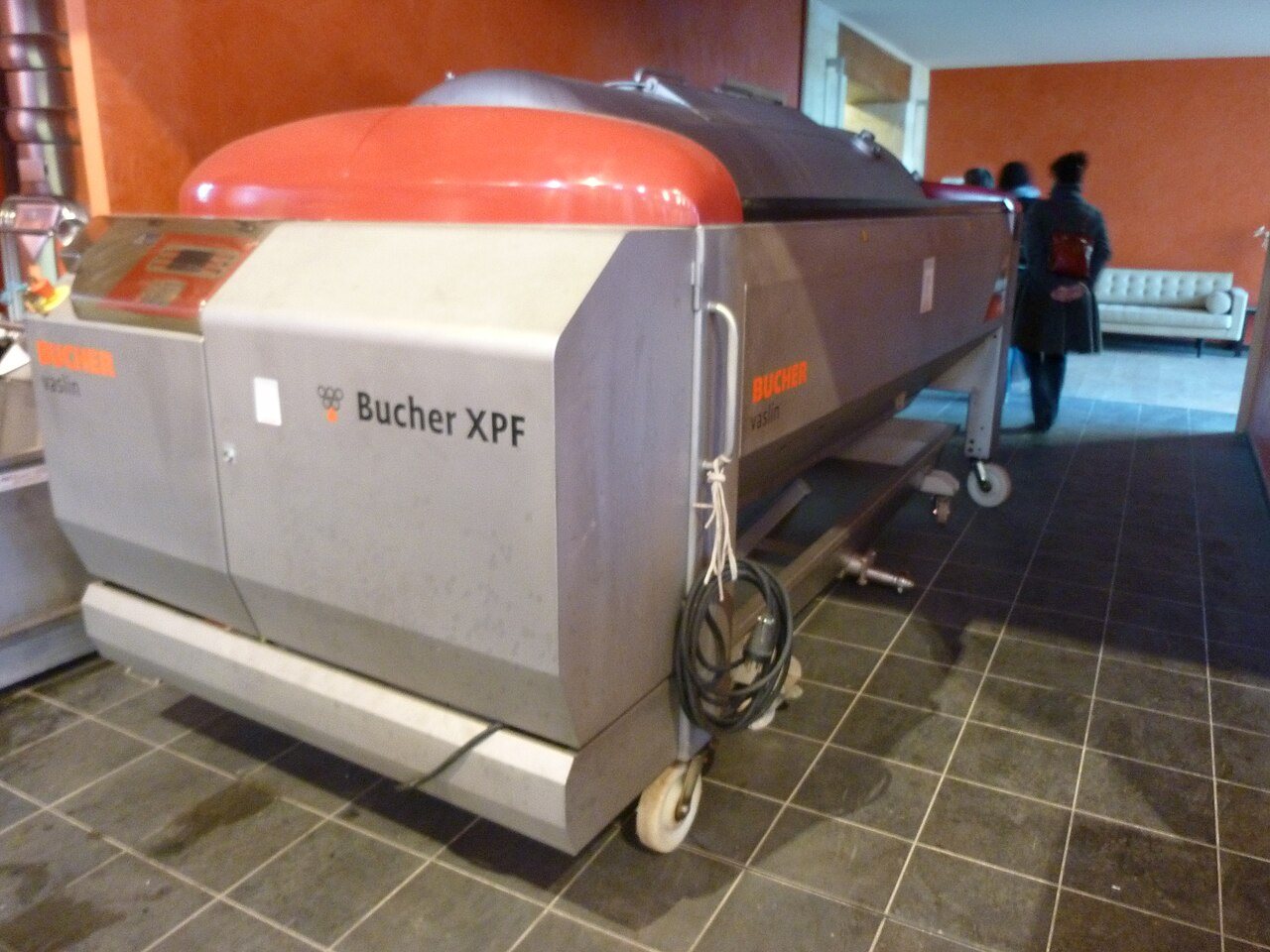
The presses used for white grapes fall into three main families. The pneumatic press has an internal membrane that inflates against the clusters and pushes the juice outward. Pressure rises gradually, and the cycle can be programmed. The plate press squeezes the clusters between two surfaces, with pressure applied by hand or by a simple mechanical system. The hydraulic press uses a piston that compresses the basket, with forces that can be high.
| Type of press | How it works | Strong point | Critical point in the winery |
|---|---|---|---|
| Pneumatic | Membrane that inflates in the cylinder, gradual pressure | Programmable and repeatable cycles, gentle extraction | Purchase cost and membrane maintenance |
| Plate | Pressure between plates, with manual or mechanical adjustment | Simplicity and visual control of the press | Longer manual work and often lower yield |
| Hydraulic | Piston that compresses the basket | High force and short times | High pressures tend to extract more components from the skins |
The pneumatic press suits those who want to repeat the same programme across several vintages, because it allows every cycle to be recorded. The plate press works well for small quantities, with an operator who feels how the clusters behave. The hydraulic press is more efficient when volumes are large, but it requires more attention to pressure, which must stay below the value your experience judges suitable for the variety.
The practical advice is to start from the volume you need. For a winery processing a few tonnes, a well-maintained pneumatic or plate press is enough. As volume grows, a pneumatic press with stored programmes prevents pressing from depending on the skill of whoever is on duty. The equipment to buy first can be found in the list of equipment for a small winery in order of priority.
Pressing programmes and separation of fractions
A pneumatic pressing programme follows a sequence of cycles. Each cycle takes the membrane to a higher pressure, then there is a drainage pause during which the juice runs out without force. The pause is important, because it allows the must to flow without crushing the skins. At the end of each cycle, the must is collected in a separate container, so that you can decide later which fractions to combine and which to exclude.
The programme should be written before the harvest and then corrected using the data from the lot. There is no universal number of cycles. What matters is that every programme is recorded, with the final pressure, the duration and the quantity of must obtained. After a few vintages, the winery will have its own table for each variety, and can repeat the desired result.
With the plate press or the hydraulic press, separation is done by eye and by weighing the must collected. Here too, it is advisable to record for each pressing the quantity and the moment when the must changes colour or density. The log allows you to decide, with data in hand, whether the second press should be kept separate or added to the rest.
Free-run must and press must: what to do with them
Free-run must is the juice that flows out of the grapes before any pressure is applied, or with minimal pressure. It is usually the clearest, with fewer polyphenols and less potassium than the later fractions. For many quality white wines it is the fraction to keep separate and handle with care, because it has the cleanest aromatic profile.
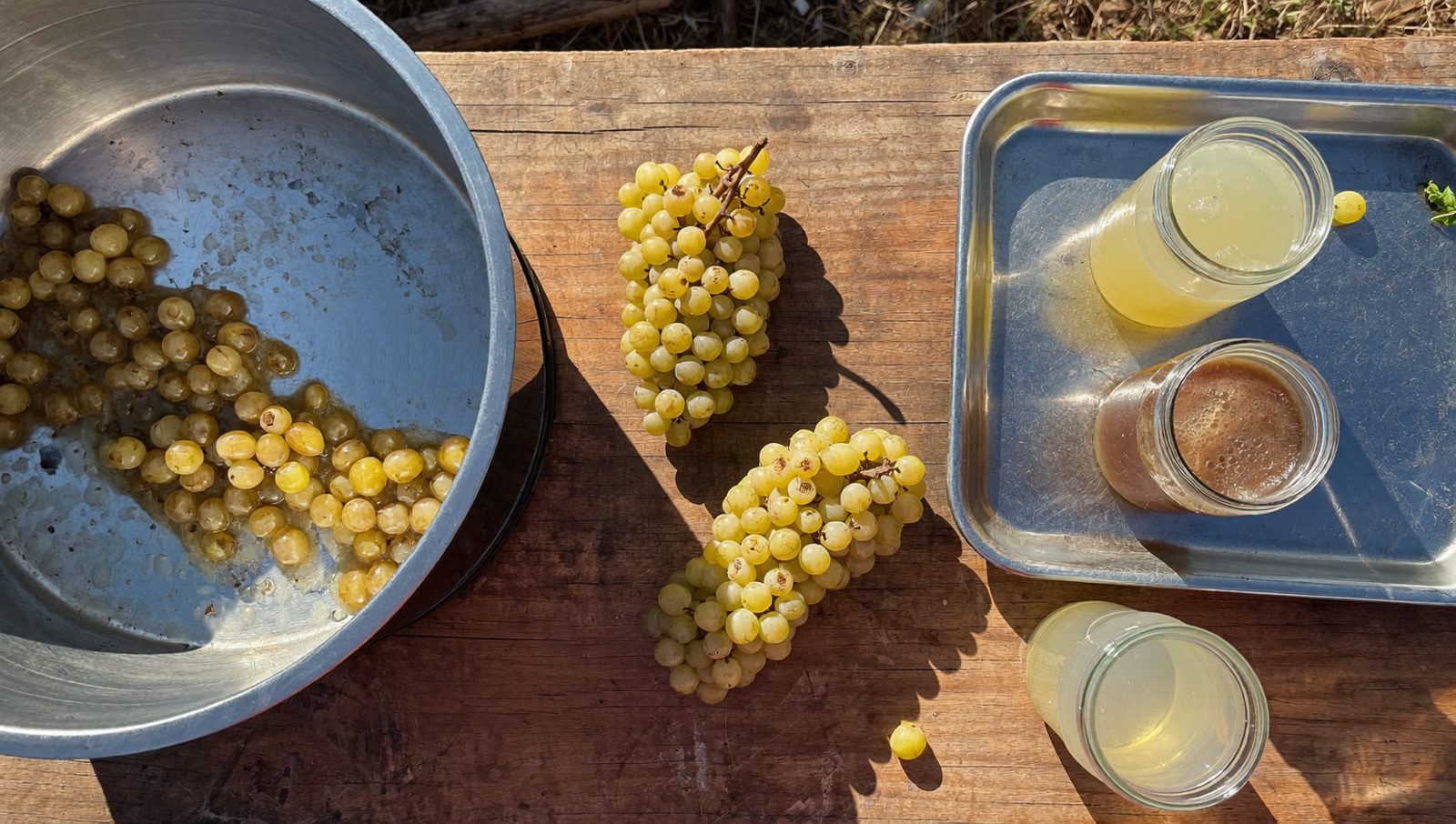
The first press, that is the must released at intermediate pressure, contains more extract and more potassium, with an acidity that tends to fall and a pH that tends to rise compared with free-run must. The second press, at higher pressures, carries more components from the skins and stems, and may show bitter or astringent notes. This fraction is not to be discarded, but it must be assessed. It can be used for a base wine, for a blend or, where the profile allows, for a separate production.
Blending the fractions is a stylistic decision. A fresh, aromatic wine is often built from free-run must and part of the first press. A wine with more structure can accept a share of the second press. There is no universal proportion. The choice should be made through comparative tastings, recording colour, aroma and acidity for each fraction.
Must oxidation: protecting or hyperoxygenating
During pressing, the must comes into contact with air, and phenolic substances oxidise. Oxidation changes colour and aroma, and in some cases leads to notes of hazelnut or cooked apple. For a fresh white wine, the aim is to limit it. For a more oxidative style, the same reaction can be pursued in a controlled way.
Control starts with time. The longer the must remains exposed to air, the more oxidation increases. It is advisable to reduce transfers, use closed containers, and work at low temperature. Inert gas, such as carbon dioxide or nitrogen, also protects the must during transfer stages. Sulphur dioxide is the most common system for limiting oxidation, and the doses per stage, along with the EU limits, are described in the entry on sulphur dioxide in the winery.
Intentional hyperoxygenation is not a mistake. Some white wine styles require a controlled share of oxidation, and in that case contact with air should be planned. The difference lies in the decision. If oxidation is not wanted, it must be prevented. If it is wanted, it must be measured and stopped at the right moment.
AWRI, in its portal dedicated to winemaking, lists the aeration of fermentations among the technical topics it works on. The topic is linked to pressing, because the air that enters the must during pressing acts before fermentation.
Maximum grape-to-wine yield and disposal of pomace
Pressing also determines yield, that is how much wine you obtain from a quintal of grapes. European and national rules govern pressing and the destination of by-products such as pomace and lees. For DOP and IGP wines, the maximum grape-to-wine yield is set by the production specification. These texts should be read in the version in force before the harvest, because they may change with revisions.
Beyond European and national rules, each region and each designation may have its own rules. Pomace, meaning the skins and seeds left after pressing, is subject to traceability rules. For this reason the winery must know where it goes and with which documents. The ICQRF page publishes the vademecum for the 2026-2027 harvest campaign and information on the accompanying documents for wine products, including the electronic MVV-E document. It is the starting point for understanding which records to keep during the harvest.
It is advisable to manage the yield limit before pressing, by choosing the moment of picking and the type of pressing. An overly ripe harvest or excessive pressure increases the quantity of must, but also the risk of exceeding the threshold. The moment of picking is assessed using ripeness parameters, and the entry on Babo degrees and choosing the moment of harvest explains how to read these values.
IFV, on its website, publishes technical news on vineyard and wine, including conferences dedicated to wine quality. For the pressing and yield aspects, consult IFV's technical texts together with the regulatory sources, because the framework changes from one vintage to the next.
Frequently asked questions
Which press should a small winery choose?
For a few tonnes, a pneumatic press or a well-maintained plate press is enough. The pneumatic press is worthwhile when you want to repeat the same programme across several vintages. The plate press requires more labour, but visual control helps those who are just starting out.
Can free-run must be combined with the first press?
Yes, but it is a stylistic choice. Free-run must is the clearest and most aromatic, and combining it with the first press brings more extract. It is advisable to carry out a comparative tasting before deciding, recording colour and acidity for each fraction.
How do you avoid oxidation during pressing?
Reduce the time of exposure to air, work at low temperature, use closed containers and inert gas during transfers. Sulphur dioxide, with doses per stage, remains the most common system. Doses should be checked against the dedicated entry.
Where is the wine yield limit verified?
For DOP and IGP wines, the maximum grape-to-wine yield is verified in the production specification in force. European, national and regional rules also govern pressing and by-products. The ICQRF page indicates the accompanying documents and the harvest campaign vademecum, to be consulted before picking.
Sources
- Wine Acidification and Deacidification: The Practical Guide
- Albeisa Bottle: What It Is and Which Wines Use It
- Wine analysis methods: OIV, FTIR, enzymatic kits compared
- Vineyard soil management: cover crops, green manure, tillage
- Wine bacteria: useful lactic and spoilage types
- Vineyard management calendar: work by season