Pinot Grigio delle Venezie DOC explained: rules, zone, ramato, state seal, Friuli, Trentino and IGT compared, and export
Wines Export Editorial · Last updated:
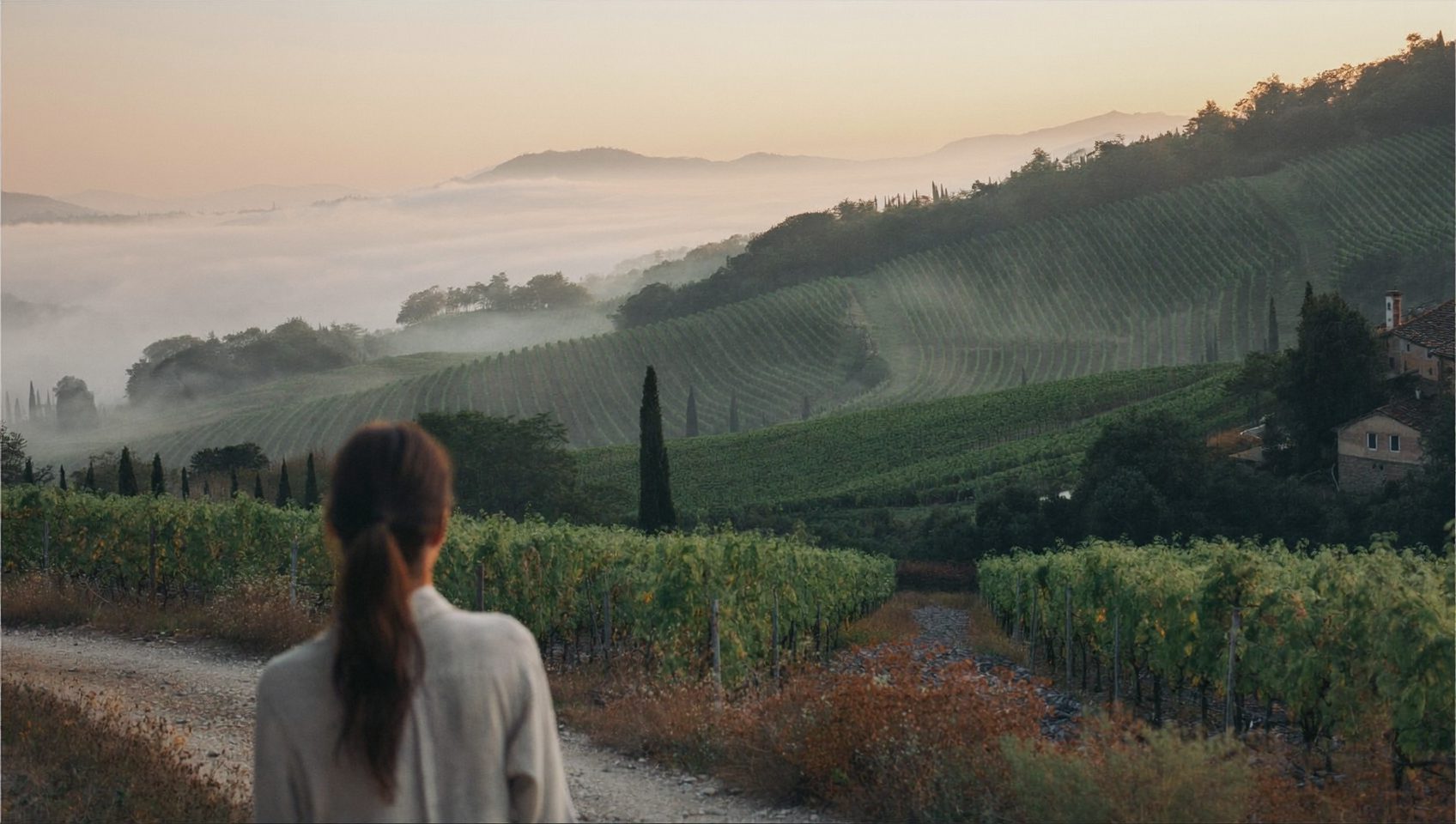
Pinot Grigio delle Venezie DOC is the designation of origin that covers Pinot Grigio across the whole of north-east Italy: the autonomous Province of Trento and the regions of Friuli Venezia Giulia and Veneto (DOC delle Venezie disciplinare, art. 3). The wine must come from at least 85 percent Pinot Grigio grapes, with a maximum yield of 18 tonnes per hectare and at least 11 percent alcohol, and may be still, semi-sparkling (frizzante) or sparkling (spumante), also in a rosato or ramato version; the same DOC also provides for a Bianco (disciplinare, art. 1, 2, 4 and 6). Every bottle carries the Italian state seal (Consorzio DOC delle Venezie). The DOC applies from the 2017 harvest (Consorzio, technical FAQ); EU protection came with Commission Implementing Regulation (EU) 2020/1064 of 13 July 2020, and the text in force is the one amended by the decree of 15 July 2021 (Gazzetta Ufficiale n. 180, 29 July 2021). According to the Consorzio, the supply chain covers about 27,000 hectares, accounts for 85 percent of Italian Pinot Grigio and 43 percent of world Pinot Grigio, and produces about 230 million bottles a year (Consorzio, press conference of 10 March 2026).
This page is the full guide to the denomination, including what a buyer or seller abroad should check. Ex-cellar quotations are in Pinot Grigio export price; the wider area in what the Triveneto includes, and the other Italian whites in Italian white grape varieties for importers.
What the DOC delle Venezie is and when it was created
It is an interregional denomination built around one grape variety. The name "delle Venezie" has been used on labels since 1977, when European rules created "table wines with a geographical indication"; in 1995, by decree of 21 November, the delle Venezie IGT was born (disciplinare, art. 9). The DOC starts with the 2017 harvest (Consorzio, technical FAQ). On 13 July 2020 the European Commission granted protection to the PDO "delle Venezie", in Slovene "Beneških okolišev", with Implementing Regulation 2020/1064, and with Regulation 2020/1065 renamed the old IGT "Trevenezie" (Gazzetta Ufficiale n. 180, 29 July 2021; Trevenezie IGT disciplinare). The latest amendment, an ordinary one, is the decree of 15 July 2021, requested by the Consorzio through the three administrations (Gazzetta Ufficiale n. 180, 29 July 2021).
The disciplinare explains why the denomination exists: in the last twenty years of the twentieth century Pinot Grigio plantings grew strongly in the north-east, partly driven by international demand, and the area now holds about 85 percent of Italy's productive potential for the variety, so that Pinot Grigio delle Venezie is identified as Italy's reference Pinot Grigio (disciplinare, art. 9). The protection consortium was founded in 2017 and has been recognised by the Ministry of Agriculture since 11 August 2020, with a mandate covering the whole denomination (Consorzio, "Il nostro ruolo" page). Annual compliance checks are carried out by the control body Triveneta Certificazioni (disciplinare, art. 9 on the control structure).
Where it is produced: regions and provinces
The grape-growing zone is the entire territory of the autonomous Province of Trento and of the regions of Friuli Venezia Giulia and Veneto (disciplinare, art. 3). The annex to the disciplinare lists the authorised varieties province by province: Trento; Gorizia, Pordenone, Trieste and Udine; Belluno, Padua, Rovigo, Treviso, Venice, Verona and Vicenza (disciplinare, annex 1).
| What | Where | Source |
|---|---|---|
| Vineyards | autonomous Province of Trento, Friuli Venezia Giulia, Veneto | art. 3 |
| Winemaking, frizzante and spumante production | in the same three administrations and, by tradition, also throughout the Province of Bolzano | art. 5, para. 1 |
| Bottling | not tied to the zone: also allowed abroad, under control and with the state seals | Consorzio, technical FAQ |
The disciplinare describes a territory closed to the north by the Alps and crossed by the Adige, Brenta, Piave, Cellina, Meduna, Tagliamento and Isonzo rivers. In the hills the soils are limestone or dolomitic limestone; in the upper and middle plain gravelly, sandy and free-draining; in the lower plain silty clay. Mean annual temperatures range from 10-12 to 13-14 °C, rainfall from 700 to 1,300 mm a year, and the day-night temperature swings of August and September preserve acidity and aromas (disciplinare, art. 9).
One rule buyers notice at once: the label may not name municipalities, hamlets, areas or localities within the zone (disciplinare, art. 7, para. 4). A Pinot Grigio delle Venezie cannot say which village it comes from; for a narrower origin you need the territorial DOCs described further down.
Grapes, yields and alcohol: what the disciplinare requires
| Rule | What it requires | Source |
|---|---|---|
| Pinot Grigio | at least 85 percent of the estate vineyards | art. 2, para. 1 |
| Other grapes allowed | Chardonnay, Pinot Bianco, Müller Thurgau, Garganega, Verduzzo, Tocai Friulano, up to 15 percent; for ten years from entry into force also other authorised non-aromatic white grapes, Sauvignon included | art. 2, para. 1 |
| Maximum grape yield | 18 tonnes per hectare; above 20 percent over that limit the whole lot loses the DOC | art. 4, para. 5 |
| Minimum natural alcohol of the grapes | 9.50 percent; 9.0 percent for spumante and frizzante | art. 4, para. 9 |
| Grape-to-wine yield | 70 percent; between 70 and 80 the excess loses the DOC and the grape name, above 80 the whole lot loses it | art. 5, para. 4 |
| Blending | up to 15 percent of Bianco delle Venezie, also from other vintages, if the vineyard is pure Pinot Grigio | art. 5, para. 3 |
| Vineyards | overhead pergola (tendone) and Bellussi systems excluded; existing ones may stay for up to 15 years | art. 4, para. 2 |
The yield in the disciplinare is a ceiling, not the one applied every year. The regions and the Province of Trento can lower it at the Consorzio's proposal (disciplinare, art. 4, para. 6), and they do: for the 2025 harvest the yield was cut to 170 quintals per hectare, 20 of them held in storage; for 2026 to 160 quintals, with 130 free and 30 under administrative storage (Consorzio, production management page; press release of 21 May 2026). For the 2026/2027 and 2027/2028 seasons, registration in the DOC of Pinot Grigio vineyards planted or grafted after 31 July 2021 remains suspended (Consorzio, press release of 12 August 2026). For a buyer this means supply is managed: a vintage is shaped not only by the harvest but also by the measures decided each spring.
The styles: still, frizzante, spumante and Bianco
The disciplinare provides for three families (art. 1):
| Style | Main features | Source |
|---|---|---|
| Pinot Grigio, also rosato or ramato | straw yellow to golden, or pink or copper; fruity, sometimes floral; dry to off-dry (abboccato); minimum total alcohol 11.00 percent, acidity 4.5 g/l, extract 15.0 g/l | art. 6 |
| Pinot Grigio frizzante, also rosato or ramato | fine, fleeting bubbles; dry to off-dry; same minimums as the still wine | art. 6 |
| Pinot Grigio spumante, also rosato or ramato | tank (autoclave) secondary fermentation only, categories sparkling wine and quality sparkling wine; brut nature (dosaggio zero) to dry; alcohol 11.00 percent, acidity 5.0 g/l, extract 14.0 g/l | art. 1, art. 5 para. 6, art. 6 |
| Bianco | at least 50 percent Chardonnay, Pinot Bianco, Müller Thurgau, Garganega, Verduzzo and Tocai Friulano; dry; alcohol 11.00 percent | art. 2, para. 2; art. 6 |
Labelling rules: the vintage is compulsory except for non-vintage spumante and for frizzante; the grape name Pinot Grigio may precede the denomination; for rosato and ramato the word "rosé" is also allowed; adjectives such as superiore, extra, fine, scelto or selezionato are banned (disciplinare, art. 7). The Consorzio gives both "delle Venezie" DOC Pinot grigio and Pinot grigio "delle Venezie" DOC as correct forms (Consorzio, technical FAQ).
Ramato: what it is and where it comes from
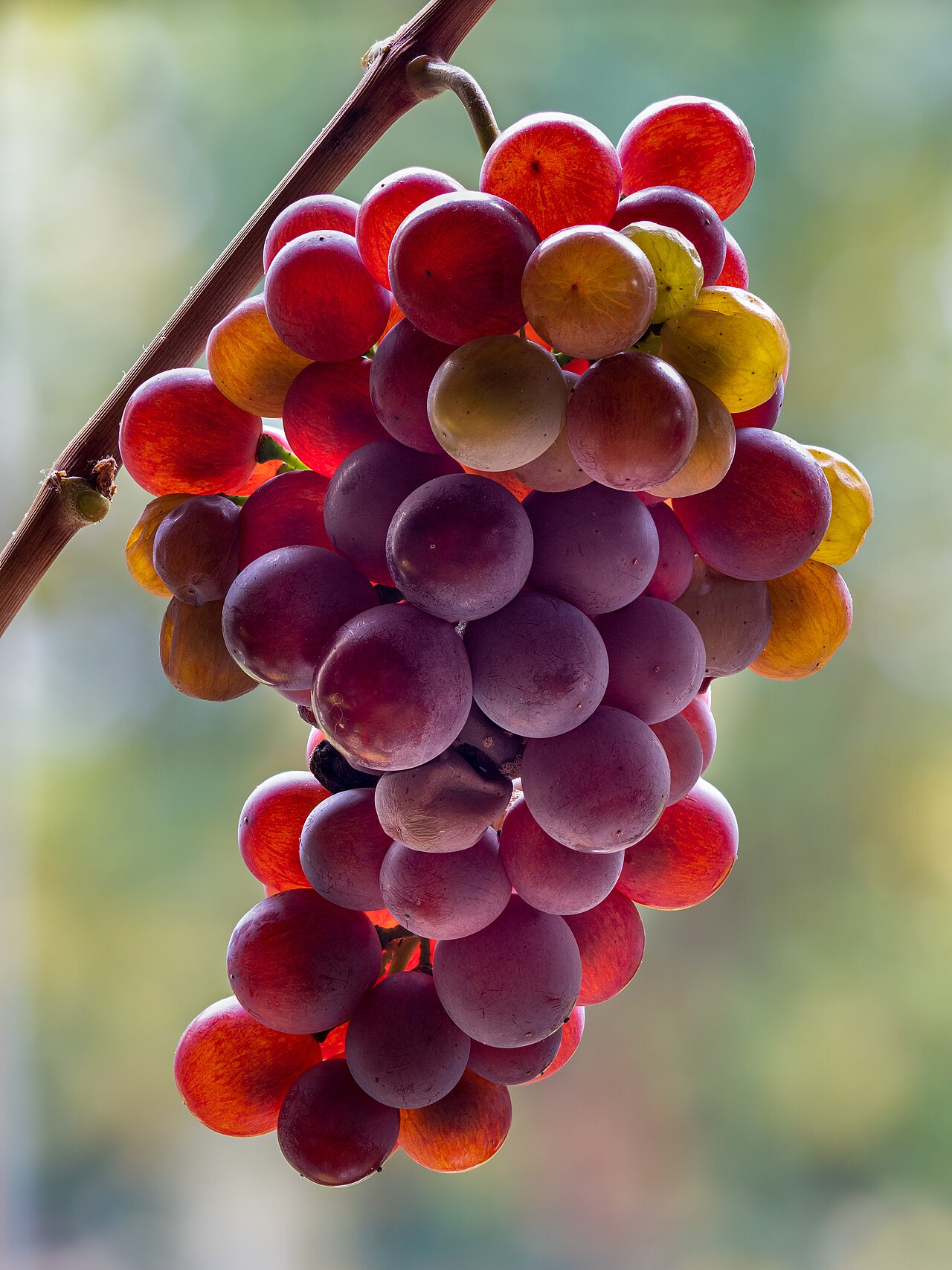
Ramato is a copper-coloured Pinot Grigio, its colour coming from the natural pigment of the skins. Pinot Grigio has coloured berries, and the disciplinare notes that writings from the Venetian Republic era already use the terms "ramato", mainly in today's Friuli Venezia Giulia, and "rosato", mainly in Veneto and Trentino (disciplinare, art. 9).
According to the same text, at the end of the twentieth century the choice of vineyards on deeper soils, training systems that expose the bunches more to the sun (pergola trentina, Sylvoz, Guyot, double arched cane) and the selection of clones richer in anthocyanins made it possible to obtain shades from pale pink to deep copper; the colour then has to be fixed in the cellar with suitable techniques (disciplinare, art. 9). Official recognition of the term rosato for Pinot Grigio came with the 1995 decree on the region's IGTs (disciplinare, art. 9). Today ramato is provided for the still, frizzante and spumante wines (disciplinare, art. 1 and 6). The Friuli and Trentino DOCs also allow a copper colour for their Pinot Grigio (Friuli disciplinare, art. 6, and Trentino disciplinare, art. 6).
State seal, packaging and bottling abroad
Every pack of DOC delle Venezie carries the contrassegno di Stato, the state seal printed by the Italian State Mint and Polygraphic Institute (Istituto Poligrafico e Zecca dello Stato) and issued by the control body after checking conformity, analysis and traceability (Consorzio, "Il nostro ruolo" page). It goes on bag-in-box too and cannot be replaced by other traceability systems (Consorzio, technical FAQ). Since March 2026 the Consorzio has presented it as the bottle's digital passport, with a QR code developed with the State Mint (Consorzio, press release of 11 March 2026).
| Rule | What it requires | Source |
|---|---|---|
| Still and frizzante wines | glass up to 6 litres, flush cork or long-skirt screw cap; bag-in-box up to 6 litres allowed | disciplinare, art. 8, para. 1 |
| Spumante | glass only, up to 18 litres; plastic stoppers banned; screw or tear-off closures only up to 0.200 litres | disciplinare, art. 8, para. 2 |
| Bulk sale to consumers | not allowed: everything must be packed with the seal | Consorzio, technical FAQ |
| Bottling abroad | allowed: the bulk wine leaves already certified as suitable, the foreign bottler joins the control system, orders the seals and reports the bottling | Consorzio, technical FAQ |
Delle Venezie, Friuli, Trentino, Alto Adige and IGT: the differences
The same north-eastern Pinot Grigio can be sold under different names. The territorial DOCs coexist with the DOC delle Venezie on the same vineyards, and the Consorzio regulates reclassification of Pinot Grigio from those DOCs into its own within a window set each year, for 2026 from 1 October to 30 November (Consorzio, production management page). The freeze on new Pinot Grigio vineyards decided for the 2022-2025 seasons was shared with the Arcole, Garda, Grave, Friuli, Trentino, Valdadige, Vicenza and Venezia DOCs (Consorzio, technical FAQ).
| Denomination | Zone | Maximum grape yield | Minimum total alcohol for Pinot Grigio | Worth knowing |
|---|---|---|---|---|
| DOC delle Venezie | Trento, Friuli Venezia Giulia, Veneto | 18 t/ha | 11.00 percent | still, frizzante, spumante, also rosato or ramato; no village names on the label (disciplinare, art. 1, 3, 4, 6, 7) |
| DOC Friuli or Friuli Venezia Giulia | municipalities of Friuli Venezia Giulia listed in the disciplinare | 14 t/ha | 10.5 percent | at least 85 percent of the variety; colour may be copper; grape-to-wine yield 75 percent (Friuli disciplinare, art. 2, 3, 4, 5, 6) |
| DOC Trentino | Province of Trento | 15 t/ha | 11.00 percent | straw yellow or copper colour; a Riserva exists (Trentino disciplinare, art. 1, 4, 6) |
| DOC Alto Adige | Province of Bolzano | 13 t/ha; 9.8 t/ha with an additional geographical unit | 11.50 percent; 11.00 in the Valle Venosta sub-zone | outside the delle Venezie grape zone; also spumante, passito, late harvest, riserva (Alto Adige disciplinare, art. 1, 4, 6) |
| DOC Valdadige | municipalities in the provinces of Trento, Bolzano and Verona | 15 t/ha | 10.5 percent | at least 85 percent of the variety; residual sugar no more than 6 g/l (Valdadige disciplinare, art. 2, 3, 4, 6) |
| IGT Trevenezie, IGT Veneto, IGT Venezia Giulia | same regions | 19 t/ha for Pinot Grigio | 9.00 percent (Trevenezie) | the name Pinot Grigio may not appear on the label (Trevenezie, Veneto and Venezia Giulia IGT disciplinari, art. 4, 6, 7) |
In the Ministry's text of the Trentino DOC, the 15-tonne figure for Pinot Grigio carries a reference to a 2015 amendment proposal; anyone buying a Trentino Pinot Grigio can ask the winery for the text in force. The practical consequence of the last row is the most useful one: a north-eastern wine sold as IGT Trevenezie, Veneto or Venezia Giulia cannot declare Pinot Grigio. If the grape is on the label, the denomination will be one of the DOCs. The regions are covered in exporting wine from Veneto, wine from Friuli Venezia Giulia and wine from Trentino-Alto Adige.
The Consorzio and the denomination's figures
The Consorzio publishes year-end figures at the start of each year. They are the Consorzio's figures, not independent statistics.
| Item | Value | Source |
|---|---|---|
| Area | about 27,000 hectares | Consorzio, 10 March 2026 |
| Supply chain | 6,141 growers, 575 winemaking companies, 371 bottling companies | Consorzio, 10 March 2026 |
| Share | 85 percent of Italian Pinot Grigio, 43 percent of world Pinot Grigio | Consorzio, 10 March 2026 |
| Production | about 230 million bottles a year | Consorzio, 10 March 2026 |
| Bottled in 2025 | 1,694,176 hectolitres, against 1,707,064 in 2024 | Consorzio, 2025 results, 23 January 2026 |
| Certified in 2025 | 1,795,738 hectolitres, up 2.3 percent | Consorzio, 2025 results, 23 January 2026 |
| Bottled in 2024 | up 3 percent on 2023 | Consorzio, 2024 results, 13 January 2025 |
| Share exported | 95 percent of volumes go to international markets, the United States first | Consorzio, Stati Generali del Vino, 17 February 2025 |
In the same 2025 results the Consorzio calls Pinot Grigio delle Venezie the most exported Italian white wine in the world (Consorzio, 23 January 2026). That is the Consorzio's own description and refers to white wines; the sources listed below contain no official ranking naming it Italy's most exported wine overall.
What it tastes like and what it goes with
The legal description of still Pinot Grigio: colour from straw yellow to golden, or pink or copper; fruity, intense, characteristic nose, sometimes slightly aromatic with floral notes; fresh, harmonious palate, dry to off-dry (disciplinare, art. 6). The link-to-territory section adds good structure and a freshness driven by the variety's typical acidity, with notes of white flowers, pear, green apple and sometimes tropical fruit; in the spumante the acid balance is what matters most (disciplinare, art. 9).
For food, the disciplinare recommends the ramato and rosato versions with cheese, prosciutto, cured meats and boiled white meats, quoting a 1990 study by Giampiero Rorato (disciplinare, art. 9). The disciplinare does not set serving temperatures.
Export: where it goes and what an importer should check
Pinot Grigio delle Venezie is an export wine: the Consorzio says 95 percent of volumes go to international markets, with the United States first (Consorzio, 17 February 2025). In its promotion work it names the United States, the United Kingdom, Canada and Germany as key markets, and Asia and Latin America as new areas (Consorzio, "Il nostro ruolo" page); in October 2026 it returned to the United States with two masterclasses in Chicago and Houston (Consorzio, news, 6 October 2026). The Consorzio pages listed below do not publish shares by individual country.
What to check before an order:
- The wording. "delle Venezie" DOC Pinot grigio or Pinot grigio "delle Venezie" DOC, with the vintage unless it is a non-vintage spumante or a frizzante (disciplinare, art. 7).
- The state seal. On every bottle and bag-in-box; without it the wine is not certified (Consorzio, technical FAQ).
- The style. Still, frizzante or spumante; white, rosato or ramato; dry to off-dry for still and frizzante, brut nature to dry for spumante (disciplinare, art. 6). Ask for the residual sugar on the technical sheet.
- The format. Glass up to 6 litres or bag-in-box up to 6 litres; no kegs (disciplinare, art. 8; Consorzio, technical FAQ).
- Bulk. If you bottle in your own country, the bottler must be registered in the control system and orders seals for the exact number of bottles (Consorzio, technical FAQ).
Buyers by country are gathered on the wine importers by country hub.
Frequently asked questions
Which regions does the DOC delle Venezie cover?
The autonomous Province of Trento and the regions of Friuli Venezia Giulia and Veneto. Winemaking is also allowed in the Province of Bolzano, but the grapes must come from the three administrations (DOC delle Venezie disciplinare, art. 3 and 5).
When was the DOC delle Venezie created?
It applies from the 2017 harvest (Consorzio, technical FAQ). EU protection as a PDO comes from Implementing Regulation (EU) 2020/1064 of 13 July 2020; the text in force was amended by the decree of 15 July 2021 (Gazzetta Ufficiale n. 180, 29 July 2021).
How much Pinot Grigio must the wine contain?
At least 85 percent. The rest may come from Chardonnay, Pinot Bianco, Müller Thurgau, Garganega, Verduzzo and Tocai Friulano and, for ten years from the disciplinare's entry into force, from other authorised non-aromatic white grapes, Sauvignon included (disciplinare, art. 2).
What is ramato Pinot Grigio?
A copper-coloured Pinot Grigio, its colour coming from the natural pigment of the skins. The delle Venezie disciplinare allows it as "Pinot grigio rosato o ramato" for still, frizzante and spumante, and also permits the word "rosé" (disciplinare, art. 1, 6 and 7).
What is the difference between DOC delle Venezie and IGT Trevenezie?
The DOC delle Venezie has stricter rules (85 percent Pinot Grigio, 18 tonnes per hectare, 11 percent alcohol, state seal). The Trevenezie IGT covers the same regions but may not put the name Pinot Grigio on the label (DOC delle Venezie and IGT Trevenezie disciplinari, art. 7).
Can Pinot Grigio delle Venezie be bottled abroad?
Yes. The bulk wine must leave already certified as suitable; the foreign bottler is registered in the Triveneta Certificazioni control system, orders the state seals and reports on the bottling (Consorzio, technical FAQ).
How much is produced and where is it exported?
About 230 million bottles a year according to the Consorzio (10 March 2026); in 2025 bottlings reached 1,694,176 hectolitres (23 January 2026). 95 percent of volumes go abroad, with the United States the leading market (17 February 2025).
Sources
- DOC delle Venezie disciplinare, consolidated text after the DM of 15 July 2021 (Ministry of Agriculture, copy hosted by AIS)
- Gazzetta Ufficiale n. 180 of 29 July 2021, decree of 15 July 2021 approving ordinary amendments to the "delle Venezie" disciplinare
- Ministry of Agriculture (Masaf), lists and disciplinari of PDO and PGI wines: Friuli DOC, Valdadige DOC, Trevenezie IGT, Veneto IGT and Venezia Giulia IGT disciplinari; Trentino DOC disciplinare and Alto Adige DOC disciplinare (copies hosted by AIS)
- Consorzio DOC delle Venezie, the DOC delle Venezie, our role, technical FAQ and production management
- Consorzio DOC delle Venezie, 11 March 2026, the state seal becomes a digital passport
- Consorzio DOC delle Venezie, 23 January 2026, 2025 results and 13 January 2025, 2024 results
- Consorzio DOC delle Venezie, 21 May 2026, measures for the 2026 harvest and 12 August 2026, the 2026 harvest begins
- Consorzio DOC delle Venezie, 17 February 2025, Stati Generali del Vino on export and promotion
- Consorzio DOC delle Venezie, 6 October 2026, masterclasses in Chicago and Houston
- PIWI resistant grape varieties: what and where allowed
- Pesticide-free wine: residues, testing and buyer demands
- Is Primitivo Sweet or Dry? Dolce Naturale DOCG and Sugar
- Organic and Indigenous Commercial Wine Yeasts: What They Are
- Primitivo vs Zinfandel: US Label Rules for Importers
- Offida DOCG: Pecorino Wine, Passerina and Rosso