Valpolicella production and sales: volumes, rules, prices and what German and North American buyers look for
Wines Export Editorial · Last updated:
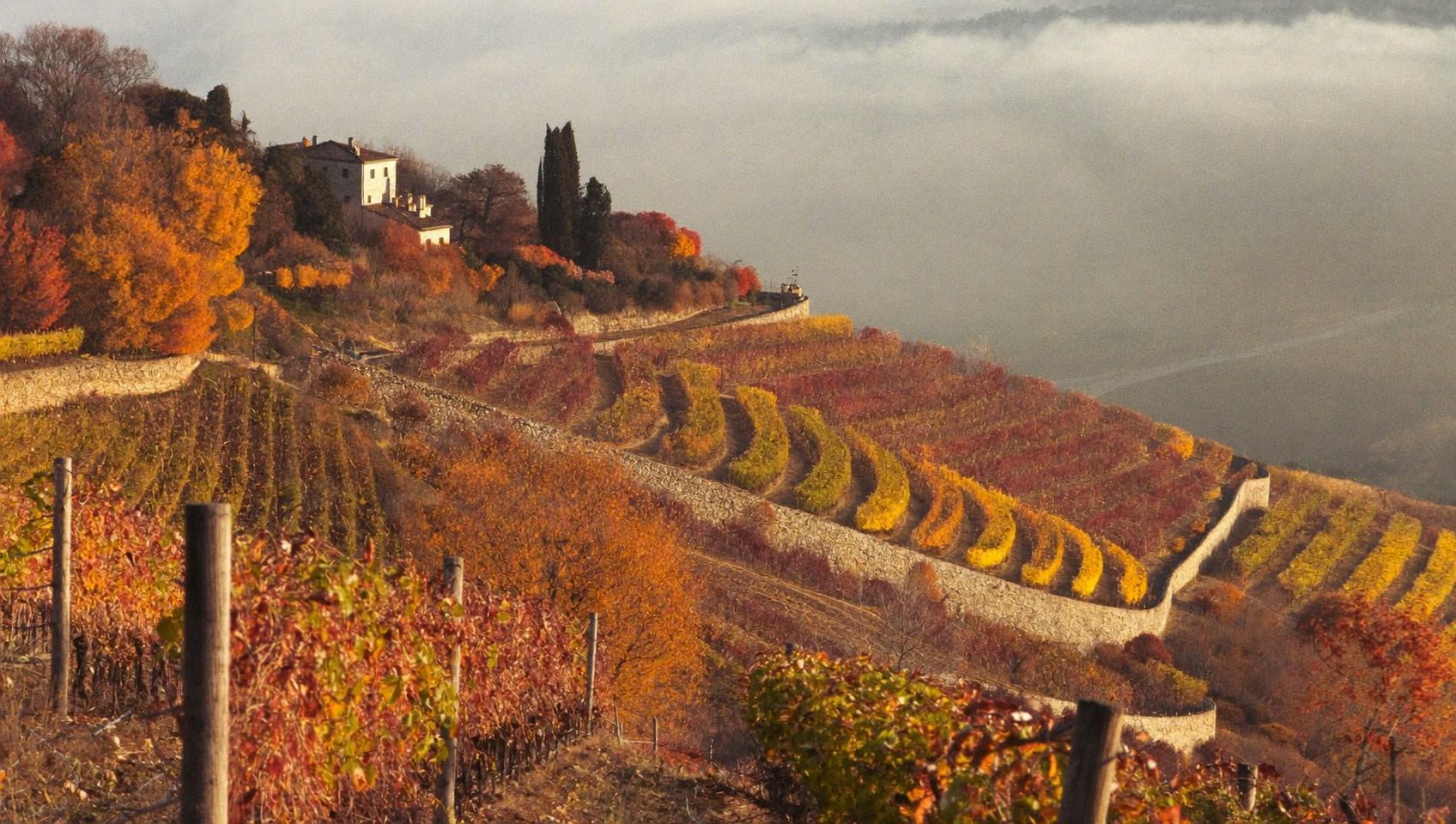
When you offer your Valpolicella wines to a foreign importer, you are not selling isolated labels. You are presenting an integrated winemaking system in which the production of one style depends, both physically and legally, on another. Each year the 8,621 hectares of vineyards in the Veronese appellation produce 59 million bottles (2024 data from the Consorzio Tutela Vini Valpolicella), divided among Valpolicella DOC, Valpolicella Ripasso DOC, Amarone della Valpolicella DOCG and Recioto della Valpolicella DOCG. Explaining to a German or North American buyer how this production pyramid works means justifying, down to the cent, the ex-cellar price gap between the vintage wine, the Ripasso and the Amarone, and turning the constraints of the production regulations into selling arguments for HoReCa and retail price lists.
Valpolicella in numbers: Consortium data and production geography
The Valpolicella wine system covers a total area of roughly 300 square kilometres in the foothills of the province of Verona, spread across 19 municipalities. According to official figures from the Consorzio per la Tutela dei Vini Valpolicella (an organisation founded in 1925 that represents over 80% of producers), the vineyards cover 8,621 hectares cultivated by 2,178 grape growers, supported in processing and marketing by 6 cooperative cellars and 338 bottlers. The appellation's total turnover reaches 600 million euros, with exports accounting for 60% of the total, distributed across 87 importing countries.
Unlike other major Italian red appellations based on a single grape variety, Valpolicella's identity rests on a blend of indigenous varieties that cover 97% of the vineyard area. The varietal breakdown places Corvina first (56% of the total), followed by Rondinella (19%), Corvinone (18%) and 4% other authorised varieties. The production regulations stipulate that the blend in all appellations of the territory must consist of 45% to 95% Corvina and/or Corvinone, and 5% to 30% Rondinella, with the option to add up to a maximum of 25% of other non-aromatic red grape varieties permitted in the province of Verona (with a limit of 10% per single variety).
From the standpoint of geography and labelling, when you present your range to Verona wineries oriented to export or directly to international operators, you need to explain the division of the territory into three distinct subzones:
- Classico zone: includes the five historic municipalities of Sant'Ambrogio di Valpolicella, San Pietro in Cariano, Fumane, Marano di Valpolicella and Negrar di Valpolicella. It is the area closest to Lake Garda, whose body of water moderates the continental climate. Only wines made from grapes harvested and vinified within this perimeter may carry the "Classico" designation on the label.
- Valpantena zone: corresponds to the valley of the same name that rises behind the city of Verona; it entitles all styles to the geographical subzone "Valpantena".
- Valpolicella DOC zone (or wider area): includes the hill districts of the municipality of Verona and the eastern valleys of Illasi, Tramigna and Mezzane. Wines produced here are released under the appellation without further subzone designations.
Valpolicella DOC Classico and Superiore: the base of the pyramid
At the base of the qualitative and productive pyramid lies the Valpolicella DOC explained for foreign buyers, which accounts for 29% of the total bottled output of the whole territory (out of 59 million bottles per year). Recognised as a DOC in 1968, this wine comes in two expressions that serve very distinct consumption occasions and price bands on importers' lists.
The Valpolicella vintage wine (also in the Classico and Valpantena versions) is obtained by red vinification of fresh grapes immediately after harvest, followed by a brief ageing in steel or concrete. The regulations require a minimum total alcohol content of 11.0% vol and a low residual sugar content. In the glass it shows a ruby red colour with wine-like aromas, notes of fresh cherry, rose and bitter almond, supported by lively acidity and a fine tannic structure. For a foreign distributor, this label is the quintessential by-the-glass wine in informal restaurants, suitable with starters, light first courses, white meats, or served slightly chilled during the summer months.
The Valpolicella DOC Superiore raises the technical and economic bar. To claim the "Superiore" designation, the wine must come from selected vineyards, reach a minimum alcohol content of 12.0% vol, and undergo a compulsory ageing period of at least one year starting from 1 January following the harvest. Many wineries choose to dry part of the grapes destined for the Superiore for a few weeks before pressing, followed by maturation in wooden barrels. The result is a more structured, velvety red, with garnet tones developing over time, designed to accompany red meat main courses and medium-aged cheeses.
Valpolicella Ripasso DOC: how it is made and what it is worth on the market
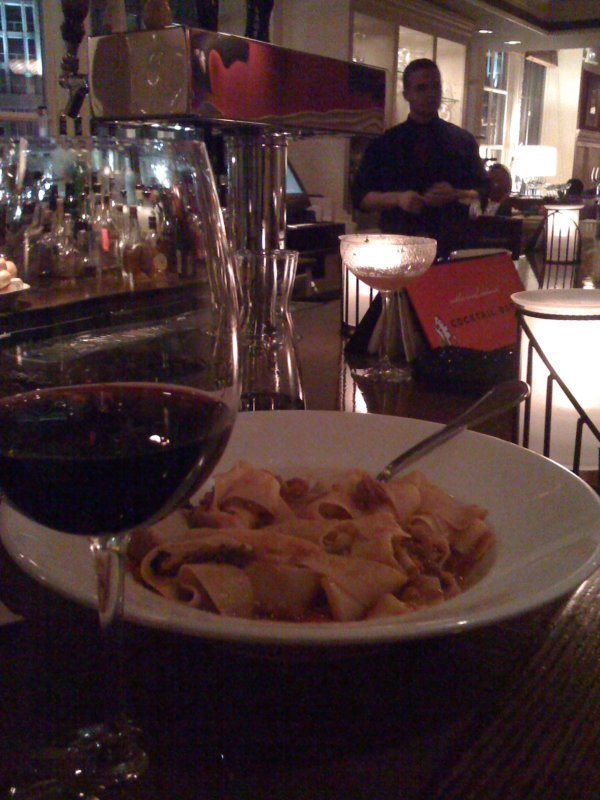
On the intermediate step of the pyramid is the Valpolicella Ripasso DOC, which has held its own autonomous denomination of controlled origin since 2010. The Consortium's figures clearly show the commercial weight of this style: with a 48% share of total bottles produced, Ripasso is the leading seller of the Valpolicella appellation, generating almost half the volumes of the entire Veronese supply chain.
The international success of Ripasso stems directly from its production method, which creates a winemaking and economic bridge between the vintage wine and Amarone. Between January and March, right after racking the Amarone (or the Recioto), the base Valpolicella wine produced in autumn is refermented on the residual skins of the dried grapes, still rich in unconverted sugars, active yeasts and phenolic compounds.
This "ripasso" operation on the skins usually lasts between 10 and 15 days and profoundly transforms the matrix of the starting wine:
- It increases the alcohol content and the net dry extract;
- It enriches the liquid with polyphenols, anthocyanins and glycerol, giving it a deep, dark ruby red colour;
- It modifies the aromatic and taste profile, adding to fresh cherry notes of ripe red fruit, sweet spices, greater roundness on the palate and longer ageing potential.
For your winery and for the buyer, it is essential to remember that Ripasso production is not free in terms of volume: the regulations strictly tie the quantities of wine you can refermment to the volumes of grapes actually set aside to produce Amarone and Recioto. This regulatory link prevents artificially inflating the supply of Ripasso without having a corresponding production of dried-grape wines in the cellar.
Amarone and Recioto della Valpolicella DOCG: the peak of appassimento
At the top of the pyramid sit the two Denominations of Controlled and Guaranteed Origin (recognised as DOCG in March 2010): the Amarone della Valpolicella DOCG and the Recioto della Valpolicella DOCG, which together make up 23% of the total bottles placed on the market.
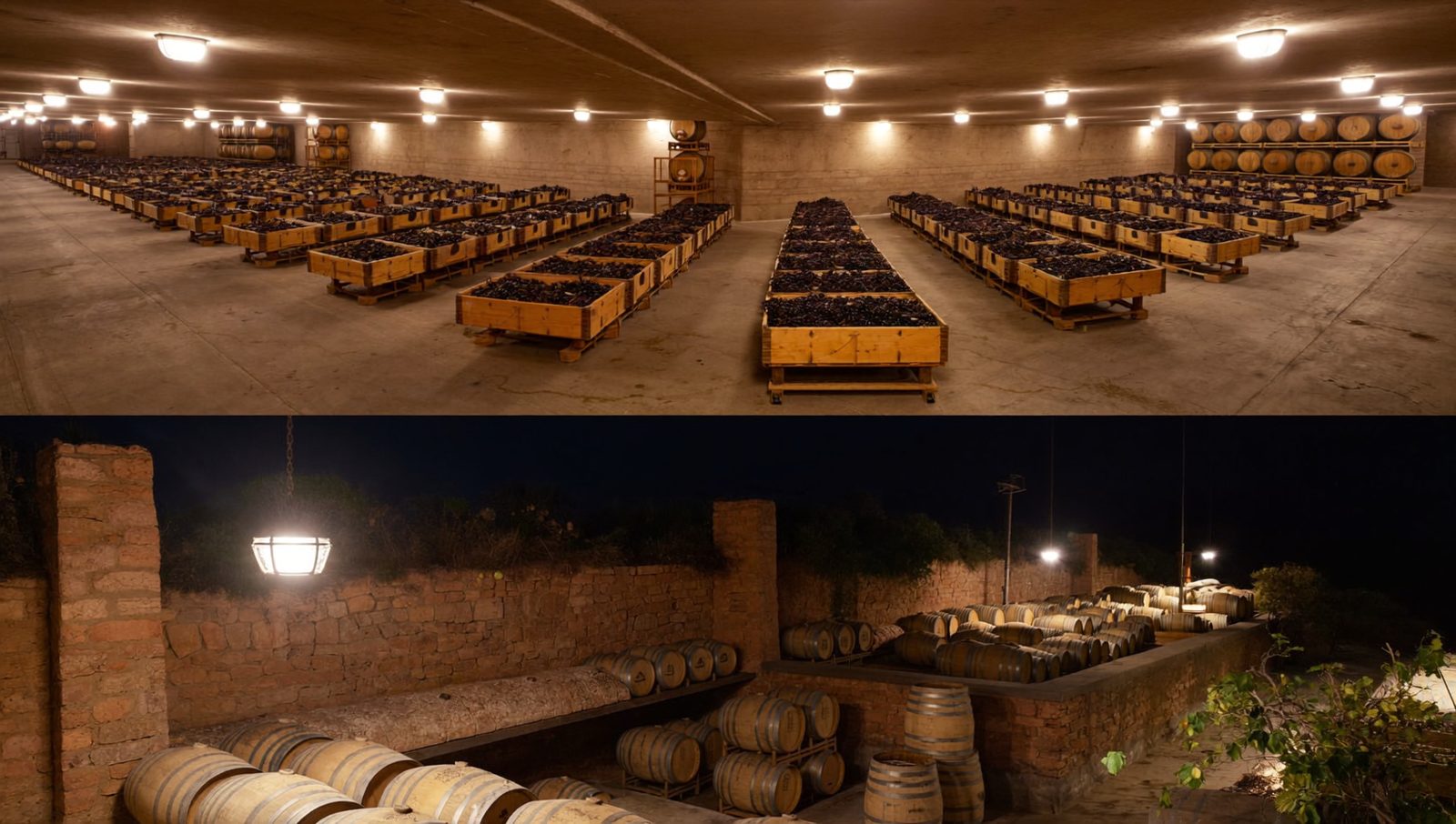
Both wines originate from the historic grape drying technique (appassimento). Between late September and early October, the healthiest and loosest bunches are hand-picked exclusively and laid out in a single layer on bamboo racks (the traditional arele) or in perforated plastic or wooden crates. The crates are stored in the fruttai, large, well-ventilated rooms where the grapes rest for 100 to 120 days (until late January). During these three or four months of controlled dehydration, the berries lose between 30% and over 40% of their initial weight through water evaporation, concentrating sugars, polyphenols, glycerol and resveratrol, while malic acidity decreases.
From this point on, the destinies of the two wines diverge during fermentation:
- Amarone della Valpolicella DOCG: the slow fermentation of the concentrated must continues until the sugars are almost completely used up, developing a minimum natural alcohol content of 14.0% vol (which in cellar practice often reaches 15 to 16.5 degrees). The wine must then mature for at least 24 months from 1 January following the harvest before it can be marketed; for the Riserva style, the minimum ageing rises to 4 years (48 months) from 1 November of the harvest year. It is a dry red of great power, with notes of dried plum, cherry in spirit, chocolate and spices.
- Recioto della Valpolicella DOCG: this is the historic sweet wine from which, through an unintentional completion of fermentation in barrel in the 1930s, the Amarone style was born. In Recioto, fermentation is stopped before all the sugars turn into alcohol, preserving a significant natural residual sugar that makes it a dessert wine or a pairing for blue cheeses and dry pastries.
| Denomination and Style | Classification | Share of Consortium production | Winemaking method | Minimum legal ageing | Minimum alcohol content |
|---|---|---|---|---|---|
| Valpolicella DOC (vintage) | DOC | 29% (with Superiore) | Fresh grapes vinified as red | None specific (release in spring) | 11.0% vol |
| Valpolicella DOC Superiore | DOC | 29% (with vintage) | Selected fresh grapes or light drying | 12 months (from 1 January after harvest) | 12.0% vol |
| Valpolicella Ripasso DOC | DOC | 48% | Refermentation on Amarone/Recioto skins | Until 1 January of the second year after harvest | 12.5% - 13.0% vol |
| Amarone della Valpolicella | DOCG | 23% (with Recioto) | Drying in fruttaio (100-120 days), dry | 24 months (48 months for the Riserva version) | 14.0% vol |
| Recioto della Valpolicella | DOCG | 23% (with Amarone) | Drying in fruttaio (100-120 days), sweet | Varies by style (at least until the following spring) | 12.0% vol finished (14.0% total) |
Prices and the pyramid: how to explain the cost structure to buyers
One of the most frequent obstacles in B2B negotiations with new distributors concerns understanding the ex-works (Ex-Works) price scale. A buyer who does not fully know the drying technique may struggle to understand why an Amarone costs three or four times more than a basic Valpolicella from the same winery, or why the Ripasso sits exactly in the middle.
To protect your margins without giving in to unjustified discount requests, you need to break down the four industrial factors that determine the direct cost of a bottle of Amarone for the importer:
- Manual sorting in the vineyard: a grape harvester cannot be used for drying grapes; specialised labour is needed to select only loose bunches free of damaged berries.
- Weight loss during drying: since the grapes lose 30% to over 40% of their weight during the 100 to 120 days on the racks, the grape-to-wine yield drops sharply. To produce a single 0.75-litre bottle of Amarone, nearly twice the kilograms of fresh grapes needed for a bottle of vintage Valpolicella are required.
- Energy and drying room management costs: keeping the grapes healthy for four months requires ventilation and dehumidification systems and daily manual checks to discard any bunches affected by mould.
- Financial tie-up in the cellar: while vintage Valpolicella is invoiced and collected a few months after harvest, Amarone ties up capital, oak barrels and cellar space for at least three years (and up to five for the Riserva) before generating cash.
Within this financial architecture, Valpolicella Ripasso DOC plays a balancing role both for your winery and for your foreign customer. On the production side, it allows you to make use of the extractive potential left in the Amarone skins and to recover your investment a year ahead of the DOCG. On the buyer's side, it offers a wine that recalls the organoleptic profile of Amarone (body, softness, ripe fruit) at a shelf or wine-list price accessible for everyday or weekly consumption.
Germany and North America: what the two key markets are looking for
With 60% of production destined for export, the economic stability of Valpolicella rests largely on the performance of Central Europe (with Germany at the forefront, represented each year by the Consortium at ProWein Düsseldorf) and North America (the United States and Canadian provincial monopolies). However, buyers' purchasing approach in these two geographical areas shows marked differences that call for distinct offering strategies.
The German market: Ripasso turnover and the rediscovery of Classico
In Germany, importers specialised in the HoReCa channel (Italian and international restaurants) and buyers from qualified retail have known the appellation for decades. The engine of volume in German territory is undoubtedly the Valpolicella Ripasso DOC: it is the perfect "winter wine" for German consumers, who look for soft reds with non-aggressive tannins and an enveloping structure at a competitive average price.
As for Amarone, the German market is extremely sensitive to price positioning. In organised retail (LEH) and discount stores there is strong pressure for entry-price Amarone bottled by large groups; if you are a mid-sized winery (between 500,000 and 2 million bottles), you cannot compete on that ground. With German distributors of the specialist channel (Fachhandel), you should instead focus on Classico designations, single-vineyard selections and a drier, more vertical and less sugary style of Amarone, always supported by Valpolicella Superiore as a gastronomic alternative for fine dining looking for lower alcohol levels than the DOCG.
The North American market: Amarone's prestige between the United States and Canada
In the United States and Canada the perception of the pyramid is reversed: the commercial locomotive opening the doors of distributors is the Amarone della Valpolicella DOCG, seen as a great collectible wine, a gift wine and a high-end steakhouse wine, on a par with Barolo and Brunello di Montalcino. On American restaurant wine lists, Amarone occupies the premium and luxury segment, where the end customer is willing to spend substantial sums on historic vintages and Riserva versions with long oak ageing.
In Canada, where imports go through provincial monopolies (such as LCBO in Ontario, SAQ in Québec or BCL in British Columbia), both Amarone and Ripasso enjoy dedicated categories and recurring purchase tenders. When you prepare an offer for an American importer or a Canadian agent, present the full range as a coherent package: use the authority and international critic scores of your Amarone to pull through the introduction of Ripasso volumes (positioned as the "Baby Amarone" for by-the-glass consumption in wine bars) and of Valpolicella Classico as a fresh, versatile summer proposal.
Frequently asked questions
What is the production difference between Valpolicella Ripasso and Amarone?
Amarone della Valpolicella DOCG is produced exclusively from grapes left to dry in fruttai for 100 to 120 days, until they lose about 30-40% of their weight, and then dry-vinified with at least 24 months of ageing. Valpolicella Ripasso DOC, by contrast, is made from vintage Valpolicella wine (from fresh grapes) which, between January and March, is refermented for about two weeks on the residual skins just racked from the Amarone or Recioto.
Which grape varieties make up the blend of Valpolicella wines?
All the wines of the pyramid (Valpolicella DOC, Ripasso DOC, Amarone DOCG and Recioto DOCG) share the same varietal base: 45% to 95% Corvina and/or Corvinone, and 5% to 30% Rondinella. The regulations also allow the addition of up to a total maximum of 25% of other authorised non-aromatic red grape varieties in the province of Verona (maximum 10% per single variety).
How many bottles are produced in Valpolicella and which style sells the most?
According to 2024 data from the Consorzio Tutela Vini Valpolicella, total production amounts to 59 million bottles from 8,621 hectares of vineyards. The style produced and sold in the greatest volume is Valpolicella Ripasso DOC, accounting for 48% of total volumes, followed by Valpolicella DOC (base and Superiore) at 29%, while Amarone and Recioto DOCG together account for the remaining 23%.
What does the "Classico" designation on a Valpolicella or Amarone label mean?
The "Classico" designation does not indicate a winemaking style but a specific historic geographical subzone. It can appear on the label only if the grapes are grown and vinified within the five historic municipalities of the appellation in the province of Verona: Sant'Ambrogio di Valpolicella, San Pietro in Cariano, Fumane, Marano di Valpolicella and Negrar di Valpolicella.
Sources
- Consorzio per la Tutela dei Vini Valpolicella — Official data, territory and styles
- Ministero dell'agricoltura, della sovranità alimentare e delle foreste (MASAF) — DOP and IGP production specifications
- Federdoc — National Confederation of Voluntary Consortia for the Protection of Italian Wine Denominations
- ISTAT — Statistics on foreign trade and the Italian agri-food sector
- Vermentino: Gallura DOCG, Sardinia, Liguria and Tuscany
- Triveneto: what it includes and what it produces for export
- Vineyard management calendar: work by season
- Trebbiano Varieties: Toscano, Abruzzo, Romagnolo, Turbiana
- Vineyard soil management: cover crops, green manure, tillage
- Tasting notes for importers: structure and vocabulary