Vermentino explained: Vermentino di Gallura DOCG, Vermentino di Sardegna DOC, Liguria and Tuscany, rules, yields, types and export
Wines Export Editorial · Last updated:
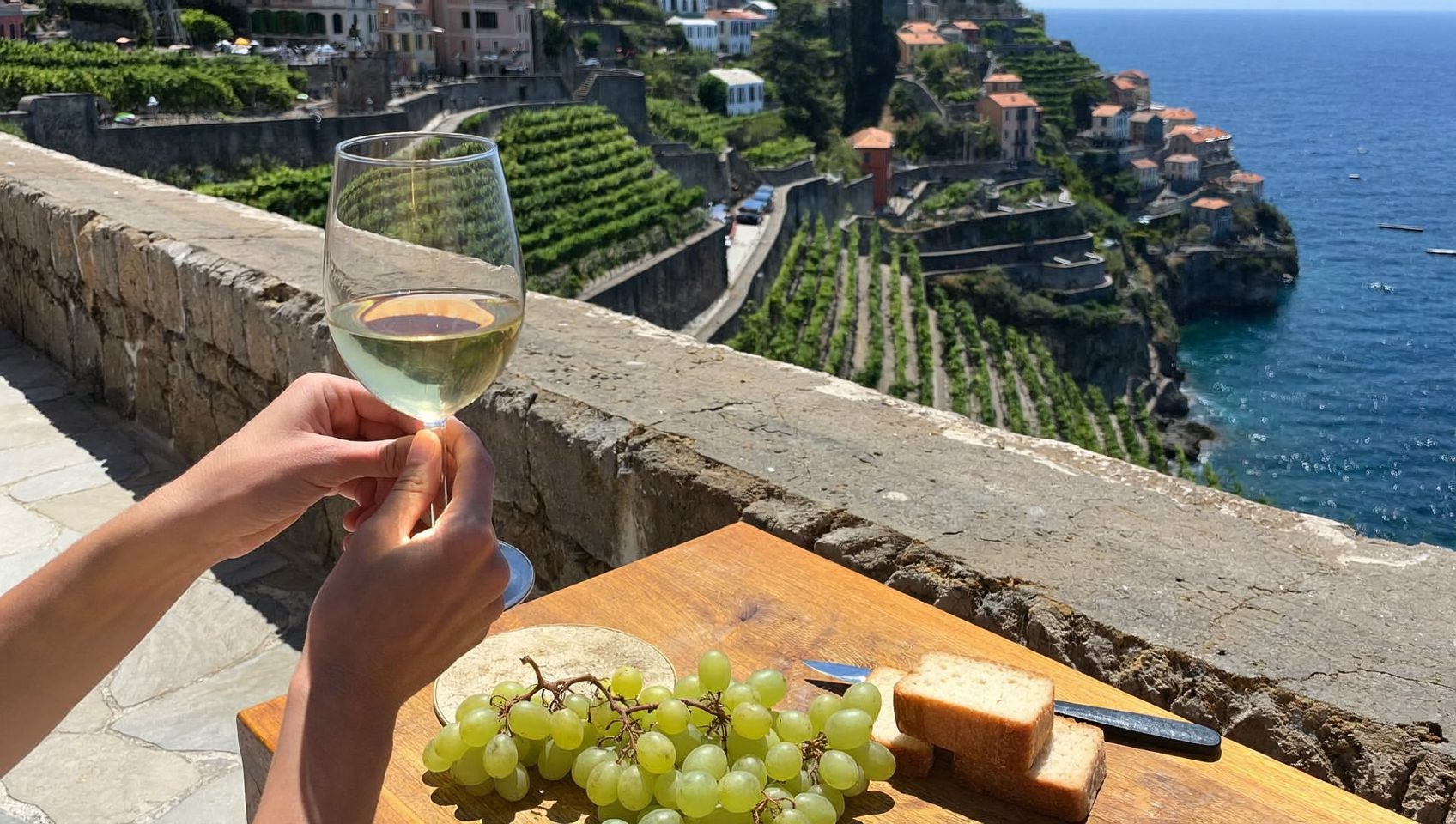
Vermentino is a white grape that Italy sells under several different denominations, and the grape name alone does not tell you where the wine comes from. The only DOCG is Vermentino di Gallura, in north-eastern Sardinia; Vermentino di Sardegna DOC covers the whole island; in Liguria and Tuscany Vermentino is a wine type inside DOCs such as Colli di Luni, Riviera Ligure di Ponente, Bolgheri and Maremma Toscana. Vermentino di Gallura requires at least 95 percent Vermentino, grapes from 23 municipalities of Gallura grown on soils formed from weathered granite, no more than 10 tonnes per hectare and at least 12 percent alcohol, 13 for the Superiore (Vermentino di Gallura DOCG disciplinare, art. 2, 3, 4 and 6). Vermentino di Sardegna requires at least 85 percent Vermentino, no more than 16 tonnes per hectare and at least 10.5 percent alcohol (Vermentino di Sardegna DOC disciplinare, art. 2, 4 and 6). Vermentino di Gallura has been a DOC since 1976 and a DOCG since 1996 (Consorzio di tutela del Vermentino di Gallura); the DOCG decree is dated 11 September 1996 and the latest amendment in the text published by the Italian Ministry of Agriculture is dated 7 March 2014.
This page is the full guide to Italian Vermentino, including what a buyer abroad should check before listing it. The wineries of the north-east of the island are in the wineries of Gallura and north-eastern Sardinia, the island as a whole in the Sardinian wine export guide and its denominations in Sardinian wines: denominations and buyer guide; for Liguria see the Ligurian wine export guide.
What Vermentino is and the names it goes by
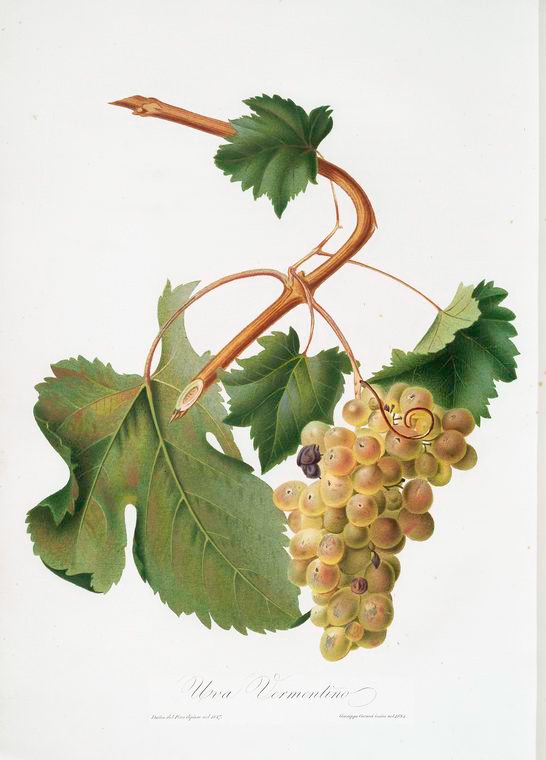
Vermentino is an Italian white grape with many local names. The international variety catalogue VIVC lists it under the prime name Vermentino, white berry, country of origin Italy, with 62 synonyms including Pigato, Favorita and Rolle (VIVC, passport 12989).
A botanical synonym does not become a free name on the label. In Liguria, Pigato is a separate type in the Riviera Ligure di Ponente DOC, made from at least 95 percent Pigato grapes (Riviera Ligure di Ponente disciplinare, art. 1 and 2), and the disciplinare describes Pigato and Vermentino as varieties brought in centuries ago that became distinct in the local climate (art. 9). In Piedmont, Favorita is a type in the Langhe DOC, with at least 85 percent of the variety (Langhe DOC disciplinare, art. 1 and 2). For a buyer, a Pigato and a Vermentino from the same coast are two wines with two names on the label.
Vermentino Nero is a different, black-berried variety: the grape lists annexed to the Tuscan disciplinari name it separately from white Vermentino, and the Candia dei Colli Apuani DOC has distinct "Vermentino bianco" and "Vermentino nero" types (Candia dei Colli Apuani disciplinare, art. 1).
On origins, the Gallura disciplinare reports that 20th-century scholars considered the grape Spanish, arriving between the 15th and 18th centuries; the first record of the variety in Sardinia is by Angius, in Gallura itself, and Count Rovasenda listed it as a table grape in 1877. The same text concludes that the true origin remains unknown (Vermentino di Gallura disciplinare, art. 9).
Vermentino di Gallura DOCG: area, grapes and soils
Vermentino di Gallura is the only DOCG in Sardinia and is made from grapes grown in 23 municipalities in the north-east of the island. The area covers the whole territory of Aggius, Aglientu, Arzachena, Badesi, Berchidda, Bortigiadas, Budoni, Calangianus, Golfo Aranci, Loiri Porto San Paolo, Luogosanto, Luras, Monti, Olbia, Oschiri, Palau, Sant'Antonio di Gallura, San Teodoro, Santa Teresa Gallura, Telti, Tempio Pausania and Trinità d'Agultu, in the former province of Olbia-Tempio, plus Viddalba in the province of Sassari (disciplinare, art. 3).
| Rule | What the disciplinare says | Source |
|---|---|---|
| Grapes | Vermentino at least 95 percent; up to 5 percent of other non-aromatic white grapes authorised in Sardinia | art. 2 |
| Vineyards | only on soils formed from weathered granite, up to 500 metres above sea level | art. 4 |
| Density | at least 3,250 vines per hectare for new plantings and replantings | art. 4 |
| Practices | any forcing banned; emergency irrigation allowed | art. 4 |
| Maximum grape yield | 10 tonnes per hectare; 9 for the Superiore | art. 4 |
| Grape-to-wine yield | 70 percent; 50 percent of the fresh grapes for the Passito | art. 5 |
| Where the wine is made | winemaking, sparkling-wine production and bottling inside the area, with individual authorisations for firms that already bottled outside it | art. 5 |
| Controls | Chamber of Commerce of Sassari | art. 10 |
The disciplinare describes a mostly granitic subsoil covered by coarse sand, at times mixed with clay, derived from a rock mass formed about 300 million years ago. The climate is warm-temperate with mild winters; rain falls mostly in autumn and winter and stays below 700 mm a year, and the constant wind, salty near the sea, keeps the grapes healthy (art. 9). The Consorzio's collective mark is a glass with a stylised rooster, the symbol of Gallura (art. 9).
Vermentino di Gallura: types, alcohol and release dates
The DOCG has six types, from still white to passito, and the Superiore is the one with more alcohol and fewer grapes per hectare. Release dates differ from one type to another.
| Type | Maximum grape yield | Minimum natural alcohol of the grapes | Minimum total alcohol of the wine | Release |
|---|---|---|---|---|
| Vermentino di Gallura | 10 t/ha | 11 percent | 12 percent | from 15 January after the harvest |
| Superiore | 9 t/ha | 12 percent | 13 percent | from 15 January after the harvest |
| Vendemmia tardiva (late harvest) | 10 t/ha | 12 percent | 13 percent | from 15 January after the harvest |
| Passito | 10 t/ha | 15 percent after drying | 15 percent, of which at least 14 actual | from 1 May after the harvest |
| Frizzante | 10 t/ha | 10 percent | 10.5 percent | from 1 December of the harvest year |
| Spumante (tank method) | 10 t/ha | 10 percent | 10.5 percent | from 1 December of the harvest year |
| Spumante (traditional method) | 10 t/ha | 10 percent | 10.5 percent | after at least nine months of second fermentation |
Source: Vermentino di Gallura DOCG disciplinare, art. 4, 5 and 6.
The base wine and the Superiore range from dry to amabile (off-dry), with a possible slightly bitter finish; for wines aged in wood the disciplinare allows light vanilla notes. Minimum total acidity is 4.5 g/l; minimum non-reducing extract is 16 g/l for still wines, 14 for frizzante and spumante, 24 for passito (art. 6).
Labelling rules:
| Rule | What the disciplinare says | Source |
|---|---|---|
| Adjectives | "extra", "fine", "scelto", "selezionato" and similar are banned | art. 7 |
| Amabile | the word "amabile" is mandatory when the wine has those characteristics | art. 7 |
| Sardegna | the name "Sardegna" may precede the denomination | art. 7 |
| Vigna | allowed with the place name, if the plot is registered separately in the vineyard register and the wine is made and stored separately | art. 7 |
| Vintage | mandatory, except for frizzante and non-vintage spumante | art. 7 |
| Traditional method | date of first disgorgement mandatory on the label | art. 5 |
| Bottles | glass; Passito no larger than 0.750 litres; plastic mushroom stoppers banned on spumante | art. 8 |
In practice, a Vermentino di Gallura from the 2025 harvest may not be sold before 15 January 2026, and a 2025 Passito not before 1 May 2026.
Vermentino di Sardegna DOC: the island-wide denomination
Vermentino di Sardegna is made across the whole region, under looser rules than the DOCG. It requires less Vermentino in the blend, allows more grapes per hectare and a lower minimum alcohol.
| Rule | What the disciplinare says | Source |
|---|---|---|
| Types | Vermentino di Sardegna, Frizzante, Spumante | art. 1 |
| Area | the whole region of Sardinia | art. 3 |
| Grapes | Vermentino at least 85 percent; up to 15 percent of other non-aromatic white grapes authorised in Sardinia | art. 2 |
| Density | at least 3,500 vines per hectare for new plantings | art. 4 |
| Maximum grape yield | 16 tonnes per hectare | art. 4 |
| Minimum natural alcohol of the grapes | 10 percent | art. 5 |
| Grape-to-wine yield | 70 percent; between 70 and 80 the excess may become IGT Isola dei Nuraghi; above 80 every denomination is lost | art. 5 |
| Minimum alcohol | 10.5 percent actual for still and frizzante; spumante 11 percent total, of which 10 actual | art. 6 |
| Bottling | in Sardinia, with individual authorisations for firms that already bottled outside; frizzante and spumante may also be produced and bottled outside the region | art. 5 |
| Containers | glass up to 1.5 litres, no crown caps; a plastic bag in a rigid box of at least 2 litres is allowed | art. 8 |
| Label | vintage mandatory except for frizzante and spumante; "amabile" mandatory when the wine has those characteristics | art. 7 |
| Controls | Valoritalia | art. 10 |
The spumante ranges from brut nature to demi-sec (art. 6). The disciplinare says the grape spread across the island when vineyards were replanted after phylloxera, first in Gallura and then in Anglona, around Alghero, in Meilogu and in the Campidani of Cagliari and Oristano, and calls Vermentino di Sardegna the most extensive DOC on the island (art. 9). The DOC was approved by presidential decree of 23 February 1988, published in the Gazzetta Ufficiale on 4 January 1989, and last amended on 7 March 2014.
Other Sardinian DOCs have a Vermentino type: Cagliari, with Vermentino and Vermentino superiore, and Alghero, with Vermentino frizzante (Cagliari DOC and Alghero DOC disciplinari, art. 1). The wineries of the north-west of the island are in Sassari wineries for export.
Gallura DOCG and Sardegna DOC: the differences for a buyer
The same Gallura winery can make both denominations, even from neighbouring vineyards. The differences lie in the figures of the disciplinare and should be read on the technical sheet of each lot.
| Vermentino di Gallura DOCG | Vermentino di Sardegna DOC | |
|---|---|---|
| Area | 23 municipalities of Gallura | the whole of Sardinia |
| Minimum Vermentino | 95 percent | 85 percent |
| Maximum grape yield | 10 t/ha; 9 for the Superiore | 16 t/ha |
| Minimum alcohol of the base wine | 12 percent total | 10.5 percent actual |
| Types | base, Superiore, Frizzante, Spumante, Passito, Vendemmia tardiva | base, Frizzante, Spumante |
| Release of the still wine | from 15 January after the harvest | no date set |
| Bottling | inside the area, frizzante and spumante included | in Sardinia; frizzante and spumante also outside |
Sources: Vermentino di Gallura DOCG and Vermentino di Sardegna DOC disciplinari, art. 2 to 8.
Vermentino in Liguria: Colli di Luni and Riviera Ligure di Ponente
In Liguria Vermentino is a type within a DOC, and the Colli di Luni DOC straddles the border with Tuscany. In the west, the Riviera Ligure di Ponente DOC sets it alongside Pigato, with almost identical rules and separate names.
| Colli di Luni DOC Vermentino | Riviera Ligure di Ponente DOC Vermentino | |
|---|---|---|
| Area | parts of 14 municipalities in the province of La Spezia and of Fosdinovo, Aulla and Podenzana in the province of Massa | the province of Imperia, more than forty municipalities in the province of Savona, Arenzano and Cogoleto in the province of Genoa |
| Minimum Vermentino | 90 percent | 95 percent |
| Types | Vermentino, Vermentino superiore | Vermentino, Vermentino superiore, Vermentino passito |
| Maximum grape yield | 11 t/ha; 9 for the Superiore | 11 t/ha; 9 for Superiore and Passito |
| Minimum alcohol | 11.50 percent; 12.50 for the Superiore | 11.00 percent; 13.00 for the Superiore; 16.50 for the Passito, of which 12.50 actual |
| Grape-to-wine yield | 70 percent | 70 percent; 50 for the Passito |
| Sub-zones | none | Riviera dei Fiori, Albenganese, Finalese, Quiliano and Taggia, with one tonne less per hectare and half a degree more natural alcohol |
Sources: Colli di Luni DOC disciplinare, art. 1 to 6; Riviera Ligure di Ponente DOC disciplinare, art. 1 to 6.
In the Colli di Luni, Vermentino also goes into Colli di Luni bianco, at least 35 percent alongside 25 to 40 percent Trebbiano toscano (art. 2); winemaking and bottling take place inside the area (art. 5). In the Riviera Ligure di Ponente the vintage is mandatory, the word "riserva" is banned and glass containers may not exceed 5 litres (art. 7 and 8); Superiore and Passito may not be released before 1 November of the year after the harvest (art. 5).
Vermentino is also a type in the Ligurian DOCs Colline di Levanto, Golfo del Tigullio-Portofino and Val Polcevera, in the last two also as frizzante (disciplinari, art. 1). Pigato and the wines of Albenga are covered in Albenga wines: Pigato, Vermentino and Lumassina; the red of the same DOC in Rossese: export guide.
Vermentino in Tuscany: Bolgheri, Maremma and the other DOCs
In Tuscany Vermentino grows mostly along the coast, as a DOC type with at least 85 percent of the variety. The two best known are Bolgheri and Maremma Toscana.
| Bolgheri DOC Vermentino | Maremma Toscana DOC Vermentino | |
|---|---|---|
| Area | the municipality of Castagneto Carducci, province of Livorno, excluding the part west of the old Via Aurelia | the whole province of Grosseto |
| Minimum Vermentino | 85 percent | 85 percent; 95 for the Superiore |
| Types | Vermentino; Vermentino also goes into Bolgheri bianco, from 0 to 100 percent | Vermentino, Spumante, Superiore, Passito, Vendemmia tardiva |
| Maximum grape yield | 12 t/ha | 12 t/ha; 9 for the Superiore |
| Minimum natural alcohol of the grapes | 10.50 percent | 10.50 percent; 11.00 for the Superiore |
| Minimum alcohol of the wine | 11.00 percent | 11.00 percent; 12.50 for the Superiore |
| Grape-to-wine yield | 70 percent | 70 percent; 84 hectolitres per hectare, 63 for the Superiore |
| Release | no date set | Superiore from 1 January of the second year after the harvest |
Sources: Bolgheri DOC disciplinare, art. 1 to 6; Maremma Toscana DOC disciplinare, as amended by ministerial decree of 8 May 2023, art. 1 to 6.
According to the disciplinare, the Maremma Superiore was added to give the type a clearer identity and to adapt part of the production to new market demand (art. 9). The reds of the area are in Bolgheri DOC: what buyers should know and the municipality in wine in Castagneto Carducci.
A Vermentino type also exists in the DOCs Candia dei Colli Apuani, Capalbio, Colline Lucchesi, Elba, Montecarlo, Montecucco, Montescudaio, Monteregio di Massa Marittima, Parrina, San Torpè, Terratico di Bibbona, Terre di Pisa and Val di Cornia (disciplinari, art. 1). Percentages and yields vary from one to the next and must be read in each DOC's own disciplinare.
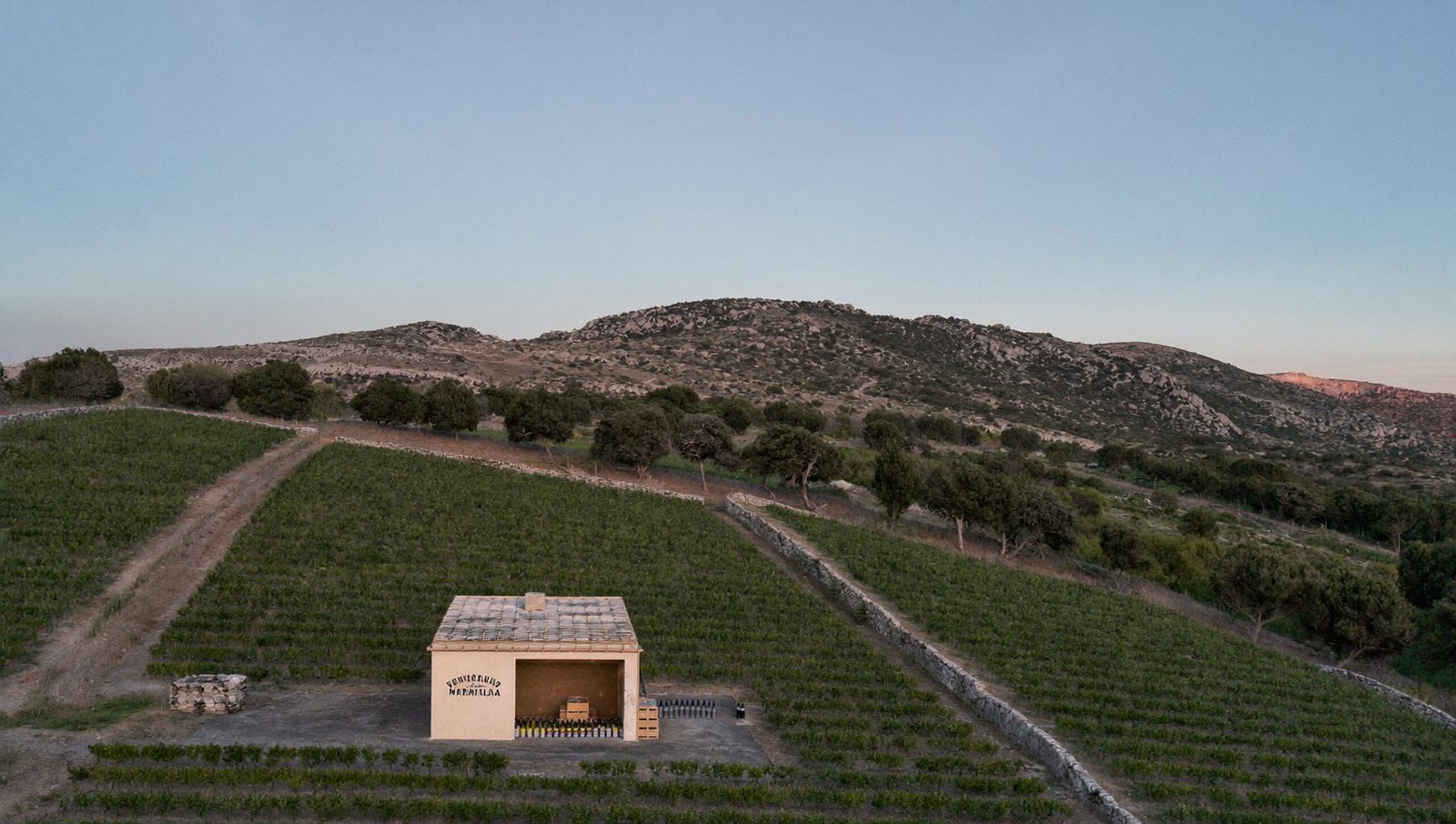
Six denominations compared
| Denomination | Region | Minimum Vermentino | Maximum grape yield | Minimum alcohol (base) |
|---|---|---|---|---|
| Vermentino di Gallura DOCG | Sardinia, 23 municipalities | 95 percent | 10 t/ha | 12 percent |
| Vermentino di Sardegna DOC | Sardinia, whole region | 85 percent | 16 t/ha | 10.5 percent |
| Colli di Luni DOC Vermentino | Liguria and Tuscany | 90 percent | 11 t/ha | 11.5 percent |
| Riviera Ligure di Ponente DOC Vermentino | Liguria | 95 percent | 11 t/ha | 11 percent |
| Bolgheri DOC Vermentino | Tuscany | 85 percent | 12 t/ha | 11 percent |
| Maremma Toscana DOC Vermentino | Tuscany | 85 percent | 12 t/ha | 11 percent |
Sources: the six disciplinari, art. 2, 4 and 6.
Each denomination has a file in the EU register eAmbrosia: Vermentino di Gallura PDO-IT-A0903, Vermentino di Sardegna PDO-IT-A1169, Colli di Luni PDO-IT-A0353, Riviera Ligure di Ponente PDO-IT-A0357. The register gives Vermentino di Gallura a protection date of 29 March 1976.
Selling Vermentino abroad
For Vermentino di Gallura the only available figures come from the Consorzio and the press, and they do not refer to the same year. The Consorzio's website, as of 12 November 2026, states 5,950,000 bottles produced per year, 2,500 hectares planted to DOCG Vermentino, 40 producing wineries and 80 labels on the market, without saying which year these refer to. In October 2023 ItaliaOggi reported about 50 producers and about six million bottles a year, a third of them sold abroad, in the United States and Europe (ItaliaOggi, 4 October 2023). For the grape as a whole, WineNews put Italy's Vermentino plantings at 6,000 hectares, 4,500 of them in Sardinia (WineNews, 20 May 2025).
For Vermentino di Sardegna and the Ligurian and Tuscan DOCs the consortia do not publish export data: buyers should ask the winery for figures on the specific wine. The markets named for Gallura lead to wine importers in the United States, wine importers in Germany and the list of wine importers by country; the weight of the guaranteed label in negotiations is covered in exporting DOCG wines.
Before listing a Vermentino, check on the technical sheet and the label:
- The exact denomination. "Vermentino di Gallura DOCG", "Vermentino di Sardegna DOC" or the Ligurian or Tuscan DOC, not just "Vermentino".
- Superiore. In Gallura it must reach at least 13 percent alcohol and come from no more than 9 tonnes per hectare (art. 4 and 6).
- The release date. A still Vermentino di Gallura may not be released before 15 January after the harvest, the Passito before 1 May (art. 5).
- "Amabile". If the wine is off-dry, in Gallura and in Vermentino di Sardegna the word must appear on the label (art. 7).
- Where it was bottled. Vermentino di Gallura is bottled in the area, save for individual authorisations; a Vermentino di Sardegna spumante may be bottled outside the island (art. 5).
- Pigato, Favorita, Vermentino Nero. These are different names on the label: Pigato and Favorita have their own types in Riviera Ligure di Ponente and Langhe, and Vermentino Nero is a red grape.
The single document can be checked in the eAmbrosia register: search for the denomination by name, open the file and read the reference to the single document.
Frequently asked questions
Is Vermentino di Gallura a DOCG?
Yes, it is the only DOCG in Sardinia. The DOCG decree is dated 11 September 1996; it had been a DOC since 1976 (Vermentino di Gallura DOCG disciplinare; Consorzio di tutela).
What is the difference between Vermentino di Gallura and Vermentino di Sardegna?
Vermentino di Gallura comes from 23 municipalities in Gallura, with at least 95 percent Vermentino, 10 tonnes per hectare and 12 percent alcohol. Vermentino di Sardegna comes from the whole island, with at least 85 percent, 16 tonnes per hectare and 10.5 percent alcohol (disciplinari, art. 2, 3, 4 and 6).
What does Superiore mean on Vermentino di Gallura?
That the grapes come from no more than 9 tonnes per hectare with at least 12 percent natural alcohol, and that the wine has at least 13 percent alcohol (Vermentino di Gallura DOCG disciplinare, art. 4, 5 and 6).
Are Pigato and Vermentino the same grape?
The VIVC catalogue lists Pigato and Favorita among the synonyms of Vermentino. On the label, though, they stay separate: Pigato is a type of the Riviera Ligure di Ponente with at least 95 percent Pigato, Favorita a type of the Langhe DOC (VIVC, passport 12989; Riviera Ligure di Ponente and Langhe disciplinari, art. 1 and 2).
Is Tuscan Vermentino different from Sardinian Vermentino?
It is the same grape under different rules. Bolgheri and Maremma Toscana require at least 85 percent Vermentino, 12 tonnes per hectare and 11 percent alcohol; Maremma also has a Superiore at 95 percent (Bolgheri and Maremma Toscana disciplinari, art. 2, 4 and 6).
How many bottles of Vermentino di Gallura are produced?
The Consorzio's website states 5,950,000 bottles a year without giving the year; ItaliaOggi reported about six million in October 2023, a third of them sold abroad.
Sources
- Italian Ministry of Agriculture (Masaf), list of DOP and IGP wine disciplinari: Vermentino di Gallura DOCG (last amended 7 March 2014), Vermentino di Sardegna DOC (last amended 7 March 2014), Colli di Luni DOC, Riviera Ligure di Ponente DOC, Bolgheri DOC, Maremma Toscana DOC (ministerial decree of 8 May 2023), Langhe DOC, Candia dei Colli Apuani DOC, Cagliari DOC, Alghero DOC
- eAmbrosia, EU register of geographical indications: files PDO-IT-A0903, PDO-IT-A1169, PDO-IT-A0353, PDO-IT-A0357
- VIVC, Vitis International Variety Catalogue, Vermentino passport no. 12989
- Consorzio di tutela del Vermentino di Gallura DOCG, official website
- ItaliaOggi, 4 October 2023, Vermentino di Gallura DOCG opens to new markets
- WineNews, 20 May 2025, the best Vermentino in Italy at the National Vermentino Prize
- Vineyard management calendar: work by season
- Valpolicella production and sales: the Amarone pyramid
- Vineyard soil management: cover crops, green manure, tillage
- Triveneto: what it includes and what it produces for export
- Albeisa Bottle: What It Is and Which Wines Use It
- Trebbiano Varieties: Toscano, Abruzzo, Romagnolo, Turbiana