Casavecchia explained: the Pontelatone grape, National Register, Casavecchia di Pontelatone DOC, Terre del Volturno IGT, label and export
Wines Export Editorial · Last updated:
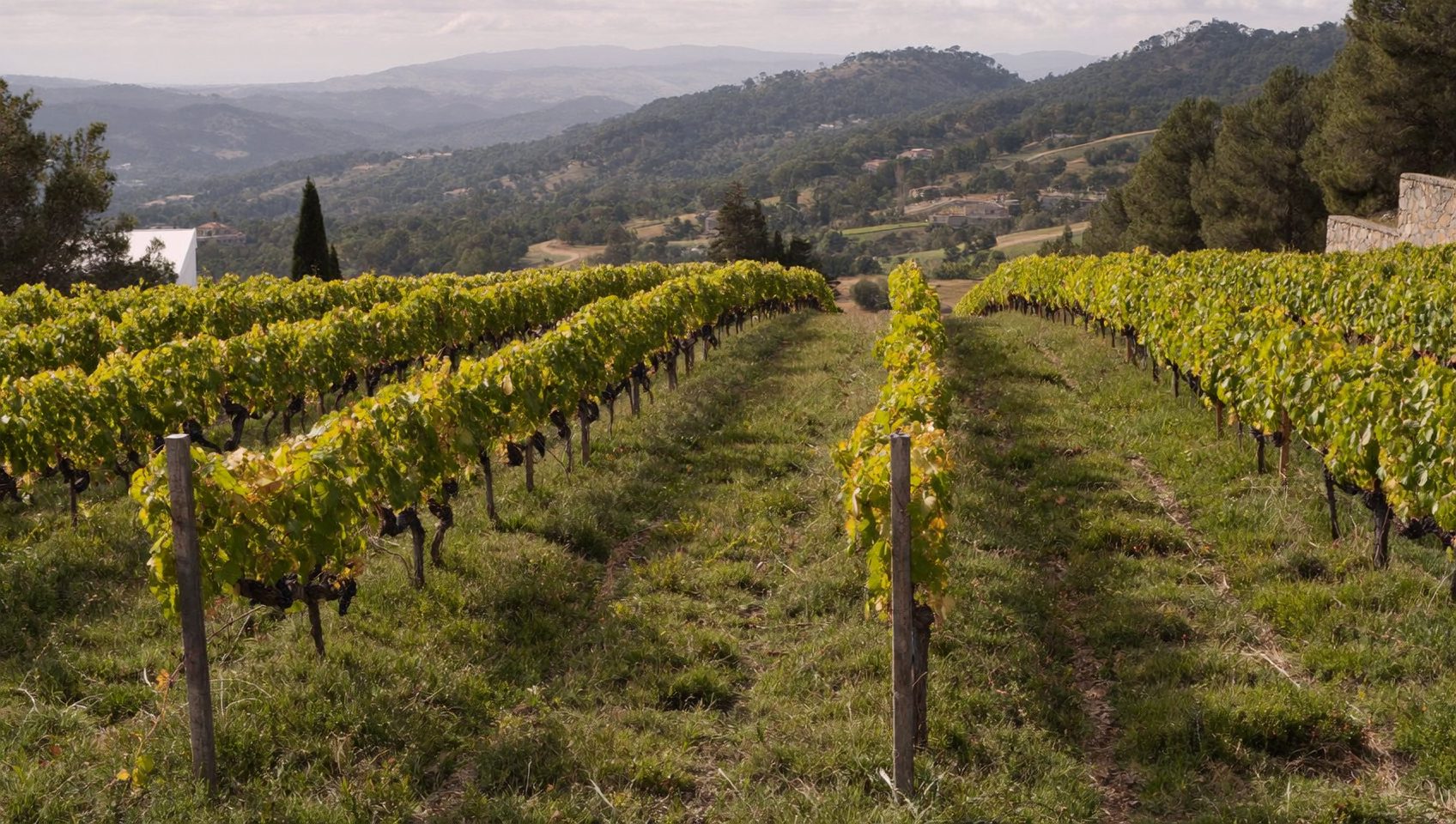
Casavecchia is a black-berried grape from the province of Caserta, listed in the Italian National Register of Grapevine Varieties as «Casavecchia N.» since 15 May 2002, on a proposal from the Campania Region. On labels it appears mainly under two names: the Casavecchia di Pontelatone DOC, with at least 85 per cent of the variety and two years of ageing, one of them in wood, and the Terre del Volturno IGT with the varietal indication «Casavecchia», also with at least 85 per cent (Casavecchia di Pontelatone DOC production rules, art. 2 and 5; Terre del Volturno IGT production rules, art. 2). The DOC was approved by ministerial decree of 8 November 2011 (Gazzetta Ufficiale no. 278 of 29 November 2011) and amended on 30 November 2011 and 7 March 2014.
This page is the complete guide to the variety and its rules, including the part for those selling abroad. The other wines of the province are covered in exporting Caserta wines, the regional picture in Campania wines: a guide for international importers.
Where Casavecchia comes from
Casavecchia comes from the area around Pontelatone, on the hills between Monte Maggiore and the Tifatini mountains, north of Capua along the Volturno river. The DOC production rules tell its story in two versions: the popular one and the one given by witnesses (Casavecchia di Pontelatone DOC rules, art. 9).
According to local lore, towards the end of the 19th century Scirocco Prisco, born in Pontelatone in 1875 and died in 1962, found the first vine next to an ancient ruin on his land, near the «Ciesi» farmhouse, and propagated it by layering; from there the variety spread to Castel di Sasso, Formicola and Liberi. Local people began saying «l'uva e chella casa vecchia» ("the grape from that old house"), which is said to be the origin of the name. Prisco's two children, interviewed for the production rules, said instead that their father found the vine around 1900, when it was already old, with a trunk at least 40 centimetres across. For this reason the rules consider it more likely that a population of Casavecchia already grew in the area and that this single plant survived the powdery mildew epidemic of 1851, which hit the whole of Campania.
The Terre del Volturno IGT rules add that some scholars link Casavecchia to Trebulanum, the wine Pliny the Elder described as drunk by soldiers and produced in the area of Pontelatone, Formicola, Castel di Sasso and Liberi (Terre del Volturno IGT rules, art. 8). This is a hypothesis, not an established fact, and it should be presented that way in export materials too.
Casavecchia in the National Register of Grapevine Varieties
The Register is the official source for the variety's name, synonyms and the denominations in which it is allowed.
| Item | What the Register states |
|---|---|
| Official name | Casavecchia N. (N = black berry) |
| Code | 365 |
| Proposed by | Campania Region |
| Registration | 15 May 2002, Gazzetta Ufficiale no. 165 of 16 July 2002 |
| Synonyms | none listed in the entry |
| Registered clones | one, I - VCR 435 (10 February 2021, Gazzetta Ufficiale no. 43 of 20 February 2021) |
| DOC in which it is allowed | Casavecchia di Pontelatone |
| IGT in which it is allowed | Campania, Roccamonfina, Terre del Volturno |
| Use | for winemaking only |
Source: National Register of Grapevine Varieties, Casavecchia N. entry.
Because the Register lists no synonyms, technical sheets and labels should use the name Casavecchia only.
How to recognise it in the vineyard
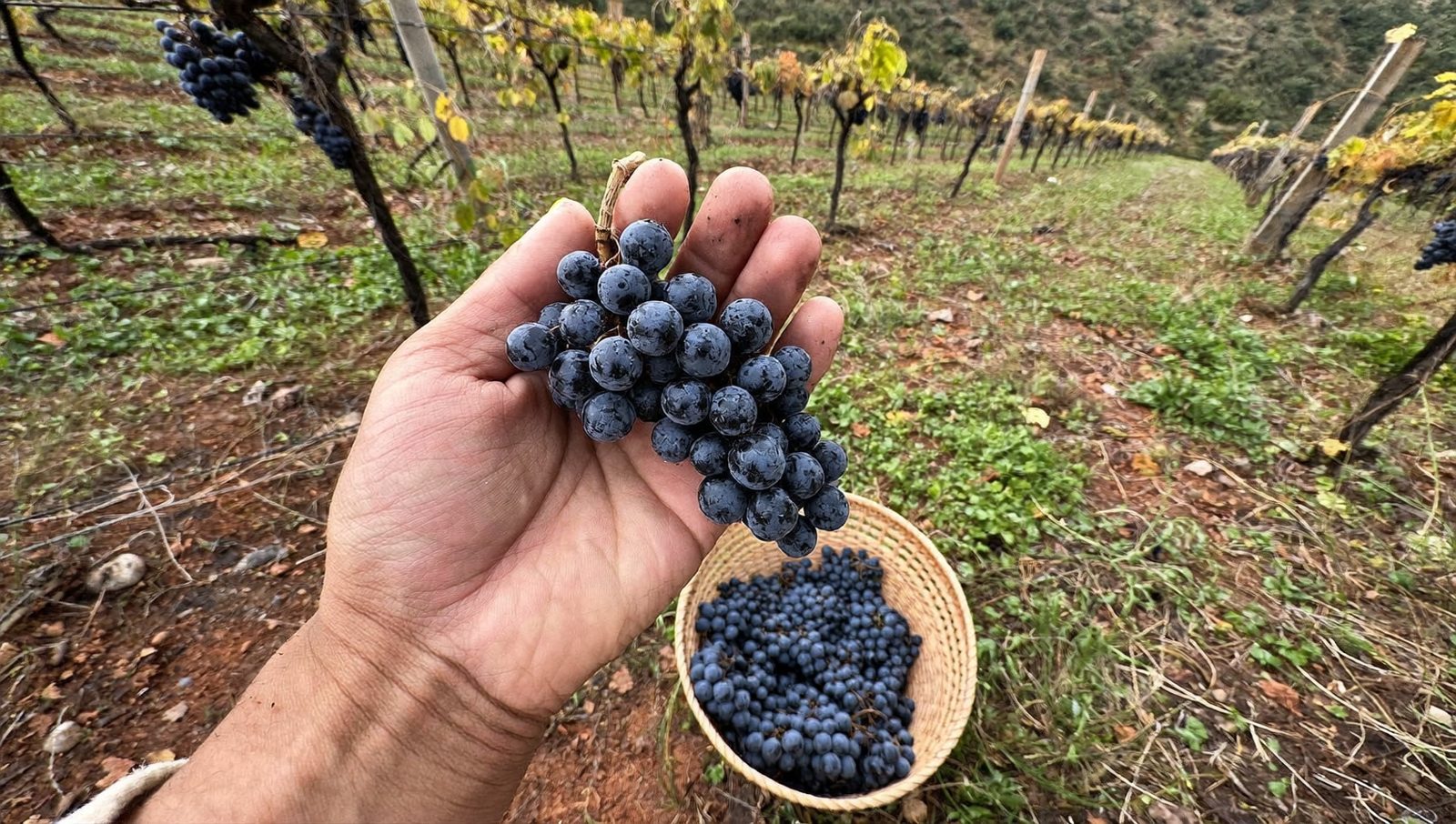
The Register's ampelographic sheet, taken from the registration application, describes a medium-large, loose bunch, elongated and with several wings, and a medium-small, ellipsoid berry with a thick, blue-black, heavily bloomed skin; the pulp is colourless, juicy and neutral in flavour. The leaf is medium-sized, sometimes small, pentagonal, with five or sometimes three lobes (Casavecchia ampelographic sheet).
The observations were made on 60 local vines, trained to the traditional festone system at about 500 vines per hectare, and compared with Merlot grown in the same area.
| Trait | Casavecchia | Merlot (control) |
|---|---|---|
| Wood removed at winter pruning | 1.9 kg per vine | 2.8 kg per vine |
| Yield | 11.5 kg per vine | 21.7 kg per vine |
| Average bunch weight | 284 g | 191 g |
| Potential and actual fertility | 1.27 and 0.96 | 1.97 and 1.52 |
Source: ampelographic sheet of the National Register.
The growth cycle described: budbreak in the second ten days of April, flowering between late May and early June, veraison in the last ten days of July, ripening in the last ten days of September. In short, a variety less vigorous and less productive than Merlot, with heavier but fewer bunches.
Which denominations use it, and at what share
| Denomination | How Casavecchia appears | Minimum share of the variety | Source |
|---|---|---|---|
| Casavecchia di Pontelatone DOC, Rosso and Riserva | main variety | 85 per cent; the rest from other non-aromatic red varieties suitable in Campania, up to 15 | Casavecchia di Pontelatone DOC rules, art. 2 |
| Terre del Volturno IGT «Casavecchia» | varietal indication on the label | 85 per cent; the rest from non-aromatic red varieties suitable in the provinces of Caserta and Naples, up to 15 | Terre del Volturno IGT rules, art. 2 |
| Campania IGT | allowed according to the Register, but not among the varieties that may be named on the label in the version of the rules we read | no share set: it goes into generic reds and rosés | Register; Campania IGT rules, art. 2 |
| Roccamonfina IGT | allowed according to the Register, but not among the varieties that may be named on the label in the version of the rules we read | no share set: it goes into generic reds and rosés | Register; Roccamonfina IGT rules, art. 2 |
In practice, a producer who wants Casavecchia on the label has two routes: the DOC, if the grapes come from its area, or the Terre del Volturno IGT.
The Casavecchia di Pontelatone DOC: area and requirements
The area covers the whole of the municipalities of Liberi and Formicola and parts of Pontelatone, Caiazzo, Castel di Sasso, Castel Campagnano, Piana di Monte Verna and Ruviano, all in the province of Caserta (rules, art. 3). Only hillside vineyards or vineyards with a suitable aspect qualify; valley-floor, damp or poorly sunlit sites are excluded (art. 4).
| Requirement | Rosso | Riserva | Source |
|---|---|---|---|
| Minimum Casavecchia | 85 per cent | 85 per cent | art. 2 |
| Maximum grape yield | 9 tonnes per hectare | 9 tonnes per hectare | art. 4 |
| Minimum natural alcohol of the grapes | 11.50 per cent | 12.00 per cent | art. 4 |
| Maximum grape-to-wine yield | 70 per cent | 70 per cent | art. 5 |
| Enrichment | allowed under current law | not allowed | art. 5 |
| Minimum ageing | two years, at least one in wood | three years, at least 18 months in wood | art. 5 |
| Ageing starts | 1 November of the harvest year | 1 November of the harvest year | art. 5 |
| Minimum total alcohol when released | 12.50 per cent | 13.00 per cent | art. 6 |
| Minimum total acidity | 5.0 g/l | 5.0 g/l | art. 6 |
| Minimum non-reducing extract | 26.0 g/l | 26.0 g/l | art. 6 |
In favourable years the yield may exceed 9 tonnes by up to 20 per cent, but the surplus must be brought back within the limit; beyond 20 per cent the whole crop loses the denomination (art. 4). New plantings must have at least 2,500 vines per hectare, horizontal training systems are banned and only emergency irrigation is allowed (art. 4).
Winemaking, ageing and bottling may take place anywhere in the province of Caserta and in the municipality of Amorosi, in the province of Benevento; bottling must stay within that area (art. 5). Since ageing runs from 1 November, a 2023 Rosso completes its ageing on 1 November 2025 and a 2023 Riserva on 1 November 2026.
Label and bottle
The vintage is mandatory. The word «Riserva» must appear below the words «denominazione di origine controllata», in characters no larger than those of the denomination name. Qualifiers such as «superiore», «extra», «fine» or «selezionato» are banned; the term «vigna» with a place name is allowed if the plot is declared in the annual harvest report (rules, art. 7).
The wine is sold in Bordeaux-shaped bottles of dark glass up to 5 litres, closed with a cork; screw caps or tear-off closures are allowed only up to 0.200 litres (art. 8). The rules provide for no white, rosé, sparkling or sweet types (art. 1). Annual checks are carried out by the control body Agroqualità (art. 10).
Casavecchia DOC or Terre del Volturno IGT: what changes
The two labels require the same minimum share of the variety but follow very different rules. All eight municipalities of the DOC also fall within the IGT area, which covers most of the province of Caserta and three municipalities in the province of Naples (Terre del Volturno IGT rules, art. 3).
| Casavecchia di Pontelatone DOC | Terre del Volturno IGT «Casavecchia» | |
|---|---|---|
| Maximum grape yield | 9 tonnes per hectare | 12 tonnes per hectare |
| Minimum natural alcohol | 11.50 per cent (Riserva 12.00) | 10.50 per cent |
| Minimum total alcohol when released | 12.50 per cent (Riserva 13.00) | 11.50 per cent |
| Grape-to-wine yield | 70 per cent | 80 per cent |
| Ageing | two years with one in wood (Riserva three with 18 months) | no minimum period |
| Riserva | allowed | banned |
Sources: Casavecchia di Pontelatone DOC rules, art. 4-6; Terre del Volturno IGT rules, art. 4-7.
The biggest difference for style is wood. Gambero Rosso wrote that many Casavecchia wines have been spoiled by a use of wood made compulsory by the DOC rules, and that versions with shorter maceration and ageing give better results (Raffaele Mosca, Gambero Rosso, 10 May 2026). A Casavecchia aged only in steel cannot be DOC: it has to be released as IGT. The IGT can also serve as a fallback for wines from vineyards registered for the DOC that meet the IGT requirements (Terre del Volturno IGT rules, art. 7).
The same IGT rules also cover the area's other native red, Pallagrello nero, with the same basic rules as Casavecchia (85 per cent, 12 tonnes per hectare, 11.50 per cent when released). The province's other red DOC, Falerno del Massico, uses Aglianico (at least 60 per cent) and Piedirosso (up to 40) instead, with one year of ageing from 1 January after the harvest and a Riserva aged two years, one of them in cask (Falerno del Massico DOC rules, art. 2, 5 and 7): see Falerno del Massico DOC. The great red of inland Campania is covered in Aglianico: Taurasi, Taburno, Vulture.
What kind of wine it makes
The production rules describe Casavecchia di Pontelatone as ruby red of varying intensity, turning garnet with age; intense, persistent, characteristic on the nose; dry, sapid, properly tannic, soft and full-bodied on the palate (rules, art. 6). Gambero Rosso describes it as less productive and more acidic than Pallagrello, with finer tannins, able to give elegant, long-lived wines (Raffaele Mosca, Gambero Rosso, 10 May 2026).
The climate of the area, according to the rules: an average annual temperature of 15.6 °C, 970 mm of rain, 76 per cent of it between October and March, with August the driest month at 15.9 mm. Relative humidity stays high during ripening, 74.15 per cent in September and 73 per cent in October. Soils are of three types: alluvial near the Volturno, pyroclastic in the valley and sandstone-clay on the hills (rules, art. 9).
Selling Casavecchia abroad
No export data for Casavecchia are published by the Ministry or by a consortium: none of the official sources read for this guide gives volumes or markets. The figures on vineyard area and bottles circulating online are not official and do not agree with one another, so we do not report them. What a foreign buyer can check are the rules, and these are what make the difference in a negotiation.
Before sending a technical sheet to an importer, check four points:
- Denomination consistent with the ageing. If the wine has not spent a year in wood, it cannot be Casavecchia di Pontelatone DOC: it must be presented as Terre del Volturno IGT.
- Release date. DOC Rosso not before two years from 1 November of the harvest, Riserva not before three; the IGT has no minimum.
- Variety name. The Register lists no synonyms: no alternative names on the label or technical sheet.
- Bottle and closure. For the DOC, a dark-glass Bordeaux bottle and a cork above 0.200 litres.
The story you can use is the one documented in the production rules: the vine found around 1900, propagation from a single plant, and the Trebulanum hypothesis from Pliny, always presented as a hypothesis. For choosing markets, see wine importers by country and how to export wine: the complete guide.
Frequently asked questions
Is Casavecchia a white or a red grape?
Red: it is listed in the National Register as «Casavecchia N.», a black-berried variety. The DOC rules provide only for the Rosso and Riserva types (Casavecchia di Pontelatone DOC rules, art. 1).
How much Casavecchia must a Casavecchia di Pontelatone DOC contain?
At least 85 per cent. The rest, up to 15 per cent, may come from other non-aromatic red varieties suitable for cultivation in Campania (rules, art. 2).
How long must Casavecchia di Pontelatone be aged?
The Rosso at least two years, one of them in wood; the Riserva at least three years, 18 months of them in wood. Ageing is counted from 1 November of the harvest year (rules, art. 5).
Where is Casavecchia di Pontelatone produced?
In the province of Caserta: all of Liberi and Formicola, and parts of Pontelatone, Caiazzo, Castel di Sasso, Castel Campagnano, Piana di Monte Verna and Ruviano (rules, art. 3).
Does Casavecchia have any synonyms?
The National Register of Grapevine Varieties lists none. The official name is Casavecchia N., code 365.
Can Casavecchia be made without oak?
Yes, but not as DOC, which requires at least one year in wood. Without wood the wine can be released as Terre del Volturno IGT with the varietal indication Casavecchia, which sets no ageing period (Terre del Volturno IGT rules, art. 2-6).
Where does the name Casavecchia come from?
According to the local saying recorded in the production rules, from the dialect phrase «l'uva e chella casa vecchia» ("the grape from that old house"), referring to the vine found next to an ancient ruin in Pontelatone (rules, art. 9).
Sources
- National Register of Grapevine Varieties, Casavecchia N. entry, code 365
- National Register of Grapevine Varieties, Casavecchia ampelographic sheet
- Casavecchia di Pontelatone DOC production rules, text of the Italian Ministry of Agriculture, Food Sovereignty and Forests (DM 8 November 2011, last amended DM 7 March 2014), list of PDO and PGI production rules
- Terre del Volturno IGT, Campania IGT, Roccamonfina IGT and Falerno del Massico DOC production rules, Ministry of Agriculture texts in the same list
- Raffaele Mosca, «I vini dell'Alto Casertano stanno cambiando», Gambero Rosso, 10 May 2026
- Cesanese: Register, Piglio, Affile, Olevano, Rules
- Cannonau di Sardegna DOC: Grape, Subzones, Riserva
- Chardonnay in Italy: Register, DOC, DOCG and sparkling
- Cagnina: Romagna's Terrano and the Romagna Cagnina DOC
- Ciliegiolo grape: Maremma Toscana, Amelia and Sovana DOC
- Bellone or Cacchione: Register, Nettuno, Cori and Roma DOC